

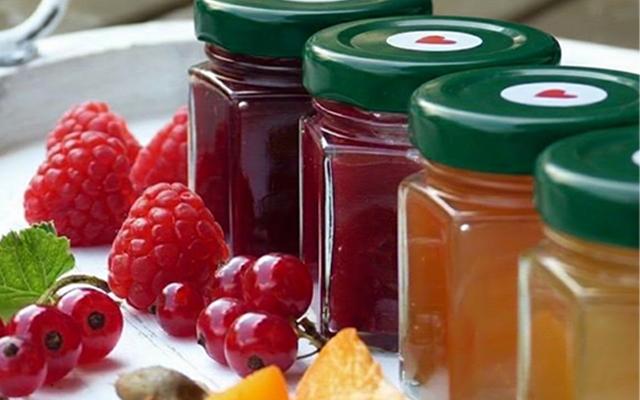
Fruit processing is one of the ways in which Italian agriculture preserves its own biodiversity and brings it to the table. Fruits with Protected Geographical Indication (PGI), local varieties and recovered cultivars find a second season in the jar, from breakfast to the delicatessen counter to the cheese board.
Choosing a jam for a pairing means reading three elements: the legal name, the quantity of fruit, the acid-aromatic profile of the raw material.
This guide brings together the European rules applied from 14 June 2026, the sensory profiles of the main flavours and the pairings indicated by cheese tasters. It is aimed at consumers, Ho.Re.Ca. operators and international buyers.
Jam, marmalade or compote: how to read the label
In the European Union 'jam', 'extra jam', 'jelly', 'citrus jam' and 'chestnut cream' are legal names, reserved for products complying with precise compositional rules (Directive 2001/113/EC, Annex I). The Breakfast Directive (EU) 2024/1438, implemented in Italy with legislative decree 207/2025, updated its requirements as of 14 June 2026:
- The jam must now contain at least 450 grams of fruit per kilogram of finished product, the extra jam at least 500 grams of non-concentrated pulp. The thresholds decrease respectively to 350 grams and 450 grams for redcurrants, blackcurrants, service berries, sea buckthorn, rosehips and quinces (Directive 2001/113/EC, Annex I);
- The citrus marmalade requires at least 200 grams of citrus fruit per kilogram, of which at least 75 coming from the endocarp, the internal part of the fruit formed by the segments (dir. 2001/113/EC, Annex I). The term 'jam', in Italy as in some other Member States that have made use of this option, is reserved only for citrus-based products;
- The chestnut spread, finally, requires at least 380 grams of chestnut puree per kilogram (Directive 2001/113/EC, Annex I);
- a jam with reduced sugar content may retain the legal name, since in this case the minimum threshold of 60% soluble dry matter does not apply (legislative decree 50/2004, art. 2.4). The conditions of the indications without added sugars and with reduced sugar content are regulated separately;
- 'composed' e 'fruit preparation' are not reserved denominations. Products so designated may therefore contain – depending on the case – different ingredients, more or less fruit and added sugars. It is therefore advisable to consult the list of ingredients and the nutritional declaration on the label.
The regulation under examination also considers as fruit tomatoes, edible parts of rhubarb stalks, carrots, sweet potatoes, cucumbers, pumpkins, melons e watermelons (Directive 2001/113/EC, Annex III, part A). A jam made from green tomatoes or pumpkin is therefore a jam in its own right. Preparations of onion assume instead other sales names.
Sensory profiles of individual flavours
Three variables define the character of a jam, in its different flavours:
- the ratio between sugars and acids of the fruit;
- the aromatic component;
- the consistency of the gel.
Consistency has a greater importance than one might believe: a study on strawberry jams, prepared with pectins of different types in various concentrations, showed how the physical properties of the gel affect the perception of taste and aroma (Kurotobi et al., 2021).
Red fruits and small berries
Strawberries, raspberries, currants, blueberries, blackberries: from these berries are born jams of acidity lively, color deep, aroma clean fruity.
The strawberry offers a soft sweetness with a slightly acidic finish. The raspberry is more sharp, with a floral character. The redcurrant brings an almost citrusy acidity, while blackberry e blackberry add notes of forest floor with a slight astringency, due to the polyphenols in the skin.
Jams made from red fruits are those that best contrast the fatty flavor of fresh cheeses. They add a note to creamy desserts, such as panna cotta, as well as to yogurt e kefir neutral ones.
Apricots, peaches, plums and figs
The apricots offer the base for a jam of full sweetness, refined acidity, aroma of white flowers and honey. It is one of the most versatile in pastry-making.
The peach is more delicate, with floral notes and a velvety texture. The plums, cooked with the skin, develop a more marked acidity as well as an amber or purple color depending on the variety.
The jam made from figs concentrates sugars and caramelized notes, with small achenes conferring a granular texture. It is the natural companion to savory or blue-veined cheeses.
Quinces, pears, cherries and chestnuts
The quinces, rich in pectin, lend themselves to dense and compact preparations such as quince paste, amber in color, slightly astringent on the palate. The pear gives instead soft and sweet jams, often enriched with spices or wine.
The cherries offer deep sweetness and dark color. Sour cherries e wild cherries, acidic varieties of the cherry tree (Prunus cerasus), add a sweet-acid register with an almond finish. In Cantiano, in the Marche Apennines, jams, syrups and sour cherry wine are made (AMAP, n.d.).
The chestnut spread, velvety, combines sweetness and toasted notes. It is the preparation most closely linked to the Italian supply chain of chestnuts, where chestnuts are also destined for candying.
Citrus fruits: oranges, lemons, mandarins and bergamot
In marmalades made from Mediterranean citrus fruits the peel is the protagonist. Essential oils provide aroma, while bitter compounds offer a counterpoint to sweetness.
THE'bitter orange offers a sharper bitter taste, regardless of the presence of sugar, the oranges Sweets a more rounded taste. THE'Red Orange of Sicily PGI is reserved for the varieties Tarocco, Moro, Sanguinello, grown in eastern Sicily in the provinces of Catania, Syracuse and Enna. The anthocyanins in the pulp give its jams a ruby color.
The lemon offers fresh and firm jams, the mandarin sweeter, fragrant. The bergamot, grown mainly along the coast of Reggio Calabria, brings a floral and balsamic note.
Vegetables and spices for the board
Jams made from green tomatoes or pumpkin combine vegetable sweetness and moderate acidity. They are often completed with ginger, cinnamon or nutmeg.
The Red Onion of Tropea Calabria PGI includes three types – spring onion, onion for fresh consumption and storage onion – grown along the Tyrrhenian coast of Calabria. Cooked slowly with sugar, red onion produces sweet and savory preserves, with a hint of acidity.
Preparations with chili pepper finally introduce a spicy note, to be measured with aged cheeses and cured meats.
The principles of pairing
The sensory literature traces successful pairings back to a few mechanisms:
- similarity
- contrast
- harmony
- emergence of new sensations
- reciprocal modulation of tastes.
However, the hypothesis according to which two foods go well when they share aromatic compounds has not been confirmed (Spence, 2020a).
We speak of pairing when the two elements remain recognizable in the bite, unlike blends in which they blend (Spence, 2020b). Serving the jam separately, in small quantities, allows each diner to find their own measure.
With Cheeses the predominant effect is contrast: the acidity of jellies and jams contrasts the creaminess of fresh cheeses or the greasiness of mature ones, as emerged in a tasting of berries and jellies organized by the National Organization of Cheese Tasters (ONAF) (Ambrosetti, 2025).
The sweetness of figs, pears or quinces instead balances the salt and spicy notes of blue-veined or long-aged cheeses.
Cheeses and jams, the indications of tasters
The ONAF technical sheets dedicate an entry to each cheese on pairings with honey and jams. The following instructions concern primarily cheeses with Protected Designation of Origin (PDO):
- The Parmigiano Reggiano PDO, aged at least 12 months, asks for 'Fruit jams with moderate acidity, or mustards (mustard)'. The card also indicates vegetable jams, possibly spiced, as well as wildflower honey, forest or heather honeydew (ONAF, s.d.-c);
- The Gorgonzola PDO pungent is served with ripe sweet fruit, Honey, preserves or mustards. Mixed fruit mustards, pear, chestnut or fig mustards are indicated, as well as red onion sauces; the sweet type is mainly used in cooking (ONAF, s.d.-b);
- for the Asiago PDO fresh or pressed, the menu offers rosehip berry jam or wild strawberry mustard, with heather or dandelion honey. Seasoned or farmed Asiago is accompanied by quince jam, green tomato, blackberry or fig jam, with wildflower honey or forest honeydew (ONAF, s.d.-a);
- The Taleggio PDO, cheese with raw, soft paste made from whole cow's milk, changes pairing with aging. Young forms suit wildflower honey or orange or mandarin jams, slightly tart. More aged forms, with pungent taste, support chestnut honey or fruit mustard (ONAF, s.d.-f);
- The Pecorino Toscano PDO, made from whole sheep's milk, in fresh or seasoned versions, is combined by ONAF with honey, jams, seasonal fruit such as apples, pears or figs (ONAF, s.d.-d);
- The Robiola of Roccaverano PDO, or Roccaverano PDO, goat's milk cheese fresh, pairs with strawberry, raspberry, plum, ginger squash, mandarin or orange preserves, as well as with mustard and onion sauce (ONAF, 2023).
Among the traditional Piedmontese cheeses, the Robiola d'Alba sheet indicates orange marmalade as well as pumpkin and ginger jam (ONAF, s.d.-e). Ricotta, fresh goat cheeses, robioles and stracchinis in turn find the ideal contrast in the more acidic jams of raspberries, currants or sour cherries.
Meats, cured meats and savoury cuisine
The jams of citrus fruits accompany the fatty meats, according to the duck à l'orange scheme. Red onion compotes, green tomato jams and chilli preparations find space on cured meat platters.
The dialogue between cured meats and fruit has deep roots in Italian cuisine. The Consortium of Prosciutto di Parma PDO proposes recipes with grilled figs as well as with pears in candied ginger (Consorzio del Prosciutto di Parma, N/A-a, N/A-b). The Consortium of Prosciutto di San Daniele in turn suggests a pizza with sweet gorgonzola and pears caramelized in a pan with sugar and butter (Consorzio del Prosciutto di San Daniele, 2024); it is suggested in this regard to try the clarified butter, more suitable for cooking. Fig and pear jams bring the same sweet-savoury contrast to the board, in every season.
The same balance applies to speck. The Protection Consortium Speck Alto Adige suggests grilled melon with rocket pesto (Consorzio Tutela Speck Alto Adige, 2024), while branded products Alto Adige propose a tartare of Speck Alto Adige PGI with scallions and Apple Alto Adige PGI (IDM Südtirol-Alto Adige, N/A). The acidic jams of apple or berries accompany in the same way the smoky notes of speck.
For cured meats to be cooked the reference is the Traditional Mostarda of Cremona, candied fruit with the addition of mustard served with meats and cheeses to give them 'a sweetly spicy taste' (Municipality of Cremona, n.d.). On fatty meats, from cotechino to mixed boiled meat, spicy quince or pear jams offer a less pungent alternative.
Sweets and breakfast
The tart remains the reference dessert. Il Cucchiaio d'Argento offers it with shortcrust pastry flavored with lemon zest and half a kilo of apricot jam (Il Cucchiaio d'Argento, n.d.).
The ricotta and sour cherry tart it is a classic of Jewish-Roman cuisine (Guetta, 2022). The acidity of the sour cherries balances the lactic sweetness of the ricotta, according to the same contrast principle that regulates the cutting board.
A breakfast, the most acidic jams of red fruits or citrus accompany white yogurt and buttered toast. Bitter orange marmalades also lend themselves to dark chocolate, chestnut cream with crêpes and pan brioche.
Gastronomic Pairing Table
| Taste | Sensory Profile | Cheeses | Other savoury uses | Desserts and breakfast
|
| Strawberry, raspberry, currant | Lively acidity, fruity aroma, floral character | Ricotta, fresh goat cheese, robiola; Roccaverano DOP | Fresh cheese boards | Tarts, white yogurt, creamy desserts |
| Blueberry, blackberry | Undergrowth notes, slight astringency | aged Asiago PDO (blackberry) | Game | Baked cakes, pancakes |
| Apricot, peach | Full sweetness, balanced acidity, floral notes | Sweet semi-aged cheeses | Mixed boards | Apricot tart, brioche |
| Plum | Marked acidity, cooked fruit notes | Roccaverano DOP | Roasted pork | Tarts, shortcrust pastries |
| Fig | Intense sweetness, caramel notes, grainy texture | Spicy Gorgonzola PDO (mostarda), aged Asiago PDO, aged pecorinos | Mixed boards | Cereal bread, dry pastries |
| Quince, pear | Dense texture, astringent note | Aged Asiago PDO (quince paste), Gorgonzola PDO (pear mostarda), Pecorino Toscano PDO | Boiled meats, with mostardas | Dry biscuits |
| Cherry, sour cherry | Sweet-tart, almond finish | Fresh and aged hard-paste cheeses | Pâtés and terrines | Ricotta and sour cherry tart, dark chocolate |
| chestnut spread | Velvety, roasted notes | Gorgonzola PDO (chestnut mostarda) | – | Crêpes, brioche bread |
| Orange, mandarin | Citrus-like, bitter note | Young Taleggio DOP, Roccaverano DOP, Robiola d'Alba | Duck with orange | Dark chocolate, toasted bread |
| Green tomatoes, pumpkin | Vegetable sweetness, moderate acidity, spices | Parmigiano Reggiano PDO, aged Asiago PDO | Aged cured meats | – |
| Red onion (compote) | Sweet, savory, acidic note | Spicy Gorgonzola PDO, Parmigiano Reggiano PDO | Aged cured meats, boiled meats | – |
Our team of FARE (Food and Agriculture Requirements) assists companies in strategic planning for compliance of mandatory and optional information – on labels and advertising, including online and on social networks – with support in developing systems of governance corporate governance and operational procedures.
Dario Dongo
Frequently asked questions about jams and pairings
What is the difference between jam, extra jam and marmalade? The jam contains at least 450 grams of fruit per kilogram, the extra jam at least 500 grams of non-concentrated pulp. In Italy the term 'jam' refers only to citrus-based products, with at least 200 grams of citrus fruit per kilogram.
Which jams pair with blue-veined and aged cheeses? Dense and sweet jams, such as figs, pears and quinces, or fruit mustards. ONAF indicates them for spicy Gorgonzola DOP as well as for seasoned Asiago DOP.
What to pair with ricotta, goat cheeses and robiolas? Acidic jams of raspberries, blackcurrants, strawberries or sour cherries, whose contrast balances the creaminess of fresh cheeses.
Does onion jam exist? No. Onion is not one of the fruits or vegetables that European standards equate to fruit, so the related preparations take on other names, such as 'compote'. Tomatoes, pumpkins and carrots can instead make full-fledged jams.
Does a compote contain more fruit than a jam? Often yes, but it is not a rule. 'Compote' is not a reserved name: the quantity of fruit, sugar content and ingredients can be found on the label of each product.
References
European Union regulations
Council Directive 2001/113/EC of 20 December 2001 relating to fruit jams, jellies and marmalades and sweetened chestnut purée intended for human consumption. Consolidated text: 14/06/2026. http://data.europa.eu/eli/dir/2001/113/2026-06-14
Directive (EU) 2024/1438 of the European Parliament and of the Council of 14 May 2024 amending Council Directives 2001/110/EC relating to honey, 2001/112/EC relating to fruit juices and certain similar products intended for human consumption, 2001/113/EC relating to fruit jams, jellies and marmalades and sweetened chestnut purée intended for human consumption, and 2001/114/EC relating to certain partly or wholly dehydrated preserved milk for human consumption. OJ L, 2024/1438, 24.5.2024. http://data.europa.eu/eli/dir/2024/1438/oj
Commission Regulation (EC) No 284/2008 of 27 March 2008 registering certain names in the Register of protected designations of origin and protected geographical indications (Lingot du Nord (PGI), Cipolla Rossa di Tropea Calabria (PGI), Marrone di Roccadaspide (PGI)). OJ L 86, 28.3.2008, p. 21. http://data.europa.eu/eli/reg/2008/284/oj
Italian regulations
Legislative decree 20 February 2004, n. 50, Implementation of Directive 2001/113/EC concerning fruit jams, jellies and marmalades, as well as chestnut cream, intended for human consumption. Regulatory. Latest consolidated version: [DATE TO INSERT]. https://www.normattiva.it/uri-res/N2Ls?urn:nir:stato:decreto.legislativo:2004-02-20;50!vig=
Legislative Decree 30 December 2025, no. 207, Implementation of Directive (EU) 2024/1438 of the European Parliament and of the Council of 14 May 2024. Official Gazette no. 3 of 5 January 2026. https://www.gazzettaufficiale.it/eli/id/2026/01/05/26G00001/sg
Geographical Indications
European Commission. eAmbrosia, Red Orange of Sicily (PGI), summary sheet. https://webgate.ec.europa.eu/eambrosia-api/api/v1/attachments/60144
Scientific studies on sensory perception and pairings
Kurotobi, T., Hoshino, T., Kazami, Y., Hayakawa, F., & Hagura, Y. (2021). Influence of physical properties on the taste and flavor of strawberry jam. Journal of Texture Studies, 52(2), 260–274. https://doi.org/10.1111/jtxs.12582
Spence, C. (2020a). Food and beverage flavour pairing: A critical review of the literature. Food Research International, 133, 109124. https://doi.org/10.1016/j.foodres.2020.109124
Spence, C. (2020b). Multisensory flavour perception: Blending, mixing, fusion, and pairing within and between the senses. Foods, 9(4), 407. https://doi.org/10.3390/foods9040407
ONAF fact sheets on cheese pairings
Ambrosetti, L. (2025). Pairings: berries, jellies and cheeses. InForma, 54, 40–41. ONAF. https://onaf.it/uploads/public/20603_54-dicembre-2025distese.pdf
ONAF. (2023). Roccaverano. Cheese sheet. https://onaf.it/uploads/public/19958_roccaverano-2023-02-23.pdf
ONAF. (n.d.-a). Asiago. Cheese sheet. https://www.onaf.it/uploads/public/20410_asiago.pdf
ONAF. (n.d.-b). Gorgonzola. Cheese sheet. https://onaf.it/uploads/public/19448_gorgonzola.pdf
ONAF. (n.d.-c). Parmigiano Reggiano. Cheese sheet. https://www.onaf.it/uploads/public/11788_parmigiano-reggiano.pdf
ONAF. (n.d.-d). Pecorino Toscano. Cheese sheet. https://www.onaf.it/uploads/public/11798_pecorino-toscano.pdf
ONAF. (s.d.-e). Robiola d'Alba. Cheese card. https://www.onaf.it/uploads/public/8232_robiola-d-alba.pdf
ONAF. (n.d.-f). Taleggio. Cheese sheet. https://www.onaf.it/uploads/public/12088_taleggio.pdf
Biodiversity and traditional products
AMAP – Agency for innovation in the agri-food and fishing sector 'Marche Agricoltura Pesca'. (s.d.). Cantiano sour cherry. Agricultural biodiversity, regional repertoire, sheet no. 75. https://amap.marche.it/files/progetti/biodiversita_agraria/repertorio_regionale/75_visciola_di_cantiano.pdf
Municipality of Cremona. (N/A). Production specification of traditional Mostarda of Cremona with municipal designation. https://comune.cremona.it/sites/default/files/allegati/2015/01/disciplinare_mostarda_cremona.pdf
Recipes and food culture
Consorzio del Prosciutto di Parma. (N/A). Bruschetta with grilled figs and Parma Ham. https://www.prosciuttodiparma.com/?p=3778
Consorzio del Prosciutto di Parma. (n.d.-b). Parma Ham wrapped pear, stem ginger and rocket rolls with a lemon-vodka dipping sauce. https://www.prosciuttodiparma.com/?p=120
Consorzio del Prosciutto di San Daniele. (2024). Roman-style crunchy pizza with Prosciutto di San Daniele, gorgonzola and pears. San Daniele Magazine. https://sandanielemagazine.com/?p=25518
Alto Adige Speck Protection Consortium. (2024). Speck Alto Adige PGI. Typically tasty. https://www.speck.it/CustomerData/496/files/Documents/news-aktuelles/download/speck_folder_it_2024.pdf
Guetta, B. J. (2022). Cooking alla Giudia: A celebration of the Jewish food of Italy. Artisan Books. https://www.hachettebookgroup.com/titles/benedetta-jasmine-guetta/cooking-alla-giudia/9781579659806/
IDM Südtirol-Alto Adige. (n.d.). 10 summer recipes. https://www.suedtirol.info/content/dam/idm/it/pdf/lead/10-ricette-estive_ottimizzato%201.pdf
The Silver Spoon. (s.d.). Apricot jam tart. https://www.cucchiaio.it/ricetta/crostata-alla-marmellata-di-albicocche/

Dario Dongo, lawyer and journalist, PhD in international food law, founder of WIISE (FARE - GIFT – Food Times) and Égalité.


