

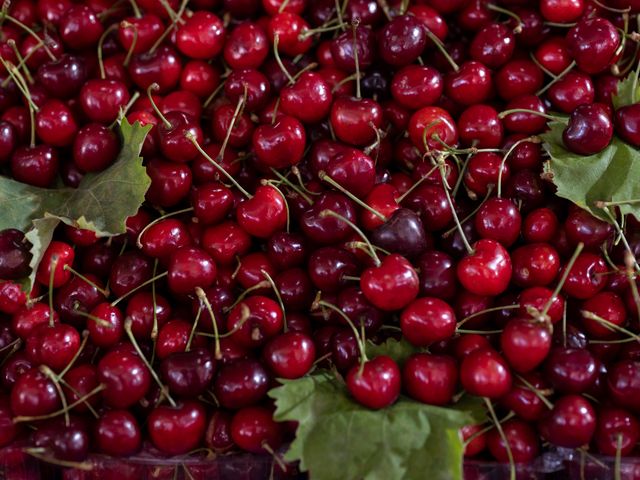
The Italian cherries (Prunus avium L.) represent an excellence of the national fruit and vegetable sector, expression of a agricultural biodiversity that unites unique territories with a short and precious seasonality. Today the Italian cherry supply chain faces the crucial challenge of climate change throughagronomic innovation in the field and the protection of native varieties. This study analyzes market data of the sector, European protections and the nutritional profile of the fruit, critically examining the most recent scientific literature evidence on the benefits of bioactive compounds.
Production and market dynamics of cherries in Italy
European and Italian production scenario
In the campaign 2025/26, the European cherry production (sweet and sour) is estimated at 644 thousand tons, down 15% compared to 762 thousand in 2024/25 (USDA-FAS, 2025). The decline, driven by France, Hungary, Italy and Poland, is only partially offset by recoveries from Spain, Germany and Portugal. The EU area remains above 177 thousand hectares, with a slight increase due to new Spanish plantations.
TheItaly, according to ISMEA calculations, produces on average 97 thousand tons annually of sweet cherries, ranking as the second EU producer (17%) after Spain (20%) and ahead of Greece (15%) and Poland (12%). Including sour cherries (morello and black sour cherries), Poland rises to first place and Italy falls to third. On the front of areas, Italy shares the continental primacy with Spain, with about 28 thousand hectares (Eurostat, in Ismea, 2025). Istat data confirm the volatility of the sector: in 2023 the national harvest fell to 88 thousand tons (-18.7% compared to 108 thousand in 2022).
Territorial distribution and climate vulnerability
the production of cherries in Italy is highly concentrated: Apulia holds 65% of the areas and 35% of national volumes; followed by Campania (23% of volumes), Emilia-Romagna and Veneto (7% each) and Lazio (5%; ISMEA, 2025). The commercial references for the quality product remain the Apulian ‘Ferrovia’ and the ‘duroni’ of Vignola.
2025 confirmed the high climate vulnerability of the sector. The March and April frosts in Apulia, the leading cherry-growing region, seriously reduced production, lowering the national 2025/26 figure (USDA-FAS, 2025).
Price trends and international trade
The campaign 2024 ended with quotations at origin increased by 4% (from 3.30 to 3.44 €/kg) and retail prices of packaged at 8.68 €/kg (+4.8%), against retail volumes increased by 12.3% and household spending up by 20.3% (Ismea, 2024). In 2025, the scarcity of supply supported prices: the Bari Commodity Exchange bulletin of May 20 reported, for wholesale, ‘Ferrovia’ at 6-8 €/kg, ‘Bigarreau’ at 4.50-6 €/kg and ‘Giorgia’ at 5-6.50 €/kg (Bari Chamber of Commerce, 2025).
On the level of the international exchanges, theItaly has a negative trade balance: imports of 51.7 million and exports of 33.5 million euros (a deficit of about 18 million), in a global market of about 4.4 billion (Ismea, 2025). Nevertheless, Italian cherries – particularly 'Ferrovia' and large-caliber duroni – compete in premium segment for quality and price, with prices in Central-Northern markets and abroad clearly above the international average.
EU context and 2025 updates
At the EU level, 2025/26 imports are expected to decline sharply (Turkey, which covers about 70% of the total, had a poor harvest), while European exports focus on the United Kingdom, Switzerland, Belarus and Albania. Two 2025 updates: the Chinese market opening is limited to Spanish cherries only — not yet Italian ones — and the launch of the EU’s three-year ‘Naturally Cherrylicious’ program, dedicated to quality, sustainability and traceability in Spain, Sweden and Finland (USDA-FAS, 2025).
Historical origin and spread of cherry growing in Italy
The wild cherry tree has been present in Europe since prehistoric times, but cultivation of table varieties is linked to Roman culture. The name derives from Vulgar Latin ceresia, itself from Greek kérasos, referring to the city of Cerasus on the Black Sea (today Giresun, Turkey). According to Pliny the Elder, it was the general Lucullus, in 72 BC, who introduced cultivated cherry trees to Rome after his military campaigns in Pontus (present-day northeastern Turkey).
Varro’s agricultural treatise mentions the grafting techniques, inancient Rome, in the 1st century BC. In medieval times it was especially monasteries that preserved and spread cherry cultivation. From the 16th century the tree was also valued for its wood, prized in cabinetmaking and in the construction of musical instruments, including organ pipes. For much of the 19th century, the fruit remained a luxury for the upper classes.
In Apulia cherry cultivation also has deep roots: the book of the General Procurator of the Chapter of San Leone in Castellana records, from 1648 and for over a century, the purchases of cherries destined for the Monastery of San Benedetto in Conversano. A Vignola (Modena), in the foothill area between the Apennines and the plain, the clay soils and the deposition methods of the Panaro river have made the cherry a valuable early produce: in 1964 the ‘Consorzio della Ciliegia, della Susina e della Frutta Tipica di Vignola’ was established.
Botanical characteristics and harvest calendar of Italian varieties
The cherry belongs to the family of Rosaceae, genus Prunus, subgenus Cerasus. The sweet cherry (Prunus avium L.) provides table cherries; the sour cherry (Prunus cerasus L.) gives morello cherries, sour cherries and marascas, mainly intended for processing. In Italy, the ‘duroni’, large and crunchy, from ‘tenerine’, lighter and softer.
The fruit is a drupe of 0.7-2 cm diameter, from the yellow of the Piedmontese ‘Graffione bianco’ to the dark red of the ‘Durone nero di Vignola’. The season Italian season opens in May in southern regions (Apulia, Campania, Sicily) and closes in July in the North (Emilia-Romagna, Veneto, Trentino-Alto Adige): a gradualness geographic one that extends the fresh product market window. The late varieties of Trentino-Alto Adige close the Italian calendar.
Agronomic innovation and management of climatic factors in cherry orchards
the choice of rootstock is crucial. On the Apulian ‘Red soils’, based on fissured and well-drained limestone rock, the Prunus mahaleb (St. Lucie cherry), which provides contained vigor and keeps plants around 4-5 meters, facilitating cultural operations. In new plantations, dwarfing rootstocks of the Gisela and Colt types are spreading, which anticipate productivity and facilitate harvest, still mainly manual.
The cherry tree requires an adequate accumulation of chilling hours in winter for uniform flowering, and is particularly sensitive to late frosts during flowering e to rain in pre-harvest, which cause fruit cracking. The pressure of the fruit fly Drosophila suzukii increases damage in wet years. For this reason, nets, as well as rain covers: costly investments but increasingly decisive to ensure high-quality production — without to use insecticides nor neonicotinoids or organophosphates — and continuity of supply in an unstable climate.
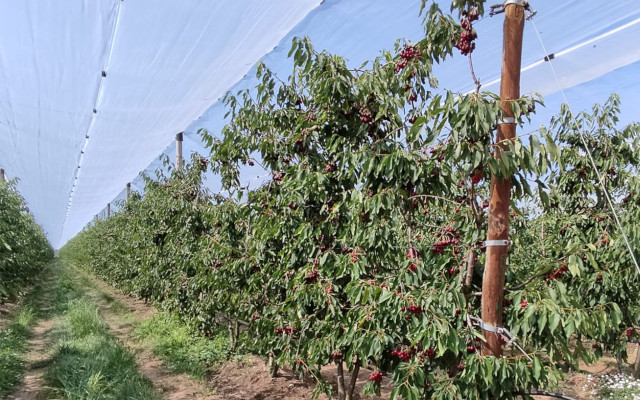
The main vocational areas reflect these terroirs:
- the province of Bari (Bisceglie, Conversano, Castellana Grotte, Turi, Putignano) in Apulia;
- the Modena-Bologna belt along the Panaro for Vignola;
- the Catania volcanic area for Etna;
- the Vicenza area for Marostica;
- the Irno Valley, between Salerno and Avellino, for Bracigliano;
- the Pisa area for Lari.
The DOP and IGP denominations of Italian cherries
The European Union protects five Italian Geographical Indications in cherry growing, one DOP and four IGP:
- the Etna Cherry DOP (Catania), recognized by EU regulation 1363/2011, grows on Etna volcanic soils and is distinguished by compact pulp and intense color;
- the Vignola Cherry IGP (Modena and Bologna), EU reg. 1032/2012, includes the ‘duroni’ with crunchy pulp and sweet-sour taste;
- the Marostica Cherry PGI (Vicenza), EC reg. 245/2002, is the oldest registration of the group, known for the shiny skin and aromatic taste;
- the Bracigliano Cherry PGI (Salerno and Avellino) was recognized through reg. (EU) 2023/184;
- the Lari Cherry PGI (Pisa) was in turn recognized through reg. (EU) 2023/1671.
The denominations guarantee origin, disciplinary and traceabilityand enhance the germplasm local.
Nutritional composition and micronutrient contribution according to CREA data
According to the tables of CREA (2019), 100 grams of edible portion of fresh cherries provide 48 kcal, with:
- 86.2 g of water;
- 0.8 g of proteins;
- 0.1 g of lipids;
- 11.0 g of carbohydrates (entirely composed of sugars),
- 1.3 g of total fiber (CREA, 2019)
On the minerals minerals potassium stands out (229 mg/100 g), followed by calcium (30 mg), phosphorus (18 mg) and iron (0.6 mg), with very low sodium (3 mg): a profile also suitable for low-sodium diets. Among vitamins, there are 11 mg of vitamin C, 0.50 mg of niacin and 7 µg of folates (CREA, 2019).
Relating a portion standard of 150 g to the Reference Nutrient Values of Reg. (EU) 1169/2011, cherries reach 21% of the RNV for vitamin C (17 mg) and 17% for potassium (344 mg).
Effects of bioactive compounds on health in clinical studies
Besides nutrients, cherries are rich in bioactive compounds – polyphenolsanthocyanins and, in sour varieties, melatonin – studied in numerous clinical trials of the last decade. The evidence is promising but heterogeneous: most studies are small and on concentrated juices or extracts of sour cherry (‘tart cherry’), rather than on the fresh fruit (Kelley et al., 2018).
Sleep and melatonin
The sour cherries are among the few natural food sources of melatonin. In a controlled pilot study, adults with insomnia increased their sleep time by 84 minutes by taking ‘Montmorency’ juice twice a day for two weeks (Losso et al., 2018).
A systematic review with meta-analysis confirmed a favorable, albeit modest, effect on sleep duration and efficiency (Stretton et al., 2023; Barforoush et al., 2025). However, null results are not lacking: a common dose of 'Montmorency' powder did not improve sleep or inflammation in overweight subjects (Tucker et al., 2024).
Inflammation and oxidative stress
The anthocyanins modulate inflammatory markers. In a trial on older adults, supplementation with tart cherry juice reduced C-reactive protein and malondialdehyde and increased DNA repair activity (Chai et al., 2019). Available reviews indicate a dose-dependent reduction of CRP (C-Reactive Protein) and indicators of oxidative stress (Kelley et al., 2018; Norouzzadeh et al., 2023).
Blood pressure and cardiometabolic risk
Several meta-analyses of randomized studies report a favorable effect on blood pressure and some cardiometabolic risk factors, particularly with tart cherry juices, although with evidence quality ranging from moderate to low (Eslami et al., 2022; Moosavian et al., 2022; Norouzzadeh et al., 2023). The effect is generally more pronounced in subjects with altered baseline values.
Muscle recovery and sport
The strongest strand concerns post-exercise recovery. Sour cherry concentrates attenuated muscle soreness, markers of damage, and inflammation after intense exertion, with variable effects on performance (Chung et al., 2022; Gao et al., 2024). This is the application that supported the diffusion of Supplements based on 'Montmorency'.
Uric acid, gout and osteoarthritis
A systematic review found that cherry consumption reduces uric acid and is associated with a lower frequency of gout attacks (Chen et al., 2019). For osteoarthritis, the evidence remains preliminary and conflicting, with reductions in inflammatory markers in some studies but not in others (Kelley et al., 2018). Cherries do not replace urate-lowering therapies and are currently considered a dietary adjunct.
Food applications and development of extracts for integration
The fresh consumption remains the preferred use. In processing, cherries provide jams, syrups, juices, and liquors such as maraschino and cherry brandy, while sour cherries and sloes feed into pastry. In savory cooking, they accompany meats and aged cheeses in a sweet-salty style. On the nutraceutical, sour cherry extracts are marketed as food supplements for sports recovery, joint support, and sleep.
Guide to choosing for consumers and supply chain operators
For consumers
- Prefer the product organic and, where possible, the designations PDO and PGI, for guarantees of sustainability — maximum in organic — and traceable origin.
- Respect the seasonality from May to July, avoiding imported out-of-season products.
- Check freshness and quality: green and turgid stem, shiny and intact skin, absence of bruises.
For professional operators
- Favor short supply chains and certified suppliers, with complete traceability.
- Plan supplies taking into account the high climatic variability, which in 2024 and 2025 penalized especially Southern Italy.
- For the processing, organic raw material reduces residues and enhances the content of bioactive compounds.
- Support the native cultivars at risk – ‘Ferrovia’, ‘Durona di Bisceglie’, ‘Colafemmina’ – means protecting an irreproducible genetic heritage.
Conclusions
The future of Italian cherry cultivation lies in the ability to combine the safeguarding of a millenary genetic heritage with the transition to resilient cultivation models. Investments in protective coverings and modern rootstocks prove essential to ensure continuity of supply and eliminate the use of synthetic chemicals. The enhancement of the product through organic, DOP, and IGP quality regimes offers the market a safe food, whose richness in functional molecules is increasingly recognizedin international medical research.
Dario Dongo
Credit cover Engin Akyurt
References
Regulatory references
- Commission Regulation (EC) No 245/2002 of 8 February 2002 supplementing the Annex to Regulation (EC) No 2400/96 on the entry of certain names in the Register of protected designations of origin and protected geographical indications. http://data.europa.eu/eli/reg/2002/245/oj
- Commission Implementing Regulation (EU) No 1363/2011 of 19 December 2011 entering a name in the register of protected designations of origin and protected geographical indications [Ciliegia dell’Etna (PDO)]. http://data.europa.eu/eli/reg_impl/2011/1363/oj
- Commission Implementing Regulation (EU) No 1032/2012 of 26 October 2012 entering a name in the register of protected designations of origin and protected geographical indications (Ciliegia di Vignola (PGI)). http://data.europa.eu/eli/reg_impl/2012/1032/oj
- Commission Implementing Regulation (EU) 2023/184 of 23 January 2023 entering a name in the register of protected designations of origin and protected geographical indications (‘Ciliegia di Bracigliano’ (PGI)). http://data.europa.eu/eli/reg_impl/2023/184/oj
- Commission Implementing Regulation (EU) 2023/1671 of 24 August 2023 entering a name in the register of protected designations of origin and protected geographical indications (‘Ciliegia di Lari’ (PGI)). http://data.europa.eu/eli/reg_impl/2023/1671/oj
Databases and institutional sources
- CREA – Council for agricultural research and analysis of agricultural economics. (2019). Cherries, fresh. Food composition tables. https://www.alimentinutrizione.it/tabelle-nutrizionali/007710
- ISMEA. (2024). Cherry demand is soaring [Sector note, NielsenIQ retail data 29 April - 16 June 2024]. Institute of services for the agricultural food market. https://www.ismeamercati.it
- ISMEA. (2025). Report on the Italian agri-food sector 2025 and cherry sector sheets. Institute of services for the agricultural food market. https://www.ismea.it
- ISTAT. (2024). Woody agricultural crops: cherries. National Institute of Statistics. https://www.istat.it
- USDA-FAS. (2025). Stone fruit annual – European Union (Report E42025-0004). Foreign Agricultural Service, U.S. Department of Agriculture. https://www.fas.usda.gov
Industry sources and specialized press
- Chamber of Commerce of Bari. (2025). Commodity Exchange – Price bulletin of fruit and vegetable products, session of May 20, 2025. https://www.ba.camcom.it/bari/borsa-merci
- Del Bene, D. (2024, May 28). Cherries: prices soar in Puglia, but there is a 60% drop in production underneath. AgroNotizie. https://agronotizie.imagelinenetwork.com
- Del Bene, D. (2025, May 21). Cherries: scarce in Puglia due to frosts. AgroNotizie. https://agronotizie.imagelinenetwork.com
Peer-reviewed scientific studies
- Barforoush, N., Hosseini, S. A., Maraghi, E., & Haghighizadeh, M. H. (2025). The effect of tart cherry on sleep quality and sleep disorders: A systematic review. Food Science & Nutrition. https://doi.org/10.1002/fsn3.70923
- Chai, S. C., Jerusik, K., Davis, Z., Wright, R. S., & Gough, H. (2019). Effects of tart cherry juice on biomarkers of inflammation and oxidative stress in older adults. Nutrients, 11(2), 228. https://doi.org/10.3390/nu11020228
- Chen, P. E., Liu, C. Y., Chien, W. H., Chien, C. W., & Tung, T. H. (2019). Effectiveness of cherries in reducing uric acid and gout: A systematic review. Evidence-Based Complementary and Alternative Medicine, 2019, 9896757. https://doi.org/10.1155/2019/9896757
- Chung, J., Choi, M., & Lee, K. (2022). Effects of short-term intake of Montmorency tart cherry juice on sleep quality after intermittent exercise in elite female field hockey players: A randomized controlled trial. International Journal of Environmental Research and Public Health, 19(16), 10272. https://doi.org/10.3390/ijerph191610272
- Eslami, O., Khorramrouz, F., Ghavami, A., Hajebi Khaniki, S., & Shidfar, F. (2022). Effect of cherry consumption on blood pressure: A systematic review and meta-analysis of randomized controlled trials. Diabetes & Metabolic Syndrome, 16(2), 102409. https://doi.org/10.1016/j.dsx.2022.102409
- Gao, R., Rapin, N., Andrushko, J. W., Farthing, J. P., Gordon, J., & Chilibeck, P. D. (2024). The effect of tart cherry juice compared to a sports drink on cycling exercise performance, substrate metabolism, and recovery. PLoS ONE, 19(8), e0307263. https://doi.org/10.1371/journal.pone.0307263
- Kelley, D. S., Adkins, Y., & Laugero, K. D. (2018). A review of the health benefits of cherries. Nutrients, 10(3), 368. https://doi.org/10.3390/nu10030368
- Losso, J. N., Finley, J. W., Karki, N., Liu, A. G., Prudente, A., Tipton, R., Yu, Y., & Greenway, F. L. (2018). Pilot study of tart cherry juice for the treatment of insomnia and investigation of mechanisms. American Journal of Therapeutics, 25(2), e194-e201. https://doi.org/10.1097/MJT.0000000000000584
- Moosavian, S. P., Maharat, M., Chambari, M., Moradi, F., & Rahimlou, M. (2022). Effects of tart cherry juice consumption on cardio-metabolic risk factors: A systematic review and meta-analysis of randomized controlled trials. Complementary Therapies in Medicine, 71, 102883. https://doi.org/10.1016/j.ctim.2022.102883
- Norouzzadeh, M., Hasan Rashedi, M., & Shahinfar, H. (2023). Dose-dependent effect of tart cherry on blood pressure and selected inflammation biomarkers: A GRADE-assessed systematic review and meta-analysis of randomized controlled trials. Heliyon, 9(9), e19987. https://doi.org/10.1016/j.heliyon.2023.e19987
- Stretton, B., Eranki, A., Kovoor, J., Bacchi, S., Gupta, A., Maddern, G., & Boyd, M. (2023). Too sour to be true? Tart cherries (Prunus cerasus) and sleep: A systematic review and meta-analysis. Current Sleep Medicine Reports, 9, 225-233. https://doi.org/10.1007/s40675-023-00261-w
- Tucker, R. M., Kim, N., Gurzell, E., et al. (2024). Commonly used dose of Montmorency tart cherry powder does not improve sleep or inflammation outcomes in individuals with overweight or obesity. Nutrients, 16(23), 4125. https://doi.org/10.3390/nu16234125

Dario Dongo, lawyer and journalist, PhD in international food law, founder of WIISE (FARE - GIFT – Food Times) and Égalité.


