

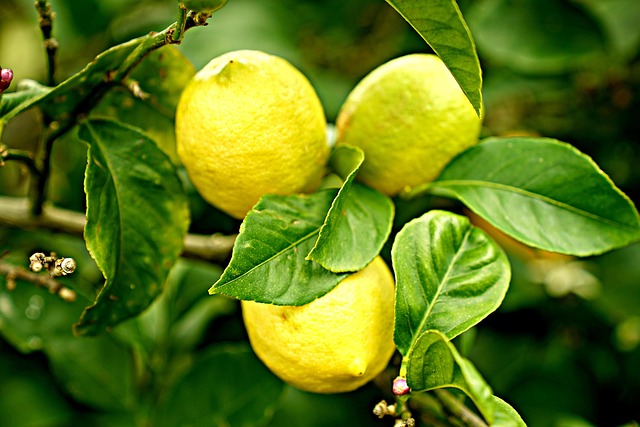
The Italian lemon is one of the most recognizable symbols of Mediterranean agriculture. From Sicily to Campania, from Calabria to Gargano, cultivars, agronomic techniques and different microclimates have built over the centuries a heritage of biodiversity that goes far beyond the fresh fruit. Lemons and lemon groves characterize landscapes, gastronomy, liqueurs, pastry and processing chains that enhance juice, zest and essential oils.
The economic dimension of the supply chain is however much broader than that represented by the Protected Geographical Indications. Italy in fact counts seven PGIs dedicated to the lemon – Amalfi Coast Lemon PGI, Sorrento Lemon PGI, Syracuse Lemon PGI, Etna Lemon PGI, Interdonato Messina Lemon PGI, Rocca Imperiale Lemon PGI and Gargano Femminello Lemon PGI – which to this day represent less than 5% of the national production.
Italian lemons, production and market
TheItaly remains one of the main European producers of lemons. Istat data for 2023 indicate a national production in the order of 472 thousand tons, about 25 thousand hectares in production. In previous years the harvests remained in the order of 450-475 thousand tons, albeit with variations mainly related to climate trends (ISTAT, 2024).
The most recent data released by Istat confirms a significant decline: in 2024 the value of the national citrus production decreased by 6.3% compared to 2023 (ISTAT, 2025).
PGI, a minority share of excellence
The comparison between total Italian production and certified quantities allows to grasp the real economic dimension of the geographical indications:
- in 2023 the Siracusa Lemon PGI reached 13,723.9 tons of certified product, with a revenue at origin of about 10.55 million euros (Fondazione Qualivita, 2026a);
- the Costa d’Amalfi Lemon PGI recorded in the same year 2,479.4 tons and a revenue of about 9.24 million euros (Fondazione Qualivita, 2026b);
- the Sorrento Lemon PGI reached 1,410.1 tons and about 3.16 million euros in revenue (Fondazione Qualivita, 2026c);
- the Rocca Imperiale Lemon PGI totaled 1,074.5 tons and about 967 thousand euros, also showing strong growth compared to the 262.6 tons recorded in 2019 (Fondazione Qualivita, 2026d);
- the Interdonato Messina Lemon PGI instead reached 505.6 tons and about 330 thousand euros in revenue (Fondazione Qualivita, 2026e).
Added to these quantities are the Etna Lemon PGI and the Femminello del Gargano Lemon PGI. The available picture thus clearly shows how certified productions represent only a limited part of Italian lemon cultivation.
The first five mentioned denominations alone sum to about 19,194 tons. Compared to the approximately 472 thousand tons of national production in 2023, they amount to just over 4% of the total. Even adding other PGIs, the result does not essentially change: the vast majority of Italian lemons is produced and marketed outside the geographical indications circuit certificate.
It is therefore important to avoid identifying the quality or value of Italian lemon cultivation solely with the PGIs. Geographical indications instead represent the tip of a much larger production system, within which they can play a strategic role in enhancing the territory, biodiversity, and traditional techniques.
Seven PGIs, seven territories
The seven Italian Protected Geographical Indications dedicated to lemons express different agronomic systems and varietal heritages:
- in Campania are found the Costa d’Amalfi Lemon PGI, linked to the Sfusato Amalfitano, and the Sorrento Lemon PGI, referring to the Oval of Sorrento;
- The Sicily counts three: Siracusa Lemon PGI, Etna Lemon PGI, and Interdonato Messina Lemon PGI;
- to these are added the Rocca Imperiale Lemon PGI, in Calabria, and the Femminello del Gargano Lemon PGI, in Puglia.
The mosaic of denominations only partly reflects the Italian lemon biodiversity, as numerous traditional cultivars and ecotypes are also grown outside the areas defined by the specifications.
Amalfi, terraces and Sfusato
The Costa d’Amalfi Lemon PGI is closely associated with the Sfusato Amalfitano and one of the most unique agricultural landscapes in the Mediterranean. The lemon groves are cultivated on terraces built along the slopes of the Coast, with traditional systems adapted to steep slopes, limited mechanization, and peculiar microclimatic conditions.
The traditional coverings, once also made through the so-called straw mats and later through shading nets, help control the microclimate of the lemon groves. The terraces also have a role that goes beyond agricultural production, as they contribute to land management and the protection of slopes.
The comparison between territorial production and certified quantities deserves particular attention. The quantities attributable to the Sfusato Amalfitano in the production area do not actually coincide with those entering the PGI circuit. In 2023, the certified product reached about 2,479 tons (Fondazione Qualivita, 2026b).
Sorrento, pergolas and Oval
The Sorrento Lemon PGI represents another emblematic example of the relationship between agriculture and landscape. The Sorrento Oval is traditionally grown under protective structures that help manage vegetative growth and fruit ripening.
The presence of lemon in the Sorrento Peninsula is documented by a long-standing historical tradition. Specialized cultivation has evolved alongside the organization of agricultural holdings, plant protection, and the development of local transformations, among which the limoncello today constitutes the best-known example.
Syracuse, the heavyweight of Italian lemon PGIs
The Syracuse Lemon PGI is the Italian denomination of the sector with the largest certified quantities. The regulations include the three commercial types linked to different bloomings and harvest seasons – Primofiore, Bianchetto or Maiolino, and Verdello – of the Femminello cultivar and its clones (Fondazione Qualivita, 2026a).
The over 13,700 certified tons in 2023 constitute a significant part of the Italian lemon PGI system, although they remain limited compared to the overall national production.
The distinction between production carried out in a territory and production certified with geographical indication is fundamental. The two concepts are not interchangeable: only the product that complies with the regulations, adheres to the control system, and is marketed as such can contribute to the official PGI volumes.
Etna, volcano and summer reblooming
The Etna Lemon PGI concerns the Ionian-Etna area of the province of Catania, with sixteen municipalities included in the production area. The denomination includes lemons belonging to the Femminello and Monachello cultivars, in a territory shaped by the volcanic nature of the soils and a peculiar agronomic tradition.
It is the most recent among the seven Italian lemon denominations, registered in 2020, and its certified production is still limited compared to the other PGIs in the sector.
The verdello, Italian summer lemon
The verdello is one of the most interesting elements of the Sicilian lemon-growing tradition. It is not simply a yellow lemon harvested before ripening, but rather the product of a specific summer flowering obtained through the agronomic management of the plant.
The traditional technique involves a controlled period of water stress followed by the resumption of irrigation, so-called forcing, with the aim of stimulating a new flowering. The result is a lemon harvested in the summer months, characterized by green skin and particular aromatic qualities.
Two Sicilian Protected Geographical Indications expressly include verdello in their respective production systems: Lemon of Syracuse PGI and Lemon of Etna PGI.
Verdello also takes on particular economic interest. The summer availability allows Sicilian lemon growing to cover a phase of the European market in which the presence of lemons from the southern hemisphere is significant.
Interdonato Messina, earliness and varietal identity
The Interdonato Messina Lemon PGI represents a production deeply linked to northeastern Sicily and to a cultivar mainly characterized by early ripening.
The fruit has arelatively moderate acidity compared to other lemons and is traditionally appreciated for fresh consumption as well. The marketing season runs from September to April. In 2023, certified production exceeded 505 tons, compared to about 296 tons in 2019 (Fondazione Qualivita, 2026e).
Rocca Imperiale, the lemon Calabria
The Lemon of Rocca Imperiale PGI is grown in the area of the homonymous municipality of Cosenza and belongs to the Femminello group.
Among the Italian lemon PGIs, it is one of the denominations that has shown the most significant quantitative growth in recent years. Certified production increased from about 263 tons in 2019 to 1,075 tons in 2023, while turnover grew from about 236 thousand to 967 thousand euros in the same period (Fondazione Qualivita, 2026d).
It is a particularly interesting case because it demonstrates how a geographically small indication can gradually increase the proportion of production that enters the certified system.
Femminello del Gargano, the other Italy of the lemon
The Limone Femminello del Gargano PGI completes the geography of the seven Italian denominations. The production is linked to the historic citrus cultivation of Gargano and in particular to the territories of Vico del Gargano, Ischitella and Rodi Garganico.
The denomination protects the traditional local lemon belonging to the Femminello Comune group. It recalls how the Italian history of citrus fruits does not belong exclusively to Sicily, Calabria, and Campania, but also has deep roots in southern Adriatic.
Gargano is indeed one of the historic areas of Italian citrus growing, where local microclimatic conditions have allowed the survival of citrus cultivations at relatively northern latitudes compared to the major production districts of the South.
Biodiversity beyond the PGI
The richness of Italian lemons does not end with the seven protected denominations.
Femminello Comune, Femminello Siracusano, Femminello Zagara Bianca, Monachello, Interdonato, Ovale di Sorrento and Sfusato Amalfitano are just some examples of a varietal heritage developed through agricultural selection, adaptation to territories, and cultivation practices handed down over time.
The cultural value of Italian lemons and the variety of different types of lemons are also expressed in the role of citrus fruits in the landscape, cuisine and traditions of the country.
The growing attention towards biodiversity, origin and sustainability now offers the possibility to reinterpret that heritage also from an economic perspective.
PGI, value and potential still untapped
The data suggest a clear conclusion. The seven IGPs play an essential role in the conservation and enhancement of cultivars, agricultural techniques, landscapes, and the reputation of the territories, but they are far from representing Italian lemon cultivation as a whole. Certified production actually represents only a minority share of the hundreds of thousands of tons of lemons harvested every year in Italy. This does not diminish the value of geographical indications. On the contrary, it clarifies their function: not to produce largeindistinct volumes, but rather to differentiate origin, quality, biodiversity, and connection with the territory.
The growth potential therefore concerns both the increase in quantities that can enter certified circuits, where conditions apply, and the enhancement of the entire Italian lemon growing industry. Italian origin, varietal biodiversity, organic production, local processing and full use of the fruit – juice, peel, essential oils and other co-products – can contribute to increasing the value generated upstream in the supply chain and the remuneration of farmers.
The challenge is therefore to transform the universal notoriety of the Italian lemon into economic value distributed along the supply chain, without confusing the excellence of the seven PGIs with a national production heritage that is, in quantity and diversity, much broader.
Dario Dongo
References
Statistical and institutional sources
National Institute of Statistics [ISTAT]. (2024). Italian Statistical Yearbook 2024, chap. 13 Agriculture. ISTAT. https://www.istat.it/storage/ASI/2024/capitoli/C13.pdf
National Institute of Statistics [ISTAT]. (2025). The trend of the agricultural economy, year 2024. ISTAT. https://www.istat.it/comunicato-stampa/landamento-delleconomia-agricola-anno-2024/
Geographical indications and economic data
Qualivita Foundation. (2026a). Syracuse Lemon PGI. Qualigeo. https://www.qualigeo.eu/prodotto-qualigeo/limone-di-siracusa-igp/
Qualivita Foundation. (2026b). Costa d’Amalfi Lemon PGI. Qualigeo. https://www.qualigeo.eu/prodotto-qualigeo/limone-costa-damalfi-igp/
Qualivita Foundation. (2026c). Sorrento Lemon PGI. Qualigeo. https://www.qualigeo.eu/prodotto-qualigeo/limone-di-sorrento-igp/
Qualivita Foundation. (2026d). Lemon of Rocca Imperiale PGI. Qualigeo. https://www.qualigeo.eu/en/product/limone-di-rocca-imperiale-pgi/
Qualivita Foundation. (2026e). Interdonato Messina Lemon PGI. Qualigeo. https://www.qualigeo.eu/prodotto-qualigeo/limone-interdonato-messina-igp/

Dario Dongo, lawyer and journalist, PhD in international food law, founder of WIISE (FARE - GIFT – Food Times) and Égalité.


