

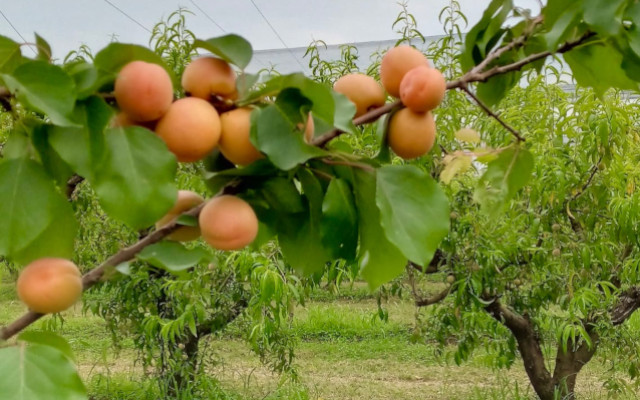
Theapricot (Prunus armeniaca L.) opens the summer fruit season combining gastronomic value and excellent nutritional profiles. In the European context, theItaly consolidates its production leadership thanks to a rich heritage of biodiversity and prime territories. This analysis maps the Italian supply chain between market dynamics, the enhancement path of theVesuvian Apricot and the latest scientific evidence, which today extends to bioeconomy and the functional recovery of agricultural by-products.
Market dynamics and trade flows in Europe
In 2025 Italian production was estimated at about 192,000 tons, down in 2024 due to adverse weather conditions and a slight reduction in surfaces (FreshPlaza, 2026). The late frosts hit the Adriatic coast, while spring rains penalized early varieties. TheEmilia-Romagna recorded a 41% collapse; in the South declines were milder (-12%), with a positive harvest in Sicily but frost damage in Apulia and Basilicata.
For the 2026 the first estimates from Europêch, presented at Medfel in Perpignan and released by CSO Italy, indicate a national production around 194,000 tons, substantially stable in 2025 (+1%) but still below the recent average (Fruitnet, 2026). The contraction of the areas continues (-4% between 2025 and 2026). The territorial distribution confirms the prevalence of the South (about 109,000 t), followed by the North (about 74,000 t) and the Center (about 10,000 t) (FreshPlaza, 2026).
At the level of European Union, the 2025 production stopped at 476,000 tons, down 15% from 563,000 in 2024; for 2026, a recovery to about 505,000 tons is expected (+6%, and +4% over the 2020-2024 average) (Fruitnet, 2026). TheItaly maintains the leadership, productive ahead of Greece, strongly rebounding to about 95,000 t (+40%), Spain, and France (FreshPlaza, 2026).
On the front of the international trade of fresh apricot theItaly is instead third by value (about 11%), behind Spain and Turkey. Most of the Italian production is in fact absorbed by the domestic market — fresh consumption and processing — while the Spanish and Turkish supply chains are structurally oriented towards export: Italy, therefore, produces more apricots but exports a smaller share, focusing on premium quality e processed products.
From Eastern routes to the golden apples of Vesuvius
Recent botanical studies place the origin of the species in the northern, northwestern and northeastern provinces of China, with possible secondary areas in Korea and Japan; the epithet armeniaca reflects the ancient attribution to Armenia (Kitic et al., 2022). The westward spread followed the Silk Road and Mediterranean trade through Asia Minor.
In ancient Rome the fruit was known as praecoquum (‘early’): from this term, through Arabic al-barqūq, derive the Italian ‘albicocca’ and the English ‘apricot’. Roman archaeobotanical documentation from northern Italy — which is abundant for peach, cherry and the apple tree — is limited for the apricot, a sign of its probably later large-scale diffusion (Bosi et al., 2020).
TheVesuvian area represents one of the oldest and most documented Italian cultivation centers. In 1583 the Neapolitan Giovan Battista Della Porta (1535-1615), in the work His Villa Orcharddistinguishes the apricots from the finest crisomelefrom Greek chrysomelon ('golden apple') derives the dialectal crisommolastill used today to indicate Vesuvian apricots. Centuries of selection have generated the many local biotypes — Pellecchiella, Vitillo, Boccuccia, Ceccona — inseparably linked to their terroir.
Botanical traits and harvest calendar
The apricot (Prunus armeniaca L., family Rosaceae, subfamily Amygdaloideae) is a tree deciduous of 5-8 meters, with finely toothed oval-lanceolate leaves. The flowering, between March and April, is early and therefore particularly exposed to late frosts, one of the main risk factors — as the 2025 vintage showed. The fruit is a drupe with a woody endocarp, velvety skin from yellow-orange to red and juicy flesh that balances sweetness and acidity.
In Italy the seasonality extends from May to July: early varieties from the South (Sicily, Campania) start the season, followed by the center and north. The modern cultivars like Pink Cot, Luna and Tsunami mature first, while cultivars historic like Pellecchiella occupy mid-summer.
Territories, agronomic practices and organic farming
Italy hosts very diverse apricot-growing areas. The Campania Vesuvian, with its potassium-rich volcanic soils, imparts distinctive aromatic notes to the fruit. TheEmilia-Romagna, a historic leader, showed its vulnerability to extreme climate events in 2025 (-41%). Puglia and Basilicata suffer from spring frosts and summer drought, while Sicily is an early area of growing importance.
Practices are evolving towards sustainability: integrated pest management and organic farming, drip micro-irrigation, mechanical soil management. In the organic sector, Italy is at the top of Europe: according to the report Organic Figures 2025, the organic agricultural area exceeds 2.5 million hectares (+2.4% over 2023), equal to 20.2% of UAA national, ahead of Spain (12.3%), Germany (11.5%) and France (9.9%); organic operators are 97,160 (+2.9%), with the South at 58% of the area and the North growing faster (+8.4%) (ISMEA, 2025).
Vesuvian Apricot, towards PGI recognition
The denomination Vesuvian Apricot, Slow Food presidium since 2017, has been waiting for recognition as a Geographical Indication for several years. The Ministry of Agriculture confirmed on June 10, 2026, having received the application for recognition as PGI pursuant to Reg. (EU) 2024/1143, setting the public verification meeting of the disciplinary on July 16, 2026 at the Department of Agriculture of the University Federico II in Portici.
The area around Vesuvius counts about 1,500-1,700 hectares of apricot orchards — second Italian area after Romagna and Matera — and concentrates about 80% of the almost 50,000 tons produced every year in Campania. There live more than forty biotypes (Corrado et al., 2021): among the most common Pellecchiella, Boccuccia Liscia and Spinosa, Ceccona, Palummella, San Castrese, Vitillo, Fracasso and Portici. The volcanic soils rich in potassium confer compact, sweet pulp and a complex aromatic profile.
Nutritional profile and essential micronutrients
According to official data provided by CREA, 100 g of fresh apricot (edible part, about 94% of the fruit) provide on average:
- energy: 42 kcal;
- water: 86.3 g;
- proteins: 0.4 g;
- lipids: 0.1 g;
- carbohydrates: 9.8 g, of which sugars 9.8 g;
- dietary fiber: 1.5 g.
Regarding micronutrients, apricots are:
- ‘high in vitamin A: 360 µg per 100 g, equal to 45,0% of the nutrient reference values established by Reg. EU 1169/2011;
- ‘source of vitamin C: 13 mg, equal to 16.3% of the NRV;
- ‘source of potassium: 320 mg equal to 16.0% of the NRV.
The vitamin A derives from β-carotene, responsible for the orange color of the fruit. The concentration of carotenoids and polyphenols can differ significantly among varieties and cultivation systems (Iglesias-Carres et al., 2019; Wojdyło & Nowicka, 2021).
Functional properties and biological virtues of the drupe
The benefits related to the consumption of fresh fruit are mainly linked to its content of carotenoids and polyphenols (Al-Soufi et al., 2022). Recent scientific research has particularly focused on the enhancement of bioactive compounds contained in some by-products of the supply chain, such as leaves and kernels, as well as in the apricot pulp, for nutraceutical and cosmetic applications.
The benefits of carotenoids in visual function
The content of β-carotene, lutein, and zeaxanthin makes apricot relevant for vision. Lutein and zeaxanthin are the only carotenoids that accumulate in the macula, where they filter blue light and protect retinal tissue (Mares, 2016):
- randomized controlled trials show that their supplementation increases the optical density of macular pigment and retinal sensitivity (Huang et al., 2015; Stringham & Stringham, 2016);
- a meta-analysis confirms improvements in visual acuity and contrast sensitivity in patients with age-related macular degeneration (Liu et al., 2014).
Although the aforementioned studies were conducted on dietary supplements where these substances are present in concentrated form, these data support the value of regular dietary intake of foods rich in these carotenoids.
Antioxidant and anti-inflammatory potential of plant tissues
Extracts of leaf of apricot show strong antioxidant activity, with DPPH and ABTS radical scavenging over 80% and an increase in superoxide dismutase up to 40%, as well as ananti-inflammatory activity in vitro on skin cells (Zagórska-Dziok et al., 2025). The effects are attributable to chlorogenic acids, quercetin and kaempferol derivatives, compounds also characterized for their anti-diabetic potential and cyclooxygenase inhibition (Wojdyło & Nowicka, 2021).
Evidence on the antimicrobial activity of leaves
Leaf extracts showed a broad antibacterial spectrum, inhibiting strains such as Staphylococcus aureus, Staphylococcus epidermidis, Bacillus subtilis e Pseudomonas aeruginosa, with greater efficacy of ethanolic extracts compared to aqueous ones (Zagórska-Dziok et al., 2025).
Prebiotic effects of fiber on gut microbiota
The dietary fibers of dried apricots promote beneficial microbial taxa — Coprococcus eutactus, Lachnospiraceae e Ruminococcus flavefaciens — producers of short-chain fatty acids, suggesting a prebiotic contribution to colon health (Coşkuner et al., 2025).
Chemoprevention perspectives from supply chain by-products
An updated review summarizes the multi-target mechanisms of the antitumor activity of Prunus armeniaca — apoptosis, antiproliferation and cytotoxicity — also noting the toxicity of amygdalin in bitter kernels, which limits its uses (Kitic et al., 2022). Extracts of kernel inhibit in vitro colon cancer cells (HCT-116, HT-29) and hepatocarcinoma (HepG2) at low concentrations (Gomaa, 2013; Dimitrov et al., 2021).
Particularly interesting is an Italian study 2025: a purified fraction (FOPF) obtained from the kernel oil of the Farclo variety, cultivated in Emilia-Romagna and selected for its low natural amygdalin content, showed antiproliferative effects on colorectal cancer cells (LoVo, HT29) and hepatocarcinoma (Hep3B), with GI50 values between 0.06 and 0.09 mg/mL, cell cycle arrest and inhibition of migration, mediated by PPAR-γ modulation (Vaccari et al., 2025).
Commercial and industrial end uses
Apricot lends itself to multiple uses:
- fresh consumption for premium varieties;
- production of juices, nectars, smoothies and other fruit beverages;
- canning industry (candied apricots, Jams, preserves);
- confectionery industry. The ‘apricot almonds’ — that is, the seeds (armellines) found inside the kernel — are used in the production of Italian amaretti, as well as flavorings in pastry making;
- drying, which by reducing water, concentrates the residual nutrients of the fruit, in particular beta-carotene/pro-vitamin A (and, to a lesser extent, vitamin E);
- distillation and liqueur making;
- phytotherapy and cosmetics, whereas hazelnut oil — rich in unsaturated fatty acids and tocopherols — also shows nutraceutical potential (Pawar et al., 2023; Vaccari et al., 2025).
Criteria for consumption and professional management
For gourmets. Choose fruits with uniform skin, slightly yielding to the touch, and with an intense aroma. Favor the organic apricots, grown without the use of synthetic pesticides for the best protection of the environment, pollinators and local biodiversity. For the apricots dried, focus on products without added sugars.
For professional buyers. Consider seasonality and climate variability as structural elements of planning, with diversified supplies and fair supply chain contracts towards producers. The demand for organic and juice products is growing; for the Vesuvian Apricot, it will be useful to monitor the IGP process as a future differentiation lever.
Conclusions
The Italian apricot supply chain expresses a complete synthesis of historical roots, productive primacy, and health-oriented innovation. While climate variability requires resilient agronomic responses, the enhancement of geographical indications and organic conversion offer stable protections to producers and guarantees to consumers. The frontiers of research on by-products — from leaves to kernels — ultimately outline a virtuous path of circular economy, confirming this fruit as a strategic resource for the transitionecological and nutritional.
Dario Dongo
References
Market data
Eurostat. (2025, 25 August). How much fruit and vegetables does the EU harvest? Eurostat News. https://ec.europa.eu/eurostat/web/products-eurostat-news/w/ddn-20250825-1
FreshPlaza. (2025, 17 June). The Vesuvian Apricot candidate for PGI. FreshPlaza. https://www.freshplaza.it/article/9741372/l-albicocca-vesuviana-candidata-all-igp/
Fruitnet. (2026, 1 May). European apricot production forecast up 6 per cent. Eurofruit. https://www.fruitnet.com/eurofruit/european-apricot-production-forecast-up-6-per-cent/271384.article
ISMEA — Institute of Services for the Agricultural Food Market. (2025). Organic Figures 2025. ISMEA Markets. https://www.ismeamercati.it/flex/cm/pages/ServeBLOB.php/L/IT/IDPagina/13717
Scientific bibliography
Al-Soufi, M. H., Alshwyeh, H. A., Alqahtani, H., Al-Zuwaid, S. K., Al-Ahmed, F. O., Al-Abdulaziz, F. T., Raed, D., Hellal, K., Mohd Nani, N. H., Zubaidi, S. N., Asni, N. S. M., Hamezah, H. S., Kamal, N., Al-Muzafar, H., & Mediani, A. (2022). A Review with Updated Perspectives on Nutritional and Therapeutic Benefits of Apricot and the Industrial Application of Its Underutilized Parts. Molecules (Basel, Switzerland), 27(15), 5016. https://doi.org/10.3390/molecules27155016
Bosi, G., Castiglioni, E., Rinaldi, R., Mazzanti, M., Marchesini, M., & Rottoli, M. (2020). Archaeobotanical evidence of food plants in Northern Italy during the Roman period. Vegetation History and Archaeobotany, 29(6), 681–697. https://doi.org/10.1007/s00334-020-00772-4
Corrado, G., Forlani, M., Rao, R., & Basile, B. (2021). Diversity and Relationships among Neglected Apricot (Prunus armeniaca L.) Landraces Using Morphological Traits and SSR Markers: Implications for Agro-Biodiversity Conservation. Plants (Basel, Switzerland), 10(7), 1341. https://doi.org/10.3390/plants10071341
Coşkuner, G., Alkay, Z., Arioglu-Tuncil, S., Alvarez Gonzales, M. A., Lindemann, S. R., & Tunçil, Y. E. (2025). In vitro fecal microbiota modulation properties of some dried apricots (Prunus armeniaca THE.). Journal of the Science of Food and Agriculture, 105(13), 7429–7439. https://doi.org/10.1002/jsfa.70003
CREA — Research Center for Food and Nutrition. (2024). Food composition tables: Fresh apricot (code 007000). Food Nutrition. https://www.alimentinutrizione.it/tabelle-nutrizionali/007000
Dimitrov, M., Iliev, I., Bardarov, K., Georgieva, D., & Todorova, T. (2021). Phytochemical characterization and biological activity of apricot kernels’ extract in yeast-cell based tests and hepatocellular and colorectal carcinoma cell lines. Journal of Ethnopharmacology, 279, 114333. https://doi.org/10.1016/j.jep.2021.114333
Gomaa, E. Z. (2013). In vitro antioxidant, antimicrobial, and antitumor activities of bitter almond and sweet apricot (Prunus armeniaca L.) kernels. Food Science and Biotechnology, 22(2), 455–463. https://doi.org/10.1007/s10068-013-0101-1
Huang, Y. M., Dou, H. L., Huang, F. F., Xu, X. R., Zou, Z. Y., Lu, X. R., & Lin, X. M. (2015). Changes following supplementation with lutein and zeaxanthin in retinal function in eyes with early age-related macular degeneration: A randomised, double-blind, placebo-controlled trial. British Journal of Ophthalmology, 99(3), 371–375. https://doi.org/10.1136/bjophthalmol-2014-305503
Iglesias-Carres, L., Mas-Capdevila, A., Bravo, F. I., Bladé, C., Arola-Arnal, A., & Muguerza, B. (2019). Optimization of extraction methods for characterization of phenolic compounds in apricot fruit (Prunus armeniaca). Food & Function, 10(10), 6492–6502. https://doi.org/10.1039/C9FO00353C
Kitic, D., Miladinovic, B., Randjelovic, M., Szopa, A., Sharifi-Rad, J., Calina, D., & Seidel, V. (2022). Anticancer potential and other pharmacological properties of Prunus armeniaca L.: An updated overview. Plants, 11(14), 1885. https://doi.org/10.3390/plants11141885
Liu, R., Wang, T., Zhang, B., Qin, L., Wu, C., Li, Q., & Ma, L. (2014). Lutein and zeaxanthin supplementation and association with visual function in age-related macular degeneration. Investigative ophthalmology & visual science, 56(1), 252–258. https://doi.org/10.1167/iovs.14-15553
Mares, J. (2016). Lutein and zeaxanthin isomers in eye health and disease. Annual Review of Nutrition, 36, 571–602. https://doi.org/10.1146/annurev-nutr-071715-051110
Pawar, K. R., & Nema, P. K. (2023). Apricot kernel characterization, oil extraction, and its utilization: a review. Food science and biotechnology, 32(3), 249–263. https://doi.org/10.1007/s10068-022-01228-3
Stringham, J. M., & Stringham, N. T. (2016). Serum and retinal responses to three different doses of macular carotenoids over 12 weeks of supplementation. Experimental Eye Research, 151, 1–8. https://doi.org/10.1016/j.exer.2016.07.005
Vaccari, M. E., Cavalloro, V., Bedeschi, M., Serra, P., Simonetti, G., Casali, E., Porta, A., Fossati, A., Martino, E., Collina, S., & Tesei, A. (2025). Preparation of a micronutrient-enriched apricot kernel oil and assessment of in vitro chemopreventive properties. International Journal of Molecular Sciences, 26(18), 9237. https://doi.org/10.3390/ijms26189237
Wojdyło, A., & Nowicka, P. (2021). Profile of phenolic compounds of Prunus armeniaca L. leaf extract determined by LC-ESI-QTOF-MS/MS and their antioxidant, anti-diabetic, anti-cholinesterase, and anti-inflammatory potency. Antioxidants, 10(12), 1869. https://doi.org/10.3390/antiox10121869
Zagórska-Dziok, M., Ziemlewska, A., Wójciak, M., Sowa, I., Wąsik-Szczepanek, E., & Nizioł-Łukaszewska, Z. (2025). Comparison of cytotoxicity and antioxidant, antibacterial, and anti-inflammatory activity of aqueous and ethanolic extracts from Malus domestica, Prunus armeniaca, and Prunus cerasus leaves. Molecules, 30(10), 2085. https://doi.org/10.3390/molecules30102085

Dario Dongo, lawyer and journalist, PhD in international food law, founder of WIISE (FARE - GIFT – Food Times) and Égalité.


