

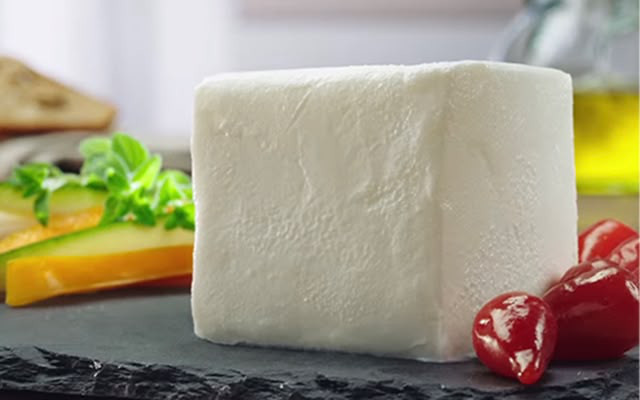
The robiola is a family of soft fresh cheeses, united by short maturation, creamy texture and a lactic profile ranging from delicate to strong depending on the type of milk used and the days of aging. It is made with cow's, sheep's, goat's or mixed milk, depending on the case, in a geographical area starting from the Piedmont Langhe, crossing the Pre-Alpine Lombardy and descending towards the western Ligurian hinterland.
It is a cheese for quick consumption, reaching the consumer between four days and a few weeks from production. The paste is white or ivory in the fresh versions, tending to straw color with maturation; the rind may be completely absent, or form thin and covered with natural mold, or be washed and take on a pinkish hue. According to one of the most accredited etymological hypotheses, the name itself derives from this coloring: from Latin ruber, red.
Regional varieties and areas of origin
Under the same name coexist significantly different products, each linked to its own territory:
- in Piedmont the most distinctive versions are concentrated. The two protected designations — Robiola di Roccaverano/Roccaverano PDO e Murazzano PDO — respectively oversee the Alta Langa of Asti-Alexandria and that of Cuneo, with goat's milk the first and sheep's the second. In the Asti area also produced is the robiola di Cocconato, registered among the Traditional Agri-food Products of the region: whole pasteurized cow's milk, round and flattened shape, crustless, ready for consumption in about five days;
- in Lombardy the register changes. The robiola bresciana, widespread between Lower Brescia, Franciacorta and Sebino, is a cow's milk cheese with a quadrangular shape known in local dialect as strachì bianch. The robiola della Valsassina, in the province of Lecco, is aged at least thirty days in caves or cellars, with washed rind: for its aromatic profile it is closer to Taleggio than to the Piedmontese robiolas. Both are listed among the traditional agri-food products of Lombardy;
- in the border area between Piedmont and Liguria, along the Bormida Valley, small-scale goat and sheep productions finally survive, historically linked to the same pastures that feed the denomination of Roccaverano.
Historical origins and distribution
The roots of cheese-making in Alta Langa and Val Bormida trace back to the Celtic-Ligurian populations settled on those hills, according to the historical reconstruction of the Roccaverano Protection Consortium. The first written evidence of European importance arrives in the 15th century with the Summa lacticiniorum by Pantaleone da Confienza, doctor at the Savoy court: the first systematic treatise on European cheeses, which dedicates ample space to Piedmontese productions.
Two hypotheses coexist about the origin of the name, none of which definitively proven. The first derives it from the municipality of Robbio, in the province of Pavia, where the production is documented from the 16th century. The second recalls the already mentioned Latin adjective, referring to the crust that reddens with aging — an explanation identically found in the oral tradition of Brescia and the Val Sassina.
Cheesemaking and coagulation techniques
Only three ingredients: Milk, rennet e Salt. It is the way they are used that distinguishes the processes:
- in the Robiola di Roccaverano/Roccaverano PDO is used exclusively raw milk whole goat of the Roccaverano and Camosciata delle Alpi breeds, or their crosses. The milk is brought to a temperature between 18 and 24°C and left to coagulate for a time ranging from 8 to 36 hours depending on the climatic conditions. It is a predominantly acidic coagulation, slow, depending on the natural lactic flora of the raw milk. The curd is then gently transferred into perforated molds, where it remains up to 48 hours with periodic turning to expel the whey; salting is done dry on both sides;
- in the Murazzano PDO instead the milk of sheep from the Langhe, pure or with possible addition of cow's milk (< 40%), raw or subjected to heat treatment. Coagulation at about 37°C is obtained with liquid veal rennet, with a double break of the curd — first coarse, then finer — and resting on an inclined plane for about 24 hours, with dry salting during the turnings;
- Outside the two PDOs, robiola production is heterogeneous. The cow's milk is the most widespread, both in industrial robiola and in many artisanal productions, generally pasteurized. Prevails the presamic coagulation: rennet in higher doses, setting time from a few minutes up to about an hour (compared to 8-36 hours of acid coagulation), compact and elastic curd, suitable for mechanical molding in large volumes. Also widespread is the mixed presamic-acid coagulation, which reduces the time while maintaining a soft structure.
The maturation follows different paths according to the desired result:
- The fresh version is ready after 4-10 days, with creamy paste and slightly acidic milky taste;
- The aged version requires at least eleven days and develops a natural bloom rind, with a more pronounced aromatic profile;
- the long aging processes of Murazzano can reach 90 days, and in the burnie — the Langhe glass jars — even longer, with savory and spicy results.
Regulations of the two PDOs of Piedmont
The two protected designations of origin of robiola from Piedmont represent the qualitative pinnacle of the family, for a verifiable reason: the connection to a defined territory, with specific animal breeds and a disciplinary subject to third-party control.
Robiola di Roccaverano/Roccaverano PDO
The production area includes 19 municipalities between the provinces of Asti and Alessandria, in the eastern part of the Langhe. The revision of the regulation approved in 2023 introduced two innovations: the designation registered becomes ‘Robiola di Roccaverano/Roccaverano‘, also usable in the abbreviated form, and the raw material is fixed at 100% goat's milk, excluding the percentages of cow's and sheep's milk that the previous text allowed.
The cheese comes in cylindrical shapes from 250 to 400 grams, with a diameter between 10 and 14 cm, in the two types fresh and aged. The goats graze on hilly meadows rich in spontaneous essences — lupinella among all — which the milk transfers to the cheese in the form of recognizable herbal and floral notes.
Murazzano PDO
Produced in 50 municipalities ofAlta Langa cuneese, Murazzano is based on the milk of the Langhe Sheep, an autochthonous breed now in strong numerical decline. The regulations consolidated in 2022 distinguish two variants on the label:
- ‘Only sheep's milk from the Langhe‘, for the product obtained 100% from sheep's milk;
- ‘With Langhe sheep's milk‘, for the product with a minimum of 60% sheep's milk and up to 40% added cow's milk.
The shapes are cylindrical with flat faces, with a diameter between 10 and 15 cm, a height of 3-4 cm and weight between 250 and 400 grams. The paste is soft, with slight holes, color from milky white to ivory.
Nutritional profiles
The food composition tables provided by CREA — Centre for Food and Nutrition Research (2019) report the following nutritional values for robiola, per 100 grams of edible portion.
| Nutrient | Value per 100 g |
| Energy | 1414 kJ / 338 kcal |
| Fats | 27.7 g |
| Carbohydrates | 2.3 g |
| of which sugars | 2.3 g |
| Fiber | 0 g |
| Proteins | 20.0 g |
The CREA database does not report, for this food code, the content of saturated fatty acids nor salt: data not detected at source, so it must be verified in the nutritional tables of individual products. As for micronutrients, no vitamin or mineral reaches the 15% threshold of the reference nutritional values set out in Annex XIII to Regulation (EU) No. 1169/2011.
The profile is that of a medium energy density cheese, with high protein content — which provide 23.7% of the energy value — and high fat content, suggesting moderate portions. The CREA reference indicates a standard portion of 50 grams.
Gastronomic uses and pairings
The versatility is the trait that has made robiola a staple ingredient of Northern Italian cuisine:
- The fresh version is suitable for creaming the risottos, which enriches with creaminess without exceeding in fat nor overpowering other flavors, and as filling for fresh pastas, savory pies and casseroles. In the Langhe, the classic pairing is with white truffle from Alba, in fondues and fillings; Murazzano traditionally enters the preparation of bruss, the typical Piedmont fermented and creamed cheese;
- the refined versions support more structured pairings: Honey of chestnut and walnuts in Bergamo and Brescia, Jams and rye bread in Lombardy, full-bodied red wines for long aging. Preservation under oil, also flavored with chili pepper, prolongs the life of the aged product.
Market and production data
In the absence of disaggregated customs items, data on robiola is grouped together with crescenza and other similar fresh cheeses. The ISTAT statistics developed by CLAL in the four most recent months available, January-April 2026 compared to January-April 2025, report the following:
- the NC8 04069088 item (fat ≤40%, water in non-fat matter 62-72%) records 308 tons exported (-34.1%), for 2.83 million euros (-27.8%), at €9.20/kg (+9.5%);
- the NC8 04069093 item (water >72%) records 1,331 tons (-19.7%), 11.41 million euros (-19.6%), at €8.58/kg (+0.1%).
Certified productions 2025 return the artisanal size of the two DOPs: 135 tons for Robiola di Roccaverano (+2.27% over 2024), 9 tons for Murazzano, unchanged (CLAL, update May 19, 2026, based on data from Protection Consortia and the INOQ control body).
The general context remains favorable: the Italian dairy sector closed 2025 with exports of 6.7 billion euros (+4.6%), about 680 thousand tons, and a turnover of 28.5 billion (Assolatte, 81st annual assembly, June 18, 2026).
I domestic consumption By fresh cheeses have grown by +3.9% in volume in the first nine months of 2025 (ISMEA), while the organic has reached total sales of 6.9 billion euros (+6,2%), with modern distribution accounting for 64% of domestic purchases (Nomisma, SANA-ICE Observatory).
Purchase and storage guidelines
- Consider raw milk: it preserves aromatic complexity but involves an unavoidable microbiological risk. The product must not be consumed by small children, pregnant women, the elderly, and immunocompromised people, due to possible presence of aggressive pathogens such as STEC and Listeria monocytogenes (Dongo, 2025).
- Prefer organic, where available. Regulation (EU) 2018/848 sets the highest standards for organic supply chains to guarantee animal welfare: a stocking density that allows animals to move and maintain natural positions, as well as access to outdoor spaces, preferably pasture;
- Look for the DOP logo when you want assurance of the link with the territory and traditions of the Langhe: only 'Robiola di Roccaverano/Roccaverano DOP' and 'Murazzano DOP' involve a binding specification and independent control body verification.
- Read the milk type: goat milk for Roccaverano; pure or mixed sheep milk for Murazzano; mostly cow milk for the more widely consumed robiolas. The milk clearly determines sensory profile and composition.
- Evaluate the degree of ripening depending on use: fresh robiola for spreading, creaming, and fillings; aged for cheese boards and pairings with structured wines.
- Store properly: in the refrigerator, after opening the package, on a ceramic plate or covered glass container. Avoid using plastic wrap, which retains condensation and alters the crust.
Conclusions
Robiola confirms itself as a plural and versatile cheese, capable of combining a centuries-old cheese-making tradition with the needs of modern consumption. The two Piedmontese Protected Designation of Origin (PDO) denominations represent precious safeguards of territorial roots, breed biodiversity, and local artisanal knowledge.
For most consumers and the daily shopping of the whole family, the ideal choice is the purchase of pasteurized milk products — that is, without the label ‘from raw milk’ (Dongo, 2024) — able to combine taste and nutrition with food safety for every age group.
Dario Dongo
Credit cover Fattorie Osella
References
European Union normative sources
Commission Regulation (EC) No 1107/96, concerning the registration of geographical indications and designations of origin under the procedure referred to in Article 17 of Council Regulation (EEC) No 2081/92 [registration Murazzano PDO]. http://data.europa.eu/eli/reg/1996/1107/oj
Commission Regulation (EC) No 1263/96, amending the annex of Regulation (EC) No 1107/96 [registration Robiola di Roccaverano PDO]. http://data.europa.eu/eli/reg/1996/1263/oj
Commission Regulation (EU) No 217/2011, approving non-substantial modifications to the specification of a name registered in the register of protected designations of origin and protected geographical indications [Robiola di Roccaverano (PDO)]. http://data.europa.eu/eli/reg/2011/217/oj
Commission Implementing Regulation (EU) No 855/2014, approving a minor modification to the specification of a name registered in the register of protected designations of origin and protected geographical indications [Robiola di Roccaverano (PDO)]. http://data.europa.eu/eli/reg_impl/2014/855/oj
Commission Implementing Regulation (EU) 2023/335 of the Commission approving a non-minor amendment of the specification of a name entered in the register of protected designations of origin and protected geographical indications [‘Robiola di Roccaverano’ (PDO)]. http://data.europa.eu/eli/reg_impl/2023/335/oj
Notice on the approval of a standard amendment of the specification of the protected designation of origin ‘Murazzano’. OJ C 229 of 14.6.2022, p. 18. https://eur-lex.europa.eu/legal-content/IT/TXT/HTML/?uri=CELEX:52022XC0614(04)
Regulation (EU) 2018/848 of the European Parliament and of the Council on organic production and labelling of organic products. Consolidated text: 25/03/2025. http://data.europa.eu/eli/reg/2018/848/2025-03-25
Regulation (EU) No 1169/2011 of the European Parliament and of the Council on the provision of food information to consumers. Consolidated text: 01/04/2025. http://data.europa.eu/eli/reg/2011/1169/2025-04-01
Institutional and associative sources
Assolatte. (2026, June 18). 81st Annual Assembly — data of the Italian dairy sector.
CLAL. (2026). Italy: Import/Export Summary. https://www.clal.it/?section=riepilogo_istat
CLAL. (2026). Italy: PDO Cheese Production. https://www.clal.it/?section=formaggi_dop
CREA — Food and Nutrition Research Center. (2019). Food composition tables: Robiola (food code 166850). https://www.alimentinutrizione.it/tabelle-nutrizionali/166850
ISMEA (2026, January 22). AgriMarkets, 3rd quarter 2025. https://www.ismeamercati.it/flex/cm/pages/ServeBLOB.php/L/IT/IDPagina/13755
Further insights
Dongo, D. (2025, January 14). Raw milk cheeses, no for children and elderly. FT (Food Times). https://www.foodtimes.eu/it/sistemi-alimentari/formaggi-a-latte-crudo-no-a-bambini-e-anziani/
Dongo, D. (2024, November 15). ‘Thermized’ or raw milk cheese? Lawyer Dario Dongo answers. FT (Food Times). https://www.foodagriculturerequirements.com/notizie/domande-e-risposte/formaggio-da-latte-termizzato-o-crudo-risponde-lavvocato-dario-dongo/
Dongo, D. (2026, June 5). Denomination, the case of cheeses. FARE (Food and Agriculture Requirements). https://www.foodagriculturerequirements.com/notizie/domande-e-risposte/denominazione-il-caso-dei-formaggi/

Dario Dongo, lawyer and journalist, PhD in international food law, founder of WIISE (FARE - GIFT – Food Times) and Égalité.


