

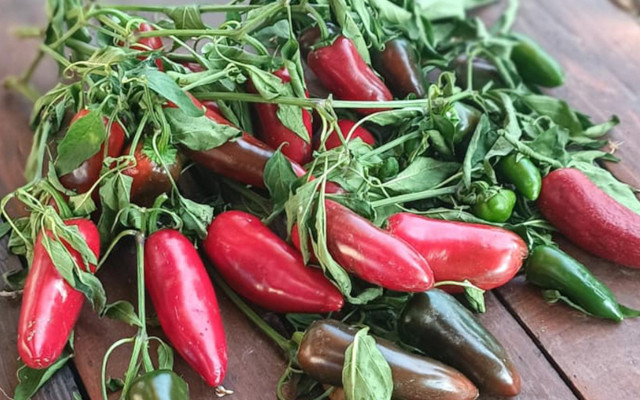
The chili pepper represents the agricultural product symbol of the gastronomic imagination, culture and regional cuisine of Calabria, as well as being a strategic economic resource for local agriculture. On June 11, 2026, the European Union officially registered the denomination Peperoncino di Calabria PDO, recognizing the historical, cultural and productive bond between this product and the regional territory. The registration provides legal protection against imitations ‘Calabrian sounding’ and improper evocations of a famous product well beyond national borders, protecting a biodiversity heritage made up of sixteen cultivars of Capsicum annuum.
The need for specific statistical data for the sector
One of the main problems in the economic analysis of the sector concerns scarcity of statistical data specific:
- official Italian and European databases aggregate chili peppers within broader categories related to peppers and other vegetables;
- therefore it is difficult to precisely quantify production, areas, and exports referring exclusively to chili peppers intended for fresh or processed consumption.
For this reason, it is advisable to avoid the dissemination of numbers often taken up by the press but lacking adequate statistical documentation.
The economic importance of the PGI
Although there is a lack of specific data on the certified product, some indicators allow understanding the economic significance of the recognition in question. With the registration of the Calabria Chili Pepper the Calabria reaches 42 denominations recognized among agri-food and wine products, strengthening a system of geographical indications which represents one of the main tools for the territorial enhancement of Italian agri-food products.
The new PGI fits into a context of growing international demand for products characterized by authenticity, traceability, and certified origin, elements increasingly relevant in the purchasing choices of both consumers and professional operators.
Traceability and legal protection against imitations
The agricultural organizations promoting the initiative have repeatedly emphasized how the European recognition was also requested to counter phenomena of imitation and unfair competition that have affected for years the market of chili peppers marketed as 'Calabrian' without any real connection with the regional territory.
The economic value of the PGI therefore derives not only from the possible price increase but also from the possibility of differentiating the authentic product from the numerous imitations present on the market and from the promotion opportunities offered by various public funding services of the European Geographical Indications system.
History of chili pepper in Calabria
The early globalization of the genus Capsicum
Like all species of the genus Capsicum, the chili pepper is native to the American continent. Archaeobotanical evidence indicates that its food use dates back to at least 9,000 years ago in Mexico and Peru as a wild plant (Italian Chili Pepper Academy). A genomic study on over 10,000 germplasm accessions has reconstructed the routes of diffusion of the chili pepper along the main trade routes maritime and terrestrial, confirming its role as one of the first globally mass-consumed goods (Tripodi et al., 2021).
After the voyages of Christopher Columbus, the chili pepper quickly reached theEurope through Spanish and Portuguese trade routes. Its spread was extraordinarily fast thanks to several factors: ease of cultivation, high productivity e cost significantly lower compared to Asian black pepper, then considered a luxury spice. The word ‘peperoncino’ appears for the first time as a diminutive of ‘peperone’ only in the twentieth century, after centuries in which the American fruit was known as ‘piper rubrum indicum’, ‘horned pepper’ or ‘siliquastrum’ (Linkiesta, 2025).
From botanical rarity to food preservation technology
in Calabria the chili pepper found particularly favorable conditions, but its establishment was not immediate. Eighteenth-century historical sources describe it as still a rare plant in botanical gardens, and authoritative voices of the time discouraged its frequent use because it ‘was very harmful’. It was only when its ability to preserve meat — a crucial problem in a region where, according to Grimaldi in 1770, lard and sausages ‘rotted due to ignorance and negligence’ — that chili pepper had widespread diffusion (I Calabresi, 2026).
High brightness, long growing season, high summer temperatures and ventilation from both the Tyrrhenian and Ionian seas favored the adaptation of the crop and the selection of numerous local ecotypes. Over the centuries, chili pepper ceased to be a simple exotic spice to become an identifying ingredient of regional cuisine.
Legends and symbolic value
Chili pepper against the evil eye
In Calabrian popular tradition, the chili pepper is not just a food. For centuries it has been considered a symbol apotropaic, capable of warding off negative influences, bad luck, and the evil eye. The intense red color and pointed shape of the fruit have promoted the attribution of symbolic meanings that persist to this day: it is no coincidence that many amulets widespread in southern Italy replicate precisely the shape of the mature chili pepper.
A contemporary identity symbol
The symbolic strength of chili pepper also emerges in contemporary culture. Festivals, fairs, and gastronomic events have contributed to transforming it into a true ambassador of regional identity. Among these, the Diamante Chili Pepper Festival — now in its most recent editions with international participation — represents one of the most renowned events worldwide dedicated to spicy culture.
The production specification
Denomination
The denomination ‘Chili Pepper of Calabria’ is reserved exclusively for products that fully comply with all the conditions set forth by the production specification (MASAF, 2025). This provision forms the basis for protecting the denomination against usurpations, imitations, and evocations (specification, article 1).
Product description
The choice to protect sixteen different cultivars
Unlike many PGIs founded on a single cultivar, the specification protects sixteen varieties belonging to the species Capsicum annuum: Amando; Barbarian; Corno di Capra; Cayenna; Ciliegia; Pinocchio; Red Devil; Rodeo; Picaro; Shakira; Trottolino Amoroso (Naso di Cane); Vulcan; Sigaretta; Calabrese; Pizzitano; Jalapeño.
This choice enhances the agricultural biodiversity regional and reflects the real evolutionary history of chili pepper cultivation in Calabria, characterized by the coexistence of multiple ecotypes and local selections (specification, article 2 – Product description).
Physical and organoleptic characteristics
The fruits may present shape conical, elongated conical, tapered, slightly oval, tapered with a curved tip or rounded like a cherry. The length varies from 3 to 25 centimeters, while for round varieties the diameter ranges between 1 and 4 centimeters. All fruits must have a green peduncle, be intact, free of spots, and free from visible foreign bodies.
The color must vary from red to intense red for the mature product, while the degree of pungency must be between 5,000 and 70,000 Scoville units (SHU), a range that allows including different sensory expressions of Calabrian chili pepper while maintaining a recognizable common identity. For the dried versions the regulation establishes a maximum limit of humidity equal to 15%, a fundamental guarantee for the preservation and microbiological safety of the product (regulation, article 2).
Geographical area
The production area coincides with the entire administrative territory of Region Calabria (MASAF, 2025), a choice consistent with the historical spread of the crop in all Calabrian provinces and with the presence of numerous ecotypes distributed throughout the regional territory (article 3 – Geographical area).
All the operators involved in the supply chain must be registered in specific registers and subjected to controls provided by the control plan approved by the competent authority. The system guarantees the traceability complete of the product, from the field to the final packaging (article 4 – Proof of origin).
Method of obtaining
Cultivation and harvesting
Plants must be grown exclusively within the defined geographic area. Cultivation benefits from an environment characterized by high sunshine, long and relatively dry summers, favorable temperature variations, and constant sea ventilation. These factors directly contribute to the synthesis of capsaicinoids, the compounds responsible for pungency, and the development of characteristic aromas. Harvesting takes place at full physiological maturity, a moment that directly influences the contentof capsaicinoids, carotenoid concentration, aromatic intensity, and shelf life (article 5 – Method of obtaining).
Drying and traditional forms of processing
Thedrying — a practice historically rooted in Calabrian agricultural culture — can occur through natural or controlled methods, provided the process preserves the product's qualitative characteristics and respects the prescribed humidity limit. It is not a simple preservation technique: it contributes to the concentration of aromas, the stabilization of pigments, and the enhancement of sensory properties.
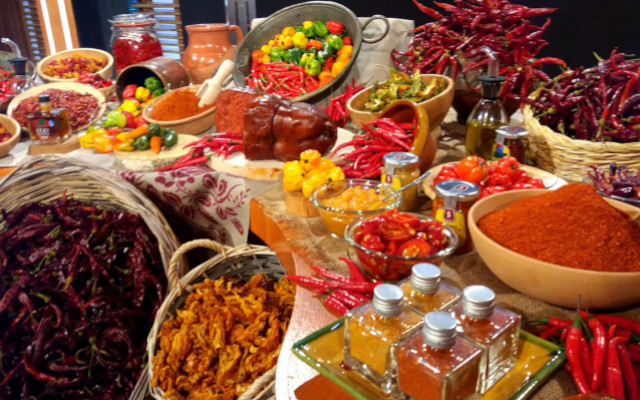
The regulation recognizes the marketing of the product as: fresh; whole dried; dried in rows e strings (a historic practice still visible in Calabrian rural villages); dried in pieces, flakes, or powder.
Powdering, flaking, or fragmenting operations must be carried out within the geographical area to guarantee full traceability of the supply chain (regulation, article 5).
The link with the territory
The Calabria presents natural conditions particularly favorable: high number of sunshine hours, Mediterranean climate, availability of hilly and coastal areas, constant ventilation, reduced incidence of late frosts. On the human side, for centuries the Calabrian farmers have selected, adapted, and preserved numerous local varieties, developing cultivation, harvesting, and drying techniques handed down from generation to generation. The regulation fully recognizes this cultural and gastronomic heritage as a constitutive element of the territorial bond (article 6 – The link with the territory).
Control system
I controls are entrusted to an organization authorized by the Ministry of Agriculture, Food Sovereignty and Forests. The checks concern: identification of operators; production registration; conformity of agronomic practices; product characteristics; accuracy of labeling; traceability (article 7 – Control system).
Packaging and labeling
The packages must be sealed by systems preventing tampering without leaving evident traces. Thelabel must include the designation ‘Peperoncino di Calabria PDO‘, the European symbol of the Protected Geographical Indication and the information required by the current food legislation (article 8 – Packaging and labeling).
Nutritional properties and bioactive compounds
The ripe fruits of Capsicum annuum are excellent sources of vitamin C, carotenoids (including capsanthin and capsorubin, responsible for the red color), vitamin E, phenolic compounds and dietary fibers. Analytical studies on cultivars of C. annuum document vitamin C contents between 63 and 65 mg per 100 g of fresh fruit and carotenoids between 2,310 and 2,390 mg/kg dry weight (Topuz et al., 2007).
The most studied compound remains however the capsaicin, primary capsaicinoid responsible for the sensation of spiciness. It acts as an agonist of the TRPV1 receptor (Transient Receptor Potential Vanilloid 1), an ion channel present in many metabolically active tissues. Scientific literature attributes to capsaicin multiple biological activities worthy of further investigation:
- antioxidant and anti-inflammatory properties: capsaicin inhibits the expression of pro-inflammatory genes and proteins, modulating the production of reactive oxygen species (ROS) (Ji et al., 2023);
- effects on metabolism: a systematic review and meta-analysis conducted on randomized controlled trials documents that supplementation with Capsicum annuum exerts significant effects on parameters of metabolic syndrome, including total cholesterol, LDL and body weight (Shabkhiz et al., 2020). A meta-analysis of the British Journal of Nutrition confirms that capsaicin intake reduces body weight and waist circumference in overweight subjects (Li et al., 2023);
- cardiometabolic protection: a recent review on Frontiers in Nutrition shows that capsaicin acts as a multitarget modulator of cardiometabolic syndrome, improving insulin sensitivity, lipid metabolism, vascular function, and the composition of intestinal microbiota (Lin et al., 2026).
EFSA (European Food Safety Authority) has not yet evaluated the cited studies in view of the possible authorization of specific ‘health claims’, pursuant to regulation (EC) no. 1924/06, due to the absence of submission of the relevant applications. Our team of FARE (Food and Agriculture Requirements) is available to companies and associations interested in exploring these opportunities.
Traditional uses
Calabrian delicatessen
The most famous use of chili pepper concerns traditional cured meats. The ‘nduja is the best known example, but chili pepper is also used in the preparation of sausages and salami, soppressata and capocollo. Besides the aromatic function, chili pepper historically helped improve the preservation of meats thanks to its antimicrobial properties.
Preserves, pickled vegetables and condiments
Peasant tradition has developed numerous preparations based on chili pepper: chili peppers in oil, even stuffed, spicy creams, vegetable preserves, condiments for pasta and bruschetta. Many of these recipes are still made today both at home and on an artisanal and industrial level.
Fish and seafood products
Along the Tyrrhenian and Ionian coasts, chili pepper is widely used in preparations based on anchovies, sardines, tuna, stockfish and swordfish. The combination between marine sapidity and spiciness constitutes one of the distinctive elements of Calabrian cuisine.
Cheeses
Various traditional cheeses are flavored with chili pepper, whole or ground. The combination of fat component and capsaicin generates a sensory balance particularly appreciated by consumers.
Guarantees for the consumer and the value of organic choice
The introduction of the PGI offers new guarantees of authenticity. When purchasing, it is appropriate to check for the presence of the PGI logo European, the identification of the producer and the completeness of the information on the label.
Enthusiasts should pay attention not only to spiciness but also to the aromatic profile. A quality chili expresses fruity, herbaceous, floral and spicy notes: spiciness is only one component of the sensory experience.
The choice of certified organic products, where available, can offer further guarantees. Organic systems promote the conservation of agricultural biodiversity, the drastic reduction of synthetic pesticide use, the protection of soil fertility and the protection of pollinators.
Conclusions
The approval of the Calabria Chili PGI marks a turning point to protect and enhance the authentic local product at the international level. The inclusion of sixteen distinct cultivars in the regulations highlights how European quality policies can represent an effective safeguard for the preservation of local genetic heritage.
The future challenge for the supply chain now shifts to the field of scientific and regulatory valorization: the body of studies on the properties of capsaicin still awaits being translated into authorized health indications. The FARE team is ready to assist producers in this strategic growth process.
Dario Dongo
Credit cover Giancarlo Suriano
References
Italian Academy of Chili Pepper. (n.d.). History of chili pepper. https://www.peperoncino.org/il-peperoncino/storia/
Acquadro, A., Barchi, L., Portis, E., Nourdine, M., Carli, C., Lanteri, S., & Rotino, G. L. (2020). Whole genome resequencing of four Italian sweet pepper landraces provides insights on sequence variation in genes of agronomic value. Scientific Reports, 10(1), 9189. https://doi.org/10.1038/s41598-020-66053-2
Commission Implementing Regulation (EU) 2026/1273 of 4 June 2026 on the registration of the geographical indication ‘Peperoncino di Calabria’ (PGI) in the Union register of geographical indications pursuant to Regulation (EU) 2024/1143. http://data.europa.eu/eli/reg_impl/2026/1273/oj
European Commission. (2024). eAmbrosia – The EU geographical indications register. https://ec.europa.eu/agriculture/eambrosia/geographical-indications-register/
Fratianni, F., d’Acierno, A., Cozzolino, A., Spigno, P., Riccardi, R., Raimo, F., Coppola, R., Ombra, M. N., Nazzaro, F., & Tucci, M. (2020). Biochemical characterization of traditional varieties of sweet pepper (Capsicum annuum L.) of the Campania region, Southern Italy. Antioxidants, 9(6), 556. https://doi.org/10.3390/antiox9060556
International Plant Genetic Resources Institute. (1995). Descriptors for Capsicum (Capsicum spp.). Rome: IPGRI. ISBN: 92-9043-216-0. https://alliancebioversityciat.org/publications-data/descriptors-capsicum-capsicum-spp
Jarret, R. L., Barboza, G. E., Costa Batista, F. R., Berke, T., Chou, Y. Y., Hulse-Kemp, A., Ochoa-Alejo, N., Tripodi, P., Veres, A., & Garcia, C. C. (2019). Capsicum—An abbreviated compendium. Journal of the American Society for Horticultural Science, 144(1), 3–22. https://doi.org/10.21273/JASHS04446-18
Ji, Y., Yin, H., Zhang, Y., Xu, X., & Li, Y. (2023). Recent advances in analysis of capsaicin and its effects on metabolic pathways by mass spectrometry. Frontiers in Nutrition, 10, 1227517. https://doi.org/10.3389/fnut.2023.1227517
Li, X., Ye, J., Chen, Y., Zhang, Y., & Zhang, J. (2023). The effects of capsaicin intake on weight loss among overweight and obese subjects: a systematic review and meta-analysis of randomised controlled trials. British Journal of Nutrition, 130(10), 1645–1656. https://doi.org/10.1017/S0007114523000697
Lin, J., Shen, H., Ou, H., Luo, H., Huang, D., & Ye, L. (2026). Capsaicin for cardiometabolic syndrome: multitarget mechanisms and therapeutic potential. Frontiers in Nutrition, 13, 1771003. https://doi.org/10.3389/fnut.2026.1771003
Ministry of Agriculture, Food Sovereignty and Forestry. (2025). Application for registration of the Protected Geographical Indication 'Peperoncino di Calabria' and publication of the production specification. Official Gazette of the Italian Republic, General Series No. 69 of March 24, 2025. https://www.gazzettaufficiale.it/atto/serie_generale/caricaDettaglioAtto/originario?atto.codiceRedazionale=25A01771&atto.dataPubblicazioneGazzetta=2025-03-24
Panchal, S. K., Bliss, E., & Brown, L. (2018). Capsaicin in metabolic syndrome. Nutrients, 10(5), 630. https://doi.org/10.3390/nu10050630
Parisi, M., Alioto, D., & Tripodi, P. (2020). Overview of biotic stresses in pepper (Capsicum spp.): Sources of genetic resistance, molecular breeding and genomics. International Journal of Molecular Sciences, 21(7), 2587. https://doi.org/10.3390/ijms21072587
Shabkhiz, F., Rosenkranz, S., Poorabbas, A., & Khalili, A. (2020). Effects of Capsicum annuum supplementation on the components of metabolic syndrome: a systematic review and meta-analysis. Scientific Reports, 10(1), 20950. https://doi.org/10.1038/s41598-020-77983-2
Topuz, A., Odzemir, F. (2007). Assessment of carotenoids, capsaicinoids and ascorbic acid composition of some selected pepper cultivars (Capsicum annuum L.) grown in Turkey. Journal of Food Composition and Analysis 20(7):596–602. https://doi.org/10.1016/j.jfca.2007.03.007
Tripodi, P., Rabanus-Wallace, M. T., Barchi, L., Kale, S., Esposito, S., Acquadro, A., Schafleitner, R., van Zonneveld, M., Prohens, J., Diez, M. J., Börner, A., Salinier, J., Caromel, B., Bovy, A., Boyaci, F., Pasev, G., Brandt, R., Himmelbach, A., Portis, E., … Stein, N. (2021). Global range expansion history of pepper (Capsicum spp.) revealed by over 10,000 genebank accessions. Proceedings of the National Academy of Sciences, 118(34), e2104315118. https://doi.org/10.1073/pnas.2104315118
Zimmer, A. R., Leonardi, B., Miron, D., Schapoval, E., de Oliveira, J. R., & Gosmann, G. (2012). Antioxidant and anti-inflammatory properties of Capsicum baccatum: From traditional use to scientific approach. Journal of Ethnopharmacology, 139(1), 228–233. https://doi.org/10.1016/j.jep.2011.11.005

Dario Dongo, lawyer and journalist, PhD in international food law, founder of WIISE (FARE - GIFT – Food Times) and Égalité.


