

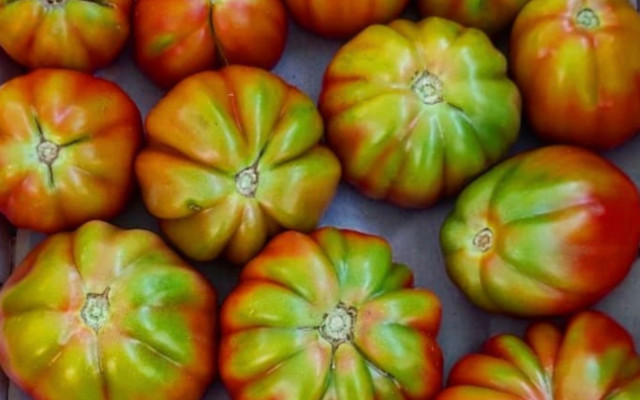
TheItaly confirms itself at the head of the European supply chain of tomato from industry, positioning itself as the world's leading exporter of derivatives intended for final consumption. This commercial success is not only the result of a centuries-old tradition of adapting the plant to different national terroirs, but also reflects a nutritional profile of excellence. The chemical-physical analysis of the berry and the most recent clinical trials today offer a solid scientific basis to understand the bioactive value of the tomato, precisely defining the applicable nutritional claims according to strict European regulations and its potential health effects.
The numbers of the Italian tomato on the global market
Italy remains a protagonist of the supply chain of industrial tomato, at European and global level. The 2025 campaign ended with 5.8 million tons processed, out of 78,695 hectares cultivated (ANICAV, 2025; ISMEA, 2026). The Bel Paese is thus positioned:
- at second place in the world, after the United States and ahead of China, which drastically reduced volumes (-53% compared to 2024), with the 14,4% of the global production estimated at 40.4 million tons (-12% on 2024. World Processing Tomato Council);
- at first place in Europe, with a share of 53.8% of the European processed.
Italy is also world leader for the production of tomato preserves intended to the final consumer, with a turnover of 5.5 billion euros, of which over 50% (2.8 billion) comes from exports (ANICAV, February 2026). USA and China instead maintain the largest volumes for bulk semi-finished products (concentrate in drums).
Scientific research however warns that the scenario is fragile: according to climate projections, industrial tomato production in the three main countries (United States, Italy and China, accounting for 65% of the total) could decrease by 6% by 2050, with Italy and California among the most exposed to water constraints (Cammarano et al., 2022).
The 2025 production is distributed between two large basins. The North (Emilia-Romagna, Lombardy, Veneto, Piedmont) delivered 3.12 million tons (+27.6% over 2024) on about 45,000 hectares; the Center-South (Campania, Apulia, Basilicata, Molise) 2,718,369 tons (-5.3%) on 33,665 hectares, with an average yield of 80.7 t/ha, penalized by the water crisis in the Foggia basin (ISMEA, 2026). The national average yield stopped at 74.2 t/ha, the worst performance in the last five years, and the whole peeled tomato production dropped by more than 20% (ANICAV, 2025).
On the commercial front, the 2024/25 campaign marks a setback after over a decade of growth. Theexport of derivatives amounted to 2.8 billion euros (-8% in value, -2% in volume), equal to about 2.2 million tons, with a trade surplus exceeding 2.5 billion (ANICAV, 2026; ISMEA, 2026). The heavy factors are the U.S. tariffs, risen to 15% on all references, geopolitical tensions and competition from low-cost producers; the cost of raw materials has also increased by about 50% in four yearsFor reference, the 2023/24 campaign had reached a record export of 3.03 billion (ISMEA, 2026).
On the domestic marketthe domestic purchases of preserves grew by 2% in volume. The tomato puree dominates retail with 63.4%, followed by pulp (20.4%), peeled tomatoes (10.9%), cherry tomatoes (3.8%) and concentrate (1.7%); the Ho.Re.Ca. channel absorbs 67% of the volumes (about 2.1 million tons). The per capita consumption of derivatives is around 35 kg per year, with Germany, United Kingdom, USA, Japan and Australia as the leading foreign markets (ANICAV, 2026).
Broadening the view to theentire horticultural production — fresh tomato and industry together — Eurostat data confirms the Italian leadership: in 2024 the EU harvested 16.8 million tons of tomatoes (+5%), with Italy first at 6.0 million (36% of the total), ahead of Spain (4.5 million, 27%) and Portugal (1.7 million, 10%). Italy has been the largest European producer of tomatoes since records have existed (Eurostat, 2025).
From Mexico to the Mediterranean, the story of success in Italy
The tomato (Solanum lycopersicum) is native to America central and southern. Its arrival in Europe dates back to the sixteenth century, following Spanish trade. In Italy, one of the first documented testimonies is from October 31, 1548, when Cosimo de’ Medici received in Pisa a basket of tomatoes grown from seeds brought to the court through his wife Eleonora di Toledo (Gentilcore, 2010).
For about two centuries the plant remained mainly ornamental, suspected of being poisonous due to its belonging to the Solanaceae, like the deadly nightshade. Pietro Andrea Mattioli, in the mid-sixteenth century, hypothesized its edibility coining the name ‘golden apples’. The first Italian recipe documented is the ‘Spanish-style tomato sauce’ described by Antonio Latini in 1692, developed in Neapolitan cuisine (Gentilcore, 2010).
The definitive affirmation of the tomato in Italy took place between the eighteenth and nineteenth centuries: in 1835 the French writer Alexandre Dumas described the Pizza with tomato in Naples, while in 1839 Ippolito Cavalcanti narrated the Pasta with tomato (the ‘vermicelli with tomatoes’, in Neapolitan dialect). Thus the tomato assumed a central role in Italian cuisine, recognized as UNESCO Intangible Cultural Heritage in 2025.
Botany and regional varieties, from San Marzano to Pachino
The tomato belongs to the Solanaceae family, genus Solanum. It is a herbaceous plant, annual in temperate climates, with a branched stem; the fruit is a berry with juicy pulp. It prefers temperate-warm climates (optimal 20-24 °C) and deep, fertile and well-drained soils, of medium texture, with good organic matter content and pH between 6 and 7; it tolerates a wide range of textures as long as drainage is assured.
Italian tomato varieties are numerous. They stand out among others for shape, history and uses:
- for thesalad: the Oxheart, large (200-800 g) and irregular, with fleshy pulp and few seeds; the Florentine ribbed, Tuscan variety with marked ribs and aromatic pulp;
- from sauce and industry: the San Marzano of the Agro Sarnese-Nocerino PDO, symbol of peeled tomatoes in Campania;
- cherry tomatoes. The Pachino PGI, introduced in Sicily in 1925, in four types (smooth round, ribbed, cherry, cluster); the Date tomato, oval and sweet, widespread between Campania and Sardinia; the Cherry tomato, with exceptional peaks in Sicily;
- native. The Vesuvio Piennolo Cherry Tomato PDO, with its local ecotypes (Fiaschella, Lampadina, Patanara, Re Umberto), preserved ‘al piennolo’ for 7-8 months; the Camone Sardinian, firm and green-striped; the Manduria Cherry Tomato, Slow Food Presidium from Puglia under organic farming.
Where it is grown between climate challenges and water sustainability
Industrial cultivation in Italy covers about 78,700 hectares, with two well-distinguished models:
- at North, Emilia-Romagna and Lombardy lead a highly mechanized production, with strong cooperative presence, oriented to round for dicing and puree;
- in the Center-South, Campania, Puglia, Basilicata and Molise characterize the ‘long’ tomato for peeled and concentrates;
- the Sicily in the Pachino district represents a unique case of table tomato in a protected environment, marked by the salinity of coastal aquifers and intense brightness.
From an agronomic point of view, the tomato requires high water inputs, especially in the transplanting, flowering and fruit color change phases. Thedrip irrigation, combined with fertigation, is the most efficient technique for controlling quality parameters, particularly of the Brix degree. Harvesting is now mechanized for almost 100% in the North and over 90% in the Center-South, with niche exceptions like San Marzano PDO (ANICAV, 2026).
the sustainability of the supply chain relies on precision irrigation, nitrate management and reduction of carbon footprint. The organic production reaches almost 10% of the surface area in the Northern basin, albeit slightly declining in the last two years. The climatic challenges — recurring water crises in the South and extreme events in the North — make these investments decisive for the competitive hold of the sector (Cammarano et al., 2022).
DOP and IGP, the denominations of the Italian tomato
Italy boasts two DOP and one IGP dedicated to the tomato:
- Pomodoro San Marzano of the Agro Sarnese-Nocerino DOPprovince of Salerno, Naples and Avellino, open field cultivation, exclusive use for peeled tomatoes and derivatives;
- Vesuvio Piennolo Cherry Tomato PDO18 municipalities of the Naples area, mainly in the Vesuvius National Park; local ecotypes without hybrids, in fresh, ‘al piennolo’ and preserved versions;
- Pomodoro di Pachino IGPmunicipalities of Pachino, Portopalo, Noto, and Ispica, four varieties in a protected environment with brackish groundwater.
Nutritional claims certified by official tables
According to CREA tables (2019) on food composition, 100 grams of ripe fresh tomato provide on average:
- energy: 23 kcal;
- proteins 1.0 g;
- lipids 0.2 g;
- carbohydrates 3.5 g (of which sugars 3.5 g);
- dietary fiber 2.0 g (of which 1.67 g insoluble).
Among the minerals are potassium (297 mg per 100 g), phosphorus (25 mg), magnesium (10 mg), calcium (9 mg), sodium (6 mg), selenium (2.3 µg), iron (0.3 mg), zinc (0.11 mg) and copper (0.01 mg). Among the vitamins, vitamin A (retinol equivalent) 610 µg, vitamin C 25 mg, niacin 0.80 mg and thiamine 0.02 mg.
Pursuant to Nutrition and Health Claims Regulation (EC) No 1924/2006, by comparing the above values with the Reference Nutrient Intake Values in Annex XIII to Reg. (EU) 1169/2011, it is possible to attribute the following to tomatoes nutritional claims:
- ‘rich in vitamin A’ (retinol eq.), equal to 76% of the RNI;
- ‘rich in vitamin C’, equal to 31% of the RNI;
- ‘source of potassium’, equal to 14.85% of the RNI.
The average tomato profile is distinguished by low energy value, the richness ofWater (94%) – and of the indicated micronutrients as well as bioactive compounds with antioxidant action, among which stands out lycopene which is also responsible for its red color.
Tomato and health
The health benefits associated with the consumption of tomato and its derivatives have not yet been subject to specific evaluations by EFSA (European Food Safety Authority), for the purposes of authorizing specific ‘health claims’. However, scientific research offers some interesting insights that deserve further investigation and studies, particularly regarding lycopene.
Lycopene and cardiovascular risk
The lycopene, a fat-soluble carotenoid present in raw tomato on average at about 3 mg per 100 g, is the most studied compound of the fruit (Nam et al., 2026). A meta-analysis of observational studies has associated higher lycopene exposure with a 17% reduction in cardiovascular risk (RR 0.83; 95% CI 0.76-0.90), with significant effects on ischemic heart disease and stroke (Song et al., 2017). Mechanistically, a review described how lycopene acts by reducing the oxidation of ‘bad cholesterol’ (LDL), improving endothelial function and modulating inflammation through inhibition of the transcription factor NF-κB (Hsieh et al., 2022).
The most updated summary comes from an umbrella review of 2026 that re-examined nine systematic reviews: the consumption of tomato and lycopene modestly but significantly reduces blood pressure (about -2.4 mmHg for systolic and -1.3 mmHg for diastolic), with ‘high’ certainty of evidence according to the GRADE system, while effects on lipid profile remain inconsistent. The authors indicate that useful dose 5-30 mg of lycopene per day, equivalent to one or two raw tomatoes (Nam et al., 2026). To understand its clinical relevance, a meta-analysis of individual data from 48 trials estimated that each 5 mmHg reduction of systolic blood pressure lowers the risk of about 10% of major cardiovascular events, regardless of baseline values (Blood Pressure Lowering Treatment Trialists’ Collaboration, 2021).
Clinical evidence is also confirmed on the vascular side: a randomized, double-blind controlled study on 75 healthy adults showed that intake of lycopene-rich tomato juice improves endothelial function (measured as flow-mediated dilation, FMD) already after 4 weeks and up to 12 (Yoshida et al., 2025).
The cooking factor: the ‘Italian-style’ tomato
A crucial aspect is that the bioavailability of lycopene increases with cooking and in the presence of fats, exactly as happens in Mediterranean preparations. A randomized crossover trial on overweight subjects found that daily consumption of tomato cooked with olive oil for six weeks significantly improves theplatelet activity, with an anti-aggregating effect consistent with cardiovascular protection (López-Yerena et al., 2023).
Lycopene and neoplasms
The largest meta-analysis ever conducted on tomato/lycopene and tumors — 119 prospective studies, over 4.6 million subjects — found that a high intake of lycopene is associated with a 5% reduction of overall cancer risk, which rises to11% considering high blood levels; each 10 µg/dL increment of circulating lycopene is linked to a 5% lower risk (Balali et al., 2025). The strongest associations in the literature concern prostate cancer prostate.
The tomato in the kitchen: from sauce to pizza
Tomato is a key ingredient of Italian cuisine. Its main uses:
- sauces and condiments for pasta, the national identity’s signature dish;
- the Neapolitan pizza, whose craft was recognized in 2017 as a UNESCO heritage;
- peeled tomatoes and puree for every season;
- salads with cherry and datterini tomatoes dressed raw with extra virgin olive oil and basil;
- soups like pappa al pomodoro;
- oil-preserved preserves and sun-dried tomatoes.
How to choose the tomato for consumers and professional buyers
For the gourmets. Prioritize products organic certified, for maximum environmental and biodiversity protection guarantee; consider the denominations DOP and IGP (San Marzano, Piennolo, Pachino), where available, for traceability and typicality; respect the seasonality of open field (May-September); vary the native cultivars; remember that the tomato cooked combined with olive oil maximizes lycopene absorption.
For professional buyers. Verify the sustainability certifications (water management, nitrates, carbon footprint); evaluate the Brix degree (over 5 indicates higher concentration of soluble solids); diversify supply between North and Center-South to mitigate climatic risks; prioritize short supply chains and producer organizations.
Conclusions
The future of the Italian tomato lies in the dual ability to manage the ecological transition in the fields and to enhance transparency on the label.national, but a conscious health decision, validated by rigorous pharmacokinetic and clinical nutrition models.
Dario Dongo
Credit cover El Tamiso organic cooperative
References
ANICAV. (2025, October 22). 2025 campaign closed with 5.8 million tons of processed product. National Association of Italian Canned Vegetables Manufacturers. https://anicav.it/2025/10/22/chiusa-la-campagna-2025/
ANICAV. (2026, February 18). Imports of tomato derivatives from Egypt: Italy is the leading producer and exporter of derivatives destined for the final consumer [Press release]. National Association of Italian Canned Vegetables Manufacturers. https://www.ansa.it/canale_terraegusto/notizie/mondo_agricolo/2026/02/18/anicav-bene-iniziativa-carloni-a-sostegno-della-filiera-del-pomodoro-da-industria_986947ae-4aed-458f-b1ba-bcc33c8ff385.html
Balali, A., Fathzadeh, K., Askari, G., & Sadeghi, O. (2025). Dietary intake of tomato and lycopene, blood levels of lycopene, and risk of total and specific cancers in adults: A systematic review and dose–response meta-analysis of prospective cohort studies. Frontiers in Nutrition, 12, 1516048. https://doi.org/10.3389/fnut.2025.1516048
Blood Pressure Lowering Treatment Trialists’ Collaboration. (2021). Pharmacological blood pressure lowering for primary and secondary prevention of cardiovascular disease across different levels of blood pressure: An individual participant-level data meta-analysis. The Lancet, 397(10285), 1625–1636. https://doi.org/10.1016/S0140-6736(21)00590-0
Cammarano, D., Jamshidi, S., Hoogenboom, G., Ruane, A. C., Niyogi, D., & Ronga, D. (2022). Processing tomato production is expected to decrease by 2050 due to the projected increase in temperature. Nature Food, 3(6), 437–444. https://doi.org/10.1038/s43016-022-00521-y
CREA – Research Center for Food and Nutrition. (2019). Tomatoes, ripe, fresh (Food code 006610). Food composition tables. https://www.alimentinutrizione.it/tabelle-nutrizionali/006610
Eurostat. (2025, August 25). How much fruit and vegetables does the EU harvest?https://ec.europa.eu/eurostat/web/products-eurostat-news/w/ddn-20250825-1
Gentilcore, D. (2010). Pomodoro! A history of the tomato in Italy. New York, NY: Columbia University Press. ISBN 978-0-231-15206-8.
Hsieh, M.-J., Huang, C.-Y., Kiefer, R., Lee, S.-D., Maurya, N., & Velmurugan, B. K. (2022). Cardiovascular disease and possible ways in which lycopene acts as an efficient cardio-protectant against different cardiovascular risk factors. Molecules, 27(10), 3235. https://doi.org/10.3390/molecules27103235
ISMEA. (2026, March 31). Tomato preserves, Italy remains first in exports and returns to second in production. https://www.ismea.it/flex/cm/pages/ServeBLOB.php/L/IT/IDPagina/13570
López-Yerena, A., Padro, T., de Santisteban Villaplana, V., Muñoz-García, N., Pérez, A., Vilahur, G., & Badimon, L. (2023). Vascular and platelet effects of tomato soffritto intake in overweight and obese subjects. Nutrients, 15(24), 5084. https://doi.org/10.3390/nu15245084
Nam, Y.-e., Hwang, I.-G., & Jang, H.-H. (2026). Role of lycopene from tomato on cardiovascular risk: An umbrella review of systematic reviews and meta-analyses of intervention studies. Food & Function, 17, 622–630. https://doi.org/10.1039/d5fo04213e
OI Pomodoro da Industria Nord Italia. (2025, October 16). Industrial tomato campaign 2025: official data from Northern Italy. https://oipomodoronorditalia.it/area-stampa/art/campagna-pomodoro-da-industria-2025-i-dati-ufficiali-del-nord-italia
Song, B., Liu, K., Gao, Y., Zhao, L., Fang, H., Li, Y., Pei, L., & Xu, Y. (2017). Lycopene and risk of cardiovascular diseases: A meta-analysis of observational studies. Molecular Nutrition & Food Research, 61(9). https://doi.org/10.1002/mnfr.201601009
Yoshida, K., Nakazawa, Y., Takahashi, S., & Suzuki, S. (2025). Improvement of vascular endothelial function by intake of lycopene-rich tomato juice in healthy adults: A randomized, placebo-controlled, double-blind, parallel-group comparative study. Food & Function, 16(19), 7812–7822. https://doi.org/10.1039/d5fo01397f

Dario Dongo, lawyer and journalist, PhD in international food law, founder of WIISE (FARE - GIFT – Food Times) and Égalité.


