

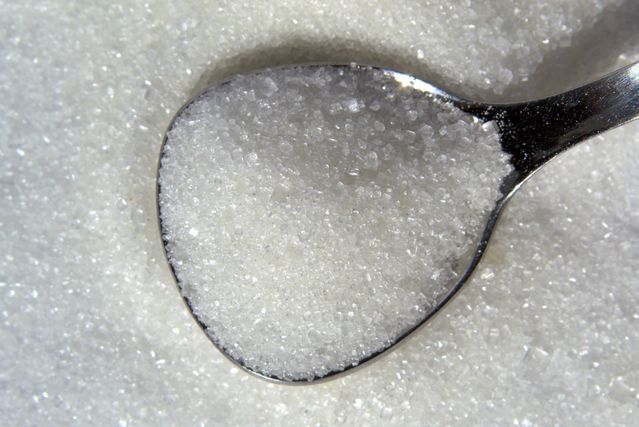
THE'erythritol (E968) is a four-carbon polyol which in just a few years has moved from 'sugar-free' niche products to the role of mass-market sweetener in beverages, confectionery and table-top sweeteners. The sweetening power is equal to approximately 60-70% of that of sucrose, the energy contribution declared on the label in the European Union is zero, digestive tolerance is better compared to other polyols.
Global production is concentrated in China, where excess capacity has led the European Union and the United States to adopt anti-dumping duties. THE'Italy processes, packages and distributes imported erythritol. In terms of safety, the European Food Safety Authority (EFSA) has set a wide acceptable daily intake for 2023.
The global market, estimates compared
The most recent estimates from international market research firms place the global value of erythritol around 250-300 million dollars. Global Market Insights (2026), in the report published in October 2026, indicates 250 million dollars in 2025 and 266 million in 2026, with a projection of 508 million by 2035 (compound annual growth rate, CAGR, 7.5%). The same report estimates global consumption of around 174,000 tonnes in 2025 and attributes Europe 63 million dollars, about a quarter of the global value.
Fortune Business Insights (2026), in the version updated in November 2026, reports 297.4 million dollars in 2025, 313.6 million in 2026 and 485 million by 2034, with annual growth of 5.6%. The European value is estimated at 71.1 million dollars, approximately 24% of the total. The differences depend on perimeters and reference prices. Global Market Insights (2026) observes a growth in volumes that is faster than the recovery of revenues, after a phase of strong price instability linked to the concentration of supply.
The demand comes mainly from 'zero' drinks, sugar-free confectionery and chewing gum, table-top sweeteners, baked goods with reduced sugar content, supplements and pharmaceutical products.
Main producers and production hubs
The global market of erythritol is very concentrated. According to Global Market Insights (2026), in 2025 i top five operators held approximately 47% of global value: Shandong Sanyuan Biotechnology (approximately 12%), Cargill (approximately 10%), Jungbunzlauer (approximately 9%), Mitsubishi Chemical and Baolingbao Biology. Fortune Business Insights (2026) lists among the main players also Zhucheng Dongxiao Biotechnology, Shandong Fuyang Biotechnology, Yusweet, Archer-Daniels-Midland and Ingredion.
The first production hub is China, in particular the province of Shandong, home to Sanyuan, Baolingbao, Zhucheng Dongxiao and Fuyang. Chinese production is based on the fermentation of glucose from corn starch (Global Market Insights, 2026). In the United States Cargill produces erythritol (Zerose brand) in the corn processing complex in Blair, Nebraska. In Europe the only manufacturer identified by the Commission is Jungbunzlauer (EU exec. reg. 2024/1959), with the factory in Marckolsheim, Alsace (France, ERYLITE brand).
Asian overcapacity has produced measurable effects. The European Commission found that dumped imports from China had forced the Union industry to stop producing erythritol towards the end of 2022 (European Commission, 2025). They followed definitive anti-dumping duties including between 34.4% and 233.3%, applied to pure erythritol and mixtures (EU executive regulation 2025/60). The United States followed the same path: in March 2026 the Department of Commerce issued anti-dumping orders and compensatory measures on imports of Chinese erythritol, after the assessment of injury to the national industry by the International Trade Commission (U.S. Department of Commerce, 2026).
Italy, a transformation and consumption market
The checks conducted on company and sector sources and on the documents of the anti-dumping investigation did not identify erythritol fermentation plants in Italy. THE'Italian industry is sourced from Asia, the United States and France, and operates in the phases of processing, packaging and distribution. The pure product is sold:
- to retail, with sugar, herbalist and large-scale retail trade (GDO) brands, including distributor brands;
- as ingredient to confectionery industries, chewing gum producers, beverage manufacturers, supplement producers and bakery product manufacturers.
Origins and production process
Erythritol was described in 1848 by Scottish chemist John Stenhouse, who obtained it from lichens (Stenhouse, 1848). It is present in nature in fruit, mushrooms and fermented foods, as well as as a metabolite produced by the human body via the pentose phosphate pathway (Mazi & Stanhope, 2023).
The production commercial is biotechnological. Starch, from corn or other sources, is hydrolyzed into glucose, then fermented by osmophilic yeasts such as Moniliella pollinis or Moniliella megachiliensis; purification and drying follow (EU regulation 231/2012, Annex). The final product is a crystalline powder of high purity.
The European regulatory framework
In the European Union erythritol is a food additive authorized with the acronym E968 in the list of Annex II (EC regulation 1333/2008). The use is permitted - as for other polyols - in numerous categories of foods with reduced energy content or without added sugars, under the conditions set out in the Annex. Since 2015, erythritol has also been authorized as flavour enhancer in flavoured beverages with reduced energy content or without added sugars (Regulation (EU) 2015/1832). The specifications for identity and purity are set out in Regulation (EU) No 231/2012.
Erythritol is not a novel food. It can be sold pure to the final consumer as table sweetener, in accordance with the labelling rules for additives intended for the consumer (Regulation (EC) 1333/2008, articles 22-23). For the purposes of the nutrition declaration its energy conversion factor is equal to 0 kJ/g (Regulation (EU) 1169/2011, Annex XIV).
Labelling and warnings on laxative effects
THE'label of a table-top sweetener containing polyols must bear the warning 'un excessive consumption may have laxative effects' (EC regulation 1333/2008, art. 23.3). The same wording is required for foods containing more than 10% added polyols authorized by Regulation (EC) No. 1333/2008' (EU regulation 1169/2011, Annex III, point 2.4).
In 2023, EFSA examined an application to exempt erythritol from this warning and concluded that the available data did not justify it (EFSA FAF Panel, 2023). The obligation therefore remains in force.
Nutritional and health claims
Foods formulated with erythritol may bear nutrition claims relating to sugars and energy, such as 'without sugar' or 'with reduced sugar content', if they meet the conditions laid down (Regulation (EC) 1924/2006, Annex). The conditions are assessed on the product ready for consumption.
Regulation (EU) No. 432/2012 also authorises two health claim on the replacement of sugars, applicable to erythritol:
- ‘l’assunzione di alimenti/bevande contenenti
anziché zucchero contribuisce al maintenance of mineralisation of teeth', provided that consumption of the food does not reduce the plaque pH below 5.7, during intake and up to 30 minutes later; - the intake 'induces a minor increase in blood glucose after their intake', if the sugar content is reduced at least to the extent required for the indication 'with reduced sugar content' (EU regulation 432/2012, Annex). That is to say, if the sugar content is at least 30% lower than the average of foods in the same category (EC regulation 1924/06, art. 9 and Annex).
Nutritional and organoleptic profile
The erythritol comes rapidly absorbed in the small intestine, dose-dependently, and excreted largely unchanged in the urine; only a small proportion is converted to erythronoate (EFSA FAF Panel, 2023). It does not affect blood glucose and insulinemia and stimulates the secretion of intestinal hormones linked to satiety, according to the study by Mazi & Stanhope (2023) which was not assessed by EFSA for the purposes of authorizing the related health claim. Not is fermented by oral cavity bacteria, a characteristic underlying its use in chewing gum and oral hygiene products.
In a randomized trial with 46 participants with obesity, taking 12 grams of erythritol three times a day for five to seven weeks did not change intestinal glucose absorption (Bordier et al., 2021).
The sweetening power is approximately 60-70% that of sucrose. The taste it is clean, the sweetness is rapid, with a refreshing effect due to the high negative heat of solution. For this reason erythritol is often combined with steviol glycosides: increases the overall sweetness, adds volume and reduces the bitter or liquorice aftertaste of some formulations with stevia.
EFSA assessment
The re-evaluation of E968 by the EFSA Panel on Food Additives and Flavorings excluded genotoxicity concerns and identified the laxative effect as the critical outcome (EFSA FAF Panel, 2023). The panel considered diarrhea adverse, due to the possible hydroelectrolyte imbalance, and established a for the first time Acceptable Daily Intake ADI of 0.5 grams per kilogram of body weight, equal to 35 grams per day for an adult weighing 70 kilograms.
Acute and chronic exposure estimates exceed the ADI, especially for children and adolescents. The panel qualified them as overestimates, concluding that regular consumers in high quantities could experience adverse effects after single or repeated intakes (EFSA FAF Panel, 2023). The conditions of use of E968 in Regulation (EC) No. 1333/2008 have not been modified to date following the opinion. Erythritol is authorised quantum satis, as a sweetener from the polyol group, in 66 food categories for a total of 83 uses (EFSA FAF Panel, 2023). In flavored drinks it is permitted only as a flavor enhancer, in products with reduced energy content or without added sugars, up to 16 grams per litre, equal to 1.6% (EU regulation 2015/1832).
Technological uses
Erythritol is used in beverages, table-top sweeteners, chewing gum, candies, sugar-free chocolate, baked goods and supplements. As mass-market sweetener it provides body and volume in addition to sweetness, partially replacing the technological functions of sucrose. It has low hygroscopicity, good heat stability and crystallises easily. In baked goods it requires adjustments of water and structurants; it does not participate in the Maillard reaction, thus does not contribute to browning.
In mixtures with steviol glycosides, volume and overall sweetness increase, a solution now widespread in table sweeteners and 'zero' drinks. In confectionery, the refreshing effect lends itself to gum and mint candies. In sugar-free chocolate, erythritol is combined with fiber or other polyols to improve texture and palatability.
Conclusions
Erythritol is an authorized food additive and a versatile bulk sweetener, with zero energy input for labeling purposes in the European Union, no effect on blood sugar and a sensory profile close to sucrose. Italy is a transformation and consumption market, without primary production.
European Union law allows use as E968 and sale to consumers in pure form, with mandatory warnings on laxative effects and the possibility of using specific nutrition & health claims. The ADI set by EFSA offers a quantitative reference for formulation and communication.
Our team of FARE (Food and Agriculture Requirements) supports innovative industries and large-scale retail trade in the strategic planning of compliance for the development of new products, from formulation to labelling, including nutrition & health claims.
Dario Dongo
Frequently asked questions
What is Erythritol E968? It is a polyol obtained by fermentation of glucose, authorized in the European Union as a sweetener additive. It has a sweetening power equal to approximately 60-70% of sucrose and an energy factor of 0 kJ/g for nutritional labeling purposes.
Can pure erythritol be sold to consumers? Yes, as a table sweetener, with the obligatory warning 'excessive consumption may have laxative effects'. This is not novel food.
How much erythritol can be consumed per day? EFSA has set an acceptable daily intake of 0.5 grams per kilogram of body weight in 2023, approximately 35 grams per day for a 70 kilo adult.
Where is erythritol produced? Are there any producers in Italy? Production is concentrated in China, in the province of Shandong, with centers in the United States (Cargill) and France (Jungbunzlauer). In Italy there are no fermentation plants: the national industry transforms, packages and distributes imported products.
What claims are permitted on products containing erythritol? Nutrition claims on sugars and energy, under the conditions of Regulation (EC) no. 1924/2006, and two health claims of Regulation (EU) no. 432/2012 on the mineralization of the teeth and on the lower increase in blood sugar levels after consumption, if erythritol replaces sugars.
References
European Union acts on additives, labeling and claims
Commission Regulation (EU) 2015/1832 of 12 October 2015 amending Annex II to Regulation (EC) No 1333/2008 of the European Parliament and of the Council as regards the use of Erythritol (E 968) as a flavour enhancer in energy-reduced or with no added sugars flavoured drinks. Official Journal of the European Union, L series. http://data.europa.eu/eli/reg/2015/1832/oj
Commission Regulation (EU) No 231/2012 of 9 March 2012 laying down specifications for food additives listed in Annexes II and III to Regulation (EC) No 1333/2008 of the European Parliament and of the Council. Consolidated text: 18/08/2026. http://data.europa.eu/eli/reg/2012/231/2026-08-18
Commission Regulation (EU) No 432/2012 of 16 May 2012 establishing a list of permitted health claims made on foods, other than those referring to the reduction of disease risk and to children's development and health. Consolidated text: 08/20/2025. http://data.europa.eu/eli/reg/2012/432/2025-08-20
Regulation (EC) No 1333/2008 of the European Parliament and of the Council of 16 December 2008 on food additives. Consolidated text: 08/11/2026. http://data.europa.eu/eli/reg/2008/1333/2026-11-08
Regulation (EC) No 1924/2006 of the European Parliament and of the Council of 20 December 2006 on nutrition and health claims made on foods. Consolidated text: 13/12/2014. http://data.europa.eu/eli/reg/2006/1924/2014-12-13
Regulation (EU) No 1169/2011 of the European Parliament and of the Council of 25 October 2011 on the provision of food information to consumers. Consolidated text: 01/04/2025. http://data.europa.eu/eli/reg/2011/1169/2025-04-01
Anti-dumping measures on Chinese erythritol
Commission Implementing Regulation (EU) 2024/1959 of 17 July 2024 imposing a provisional anti-dumping duty on imports of erythritol originating in the People's Republic of China. OJ L, 2024/1959, 19.7.2024. http://data.europa.eu/eli/reg_impl/2024/1959/oj
Commission Implementing Regulation (EU) 2025/60 of 15 January 2025 imposing a definitive anti-dumping duty, definitively collecting the provisional duty imposed on imports of erythritol originating in the People's Republic of China and levying the definitive anti-dumping duty on the registered imports of erythritol originating in the People's Republic of China. OJ L, 2025/60, 16.1.2025. http://data.europa.eu/eli/reg_impl/2025/60/oj
European Commission, Directorate-General for Trade and Economic Security. (2025, January 16). Commission acts against dumped imports of erythritol from China. https://policy.trade.ec.europa.eu/news/commission-acts-against-dumped-imports-erythritol-china-2025-01-16_en
U.S. Department of Commerce, International Trade Administration. (2026, March 27). Erythritol from the People's Republic of China: Antidumping duty and countervailing duty orders. Federal Register, 91 (doc. 2026-06008). https://www.govinfo.gov/content/pkg/FR-2026-03-27/pdf/2026-06008.pdf
Opinions and assessments of the authorities on erythritol
EFSA FAF Panel (EFSA Panel on Food Additives and Flavourings). (2023). Re-evaluation of erythritol (E 968) as a food additive. EFSA Journal, 21(12), e8430. https://doi.org/10.2903/j.efsa.2023.8430
Scientific studies on metabolism and blood glucose
Bordier, V., Teysseire, F., Schlotterbeck, G., Senner, F., Beglinger, C., Meyer-Gerspach, A. C., & Wölnerhanssen, B. K. (2021). Effect of a chronic intake of the natural sweeteners xylitol and erythritol on glucose absorption in humans with obesity. Nutrients, 13(11), 3950. https://doi.org/10.3390/nu13113950
Mazi, T. A., & Stanhope, K. L. (2023). Erythritol: An in-depth discussion of its potential to be a beneficial dietary component. Nutrients, 15(1), 204. https://doi.org/10.3390/nu15010204
Historical source on the discovery of erythritol
Stenhouse, J. (1848). IV. Examination of the proximate principles of some of the lichens. Philosophical Transactions of the Royal Society of London, 138. https://doi.org/10.1098/rstl.1848.0004
Market Reports on Erythritol
Fortune Business Insights. (2026). Erythritol market size, share & industry analysis (last updated 2 November 2026). https://www.fortunebusinessinsights.com/erythritol-market-118551
Global Market Insights. (2026). Erythritol market size & share 2026-2035 (Report ID GMI4591). https://www.gminsights.com/industry-analysis/erythritol-market

Dario Dongo, lawyer and journalist, PhD in international food law, founder of WIISE (FARE - GIFT – Food Times) and Égalité.


, dolcificante di massa a 0 kJ/g: come sostituisce lo zucchero senza alterare la glicemia, health claim ammessi in UE, DGA EFSA e dazi sull'import.)