

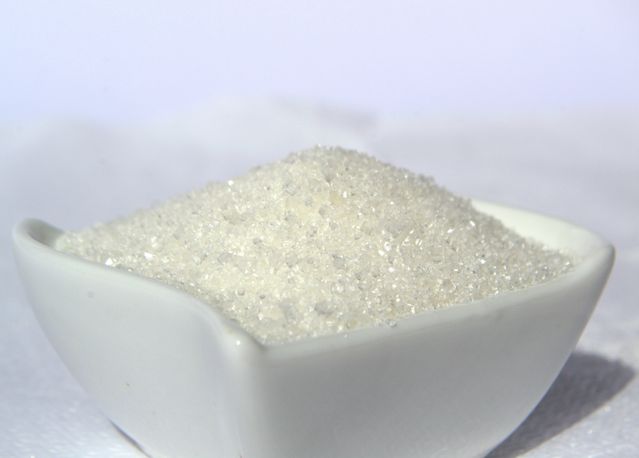
I polyols, – also called sugar alcohols – are hydrogenated carbohydrates that include sorbitol, mannitol, xylitol, maltitol, lactitol, isomalt and erythritol. The food industry uses them as bulk sweeteners, bulking agents and humectants in 'sugar-free' or energy-reduced products. They provide sweetness with fewer calories than sucrose, do not promote tooth decay and have a reduced glycemic impact.
The global market is worth around $4 billion and is led by a few large groups in Europe, the United States and Asia. In the European Union, polyols are authorized food additives, with specific rules on energy calculation, label warnings and health claims. Applications range from confectionery to chocolate, from baked goods to pharmaceuticals, to oral hygiene and material chemistry.
The global polyols market
The most recent estimates place the global value sweetening polyols at around 4 billion dollars. Global Market Insights (2026), in the report published in August 2026, indicates 4.2 billion dollars in 2025 and 4.5 billion in 2026, with a projection of 7.2 billion by 2035 (compound annual growth rate, CAGR, 5.4%). The same report attributes to Europe 1.09 billion dollars in 2026, approximately one quarter of the total, and to sorbitol, the leading polyol by value, 1.59 billion.
IMARC Group (n.d.) estimates $3.9 billion in 2025 and $6.2 billion in 2034, with annual growth of 5.17%. The differences depend on perimeters and reference prices. Demand comes from sugar-free confectionery and chewing gum, chocolate, baked goods, ice cream, beverages, supplements, medications and oral care products.
Major producers and production hubs
The market is concentrated on a few major players: according to Global Market Insights (2026), in 2025 the top five operators, namely Cargill, Roquette, ADM, Ingredion and Tereos, held 47.5% of global value; Cargill alone exceeded 16%. Roquette, a family-owned French group, produces sorbitol, maltitol, mannitol, xylitol and isosorbide in factories in Europe, Asia and America (Roquette, n.d.); among the French sites is Lestrem, in the north of the country, where isosorbide is produced (Roquette, 2026).
In Germany the Südzucker group developed the isomalt, a polyol from beet sugar patented in 1972: its subsidiary BENEO has been producing it since 1989 at the Offstein plant in the Palatinate (BENEO, N/A). Germany and France are indicated as the main European centres of production and formulation (Global Market Insights, 2026).
In Asia the China is the leading exporter of sorbitol, followed by France, India and Indonesia. In India Gulshan Polyols declares a capacity of 72 K tonnes per year of sorbitol in Gujarat; in China Futaste exceeds 40 K tonnes of capacity for xylitol (Global Market Insights, 2026).
Italy, a transformation and consumption market
In Italy polyols are produced at the plant Cargill in Castelmassa (Rovigo) formerly of Cerestar Italia, part of the Eridania group (former Ferruzzi Group) where the author had the honour and joy of working as head of legal affairs, between the late Nineties and early Two Thousands. The site was expanded in 2005 with new hydrogenation and finishing capacity for maltitol, mannitol and isomalt and its environmental certification includes the production of polyols through hydrogenation of corn syrups (Cargill, 2024). Roquette Italia Instead, it processes corn at the Cassano Spinola (Alessandria) plant, from which it obtains native starch, glucose and succinic acid of plant origin, but not polyols (Roquette, 2026).
THE'Italian industry uses polyols, partly imported, in the following stages: processing: confectionery and chewing gum, Chocolate, bakery products, gelato, dietary supplements, pharmaceuticals and cosmetics. The pure product, especially erythritol and xylitol, is sold to retail as a table sweetener, also under retail brands.
However, Italy boasts a historical link with polyols. The mannitol takes its name from manna, sugary sap of ash trees (Fraxinus ornus and Fraxinus angustifolia), once cultivated on thousands of hectares in north-western Sicily. The word in turn recalls the food which, in the book of Exodus, nourished the Israelites for forty years in the desert: 'The house of Israel called it manna. It was similar to coriander seed and white; it tasted like one focaccia with Honey' (Exodus 16.31). There Madonie manna, produced in Castelbuono and Pollina in the province of Palermo, is today a Slow Food Presidium (Slow Food Foundation, N/A).
History, raw materials and production processes
The history of polyols is intertwined with nineteenth-century sugar chemistry. The sorbitol was isolated in 1872 by French chemist Jean-Baptiste Boussingault from the berries of rowan. The xylitol was described in 1891 by Emil Fischer and Rudolf Stahel, who made it from beech wood, and almost simultaneously by the Frenchman Gabriel Bertrand. THE'erythritol was described in 1848 by John Stenhouse, who obtained it from lichens (Stenhouse, 1848). Maltitol, lactitol and isomalt are instead commercial products of the twentieth century.
The raw materials they are glucose and syrups from corn or wheat starch, sucrose, lactose and xylose. The prevailing industrial process is catalytic hydrogenation, which requires high temperatures and pressures, pure substrates and catalysts: sorbitol and mannitol derive from glucose and fructose, xylitol from xylose, maltitol from maltose, lactitol from lactose; Isomalt is a mixture of gluco-mannitol and gluco-sorbitol obtained from sucrose. THE'erythritol is produced instead for fermentation with osmophilic yeasts (Rice et al., 2020). Followed by purification, concentration and crystallization, according to the purity criteria set for each additive (Regulation (EU) 231/2012, Annex).
Sweetening power and technological properties
The sweetening power of polyols is measured in comparison with sucrose, the molecule we know as sugar: xylitol equals it, maltitol reaches 90%, sorbitol and mannitol are at 50-70%, erythritol at 60-80%, isomalt at 45-60%, lactitol around 40% (Rice et al., 2020). To achieve sugar sweetness, polyols are often combined with intensive sweeteners, such as steviol glycosides or sucralose.
The negative heat of solution of mannitol, sorbitol, xylitol and erythritol produces in the mouth a cooling effect, exploited in chewing gums and mint candies. Lacking the carbonyl group of sugars, polyols do not participate in the Maillard reaction, therefore they do not brown or caramelize during cooking. They also perform functions as a bulking agent, humectant, thickener and flavour enhancer (Rice et al., 2020).
The European regulatory framework
In the European Union sorbitols (E420), mannitol (E421), isomalt (E953), maltitols (E965), lactitol (E966), xylitol (E967) and erythritol (E968) are food additives authorized under the Food Additives Regulation (EC) No 1333/2008, Annex II. As sweeteners form group IV of polyols, usable quantum satis in numerous categories of foods with reduced energy content or without added sugars, including sports foods and protein bars; for functions other than sweetening, such as bulking agent or humectant, they fall instead into group I of additives (Regulation (EC) 1333/2008, Annex II, part C). The specifications for identity and purity are set by Regulation (EU) No 231/2012.
Polyols can be sold pure to the final consumer as table sweeteners, in compliance with the labelling rules for additives intended for the consumer (Regulation (EC) 1333/2008, art. 22-23).
Energy and labelling
For the purposes of nutrition declaration the energy conversion factor of polyols is equal to 10 kJ/g (2.4 kcal/g), versus 17 kJ/g of carbohydrates; for erythritol it is equal to 0 kJ/g (EU regulation 1169/2011, Annex XIV). The indication of polyols among carbohydrates is optional (EU regulation 1169/2011, art. 30.2, letter 'c').
THE'label of a table-top sweetener that contains polyols, regardless of their concentration, must carry the warning 'excessive consumption may have laxative effects' (EC regulation 1333/2008, art. 23.3). In other foods, the same wording is only required above a threshold, i.e. for foods containing more than 10% of added polyols authorized by Regulation (EC) No. 1333/2008' (EU regulation 1169/2011, Annex III, point 2.4).
Nutritional and health claims
Foods formulated with polyols may bear nutrition claims relating to sugars and energy, such as 'sugar-free' o 'with reduced sugar content', if they meet the conditions provided (Regulation (EC) 1924/2006, Annex). The conditions are verified on the product ready for consumption.
The indication ‘without added sugars‘ in products with polyols or other sweeteners is subject to different interpretations in Member States: the Nutrition and Health Claims Regulation permits it only in the absence of added sugars and of other foods used for their sweetening properties, without however clarifying whether sweeteners – subject to special regulation – actually fall into this second category (Regulation (EC) 1924/2006, Annex; Dongo, 2026).
Regulation (EU) No. 432/2012 also authorises two health claim on the replacement of sugars with xylitol, sorbitol, mannitol, maltitol, lactitol, isomalt and erythritol:
- ‘L’assunzione di alimenti/bevande contenenti
anziché zucchero contribuisce al mantenimento della mineralisation of teeth', provided that consumption of the food does not reduce the plaque pH below 5.7, during intake and up to 30 minutes later; - the assumption 'induces a lower increase in blood glucose after their intake', if the sugar content is reduced at least to the extent required for the indication 'with reduced sugar content' (EU regulation 432/2012, Annex).
Nutritional profiles and digestive tolerance
Polyols are only partially absorbed in the small intestine. That's why they have a Glycaemic Index much lower than that of sugars and produce a reduced insulin response (Dongo, 2023). They are also considered non-cariogenic, since they are not metabolized by the oral bacteria responsible for plaque (Rice et al., 2020).
The unabsorbed portion reaches the colon. A systematic review of 79 scientific articles observed that malabsorption of polyols depends on the dose and increases when multiple polyols are taken together; flatulence, abdominal discomfort and laxative effects are therefore linked to dosage, more markedly in people with irritable bowel syndrome (Lenhart & Chey, 2017). Digestive tolerance is therefore the main factor to consider in balanced formulation of products.
The status of EFSA assessments
The European Food Safety Authority (EFSA) is reevaluating all sweeteners authorized before 2009. For polyols, the reevaluation has to date been completed only for erythritol, while it is still ongoing for sorbitols, mannitol, isomalt, maltitols, lactitol and xylitol (EFSA, n.d.).
In its opinion on erythritol, EFSA identified laxative effect the only potentially critical outcome and set an acceptable daily dose of 0.5 grams per kilogram of body weight, equal to 35 grams per day for a 70 kilo adult.
EFSA also rejected the request to exempt erythritol from the warning on laxative effects (EFSA FAF Panel, 2023). The conditions of use of polyols in Regulation (EC) No. 1333/2008 have not been modified to date.
Possible health benefits for the microbiota
A portion of the polyols that reaches the colon is fermented by microbiota. The review by Lenhart & Chey (2017) observes how the intake of moderate doses favors an increase in bifidobacteria, suggesting their potential prebiotic role. A subsequent review of experimental and clinical studies on sweeteners confirms that polyols reach the large intestine and increase bifidobacteria in humans (Ruiz-Ojeda et al., 2019).
Xylitol is fermented by bacteria of the genus Anaerostipes, which produce butyrate (Salli et al., 2019). It butyrate it is a short-chain fatty acid (SCFA), the main source of energy for colon cells, which contributes to maintaining the integrity of the intestinal barrier and has an anti-inflammatory action (Hodgkinson et al., 2023; Liu et al., 2018). Butyric acid is also present in butter, in equilibrium with its dissociated form, butyrate.
The effects in any case they depend on the individual polyol, the dose and the duration of intake. No health claim on the effects of polyols on the microbiota is currently authorized pursuant to Regulation (EC) No. 1924/2006. The only authorized indication for a polyol in the intestinal context concerns the lactitol:
- 'Lactitol contributes to normal intestinal functions thanks to an increase in the frequency of evacuation';
- the claim may furthermore be used only for food supplements containing 10 grams in a single daily serving (Regulation (EU) 2017/676, Annex).
Industrial uses
The choice of polyol depends on sweetening power, solubility, hygroscopicity, crystallisation, heat stability and digestive tolerance. The following are the main applications, by sector.
Confectionery and chewing gum
The chewing gums are the first historical outlet for polyols. Sorbitol serves as a bulking agent, mannitol is used as an anti-caking powder, xylitol is the main polyol in gums. In hard candies isomalt, sorbitol and xylitol are used; mannitol is also used for coatings of candies and chocolate, glazes and baked products (Rice et al., 2020).
Chocolate, baked goods and gelato
In Sugar-free chocolate and in spreads maltitol is the closest substitute for sucrose, flanked by lactitol, xylitol and isomalt. In Baked products sorbitol retains humidity and slows down staling, erythritol replaces part of the sugar, lactitol enters biscuits without added sugar. In the gelato Sorbitol, maltitol, lactitol and xylitol contribute to sweetness and structure (Rice et al., 2020).
Beverages, table sweeteners and sports nutrition
Erythritol is the polyol of Beverages With reduced energy content and Table sweeteners, often mixed with steviol glycosides (Rice et al., 2020). In protein bars, gels and 'zero' supplements, erythritol and maltitol provide sweetness and mass without increasing the declared sugars.
Pharmaceuticals, oral hygiene and cosmetics
Outside the food sector, polyols are Pharmaceutical excipients For the production of tablets and active ingredients in injectable solutions, as in the case of mannitol. They are also used in Toothpastes and in cosmetics (Roquette, N/A).
Green chemistry and materials
From sorbitol we obtain the Isosorbide, a molecule of plant origin used as an alternative to petrochemical derivatives in coatings, paints, packaging and components for the automotive industry (Roquette, n.d.). It is a growing outlet of Bioeconomy, upstream of the food chain.
Domestic uses
In the kitchen polyols are found mainly as Table sweeteners: erythritol and xylitol, pure or in mixture with stevia, replace sugar in beverages, sweets and baked preparations. Since They do not brown or caramelize, baked goods remain lighter in colour and may require recipe adjustments. Portions should be carefully dosed, taking into account individual digestive tolerance.
Conclusions
Polyols are a diverse family of organic compounds with a central role in individual sugar reduction strategies. The global market is worth around 4 billion dollars, with growth around 5% per year; production is concentrated in a few large groups in France, Germany, the United States, China and India. Italy is home to Cargill's production in Castelmassa and is primarily a processing and consumption market, with applications ranging from the food industry to the pharmaceutical industry.
European Union law regulates their use as additives, the energy calculation, the warning in some cases about laxative effects and three specific health claims. Ongoing EFSA reassessments and microbiota research will complete the picture. For companies, the most solid path remains formulation innovation, accompanied by transparent labels and the choice of the most suitable polyol for each application.
Our team of WIISE benefit supports with a regulatory by design approach industries and startups, research entities and consortia in designing scientific studies and submitting health claim authorisation applications, as well as in enhancing innovative ingredients and products in compliance with applicable rules in EU and non-EU destination markets.
Dario Dongo
Frequently asked questions
What are polyols? They are hydrogenated carbohydrates, also called sugar alcohols: sorbitol, mannitol, xylitol, maltitol, lactitol, isomalt and erythritol. In the European Union they are authorized food additives, with the acronyms from E420 to E968.
How many calories do polyols provide? For nutritional labeling purposes, polyols provide 10 kJ/g, equal to 2.4 kcal/g, compared to 4 kcal/g for sugars. Erythritol is considered calorie-free (0 kJ/g).
Why does the warning about laxative effects appear on products with polyols? Regulation (EU) no. 1169/2011 prescribes the wording 'excessive consumption can have laxative effects' on foods with more than 10% added polyols, since the unabsorbed portion can cause intestinal disorders at high doses.
Are polyols good for teeth? Polyols are not fermented by plaque bacteria and are considered non-cariogenic. Regulation (EU) No 432/2012 authorises a health claim on the maintenance of tooth mineralisation when they replace sugar.
Who produces polyols? Are there producers in Italy? The main producers are Cargill, Roquette, ADM, Ingredion and Tereos, with hubs in France, Germany, the United States, China and India. In Italy, polyols are produced in the Cargill plant in Castelmassa (Rovigo); the national industry uses them, partly imported, in transformation.
Where are polyols used in industry? In chewing gum, sweets, sugar-free chocolate, baked goods, ice cream, drinks and supplements, but also as pharmaceutical excipients, in toothpastes and, in the case of sorbitol-derived isosorbide, in material chemistry.
References
European Union acts on additives, labeling and claims
Commission Regulation (EU) No 231/2012 of 9 March 2012 laying down specifications for food additives listed in Annexes II and III to Regulation (EC) No 1333/2008 of the European Parliament and of the Council. Consolidated text: 18/08/2026. http://data.europa.eu/eli/reg/2012/231/2026-08-18
Commission Regulation (EU) No 432/2012 of 16 May 2012 establishing a list of permitted health claims made on foods, other than those referring to the reduction of disease risk and to children's development and health. Consolidated text: 08/20/2025. http://data.europa.eu/eli/reg/2012/432/2025-08-20
Commission Implementing Regulation (EU) 2017/676 of 10 April 2017 authorizing a health claim made on foods, other than those referring to the reduction of disease risk and to children's development and health and amending Regulation (EU) No 432/2012. http://data.europa.eu/eli/reg_impl/2017/676/oj
Regulation (EC) No 1333/2008 of the European Parliament and of the Council of 16 December 2008 on food additives. Consolidated text: 08/11/2026. http://data.europa.eu/eli/reg/2008/1333/2026-11-08
Regulation (EC) No 1924/2006 of the European Parliament and of the Council of 20 December 2006 on nutrition and health claims made on foods. Consolidated text: 13/12/2014. http://data.europa.eu/eli/reg/2006/1924/2014-12-13
Regulation (EU) No 1169/2011 of the European Parliament and of the Council of 25 October 2011 on the provision of food information to consumers. Consolidated text: 01/04/2025. http://data.europa.eu/eli/reg/2011/1169/2025-04-01
FARE in-depth analyses on claims and labelling
Dongo, D. (2023, June 24). Glycaemic Index on the label? FARE. https://fareagrifood.com/2023/06/24/indice-glicemico-etichetta/
Dongo, D. (2026, September 4). 'No added sugar – with sweeteners'? DO. https://fareagrifood.com/2026/09/04/senza-zuccheri-aggiunti-con-edulcoranti/
EFSA opinions and assessments on polyols
EFSA FAF Panel (EFSA Panel on Food Additives and Flavourings). (2023). Re-evaluation of erythritol (E 968) as a food additive. EFSA Journal, 21(12), e8430. https://doi.org/10.2903/j.efsa.2023.8430
European Food Safety Authority. (N/A). Sweeteners. Retrieved November 19, 2026, from https://www.efsa.europa.eu/en/topics/topic/sweeteners
Scientific studies on production, properties and applications of polyols
Rice, T., Zannini, E., Arendt, E. K., & Coffey, A. (2020). A review of polyols – biotechnological production, food applications, regulation, labeling and health effects. Critical Reviews in Food Science and Nutrition, 60(12), 2034–2051. https://doi.org/10.1080/10408398.2019.1625859
Scientific studies on digestive tolerance, microbiota and butyrate
Hodgkinson, K., El Abbar, F., Dobranowski, P., Manoogian, J., Butcher, J., Figeys, D., Mack, D., & Stintzi, A. (2023). Butyrate's role in human health and the current progress towards its clinical application to treat gastrointestinal disease. Clinical Nutrition, 42(2), 61–75. https://doi.org/10.1016/j.clnu.2022.10.024
Lenhart, A., & Chey, W. D. (2017). A systematic review of the effects of polyols on gastrointestinal health and irritable bowel syndrome. Advances in Nutrition, 8(4), 587–596. https://doi.org/10.3945/an.117.015560
Liu, H., Wang, J., He, T., Becker, S., Zhang, G., Li, D., & Ma, X. (2018). Butyrate: A double-edged sword for health? Advances in Nutrition, 9(1), 21–29. https://doi.org/10.1093/advances/nmx009
Ruiz-Ojeda, F. J., Plaza-Díaz, J., Sáez-Lara, M. J., & Gil, A. (2019). Effects of sweeteners on the gut microbiota: A review of experimental studies and clinical trials. Advances in Nutrition, 10(suppl_1), S31–S48. https://doi.org/10.1093/advances/nmy037
Salli, K., Lehtinen, M. J., Tiihonen, K., & Ouwehand, A. C. (2019). Xylitol's health benefits beyond dental health: A comprehensive review. Nutrients, 11(8), 1813. https://doi.org/10.3390/nu11081813
Historical source on the discovery of erythritol
Stenhouse, J. (1848). IV. Examination of the proximate principles of some of the lichens. Philosophical Transactions of the Royal Society of London, 138. https://doi.org/10.1098/rstl.1848.0004
Market reports on polyols
Global Market Insights. (2026). Polyol sweeteners market size & share 2026-2035 (Report ID GMI8536). https://www.gminsights.com/industry-analysis/polyol-sweeteners-market
IMARC Group. (n.d.). Polyol sweeteners market report by product, form, function and application. Retrieved November 19, 2026, from https://www.imarcgroup.com/polyol-sweeteners-market
Corporate sources on polyol producers
GOOD. (n.d.). Palatinit: Timeline. Retrieved November 19, 2026, from https://www.beneo.com/ctl-stories/palatinit
Cargill. (2024, August 3). UNI ISO 14001:2015 – Certificate of approval, Cargill S.r.l., Castelmassa. https://www.cargill.com/worldwide/doc/1451376619403/uni-iso-14001-2015-certificate-di-approval.pdf
Roquette. (n.d.). Polyols. Retrieved November 19, 2026, from https://www.roquette.com/product-overview/polyols
Roquette. (2026, April 30). ISCC PLUS certification achieved for three sustainable products. https://www.roquette.com/news/three-products-sustainable-certification
Sources on manna, from the Bible to the Madonie
Italian Episcopal Conference. (2008). The Holy Bible, Exodus 16. BibleEDU. Retrieved November 19, 2026, from https://www.bibbiaedu.it/CEI2008/at/Es/16/
Slow Food Foundation. (n.d.). Madonie manna. Slow Food presidia. Retrieved November 19, 2026, from https://www.fondazioneslowfood.com/it/presidi-slow-food/manna-delle-madonie/

Dario Dongo, lawyer and journalist, PhD in international food law, founder of WIISE (FARE - GIFT – Food Times) and Égalité.


 centrali nei prodotti senza zuccheri: ruolo nell'industria alimentare, calcolo calorico, regole UE su etichette e claim.)