

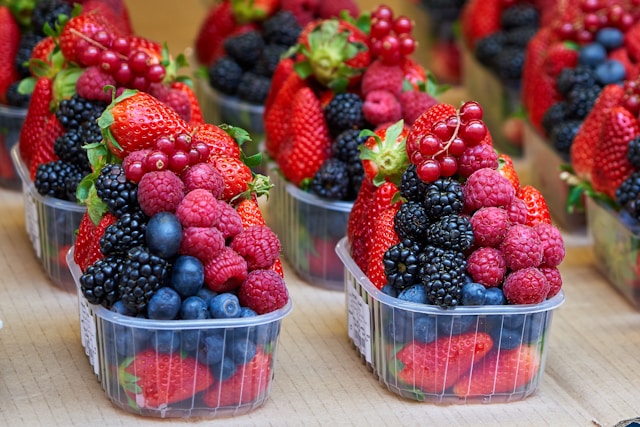
Red fruits or berries Italian — blueberries, raspberries, blackberries, currants and strawberries — have completed in a few years the transition from niche products to a structural category of the fruit and vegetable basket. This evolution, driven by profound demographic changes and new purchasing habits, is accompanied by important agronomic challenges, such as the organic protection of crops. The in-depth analysis of data from market, of the nutritional profiles official and the most recent clinical evidence illustrates its economic and health value.
ISMEA data on Italian fruit and vegetable spending
Data from the ISMEA-NIQ Observatory presented at Macfrut 2026 place thefruit and vegetable sector at almost 43 billion euros of spending, equal to 23% of the food basket Italian. Within the sector, red fruits are among the most dynamic categories: in 2025 domestic purchases grow for blueberries (+26%) and for blackberries (+37%), while strawberries advance by 8.9% in value. Also good is the organic, in quantity (+7%) and in value (+7,9%. ISMEA, 2026).
The growth is supported by demographic changes: Italy has over 26.6 million families, with single-person households now accounting for 36% of the total; purchase sizes are smaller and more frequent, perfectly suited to small fruits (ISMEA, 2026).
The evolution of consumption and the push from single-member families
| Indicator (blueberries, raspberries, blackberries, currants — excluding strawberries) | Value | Trend |
| Household spending | over €214 M | +15.3% year on year; +50% over three years |
| Volumes purchased | 15,235 t | +4,4% |
| Penetration | over 33% | First time over one third of families |
| Average category price | €14.10/kg | Up from €12.39/kg (2021) |
According to GfK–Italian Berry data updated mid-2024, the small fruits category (excluding strawberries) exceeded 214 million euros, with volumes of 15,235 tons and a Penetration that for the first time exceeded 33%: one family out of three buys small fruits at least once a year. The blueberry is the driving force of the category, while raspberries and blackberries remain more niche with still low purchase frequencies (Italian Berry, 2024, 2025).
Penetration in Italy maintains a strong geographical connotation: the North-West records rates almost 50% higher than the national average, the South and Sicily about half. This gap is however progressively reducing (Italian Berry, 2025).
Blueberry import and export
The performance of blueberries in Italy is significant:
- The production Italian is tripled in the last decade (2015-2024), from about 3,000 to 12,000 tons;
- in the same period the share destined forexport has dropped from 37% to 25%, a sign of an increasingly capable domestic market to absorb the product.
In 2024 export still generated nearly 20 million euros with an average price of €7.23/kg, significantly higher than that of strawberries and kiwi (Italian Berry, 2025).
The growth potential is made evident by a still negative trade balance, where Italy imports — mainly from Spain, Netherlands (mainly re-export from Peru and Chile) and France — quantities of blueberries much higher than those exported (Bosi, in AgroNotizie, 2025).
Italian strawberries, between greenhouse yields and Spanish competition
The domestic market
| Strawberry indicator (most recent data) | Value | Notes |
| Volumes purchased by families | ~75,000 t | Declining after previous peaks |
| Market value | ~390 M€ | Sustained by prices |
| Penetration | ~68% | More than two families out of three |
| Average price | ~5.18 €/kg | Increasing over 2023 |
| Share in “berries” spending | 62,6% | Decreasing from 65.8% in 2023 |
The strawberry remains the dominant reference of red fruits, but loses relative weight: in 2024 it represented 62.6% of spending on berries, against 65.8% the year before, mainly to the advantage of the blueberry. The domestic market is worth about 390 million euros on volumes around 75,000 tons, with a Penetration close to 68% and over 80% repeated purchases — an index of category loyalty (Italian Berry, 2025, 2026).
Surfaces, protected cultivation and yield
Italian strawberry growing is among the most intensive in Europe: over the88% of the surfaces is in protected cultivation (greenhouse and tunnel). According to Cso Italy estimates, for the 2026 campaign the national area approaches 4,500 hectares (+6% over 2025), with growth almost entirely concentrated in the South — Campania and Basilicata leading — while the North declines. The production center of gravity is now in the South, where about two-thirds of the national area is concentrated (Ciardiello, in Italiafruit, 2026; FreshPlaza, 2026).
The comparison with Spain remains uneven on the scale: the Huelva area alone in Andalusia concentrates about 40% of European production and the Spanish yield per hectare clearly exceeds the Italian one. The systematic review of 133 experiments conducted by Menzel (2025) also confirms the agronomic rationale of the Italian qualitative choice: under tunnels commercial yields are on average about one third higher than in open field, with better protection from cold, rain, and fruit diseases.
Accelerating export
On the foreign front, Italy plays defense on volumes but grows momentum: the strawberry exports in 2025 marked a +31% over the previous year, the highest value in recent years, with Austria and Germany as the main outlet markets. The trade balance is again negative, however, since imports — largely Spanish — remain higher (Cso Italy; FreshPlaza, 2026).
The origin of small fruits between myth and ancient medicine
The harvest of berries has accompanied man since the Paleolithic, as a source of food and remedy. The first written evidence dates back to classical antiquity: Pliny the Elder documents the abundance of raspberries on Mount Ida in Anatolia, from which the botanical name of the raspberry, Rubus idaeus ('bramble of Ida'). According to Greek mythology, the nymph Ida, picking berries to comfort baby Zeus, pricked herself and stained the formerly white fruits red.
The strawberry was instead linked to the cult of Adonis: according to the myth, Venus' tears for the young man's death turned into small heart-shaped fruits. In Rome, wild strawberries were consumed during June festivals, and the ‘Triumph of Strawberries’ survived until the Age of the Popes, when the strawberry fields displayed baskets at Campo de’ Fiori. In the Middle Ages, small fruits entered castle gardens and herbariums of Galenic medicine: the Salernitan School recommended blueberry leaves and berries for various ailments.
Harvest calendar and botanical characteristics of the species
The red fruits (berries) belong to botanical families different, united by small size and origin in the undergrowth.
| Species | Scientific name | Family | Harvested in Italy | Edible part (%) |
| raspberry | Rubus idaeus L. | Rosaceae | June–September | 100 |
| blueberry | Vaccinium myrtillus L. | Ericaceae | May–August (peak in June) | 100 |
| Blackberry | Rubus fruticosus L. | Rosaceae | July–October | 100 |
| Red/black currant | Ribes rubrum L. / R. nigrum L. | Grossulariaceae | June–August | 98 |
| strawberry | Fragaria × ananassa Duch. | Rosaceae | March–November (peak May–June) | 94 |
The blueberry requires acidic soils (pH 4.5–5.5) and a variable chilling requirement depending on the cultivar: the 'Duke', widespread in the North, has high demands, while low-chill selections have enabled early production in Sicily. Raspberry and blackberry, both belonging to the genus Rubus, have biennial shoots: they grow the first year, fruit the second, while new suckers ensure continuity.
The seasonality Italian seasonality follows a geographical progression from South to North — Sicily and Calabria in May, then Campania, Tuscany, Veneto, South Tyrol and Piedmont — which extends the time window of availability (Ferrari, in Italian Berry, 2025).
Cultivation techniques in different areas and biological control of the fruit fly
Growing areas and terroir
The varieties of microclimates Italian allows for almost continuous production. Piedmont, with moraine soils and continental climate, remains the historic heart; Trentino-Alto Adige exploits altitude and temperature variation for fruits rich in sugars and anthocyanins; Sicily, with mild winters and low-chill cultivars, anticipates marketing compared to Northern Europe (Italian Berry, 2024).
Agronomic practices
Most plantations adopt mulching, rain covers or tunnels, and drip irrigation, now standard in the context of increasing water scarcity. The strategic issue remains varietal fragmentation: an excess of cultivars in production causes inconsistency in perceived quality, one of the main obstacles to consumer loyalty (Ferrari, in Italian Berry, 2025).
The phytosanitary front: Drosophila suzukii
The gnat of small fruits (Drosophila suzukii), detected in Italy since 2009–2010, is the most serious threat for the sector: the female lays eggs inside the healthy and ripe fruit, bypassing many conventional treatments. For the province of Trento alone, De Ros and colleagues (2015) estimated in the past decade a damage annual over 3 million euros on five crops; estimates place the residual impact around 9% of potential revenues, mostly due to control costs (De Ros et al., 2015).
The defense integrated combines agronomic tools (pruning, field hygiene, removal of fallen fruits), physical tools (insect-proof nets with mesh below one millimeter), attractants (traps with fermentable baits) and targeted chemicals. On the side of biological control classic, Italy is at the forefront: since 2021 the release of the parasitoid Ganaspis kimorum (already indicated as G. brasiliensis, lineage G1), with programs extending from the province of Trento to several regions (Lisi et al., 2022).
Organic production
The organic now represents a significant share of small fruits, with Piedmont, Lombardy and Emilia-Romagna leading. The segment grows in line with the national trend of organic fruit and vegetables, increasing in 2025 by 7% in quantity and 7.9% in value (ISMEA, 2026).
Official nutritional values of red fruits according to CREA
Red fruits share a nutritional profile favorable: low fat, good fiber and micronutrient content, and a richness of bioactive compounds. The table reports the values from the official CREA tables per 100 g of edible portion.
| Nutrient | Raspberries | blueberries | Blackberries | Currants | Strawberries
|
| Energy (kcal) | 49 | 25 | 36 | 52 | 30 |
| Proteins (g) | 1,0 | 0,9 | 1,3 | 0,9 | 0,9 |
| Lipids (g) | 0,6 | 0,2 | tr | tr | 0,4 |
| Available carbohydrates (g) | 6,5 | 5,1 | 8,1 | 9,7 | 5,3 |
| of which sugars (g) | 6,5 | 5,1 | 8,1 | 9,7 | 5,3 |
| Total fiber (g) | 7,4 | 3,1 | 3,2 | 5,8 | 1,6 |
| Potassium (mg) | 220 | 160 | 260 | 370 | 160 |
| Calcium (mg) | 49 | 41 | 36 | 60 | 35 |
| Phosphorus (mg) | 52 | 31 | 48 | 43 | 28 |
| Iron (mg) | 1,0 | 0,7 | 1,6 | 1,3 | 0,8 |
| Vitamin C (mg) | 25 | 15 | 19 | 200 | 54 |
| Vitamin A RE (µg) | 13 | 13 | 2 | 17 | tr |
Note: tr = traces. In the foods in the table, starch is zero, so soluble sugars coincide with available carbohydrates. Source: CREA, Food composition tables (strawberries 007730; raspberries 007740; blackberry 007750; blueberries 007760; currants 007770).
I Raspberries stand out for dietary fiber (7.4 g/100 g, the highest in the group). The Currants is the richest in micronutrients: it excels in potassium (370 mg), calcium (60 mg), vitamin A and especially vitamin C, with an exceptional content of 200 mg per 100 g; it is also the sweetest (9.7 g). The Blackberries have the highest iron content (1.6 mg), useful in vegetarian diets. The blueberries are instead the least caloric (25 kcal) and the least sweet (5.1 g). The Strawberries remain among the lightest (30 kcal), with a good supply of vitamin C (54 mg).
Legal requirements for the use of nutritional claims on packaging
Below, for each species and in descending order, the micronutrients present in amounts exceeding 15% of the reference nutrient values (NRV) per 100 g of product — the threshold which under Reg. EC 1924/2006 permits the indication ‘source of’, while 30% allows ‘high content of’. NRV as per Reg. EU 1169/2011, Annex XIII:
- Currants — vitamin C 200 mg (250% of NRV); potassium 370 mg (18.5% of NRV);
- Strawberries — vitamin C 54 mg (67.5% of NRV);
- Raspberries — vitamin C 25 mg (31.2% of NRV);
- Blackberries — vitamin C 19 mg (23.8% of NRV);
- blueberries — vitamin C 15 mg (18.8% of NRV).
The vitamin C is therefore the only micronutrient that all five species provide in significant amounts; it Currants is the only one to exceed the threshold also for potassium. None of the other micronutrients recorded by CREA for these foods — calcium, phosphorus, iron, thiamine, riboflavin, niacin, vitamin A — reach 15% of the NRV in any of the species considered per 100 grams of edible portion.
The effects of anthocyanins on cardiovascular and metabolic health
The most studied class of compounds in red fruits is that of anthocyanins, the water-soluble pigments responsible for red-blue-purple coloration, accompanied by ellagitannins, flavonols, and phenolic acids. The antioxidant capacity of berries is among the highest in the entire plant kingdom (Skrovankova et al., 2015).
Heart and metabolism
The strongest evidence concerns the cardiometabolic. In subjects with metabolic syndrome, four weeks of supplementation with anthocyanins from berries (320 mg/day) significantly reduced fasting blood glucose (−15.7% compared to the control group), as well as triglycerides, total cholesterol, and LDL; at the molecular level, an increase in the expression of PPAR-γ and the reduction of NF-κB-dependent genes (TNF-α, IL-6) and C-reactive protein (Aboonabi & Aboonabi, 2020). In the same population, anthocyanins showed anti-atherogenic and antiplatelet (Aboonabi et al., 2020).
Vascular function
A 2026 systematic review and meta-analysis on healthy individuals concludes that blueberry consumption significantly improves Vascular function — measured as flow-mediated dilation (FMD), an indicator of endothelial health — while no consistent benefit emerges on cognitive in already healthy subjects (He et al., 2026). The practical message is cautious: cardiovascular benefits are well documented, cognitive ones remain context-dependent.
Glycemic response and acute cognition
On the acute, in middle-aged adults a single dose of wild blueberry taken with a meal improved both metabolic function (glucose and insulin response) and some memory and executive performances, suggesting a link between postprandial glycemic management and short-term cognitive performance (Whyte et al., 2020). The duration of exposure and the metabolic characteristics of subjects remain to be clarified as main response variables.
The applications of small fruits in gastronomy and processing
In the kitchen the berries are suitable for fresh consumption, in fruit salads, smoothie, and desserts, and are prime ingredients in pastry — from semifreddi to tarts. At the industrial level they feed juices, Jams, ice creams, yogurts, bars e Supplements, with a marked growth of functional beverages that enhance the anthocyanin content. Also relevant is the segment of frozen, constantly increasing in domestic use as well as in catering.
Selection criteria for the consumer and for large-scale distribution
For those who buy at the counter
The first recommendation is to favor products certified organic, seasonal and Made in Italy, following the geographical progression of the harvest. At purchase, check: intact surface (absence of bruises, molds or holes from oviposition), color uniform and bright, consistency firm and aroma intense, the absence of which betrays premature harvesting.
For professional buyers
For Large-Scale Distribution and Ho.Re.Ca. the continuity of supply is worth more today than the price: supply chain contracts with Italian producers guarantee consistent quality and traceability. It is useful to diversify the formats (from trays of 125–250 g to family packs of 300–500 g, up to 100 g snacks). For the processing industry, the varietal selection: cultivars rich in anthocyanins offer greater value for extracts and supplements, respecting residue parameters and absence of infestations by D. suzukii.
In summary
The growth of red fruits in Italy demonstrates the sector's ability to intercept new consumption needs. To consolidate this virtuous transition, the supply chain is called upon to overcome varietal fragmentation and invest in conversion to the organic farming system. From a health perspective, clinical data particularly reward the protective effectiveness on the cardiovascular system. Choosing organic, Italian, and seasonal products remains the most effective way to ensure crop sustainability andprotection of consumers.
Dario Dongo
Credit cover Timo Volz on Unsplash
References
Scientific studies
Aboonabi, A., & Aboonabi, A. (2020). Anthocyanins reduce inflammation and improve glucose and lipid metabolism associated with inhibiting nuclear factor-kappaB activation and increasing PPAR-γ gene expression in metabolic syndrome subjects. Free Radical Biology and Medicine, 150, 30–39. https://doi.org/10.1016/j.freeradbiomed.2020.02.004
Aboonabi, A., Meyer, R. R., Gaiz, A., & Singh, I. (2020). Anthocyanins in berries exhibited anti-atherogenicity and antiplatelet activities in a metabolic syndrome population. Nutrition Research, 76, 82–93. https://doi.org/10.1016/j.nutres.2019.12.007
De Ros, G., Conci, S., Pantezzi, T., & Savini, G. (2015). The economic impact of invasive pest Drosophila suzukii on berry production in the Province of Trento, Italy. Journal of Berry Research, 5(2), 89–96. https://doi.org/10.3233/JBR-150092
He, Y., Yang, J., Zhang, S., Mai, J., & Li, M. (2026). Blueberry consumption enhances vascular function but not cognitive abilities in healthy individuals: A systematic review and meta-analysis. Nutrition Research, 149, 162–177. https://doi.org/10.1016/j.nutres.2026.03.007
Lisi, F., Biondi, A., Cavallaro, C., Zappalà, L., Campo, G., Roversi, P. F., Sabbatini Peverieri, G., Giovannini, L., Tavella, L., Tortorici, F., Mori, N., Tonina, L., Caruso, S., Vaccari, G., Masetti, A., Schmidt, S., Falagiarda, M., Giorgini, M., Guerrieri, E., … Rossi Stacconi, M. V. (2022). Current status of Drosophila suzukii classical biological control in Italy. Acta Horticulturae, 1354, 193–200. https://doi.org/10.17660/ActaHortic.2022.1354.25
Menzel, C. M. (2025). A review of strawberry under protected cultivation: Yields are higher under tunnels than in the open field. The Journal of Horticultural Science and Biotechnology, 100(3), 286–313. https://doi.org/10.1080/14620316.2024.2449026
Özeltürkay, E. Y., Predieri, S., Medoro, C., Gatti, E., Cianciabella, M., Daniele, G. M., Mazzoni, L., Karhu, S., Latvala, T., & Kafkas, E. (2026). Quality expectations and willingness to pay of German, Italian, and Turkish strawberry consumers. Horticulturae, 12(4), 451. https://doi.org/10.3390/horticulturae12040451
Skrovankova, S., Sumczynski, D., Mlcek, J., Jurikova, T., & Sochor, J. (2015). Bioactive compounds and antioxidant activity in different types of berries. International Journal of Molecular Sciences, 16(10), 24673–24706. https://doi.org/10.3390/ijms161024673
Whyte, A. R., Rahman, S., Bell, L., Edirisinghe, I., Krikorian, R., Williams, C. M., & Burton-Freeman, B. (2020). Improved metabolic function and cognitive performance in middle-aged adults following a single dose of wild blueberry. European Journal of Nutrition. https://doi.org/10.1007/s00394-020-02336-8
Institutional and sector sources
Bosi, T. (2025, May 19). Berries, blueberry superstar at Macfrut 2025. AgroNews. https://agronotizie.imagelinenetwork.com/agricoltura-economia-politica/2025/05/19/berries-mirtillo-superstar/87387
Ciardiello, P. (2026, February 2). Contact group 2026, Italy shines: 250 more hectares of strawberries. Italiafruit. https://www.italiafruit.net/gruppo-di-contatto-2026-brilla-litalia-250-ettari-di-fragole-in-piu
CREA — Council for agricultural research and analysis of agricultural economics. (n.d.). Food composition tables. https://www.alimentinutrizione.it
Cso Italy — Fruit and Vegetable Service Center. (n.d.). Strawberries. https://www.csoservizi.com/focus-prodotti/fragole/
FreshPlaza. (2026, February 25). Italian strawberry exports grew by 31 percent compared to last year. https://www.freshplaza.it/article/9814087/
ISMEA — Institute of Services for the Agricultural Food Market. (2026, April 21). Macfrut 2026: increasing attention of Italian families towards fruit and vegetables. https://www.ismea.it/flex/cm/pages/ServeBLOB.php/L/IT/IDPagina/13578
Italian Berry / GfK — NCX Drahorad. (2024, 2025). Analysis of small fruit and strawberry consumption in Italy. https://italianberry.it

Dario Dongo, lawyer and journalist, PhD in international food law, founder of WIISE (FARE - GIFT – Food Times) and Égalité.


