

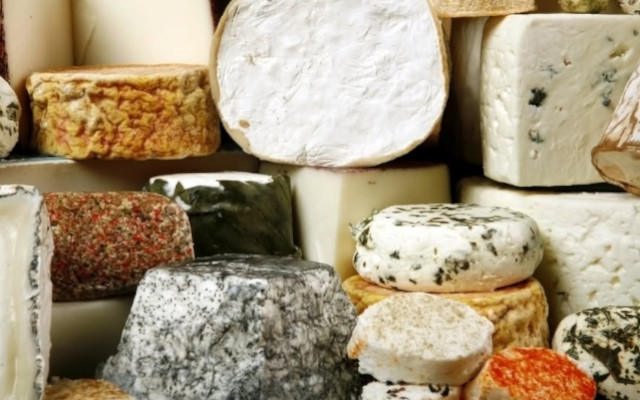
The supply chain of Italian goat cheeses finds its main production engine in Sardinia, a leading region which alone collects 57.9% of the national goat's milk (ISTAT, 2024) and hosts approximately 28% of the sector's livestock heritage. A complex national panorama develops around this island center of gravity, which includes, among other things, two PDOs, one PGI and 44 cheeses registered among the Traditional Agri-Food Products (PAT).
On an overall level, the collection of goat's milk reached 40,900 tonnes in 2024, with a growth of 50.4% compared to 2006. This article summarizes the numbers of the supply chain and the central role of Sardinia, the history and types of cheesemaking, the fundamentals of the regulations in force, the nutritional values indicated by CREA with the related nutrition claims admitted in the European Union, as well as the most recent scientific evidence.
The goat in the cheese-making history of the Mediterranean
The goat it was among the first domesticated animals, in the Fertile Crescent, about ten thousand years ago. In book IX of Odyssey the Cyclops Polyphemus milks sheep and goats, curdles half of the milk, then places the curds in wicker baskets (Homer, 8th century B.C.). It is a gesture still recognisable in cheeses basket-moulded of Southern Italy, whose name derives precisely from the baskets used for moulding.
For centuries the goat has represented in Italy the resource of marginal areas – from the Alps to the Apennines, to the islands – as it enhances poor pastures and difficult terrain. The goat heritage is now growing: between 2006 and 2025 the animals increased by 3.4%, with increases of 64.8% in the North-West and 106.3% in the North-East, while the Islands host 37.2% of them (ISTAT, 2026).
Goat milk, the supply chain figures
The collection of goat milk at Italian farms reached 40.9 kt in 2024, compared to 27.2 K in 2006 (+50.4%), equivalent to approximately 0.3% of milk collected in Italy. The growth stems mainly from productivity per head, up by 54.5% in the same period (ISTAT, 2026).
The Sardinia is the leading producing region, with 57.9% of goat milk collected in Italy (ISTAT, 2024).
The goat supply chain in Sardinia
Sardinia hosts 28% of goat Italians, according to data from the zootechnical registry at the end of 2024 (Confagricoltura Sardegna, 2025). The areas with the greatest goat vocation are Sarrabus-Gerrei, Linas, Ogliastra as well as the province of Nuoro, where the Sardinian breed goat (Sardegna Region, n.d.).
Even at the end of the seventies, Sardinian goat's milk was largely mixed with sheep's milk in dairies. The University of Sassari then estimated a regional production of 17,500 tonnes per year, equal to approximately 10% of sheep production, processed with techniques derived from Fiore Sardo and semi-cotto (Campus, 1978).
The Semi-cooked goat cheese, produced throughout the island, is documented by the accounting records of cooperative dairies from the early seventies. The milk - raw in artisanal dairies, pasteurized in industrial ones - is coagulated at 37-39 °C with calf, kid or lamb rennet; the curd, broken into corn kernels, is semi-cooked at 41-43 °C. The wheels, weighing 2.5-3 kg, mature for approximately 60 days in the young type, from 12 to 18 months in the matured type (Sardinia Region, s.d.).
The Cooked cheese (goat's) of Fluminimaggiore, in the Iglesiente, follows a singular technique. The curd, obtained with kid rennet, is portioned into 500 gram pieces, formed in whey at 70°C, roasted on the embers, immersed in whey at 100°C and pressed into a heart shape; the cheese is consumed within a week (Sardinia Region, n.d.).
Other traditional Sardinian cheeses use goat's milk without declaring it in the name. The Hawthorn, a soft paste with flowery rind, is obtained from thermized or pasteurized milk of Sardinian breed goats, with forms of 150-250 grams aged from 15 to 30 days. The Sour cheese, an acidic fresh cheese, uses goat's or sheep's milk, while the Axridda Cheese from Escalaplano, from raw sheep's or goat's milk, matures protected by a clay coating (Sardinia Region, n.d.).
The list of Sardinia also lists, in other categories, edible goat's milk (Latti de craba), kid rennet (Caggiu de crabittu) as well as processed sheep's or goat's ricotta (Arrescottu spongiau) (MASAF, 2026).
On the industrial level, the cooperative Assegnatari Associati Arborea allocated in 2023 to dairy products for consumption 3.9 K litres of goat's milk, approximately 4 kt, developing fresh milk, yogurt e kefir goat's (Latte Arborea, 2025).
Types and cheese-making techniques
Goat's cheeses are distinguished first of all by coagulation:
- in goat's cheeses with lactic coagulation acidification prevails over the action of rennet, used in minimal doses, and gives soft pastes with a sour taste;
- in goat's cheeses with rennet coagulation rennet acts more rapidly, allowing cheeses suitable for ageing.
The ageing then separates fresh goat's cheeses – consumed within a few days – from semi-aged and aged hard-paste cheeses, also suitable for grating.
The Milk can be raw, as prescribed by the specifications of Roccaverano PDO and Formaggella del Luinese PDO, or pasteurized.
In the South, cacioricotta and mixed sheep-goat cheeses are popular. In the Alps, soft goat cheeses and mountain toma cheeses prevail.
The PDO and PGI of goat's cheese
Two PDO they concern cheeses obtained exclusively from goat's milk, both in north-western Italy. To these is added a sheep-goat PGI in Basilicata, while other denominations allow a minority share of goat's milk.
Roccaverano PDO, Piedmont
The Roccaverano PDO – designation that can be used as an alternative to Robiola of Roccaverano PDO – is a fresh cheese produced in municipalities in the provinces of Asti and Alessandria. Since 2023 the specification requires whole raw milk By goat in purity, from Roccaverano or Camosciata delle Alpi goats, as well as from their crosses, excluding the additions of cow's or sheep's milk previously permitted (EU executive regulation 2023/335). The coagulation is lactic-rennet, the cylindrical shapes weigh from 250 to 400 grams. The fresh type matures from the fourth to the tenth day, the refined one from the eleventh, when the rind is covered with a natural mold cream, straw or reddish color (Piedmont Region, N/A).
The raw milk, with the natural cultures, gives the cheese a characteristic microbiota. Lactococcus lactis as well as Leuconostoc mesenteroides dominate the bacterial component, while the fungal component, led by Galactomyces candidum and Kluyveromyces marxianus, proves to be much more complex (Biolcati et al., 2022).
Formaggella del Luinese PDO, Lombardy
The Formaggella del Luinese PDO, registered at European level in 2011, is a cheese with a semi-hard paste produced exclusively with whole raw milk from goat, with rennet coagulation, with a minimum maturation of 20 days. The entire supply chain, from breeding to maturing, takes place in the Varesine Prealps, in the north of the province of Varese in Lombardy (European Commission, 2010).
Canestrato di Moliterno PGI, Basilicata
The Canestrato di Moliterno PGI is a cheese sheep-goat a hard paste obtained from whole sheep's milk, in quantities between 70% and 90%, with the addition of whole goat's milk in quantities ranging from 10% to 30% (Basilicata Region, s.d.). An application to amend the specifications published in 2024 extended the area of origin of the milk, adding the Grigia Lucana as well as the Rossa Mediterranea to the permitted goat breeds (European Commission, 2024).
Other PDOs with goat milk
Goat's milk contributes in a minority proportion to other designations. The Pecorino di Picinisco PDO (Lazio) allows up to 25% raw goat's milk from local breeds with limited distribution, such as the Capra grigia ciociara and Capra bianca monticellana (European Commission, 2013). In Piedmont the regulations of Bra PDO as well as Raschera PDO allow small additions of sheep's or goat's milk to cow's milk (Piedmont Region, 2020a; Piedmont Region, 2020b).
Traditional Agri-food Products, 44 goat cheeses
The national list of Traditional Agri-food Products (PATs), reached in 2026 at its twenty-sixth revision with 5,813 entries, includes 44 goat cheeses (MASAF, 2026; processing by GIFT):
- the count considers entries in the cheese category whose name explicitly refers to goat's milk, even in dialect or in German language, such as Crava, Cevrin, Civrin or Ziegenkäse. Excluded are the Lombard cow's milk Caprino as well as the Caprino presamico (from cow's milk) of Supino (Frosinone, Lazio), obtained from cow's milk, as well as ricotta goat, registered in another category;
- to these are added three mixed cheeses, whose name indicates goat's milk alongside other milks: the hard cheese made from sheep's, goat's and cow's milk from Campania, the Trentino mixed goat's milk and the pressed sheep's or goat's milk cheese from the Aosta Valley. Other traditional goat's milk cheeses, not identifiable by name alone, may appear in the list with different names.
The Piedmont leads the ranking with six entries, followed by Tuscany with five and by Campania with four. Among the most evocative names are the Cevrin from Coazze (Turin, Piedmont), the goat's milk cheeses from the island of Capraia (Livorno, Tuscany), the Caprino with fig latex from the Marche as well as the Sicilian 'padduni' goat's cheese.
Table 1. Goat cheeses registered in the national list of PATs (2026)
| Region or autonomous province | PAT goat cheeses
|
| Abruzzo | Abruzzo goat cheese, Abruzzo goat cheeses |
| Basilicata | goat cheese |
| Calabria | Goat cheese from Aspromonte; Nicastrese goat cheese; Goat's cheese from Limina |
| Campania | Goat's cacioricotta from Cilento; Goat caciotta from the Lattari Mountains; Tanned goat cheese from Montemaggiore; Goat's cheese from Cilento |
| Emilia-Romagna | goat cheese |
| Friuli Venezia Giulia | Goat's Caciotta; Mature goat cheese; Soft goat's cheese |
| Lazio | Goat cheese; Goat stracchino |
| Liguria | Caprino (from Valbrevenna); Malga goat cheese (from the Maritime Alps) |
| Lombardy | Goat Cadolet; Lactic coagulation goat cheese; Goat cheese with rennet coagulation |
| Marche | Goat cheese; Goat cheese with fig latex |
| Molise | goat cheese |
| Piedmont | Goat cheese from Val Vigezzo; Piedmontese lactic goat cheese; Piedmontese rennet goat cheese; Valsesian goat cheese or Crava; Cevrin from Coazze; Civrin from Val Chiusella |
| Autonomous Province of Bolzano | Algunder Ziegenkäse (Lagundo goat's cheese) |
| Autonomous Province of Trento | goat cheese |
| Puglia | Orsarese goat's cheese cacioricotta; Goat |
| Sardinia | 'Casu cottu' (goat); Goat semi-cooked |
| Sicily | 'Padduni' goat's cheese; Sicilian goat cheese |
| Tuscany | Maremma goat's cheeses; Goat's milk cheeses from the Island of Capraia; Goat's cheese from Alto Mugello; Apuan goat's cheese; Daisy |
| Aosta Valley | Soft goat's cheese |
| Veneto | Caciocapra |
Source: MASAF (2026), GIFT processing.
The nutritional values according to CREA
The CREA food composition tables do not report values for generic fresh or mature goats. For goat cheeses they instead record the Goat cacioricotta, fresh cheese present in the PATs of Campania and Puglia, while goat's milk offers a reference for the raw material (CREA, 2019a; CREA, 2019b).
Table 2. Nutritional values per 100 g (CREA, 2019)
| Nutritious | Goat cacioricotta (160810) | Goat's milk (130010)
|
| Energy | 761 kJ / 182 kcal | 320 kJ / 76 kcal |
| Fat | 14.3 g | 4.8 g |
| of which saturated fatty acids | N/A | N/A (69.2% of fatty acids) |
| Carbohydrates | 1.5 g | 4.7 g |
| of which sugars | 1.5 g | 4.7 g |
| Fibre | 0 g | 0 g |
| Protein | 11.9 g | 3.9 g |
| Salt | N/A | 0.1 g |
| Calcium | 396 mg (50% NRV) | 141 mg (18% NRV) |
| Phosphorus | 240 mg (34% NRV) | 106 mg (15% NRV) |
| Vitamin A | N/A | 86 µg (11% NRV) |
| Riboflavin | N/A | 0.11 mg (8% NRV) |
Note: NRV: Nutrient Reference Values as per Annex XIII to Regulation (EU) No 1169/2011. Salt calculated from sodium (× 2.5). N/A: data not available in the CREA table.
Goat ricotta cheese provides 182 kcal per 100 g, with 11.9 g of protein and 396 mg of calcium, equal to half the nutrient reference value. In goat milk the short-chain fatty acids – from butyric to capric – represent 17.5% of total fatty acids (CREA, 2019b). It is precisely these fatty acids, released during maturation, that give goat cheeses their characteristic aromatic notes (Broel et al., 2022).
The permitted nutrition claims
The conditions of Regulation (EC) no. 1924/2006 occur on the product ready for consumption, such as cheese or milk. Based on the CREA values, goat cacioricotta meets the conditions for the 'ad high protein content', as proteins provide 26% of energy, as well as for 'high in Calcium' and 'high in Phosphorus' (EC regulation 1924/2006, Annex).
Goat's milk reaches the threshold of 20% of energy from proteins, with 20.5%, and for calcium as well as phosphorus exceeds the 15% of the reference values required for liquids for the indication 'high in'. Vitamin A e B2 (riboflavin) exceed 7.5%, the threshold for the indication 'source of.
Operators wishing to use nutrition claim in commercial communication must in any case verify compliance with the aforementioned conditions, through analysis on representative product samples, subject to a zero tolerance in default (Dongo, 2023).
Table 3. Nutrition claims permitted based on CREA values
| Claim | Condition (Regulation (EC) 1924/2006, Annex) | Goat cacioricotta | goat milk
|
| 'High in protein' | At least 20% of energy from proteins | Yes (26%) | Yes (20.5%) |
| 'High in calcium' | At least 30% NRV per 100 g or 15% per 100 ml | Yes (50%) | Yes (18%) |
| 'High in phosphorus' | At least 30% NRV per 100 g or 15% per 100 ml | Yes (34%) | Yes (15%) |
| 'Source of Vitamin A' | At least 15% NRV per 100 g or 7.5% per 100 ml | N/A | Yes (11%) |
| 'Source of Riboflavin' | At least 15% NRV per 100 g or 7.5% per 100 ml | N/A | Yes (8%) |
Possible health benefits
The most recent scientific reviews describe goat milk as a natural source of bioactive compounds: peptides derived from proteins, oligosaccharides, short and medium chain fatty acids, as well as phospholipids (dos Santos et al., 2023).
Some studies – not yet submitted to EFSA (European Food Safety Authority) for assessment in order to evaluate the validity of any health claims not currently authorised – suggest some potential benefits associated with goat milk consumption:
- the smaller fat globules, softer curd, and higher proportion of short and medium chain fatty acids favour digestion as well as
- lipid metabolism compared to cow milk;
- peptides with antihypertensive activity, capable of inhibiting the angiotensin converting enzyme, while
- oligosaccharides exert a prebiotic effect documented in experimental studies (Nayik et al., 2021).
Consumption warnings
Fresh goat cheeses at raw milk, such as fresh Roccaverano PDO, best express the connection with the territory. The consumption of fresh dairy products and cheeses made from raw milk that are not aged, however, should be avoided by vulnerable consumers – such as children, the elderly, pregnant women and immunocompromised persons – in view of the inevitable microbiological risks associated with this type of production (Dongo, 2025).
Conclusions
Italian goat's cheese has two PDOs of pure goat's milk, one PGI from sheep and goats as well as 44 PATs distributed in twenty territorial lists, from Piedmontese Cevrin to Apulian cacioricotta. The supply chain is growing, with 40,900 tonnes of milk collected in 2024 and an increasing goat population especially in the North.
On a nutritional level, the CREA tables allow, for goat's cacioricotta, the voluntary nutritional indications 'high in protein', 'high in calcium' as well as 'high in phosphorus'. Research indicates the richness of bioactive compounds in goat's milk and other potential benefits that deserve further study.
Dario Dongo
Credit cover Assolatte
Frequently asked questions
How many PDOs of goat cheese are there in Italy? Two PDOs provide only goat milk: Roccaverano PDO (Piedmont) and Formaggella del Luinese PDO (Lombardy). Canestrato di Moliterno PGI (Basilicata) is an ovi-caprine cheese.
How many PATs of goat cheese are there? The 2026 national list includes 44 cheeses whose name recalls goat's milk, as well as three cheeses mixed with goat's milk.
Is Murazzano PDO a goat cheese? No, it is a sheep's milk cheese, produced with pure sheep's milk or with the addition of cow's milk up to 40%.
How much goat milk is produced in Italy? In 2024 the collection reached 40,900 tonnes, 50.4% more than in 2006, according to ISTAT.
What nutritional claims can goat cheese carry? Based on CREA values, goat cacioricotta can meet the conditions for 'high protein', 'high calcium' as well as 'high phosphorus'.
References
Geographical indications, European Union acts
Commission Implementing Regulation (EU) 2023/335 of 1 February 2023 approving non-minor amendments to the specification for a name entered in the register of protected designations of origin and protected geographical indications ('Robiola di Roccaverano' (PDO)). OJ L 47, 15.2.2023, pp. 46-47. http://data.europa.eu/eli/reg_impl/2023/335/oj
Commission communication C/2024/3834. Single document 'Canestrato di Moliterno' (PGI), EU No PGI-IT-0487-AM01. OJ C, 2024. http://data.europa.eu/eli/C/2024/3834/oj
Regulation (EU) 2024/1143 of the European Parliament and of the Council of 11 April 2024 on geographical indications for wine, spirit drinks and agricultural products, as well as traditional specialities guaranteed and optional quality terms for agricultural products. Consolidated text: 18/03/2026. http://data.europa.eu/eli/reg/2024/1143/2026-03-18
Consumer information and nutrition claims, European Union acts
Regulation (EC) No 1924/2006 of the European Parliament and of the Council of 20 December 2006 on nutrition and health claims made on foods. Consolidated text: 13/12/2014. http://data.europa.eu/eli/reg/2006/1924/2014-12-13
Regulation (EU) No 1169/2011 of the European Parliament and of the Council of 25 October 2011 on the provision of food information to consumers. Consolidated text: 01/04/2025. http://data.europa.eu/eli/reg/2011/1169/2025-04-01
Specifications of PDO and PGI
European Commission. (2010). Summary sheet 'Formaggella del Luinese' (DOP), CE No. IT-PDO-0005-0524-17.02.2006. Official Journal of the European Union, C 220 of 14.8.2010. https://unionalimentari.com/wp-content/uploads/2024/09/DOP_formaggella.pdf
European Commission. (2013). Summary sheet 'Pecorino di Picinisco' (DOP). https://www.onaf.it/uploads/public/formaggi/1824_1-dop-rich-pecorino-di-picinisco-c-05720130227it00280032.pdf
Basilicata Region. (s.d.). Production specifications for the pecorino cheese with protected geographical indication 'Canestrato di Moliterno'. https://regione.basilicata.it/giuntacma//files/docs/DOCUMENT_FILE_3095664.pdf
Piedmont Region. (n.d.). Robiola di Roccaverano / Roccaverano PDO. Piedmont Agri Quality. https://www.piemonteagri.it/qualita/en/products/cheese/374-robiola-di-roccaverano-roccaverano-dop
Piedmont Region. (2012). D.G.R. 27 April 2012, n. 3-3799, annex: Production Specification for Murazzano PDO cheese. Official Bulletin n. 22/2012. https://www.regione.piemonte.it/governo/bollettino/abbonati/2012/22/attach/dgr_03799_040_27042012.pdf
Piedmont Region. (2020a). Press Release: Modification of the production regulation for Bra PDO. Official Bulletin no. 8/2020. https://www.regione.piemonte.it/governo/bollettino/abbonati/2020/08/attach/aa_aa_regione%20piemonte%20-%20comunicato_2020-02-14_71679.pdf
Piedmont Region. (2020b). Press Release: Modification of the production regulation for Raschera PDO. Official Bulletin no. 4/2020. https://www.regione.piemonte.it/governo/bollettino/abbonati/2020/04/attach/aa_aa_regione%20piemonte%20-%20comunicato_2020-01-15_71202.pdf
Traditional Agri-food Products (PATs)
MASAF. (2026). Twenty-sixth revision of the list of traditional agri-food products, with table by region and product category (decree 6 February 2026, n. 59360). https://www.masaf.gov.it/flex/cm/pages/ServeBLOB.php/L/IT/IDPagina/24151
Goat farms and goat milk, official statistics
ISTAT. (2024). Italian Statistical Yearbook 2024, chapter 13, Agriculture. https://www.istat.it/storage/ASI/2024/capitoli/C13.pdf
ISTAT. (2026). Agricultural and livestock production, year 2025 [Focus]. https://www.istat.it/wp-content/uploads/2026/09/Focus_Produzioni-agricole-e-zootecniche_Anno-2025-rev-7-settembre.pdf
Goat supply chain in Sardinia
Campus, R. L. (1978). Goat cheese produced in Sardinia: preliminary note. Sassari Studies, Section III, Annals of the Faculty of Agriculture of the University of Sassari, 26, 97-106. https://iris.uniss.it/handle/11388/265022
Confagricoltura Sardinia. (2025). The sheep sector and pastoral activity in Sardinia 50 years after 'Su lamentu de su pastor'. https://www.confagricoltura.sardegna.it/wp-content/uploads/2025/05/Comparto-Ovino-a-50-anni-da-Su-lamentu-de-su-pastore-3.pdf
Latte Arborea. (2025). Impact Report 2023. Arborea Associated Members, Agricultural Cooperative Company with Shares, Benefit Company. https://www.arborea1956.com/wp-content/uploads/2025/03/relazione-impatto-2023.pdf
Autonomous Region of Sardinia. (N/A). Identification sheets of traditional products of the Sardinia Region: cheeses. https://files.regione.sardegna.it/squidex/api/assets/redazionaleras/df33e5a1-c313-4545-bbcf-b1018928c627/4.-formaggi.pdf
Nutritional data
CREA – Food and Nutrition Research Centre. (2019a). Food composition tables: Goat Cacioricotta (code 160810). https://www.alimentinutrizione.it/tabelle-nutrizionali/160810
CREA – Food and Nutrition Research Centre. (2019b). Food composition tables: Goat milk (code 130010). https://www.alimentinutrizione.it/tabelle-nutrizionali/130010
Scientific studies on goat milk
dos Santos, W. M., Gomes, A. C. G., Nobre, M. S. de C., Pereira, Á. M. de S., Pereira, E. V. dos S., dos Santos, K. M. O., Florentino, E. R., & Buriti, F. C. A. (2023). Goat milk as a natural source of bioactive compounds and strategies to enhance the amount of these beneficial components. International Dairy Journal, 137, 105515. https://doi.org/10.1016/j.idairyj.2022.105515
Nayik, G. A., Jagdale, Y. D., Gaikwad, S. A., Devkatte, A. N., Dar, A. H., Dezmirean, D. S., Bobis, O., Ranjha, M. M. A. N., Ansari, M. J., Hemeg, H. A., & Alotaibi, S. S. (2021). Recent insights into processing approaches and potential health benefits of goat milk and its products: A review. Frontiers in Nutrition, 8, 789117. https://doi.org/10.3389/fnut.2021.789117
Scientific studies on goat cheeses
Biolcati, F., Ferrocino, I., Bottero, M. T., & Dalmasso, A. (2022). The bacterial and fungal microbiota of 'Robiola di Roccaverano' protected designation of origin raw milk cheese. Frontiers in Microbiology, 12, 776862. https://doi.org/10.3389/fmicb.2021.776862
Broel, N., Sowa, M. A., Manhard, J., Siegl, A., Weichhard, E., Zorn, H., Li, B., & Gand, M. (2022). Altering the chain length specificity of a lipase from Pleurotus citrinopileatus for the application in cheese making. Foods, 11(17), 2608. https://doi.org/10.3390/foods11172608
Classical historical sources
Homer. (1900). The Odyssey (S. Butler, trans.), Book IX. Longmans, Green and Co. https://www.gutenberg.org/ebooks/1727
Articles on Food Times
Dongo, D. (2023, 29 June). Nutrition and health claims, what tolerances on declared values? FT (Food Times). https://www.foodtimes.eu/en/consumers-and-health/nutrition-health-claims-tolerances-declared-values/
Dongo, D. (2025, January 14). Raw milk cheeses, no for children and elderly. FT (Food Times). https://www.foodtimes.eu/en/food-systems/raw-milk-cheeses-no-for-children-and-elderly/

Dario Dongo, lawyer and journalist, PhD in international food law, founder of WIISE (FARE - GIFT – Food Times) and Égalité.


 alle DOP e PAT. Dati ISTAT, filiere, valori e indicazioni nutrizionali)