

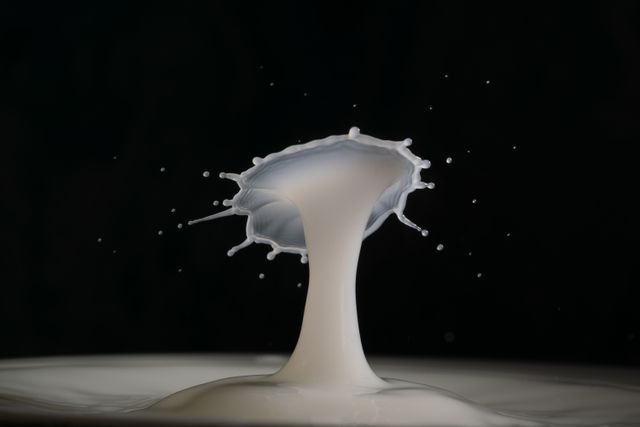
the lactose maldigestion and the intolerance to the lactose are not synonymous. The first is a physiological condition common to approximately two adults out of three, on a global scale, while the second is a clinical syndrome that manifests only in some of them and depends on the dose taken, the intestinal microbiota and individual sensitivity.
A perspective published in Advances in Nutrition (Geurts et al., 2026) proposes a rigorous classification of the terms and demonstrates how, in the vast majority of cases, milk and dairy products can remain in the diet. Following is the analysis of the study and the solutions offered by the Italian dairy supply chain, from lactose-free products to naturally lactose-free cheeses.
The concept of 'maldigestion' - also adopted in the official Italian text of health claims authorized in the European Union, where it refers to 'subjects who poorly digest lactose' (EU regulation 432/2012, Annex) - is also expressed, in Italian clinical literature, as 'lactose malabsorption'.
Lactose, natural milk sugar
The lactose è the main carbohydrate of milk. Human milk contains approximately 7.0 g per 100 ml, cow's milk approximately 4.7 g per 100 ml. It is a disaccharide with low sweetening power, made up of glucose and galactose joined by a β-1,4-glycosidic bond. The World Health Organization considers it an intrinsic milk sugar and excludes it from free sugars, whose intake must instead be kept below 10% of total energy (Geurts et al., 2026).
In breastfed infants, lactose provides approximately 40% of energy. A share of approximately 20% escapes digestion in the small intestine and reaches the colon, where it promotes the development of bifidobacteria. Galactose, in turn, enters the synthesis of myelin galactolipids. Primary intolerance is rare before the age of five and, in young children, usually results from transient intestinal diseases, such as gastroenteritis or celiac disease, and regresses upon recovery (Geurts et al., 2026). The topic is explored in depth in the article dedicated to milk for children and early childhood.
After weaning, lactose retains favorable characteristics. It has a Glycaemic Index relatively low (46, compared to 100 for glucose and 65 for sucrose), stimulates a moderate insulin response and has lower cariogenicity than sucrose, since it is fermented more slowly by bacteria in the oral cavity (Geurts et al., 2026).
Four levels of familiarity with lactose
The authors (Geurts et al., 2026) describe four levels of lactose tolerance, in relation to genetic heritage and responses to its intake. The common reference is lactase, the enzyme of the small intestine which breaks down lactose into two simple sugars – glucose and galactose – absorbed by the body. The first two levels indicate whether the enzyme remains active in adulthood, the third describes what happens when part of the lactose is not digested, the fourth the actual intolerance:
- the lactase persistence (in summary: the enzyme remains active throughout life) is a dominant genetic character, which allows lactose to be digested even in adulthood. The most studied variant in Europe appeared about 7,500 years ago in the central Balkans, in association with the first dairy farming cultures. In East Africa other variants emerged independently, an example of convergent evolution between genes and food culture;
- the lactase non-persistence (in summary: the enzyme is reduced with growth) is the original condition of the human species, common to most mammals, and does not constitute a disease: after weaning, the expression of the enzyme decreases in a programmed manner. It affects approximately two-thirds of adults in the world, with values ranging from 4% in Denmark to almost 100% in East Asian populations. Intestinal lactase expression depends on genotype and age and neither increases nor decreases with lactose consumption (Forsgård, 2019);
- the maldigestion (in summary: part of the lactose is not digested) is the incomplete hydrolysis of lactose in the small intestine. The unsplit portion reaches the colon, where it is fermented by intestinal bacteria, even without causing problems. It is detected with the hydrogen breath test, the breath test described later. It mostly derives from non-persistence, but can have secondary causes, such as damage to the intestinal mucosa, and can also appear in those who conserve lactase, when the ingested dose exceeds digestive capacity;
- the'intolerance finally, it is the clinical syndrome, i.e. the appearance of symptoms after taking lactose: flatulence, bloating, abdominal pain or cramps and diarrhoea, more rarely nausea. These symptoms may partly overlap with those of irritable bowel syndrome.
The central distinction is the following: maldigestion is a necessary but not sufficient condition for intolerance. In other words, those who misdigest lactose do not necessarily experience discomfort, and many people with maldigestion consume dairy products without any problems. The often misquoted estimate of 68% of adults worldwide being 'lactose intolerant' actually measures maldigestion. The systematic review from which this assertion comes, from 2017, was in fact withdrawn in January 2025 due to methodological problems linked to the inclusion of non-representative data (Geurts et al., 2026).
The role of the microbiota and the adaptation of the colon
When undigested lactose reaches the colon, many probiotic bacteria – bifidobacteria and lactobacilli, in particular – are able to break it down. In non-persistent subjects, 80.6% of the fecal microbiota possesses β-galactosidase activity, therefore lactose is metabolised rapidly and rarely exerts a significant osmotic load. The symptoms rather depend on subsequent fermentations: bifidobacteria transform lactose into lactate and acetate without producing hydrogen, carbon dioxide and methane – the gases responsible for bloating and flatulence – while other bacterial groups ferment it more quickly into gaseous products (Geurts et al., 2026).
The colon adaptation. In a twelve-week study of 25 adults of Asian origin with a non-persistent genotype, increasing daily doses of lactose from 6 to 12 and then to 24 g, each for four weeks, were well tolerated. The relative abundance of bifidobacteria almost doubled (from 5.5% to 10.4%), fecal β-galactosidase activity increased from 272 to 570 U/g and exhaled hydrogen decreased by approximately one third. The effects regressed upon withdrawal of lactose, confirming that adaptation requires continuous exposure (Janssen-Duijghuijsen et al., 2024).
The practical consequence is counterintuitive: a strictly lactose-free diet, adopted without necessity, can make symptoms more frequent when lactose is reintroduced, precisely because the substrate that maintains the adapted microbial community is lacking (Forsgård, 2019).
Negative suggestions vs clinical diagnosis
the'reported intolerance exceeds systematically confirmed intolerance with objective tests. In the double-blind controlled studies examined by the authors, at moderate doses the symptoms after normal milk and after lactose-free milk or placebo differ little, except for a slight increase in diarrhea. In a blind test, participants recognized lactose as the cause of their complaints in less than half of the cases, while a false glucose load caused symptoms in almost half of the subjects who attributed them to lactose. In people with irritable bowel syndrome, the reported intolerance was 3.5 times more frequent than in controls, compared to identical maldigestion in the two groups (Geurts et al., 2026).
The authors therefore recommend ascertain the condition with a clinical diagnosis before any dietary restrictions. The hydrogen breath test is the most used and recognized test to diagnose lactose malabsorption, simple and non-invasive - associated with the evaluation of symptoms.
EFSA (European Food Safety Authority) concluded that it is not possible to set a single lactose threshold valid for all, but that the vast majority of people with maldigestion tolerate up to 12 g of lactose in a single intake, with absent or mild symptoms, and higher doses if distributed throughout the day (EFSA, 2010). Variants of β-casein A1 have been implicated as a contributing cause of similar disorders, but the evidence in this regard is inconsistent and of low or moderate certainty (Geurts et al., 2026).
Dairy products in dietary guidelines
Milk and dairy products provide calcium, vitamin B12, vitamin B2 (riboflavin), phosphorus, iodine e proteins By high biological value. Meta-analyses of cohort studies associate dairy consumption with a lower risk of type 2 diabetes, reduced by 3% for every 200 g per day of total dairy products (Feng et al., 2022), and of colorectal cancer, with a relative risk of 0.80 for high consumption compared to low consumption (Barrubés et al., 2019). Furthermore, this research has not been evaluated by EFSA for the purposes of authorizing specific health claims in the European Union.
The nutritional virtues of dairy products have led the vast majority of countries – even those where lactase non-persistence is prevalent – to include these matrices in dietary guidelines:
- the China, where the prevalence of lactase non-persistence is estimated around 90-100%, recommends 300 g per day of milk equivalents;
- The Japan, with a prevalence of 85-95%, recommends two servings per day;
- the'India, with an estimated prevalence in the 50-80% range, suggests the daily consumption of 300 ml of milk.
the'exclusion of dairy products, when not necessary, is conversely associated with lower calcium intake and a reduced bone mineral density (Geurts et al., 2026). The work was supported by an unrestricted contribution from the Dutch dairy association, where or whose associated companies the authors work; its practical conclusions also coincide with those of the aforementioned EFSA opinion.
Maldigestion, solutions without sacrifice
the maldigestion or lactose malabsorption not entails need By undergoing sacrifice. It is sufficient to keep under control the quantity consumed on each occasion, distributing the valuable contributions of dairy products in the various meals of the day and over several days:
- 250 ml of cow's milk contain approximately 12 g of lactose, the amount that the majority of subjects with maldigestion tolerate on a single occasion;
- consumption together with other foods improves milk tolerance, since gastric emptying slows down and reduces the load of lactose reaching the colon per unit of time (EFSA, 2010; Geurts et al., 2026).
The authors suggest start with moderate quantities – for example small portions of yogurt, mature cheeses or half a glass of milk with meals – and to gradually increase them over a few weeks, observing your response. In the intervention study mentioned, the doses went from 3-6 g to 12 g twice a day, with a defined effect of 'conditional prebiotic' on bifidobacteria (Janssen-Duijghuijsen et al., 2024).
A typical day can therefore include milk or yogurt at breakfast, an aged cheese at lunch and a fresh cheese at dinner, alternating on the following days ricotta, mozzarella e crescenza or stracchino. Fresh cheeses also contain much lower quantities of lactose than milk: Mozzarella di Bufala Campana PDO – used as a positive reference in a study by the University of Pisa – contains on average 3,540 mg/kg (Facioni et al., 2021), i.e. less than half a gram in a 125 g mozzarella.
Yogurt and fermented milks with live cultures they are tolerated better than milk, since the β-galactosidase of the bacteria helps to break down lactose in the intestine. European Union law authorizes this health claim according to which
- 'In subjects who poorly digest lactose, live cultures in yogurt or fermented milk improve the digestion of the lactose contained in the product'
- provided that the product contains at least 10⁸ colony-forming units per gram of Lactobacillus delbrueckii subsp. bulgaricus and Streptococcus thermophilus (Regulation (EU) 432/2012, Annex). The kefir may in turn make use of it only if it contains these probiotic species in the required quantities.
For occasions when a larger portion is desired, preparations of lactase taken with the meal offer a further possibility, with variable effectiveness between products and people (Geurts et al., 2026). The health claim authorized in the European Union provides that:
- 'Lactase improves lactose digestion in subjects who poorly digest lactose'
- for food supplements with at least 4,500 FCC (Food Chemicals Codex) units to be taken with each meal containing lactose (Regulation (EU) 432/2012, Annex).
The tolerance threshold remains however individual, and it is useful to verify it at an individual level, with the possible support of a doctor or nutritionist.
Intolerance, solutions offered by milk and dairy products
People with confirmed intolerance, or with symptoms even at limited doses, in turn now have a wide offer that allows you to maintain the nutritional value of dairy products in your diet.
Lactose-free milk and dairy products
Products lactose-free they are obtained with the lactase enzyme, which splits lactose into glucose and galactose before being placed on the market, and are equivalent from a nutritional point of view to conventional products (Geurts et al., 2026). In Italy, awaiting harmonization at European level, the 2015 and 2016 Ministry of Health circulars allow the following indications:
- ‘lactose-free'for milks and dairy products with a residue of less than 0.1 g per 100 g or 100 ml;
- ‘low lactose content'for milks and fermented milks with a residue of less than 0.5 g per 100 g or 100 ml;
- in both cases, the label must carry a warning such as 'The product contains glucose and galactose as a consequence of the splitting of lactose' (Ministry of Health, 2024).
In addition to lactose-free milk, the market offers a wide 'lactose-free' range of dairy products - yoghurt and kefir, ricotta, cream and butter, but also mascarpone, – and fresh cheeses, from mozzarella to stracchino. According to the nineteenth edition of the Immagino, in 2025 in Italy were well stocked in retail 3,170 K products 'lactose-free', with sales higher than €2.4 billion, in growth of 7,7% in value and 5.5% in volume.
Italian long-aged cheeses
I hard paste and long-aged cheeses they contain negligible quantities of lactose, since the majority is removed with the whey and the residue is metabolised by lactic bacteria in the early stages of maturation (Geurts et al., 2026). The analyzes on 25 PDO cheeses conducted by the Italian Lacto-Intolerant Association with the University of Pisa, with chromatographic techniques and a quantification limit lower than 10 mg/kg, revealed values below this limit in PDO Parmigiano Reggiano aged 12 months, in PDO Grana Padano aged 9 months, in PDO Pecorino Romano, in PDO Pecorino Siciliano and in mature PDO Pecorino Sardo and PDO Fiore Sardo (Facioni et al., 2021).
The PDO Parmigiano Reggiano Protection Consortium declares the cheese naturally lactose-free, with galactose less than 0.01 g per 100 g, as a natural consequence of the production process (Parmigiano Reggiano Cheese Consortium, s.d.). The aforementioned circulars of the Italian Ministry of Health allow cheeses to be labeled 'naturally lactose-free' with a residue of less than 0.1 g per 100 g, specifying that the absence derives from the manufacturing process and adding 'contains galactose', useful information for people with galactosemia. The PDO Pecorino Toscano it was the only cheese in the study with measurable, albeit modest, residues: 336.8 mg/kg at 20 days, 28 mg/kg at 60 days and non-quantifiable values at four months (Facioni et al., 2021).
Lactose-free cheeses as a result of processing
Many Italian cheeses are lactose-free even after short aging periods, thanks to production technology. The same study measured values below 10 mg/kg in Gorgonzola PDO, sweet and spicy, in Taleggio PDO, aged from 20 to 35 days, in Provolone Valpadana PDO sweet, in Asiago PDO pressed and trained, in Montasio PDO fresh, in the Piave PDO fresh, in the Fontina PDO, in the Caciocavallo Silano PDO, in Bra Tenero, in Toma Piemontese, in Castelmagno, in Bitto, in Valtellina Casera and in Stelvio (Facioni et al., 2021).
The main factors are the starter cultures: thermophilic bacteria – such as Streptococcus thermophilus and Lactobacillus delbrueckii subsp. bulgaricus – consume lactose already in the first hours of processing, and mesophilic bacteria such as Lactococcus lactis continue the work when the temperature drops.
The removal of the whey during curd breaking, shaping, pressing and turning physically removes another part of the sugar, while the high humidity of the early stages accelerates fermentations (Facioni et al., 2021). In Gorgonzola, in particular, lactic bacteria transform lactose into lactic acid during production and maturation.
The Salva Cremasco PDO, a raw cheese with a washed rind aged for at least 75 days, is in turn made with a method similar to that of Taleggio and a high acidity of the paste. However, to date, there is no published analysis on its lactose content: the presence of the indication 'naturally lactose-free' would therefore deserve to be verified, to enhance the product also from this profile. Fresh string cheeses, such as mozzarella, retain part of the lactose and find space in the diet of those who have bad digestion according to the portions indicated previously.
Compound products with the indication 'lactose-free'
The indication 'lactose-free'it is not regulated at European level and is left to national rules, as illustrated in the article'ABC of lactose-free' by Food Times. Although the Ministry of Health circulars reserve these indications for milk and dairy products, they:
- are not subject to the application of the Nutrition and Health Claims Regulation (EC) No 1924/06, by its express provision;
- can therefore also be used on composite products, in compliance with general criteria of information loyalty, which among other things prohibit attributing particular characteristics to a food when all similar foods possess them (EU regulation 1169/2011, art. 7.1, letter 'c').
Three practical consequences follow:
- on drinks and entirely vegetable products the indication is not permitted, since the absence of lactose is common to the entire category, as demonstrated in Italy by the sanctions by the Carabinieri of the NIPAAF on a vegan beverage;
- the indication 'lactose-free' can instead be legitimately used on products such as biscuits, baked desserts or ready meals made with lactose-free dairy ingredients, when similar products with milk coexist on the market. The case of a lactose-free pandoro with butter shows how the residue must be verified and declared, together with galactose, to protect consumers with galactosaemia;
- the call to high digestibility instead, it constitutes a health claim subject to specific authorization pursuant to Regulation (EC) No. 1924/06 not issued to date and cannot therefore be associated solely with the absence of lactose, not even in the commercial communication of dairy products that are actually free of it.
Finally, 'lactose-free' does not mean 'dairy-free'. People allergic to milk proteins must also avoid lactose-free products and naturally lactose-free cheeses, as highlighted in the Food Times analysis on milk allergy and 'lactose-free' indication.
A varied diet, without unnecessary sacrifice
Lactose maldigestion is a widespread physiological variant and not a disease. Intolerance concerns a part of 'maldigestors' and is modulated by the microbiota, visceral sensitivity, expectations and food context. For most people, the starting point is not the exclusion of dairy products, but theirs conscious management: moderate portions, combination with other foods, distribution throughout the day and week, preference for yogurt, kefir and mature cheeses, gradual introduction to promote adaptation of the colon (Geurts et al., 2026).
Those presenting symptoms even at low doses can rely on the range of lactose-free products and numerous Italian cheeses naturally free of lactose, which combine nutritional value, taste and territorial identity. Before any restriction, however, it is advisable to check with your doctor.
Our team of FARE (Food and Agriculture Requirements) offers consultancy to supply chain operators for the strategic planning of commercial information compliance, including 'lactose-free' and 'naturally lactose-free' indications, nutrition & health claims and environmental and sustainability assertions on supply chains, processes and products, also with support for the development of governance corporate and operational procedures.
Dario Dongo
References
European Union regulatory sources
Commission Regulation (EU) No 432/2012 of 16 May 2012 establishing a list of permitted health claims made on foods, other than those referring to the reduction of disease risk and to children's development and health. Consolidated text: 08/20/2025. http://data.europa.eu/eli/reg/2012/432/2025-08-20
Regulation (EU) No 1169/2011 of the European Parliament and of the Council of 25 October 2011 on the provision of food information to consumers, amending Regulations (EC) No 1924/2006 and (EC) No 1925/2006 of the European Parliament and of the Council, and repealing Commission Directive 87/250/EEC, Council Directive 90/496/EEC, Commission Directive 1999/10/EC, Directive 2000/13/EC of the European Parliament and of the Council, Commission Directives 2002/67/EC and 2008/5/EC and Commission Regulation (EC) No 608/2004. Consolidated text:01/04/2025. http://data.europa.eu/eli/reg/2011/1169/2025-04-01
Scientific opinions and institutional sources
Consorzio del Formaggio Parmigiano Reggiano. (N/A). Nutritional characteristics. https://www.parmigianoreggiano.com/product-guide-nutritional-characteristics
EFSA Panel on Dietetic Products, Nutrition and Allergies (NDA). (2010). Scientific opinion on lactose thresholds in lactose intolerance and galactosaemia. EFSA Journal, 8(9), 1777. https://doi.org/10.2903/j.efsa.2010.1777
Ministry of Health. (2024, 5 April). Lactose-free foods. https://www.salute.gov.it/new/it/tema/alimenti-fini-medici-speciali-ed-integratori/alimenti-senza-lattosio
Scientific studies
Barrubés, L., Babio, N., Becerra-Tomás, N., Rosique-Esteban, N., & Salas-Salvadó, J. (2019). Association between dairy product consumption and colorectal cancer risk in adults: A systematic review and meta-analysis of epidemiologic studies. Advances in Nutrition, 10(Suppl. 2), S190–S211. https://doi.org/10.1093/advances/nmy114
Facioni, M. S., Dominici, S., Marescotti, F., Covucci, R., Taglieri, I., Venturi, F., & Zinnai, A. (2021). Lactose residual content in PDO cheeses: Novel inclusions for consumers with lactose intolerance. Foods, 10(9), 2236. https://doi.org/10.3390/foods10092236
Feng, Y., Zhao, Y., Liu, J., Huang, Z., Yang, X., Qin, P., Chen, C., Luo, X., Li, Y., Wu, Y., Li, X., Huang, H., Hu, F., Hu, D., Liu, Y., & Zhang, M. (2022). Consumption of dairy products and the risk of overweight or obesity, hypertension, and type 2 diabetes mellitus: A dose–response meta-analysis and systematic review of cohort studies. Advances in Nutrition, 13(6), 2165–2179. https://doi.org/10.1093/advances/nmac096
Forsgård, R. A. (2019). Lactose digestion in humans: Intestinal lactase appears to be constitutive whereas the colonic microbiome is adaptable. The American Journal of Clinical Nutrition, 110(2), 273–279. https://doi.org/10.1093/ajcn/nqz104
Geurts, J., Pot, B., Knipping, K., Braat, M., & Peters, S. (2026). Lactose, lactose maldigestion, and lactose intolerance: Definitions, misunderstandings, mechanisms, and public health implications. Advances in Nutrition, 17, 100760. https://doi.org/10.1016/j.advnut.2026.100760
Janssen-Duijghuijsen, L., Looijesteijn, E., van den Belt, M., Gerhard, B., Ziegler, M., Ariens, R., Tjoelker, R., & Geurts, J. (2024). Changes in gut microbiota and lactose intolerance symptoms before and after daily lactose supplementation in individuals with the lactase nonpersistent genotype. The American Journal of Clinical Nutrition, 119(3), 702–710. https://doi.org/10.1016/j.ajcnut.2023.12.016

Dario Dongo, lawyer and journalist, PhD in international food law, founder of WIISE (FARE - GIFT – Food Times) and Égalité.


