

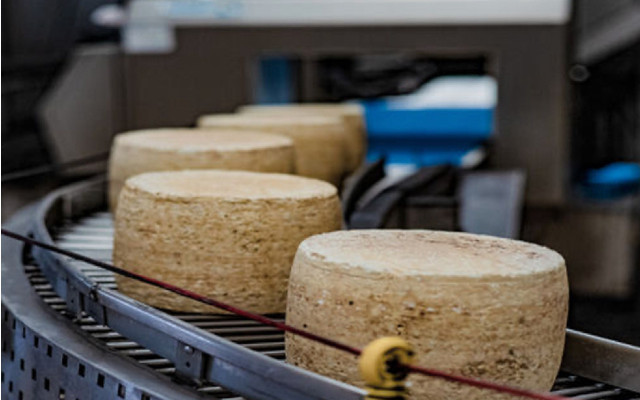
The pecorino is a family of Italian cheeses united by the use of sheep's milk. At nine protected designations of origin (PDO) that include its name, from Sardinia to Calabria, are added four PDOs and one PGI (Protected Geographical Indication) on ewe's milk cheeses, or ewe's and goat's milk cheeses, with different names, such as Fiore Sardo and canestrati.
Fifty-seven other local pecorinos are registered in the regional lists of Traditional Agri-food Products, sometimes also recognized as Slow Food presidia. To these 71 codified territorial specialties are added the productions of numerous industrial and artisanal dairies that entrust protection to their own brands.
This article summarizes updated market data, historical sources from Roman and medieval times, production regulations, nutritional values and nutrition claims allowed in the European Union, the characteristics of different types of rennet and the considerations required for vulnerable consumers.
Pecorino in sources, from Columella to the Dogana delle pecore
The first technical description of sheep cheese-making can be read in De re rustica by Lucius Junius Moderatus Columella, agronomist of the 1st century A.D.. In book VII the author recommends coagulating milk with lamb or kid rennet ('agni aut haedi coagulo'), admitting as an alternative the wild thistle flower - still used for cheeses compatible with the vegetarian diet (Dongo, 2017) - and describes salting, preservation in brine and smoking with apple wood or straw (Columella, 1954). There are three gestures still codified in the specifications: the lamb rennet in the paste of Pecorino Romano, the thistle rennet of the Pecorino delle Balze Volterrane, the smoking optional one of Fiore Sardo.
Pliny the Elder, in the Natural History (77/79 AD), lists the most popular cheeses in Rome. From the Ligurian Apennines came Ceba cheese, today's Ceva (Cuneo, Piedmont), obtained mostly from sheep's milk; from the borders between Etruria and Liguria came the forms of Luni, famous for their gigantic dimensions, up to a thousand imperial pounds each (approx. 327 kg). Closer to the City, Pliny praises the cheese of the Vestini, a people settled on the slopes of the Gran Sasso, where today the Pecorino di Farindola (Pescara, Abruzzo) is produced.
In 1447 Alfonso I of Aragon established the Royal Customs of the sheep mena in Foggia (Puglia), to govern the transhumance which connected the summer pastures of the Apennines to the winter pastures of the Tavoliere. Transhumance was declared an intangible cultural heritage of humanity by UNESCO in 2019 (State Archive of Foggia, 2024). The Apulian canestrati were born along the sheep tracks and, on the Lazio side, shepherds' dishes such as Gricia, with durum wheat semolina pasta, guanciale, pecorino and black pepper.
Market and export, 2025 figures
The sheep PDOs monitored by CLAL, based on data from protection consortia and control bodies, reached 43,451 tonnes in 2025, 1.4% less than in 2024, without considering the Fiore Sardo, the data for which has not yet been received. The Pecorino Romano accounts for 39.267 tonnes alone, over 90% of the total (CLAL, 2026a; own elaboration).
The Protection Consortium presented the data for the 2024/2025 campaign in July 2026. The 47 dairies in the supply chain processed over 300 million liters of milk, 76% of which was destined for the PDO, supplied by almost 9,000 farmers. Sardinia produces 92% of production, Lazio and the province of Grosseto 8%; the cooperative system produces 54%.
THE'export approached 218.000 quintals in 2025, equal to 60% of saleable production. The United States remain the first market, with approximately 131,000 quintals, slightly growing in volume but decreasing in value due to the effect of duties, followed by the European Union with almost 55,000 quintals (+2.4%). The United Kingdom (+8.6%), Canada (+16%) and Australia (+19.6%) are growing. In Italy, overall consumption is estimated at around 12,300 tonnes, of which almost 4,800 in large-scale retail trade, an increase of 4.3% (Consortium for the Protection of Pecorino Romano Cheese, 2026).
In terms of protection, in 2025 the US office of marks and patents recognized the incontestability of the three-dimensional certification mark of Pecorino Romano. After the 15% duty introduced in August 2025 and declared illegitimate in February 2026, a general duty of 10% applies in the United States (Consortium for the Protection of Pecorino Romano Cheese, 2026).
Customs statistics offer a second perspective. The NC 0406 90 63 code, which includes pecorino and Fiore Sardo with fat content up to 40% and excludes grated products and those intended for processing, recorded exports of 19.357 tonnes and 252.8 million euros in 2025, at average price of €13.06/kg. Volumes towards the European Union rose by 2.4%, to 5,479 tonnes, while those outside the EU fell by 4.6%, to 13,879 tonnes; in the first seven months of 2026 the overall decline is 10.3% in volume (CLAL, 2026b). The scope of the customs item, without grated cheese and industrial products, explains the difference compared to the Consortium's data, referring to all forms of marketing.
The nine PDOs of Italian pecorino
Italy matters nine PDO which include the name 'pecorino'. There are no PGIs or TSGs with this name; Pecorino di Osilo, sometimes referred to as DOP, is instead only a Slow Food presidium. Below are the fundamentals of each current specification, in order of production volume.
Pecorino Romano PDO, Sardinia, Lazio and province of Grosseto
The Pecorino Romano PDO is produced with whole and fresh sheep milk of the delimited areas in Sardinia, Lazio and the province of Grosseto (Tuscany), which can be thermised and inoculated with lactic ferments native to the area. At least 50% of the annual dry matter of feed for lactating ewes must come from the designated area. Milk coagulates at 38-40 °C with lamb rennet in pasta; the curd is broken down to the size of a grain of wheat or rice, cooked at 45-50 °C and salted dry or in brine. The forms cylindrical forms weigh 20-35 kg, with fat on dry matter exceeding 36%. The minimum aging it is five months for table cheese and for that intended for industry, which bears the words 'Pecorino Romano DOP intended for food preparations and processed products', and eight months for grated cheese (disciplinary, articles 2, 3 and 5).
The MASAF decree of 30 March 2026, communicated in the Official Journal of the European Union in September, introduced the typology Riserva: at least 18 months of maturation, production limited to the months from December to March and sodium chloride not exceeding 4% (European Commission, 2026). The limit is lower than the average of 4.5 g of salt per 100 g that CREA attributes to Pecorino romano, an aspect of interest for those who monitor their sodium intake. In the kitchen, Pecorino Romano DOP is the identifying ingredient of cacio e pepe, carbonara and Amatriciana TSG.
Pecorino Toscano PDO, Tuscany and bordering municipalities of Umbria and Lazio
The Pecorino Toscano DOP it covers the whole of Tuscany as well as some municipalities in Umbria (Allerona and Castiglione del Lago) and Lazio, in the province of Viterbo. The milk, raw or pasteurized, comes from flocks fed at least 70% of the annual dry matter with fodder from natural pastures in the area, and coagulates at 33-38 °C with calf rennet. The type a tender pasta matures for at least 20 days, with the optional mention 'semi-mature' after 60 days; that to semi-hard pasta at least four months, with the mention 'reserve' beyond eight months. Brief salting in brine preserves a sweet and never spicy flavor (regulations, articles 2, 3, 5 and 6).
Certified production was 2,479 tonnes in 2025, after 2,954 in 2024 (CLAL, 2026a). On the table, Tuscan finds its natural complement in Tuscan bread DOP, known as 'silly bread' as it has no salt which therefore compensates for the flavor of cheeses and cured meats.
Pecorino Sardo PDO, Sardinia
The Pecorino Sardo DOP was born throughout the island from whole sheep milk, possibly thermised or pasteurized, coagulated with calf rennet and semi-cooked at no more than 43°C. The guy Sweet matures 20-60 days and weighs 1-2.3 kg; The Mature, matured for more than two months, weighs 1.7-4 kg and is the basis of the grated cheese, obtained from wheels that are at least four months old (disciplinary). According to the Consortium's data, Maturo represented 73.4% of the certified production in the 2022 campaign (Dedola et al., 2024). In 2025, 1,673 tonnes were certified, compared to 1,750 in 2024 (CLAL, 2026a).
Pecorino Siciliano PDO, Sicily
The Sicilian Pecorino DOP, recognized as a designation of origin as early as 1955, is produced throughout the region with whole sheep milk and raw, with semi-cooked pasta. The types are Fresh (20-30 days), Semi-mature (45-90 days) e Seasoned (at least 120 days); in the first two the 'Pepato' version is allowed, with black peppercorns (regulations, articles 2, 3 and 5). The process preserves the wooden vats for coagulation and the rush baskets, the fasciadde, for the moulding.
The regional decree on traditionally manufactured historical cheeses documents the tuma salting scale, Primosale, according to salt and seasoned, and the addition of black peppercorns to the casing (Sicilian Region, 1999). Certified production was 32 tonnes in the 2025 year, 112 in the previous year (CLAL, 2026a).
Pecorino di Filiano PDO, Basilicata
The Pecorino di Filiano DOP, registered in 2007, is produced in thirty municipalities in the province of Potenza (Basilicata), in the Apennine belt from Vulture to Muro Lucano. The whole sheep milk and raw milk comes from Gentile di Puglia, Gentile di Lucania, Leccese, Comisana, Sarda sheep and their crosses, fed mainly at pasture. The Pasta is semi-cooked and the wheels, of 2.5-5 kg, mature for at least 180 days in tufa caves or in suitable premises, at 12-14 °C (regulation).
Pecorino Crotonese PDO, Calabria
The Pecorino Crotonese DOP, registered in 2014, is a hard, semi-cooked cheese from whole sheep milk raised in the Crotonese area in Calabria. It is marketed fresh, semi-hard, with 60-90 days of aging also in sandstone caves, and aged, over 90 days; after six months the rind can be treated with oil or olive pomace. From 2023 semi-hard and aged wheels must weigh at least 1.3 kg (regulation).
Pecorino di Picinisco PDO, Lazio
The Pecorino di Picinisco DOP, registered in 2013, is the pecorino from Val di Comino, in the province of Frosinone (Lazio). It is produced with raw milk and raw pasta with the milk of Sopravissana, Comisana, Massese sheep and their crosses, to which up to 25% of raw milk from Grigia Ciociara, Bianca Monticellana and Capestrina goats can be added. The Suede matures 30-60 days, the Seasoned over 90; during maturation the wheels can be treated with olive oil and wine vinegar (regulations, articles 2 and 5).
Pecorino delle Balze Volterrane PDO, Tuscany
The Pecorino delle Balze Volterrane DOP, registered in 2015, comes from five municipalities in the province of Pisa (Tuscany): Volterra, Pomarance, Montecatini Val di Cecina, Castelnuovo Val di Cecina and Monteverdi Marittimo. It stands out for its exclusively vegetable rennet, obtained from the inflorescences of the wild thistle, added to Milk raw and whole of Sardinian breed sheep raised at semi-wild state. There are four types: fresh (7-44 days), semi-mature (from 45 days to 6 months), mature (6-12 months) and 'to be asserbo', over 12 months, with wheels weighing up to 7 kg (single document).
Pecorino del Monte Poro PDO, Calabria
The Pecorino del Monte Poro DOP, the last one registered, in 2020, comes from the Poro plateau, in the province of Vibo Valentia (Calabria), and was already a Slow Food presidium since 2000. sheep's milk whole and raw coagulates with lamb or kid rennet fed only with milk. The types are fresh, from 20 to 60 days, semi-mature, from 61 days to 6 months, and matured, from six to twenty-four months (disciplinary, article 2).
Other ewe's milk cheeses PDO and PGI
European protection of sheep's cheeses goes beyond the name 'pecorino'. The Fiore Sardo DOP it is obtained in Sardinia from Milk raw of Sardinian sheep, with lamb or kid rennet and optional smoking, and matures at least three months for the table and six for the grater. The name derives from the chestnut moulds, the pischeddas, with a flower engraved on the bottom; the estimated production in 2024 is 542 tonnes (CLAL, 2026a).
The Canestrato Pugliese DOP, in the provinces of Foggia and Bari, and the Canestrato di Moliterno PGI, made from sheep's and goat's milk matured in the warehouses of Moliterno, in Basilicata, take their name from the rush baskets.
In Sicily the Piacentinu Ennese DOP, colored with saffron, and the Vastedda della Valle del Belìce DOP, rare stretched curd sheep's cheese. Finally, two PDOs with mixed milk involve a prevalence of sheep: la Casciotta d'Urbino in the Marche, with 70 tonnes in 2025, and Murazzano in Piedmont, with 9 tonnes (CLAL, 2026a).
Traditional Agri-food Products (PATs) and Slow Food presidia
The national list of Traditional Agri-food Products, which reached its twenty-sixth revision in 2026 with 5,813 entries (MASAF, 2026), collects numerous regional pecorino cheeses. The registration certifies production methods that have been consolidated for at least twenty-five years, without attributing exclusive rights to the name.
57 pecorino cheeses are registered in the updated list of PATs are 57 - without considering synonyms and variants grouped under the same heading - from 14 regions: Tuscany (15), Campania (8), Lazio (8), Calabria (6), Abruzzo (4), Puglia (3), Emilia-Romagna (3), Basilicata (2), Molise (2), Sardinia (2), Liguria (1), Marche (1), Sicily (1), Umbria (1).
Some local pecorino cheeses are also recognized as Slow Food presidia. Among these:
- The Pecorino di Farindola, in the Vestina area of Gran Sasso (Abruzzo), is prepared with pork rennet;
- The Pecorino di Carmasciano comes from Irpinia;
- in Sardinia the presidia are Pecorino di Osilo and the Pecorino from Alta Baronia (Slow Food Foundation, n.d.);
- in Abruzzo the Canestrato di Castel del Monte is registered among TAPs and is in turn a Slow Food presidium.
Nutritional values according to CREA
The food composition tables indicated by CREA — Food and Nutrition Research Centre (2019) refer to Pecorino (code 166050), Pecorino Romano (code 166060) and Pecorino Siciliano (code 166070) the nutritional values listed below, per 100 g. The tables do not distinguish between fresh and aged types, nor do they provide specific entries for other PDOs.
Table 1. Nutritional values per 100 g (CREA, 2019)
| Nutrient | Pecorino (166050) | Pecorino Romano (166060) | Pecorino Siciliano (166070)
|
| Energy | 1,690 kJ / 404 kcal | 1,710 kJ / 409 kcal | 1,787 kJ / 427 kcal |
| Fats | 32.0 g | 33.1 g | 33.6 g |
| of which saturated fatty acids | N/A | N/A | N/A |
| Carbohydrates | 0.2 g | 1.8 g | 2.4 g |
| of which sugars | 0.2 g | 1.8 g | 2.4 g |
| Fibre | 0 g | 0 g | 0 g |
| proteins | 28.8 g | 26.0 g | 28.9 g |
| Salt | 4.5 g | 4.5 g | 1.1 g |
| Calcium | 607 mg (75.9% NRV) | 900 mg (112.5% NRV) | 1,162 mg (145.3% NRV) |
| Phosphorus | 590 mg (84.3% NRV) | 589 mg (84.1% NRV) | 798 mg (114.0% NRV) |
| Vitamin A | 380 µg (47.5% NRV) | 480 µg (60.0% NRV) | 573 µg (71.6% NRV) |
| Riboflavin | 0.47 mg (33.6% NRV) | 0.41 mg (29.3% NRV) | N/A |
| Zinc | 3.38 mg (33.8% NRV) | N/A | N/A |
Note: N/A: data not available in CREA tables. Salt calculated as sodium × 2.5. Percentages calculated on the nutritional reference values referred to in Annex XIII to Regulation (EU) No 1169/2011. Only micronutrients present in quantities equal to or greater than 15% of NRV are reported.
Pecorino is a high-protein density food: proteins proteins they provide between 25% and 29% of the total energy. The Calcium ranges from 76% to 145% of NRV per 100 g, and a 30 g serving of Pecorino provides 182 mg, 22.8% of NRV. The content of Salt varies with technology: 4.5 g per 100 g in Pecorino romano, traditionally dry salted, 1.1 g in Pecorino siciliano.
Permitted nutritional claims
the voluntary nutrition claims must be based on laboratory analyses performed on representative samples of the product ready for consumption, which in the case of Pecorino coincides with the cheese as such. The conditions and thresholds established by the Nutrition and Health Claims Regulation Regulation (EC) No 1924/06 must indeed be verified for individual products, with zero tolerance for deficiency (Dongo, 2023a).
the conditions are set by the aforementioned regulation: 'source of proteins' if at least 12% of the energy value derives from proteins, 'high in proteins' from 20%; 'source of' a mineral or vitamin with at least 15% of the VNR per 100 g, 'high in' with at least double (EC regulation 1924/2006, Annex).
Table 2. Permitted nutritional claims based on CREA values
| Claim | Condition | pecorino | Pecorino Romano | Pecorino siciliano
|
| High protein | ≥ 20% of the energy | yes (28.5%) | yes (25.4%) | yes (27.1%) |
| High in calcium | ≥ 30% NRV | yes (75.9%) | yes (112.5%) | yes (145.3%) |
| High phosphorus content | ≥ 30% NRV | yes (84.3%) | yes (84.1%) | yes (114.0%) |
| High vitamin A content | ≥ 30% NRV | yes (47.5%) | yes (60.0%) | yes (71.6%) |
| Riboflavin (vitamin B2) | source ≥ 15%, high content ≥ 30% NRV | high content (33.6%) | source (29.3%) | N/A |
| High zinc content | ≥ 30% NRV | yes (33.8%) | N/A | N/A |
The Pecorino Romano remains just below the threshold required to indicate 'high content', but therefore boast the 'source of riboflavin', or 'source of vitamin B2' (Dongo, 2023b).
The indication 'lactose-free', however, does not fall within the nutritional indications (EC regulation 1924/2006, recital 22): pending harmonized rules, in Italy the circulars of the Ministry of Health of 2015 and 2016 apply, which allow the words 'naturally lactose-free' for cheeses with residual lactose less than 0.1 g per 100 g.
A study on 33 samples of Pecorino Romano PDO from different areas, seasons and aging periods found lactose and galactose always below detection limits, 0.54 and 0.90 mg/kg (Idda et al., 2018). In Pecorino Sardo Maturo, on 42 wheels from seven dairies, the average lactose was 26 mg/kg, equal to approximately one-fortieth of the ministerial threshold (Dedola et al., 2024).
Rennet and sensory profiles of pecorino cheeses
The rennet initiates milk coagulation and, with its enzymes, contributes to the aroma profile of pecorino:
- The calf rennet, liquid or powder, provides mainly chymosin and pepsin, and gives cheeses with more delicate flavour. This is provided for in the specifications of Pecorino Toscano PDO and Pecorino Sardo PDO;
- the lamb and kid pastes, obtained from the abomasum of suckling animals, also contain pregastric esterases. These are specific enzymes for short-chain fatty acids, from butyric to decanoic, which develop spicy aromatic notes during maturation (Broel et al., 2022). The pasta of lamb characterizes Pecorino Romano DOP, from savoury, pungent flavour in its most mature forms; the paste of kid, permitted for example for Fiore Sardo DOP and Pecorino del Monte Poro DOP, accentuates the spicy notes with 'goat' nuances (Broel et al., 2022);
- The vegetable rennet, obtained from the flowers of the wild thistle (Cynara cardunculus), contains aspartic proteases called cardosins. Their proteolytic activity, superior to that of chymosin, gives soft pasta with a slightly bitter aftertaste, sometimes spicy; sheep's milk, less subject to bitterness than cow's milk, lends itself well to this type of coagulation (Nicosia et al., 2022). It is the technique of Pecorino delle Balze Volterrane DOP, already described by Columella;
- i microbial coagulants, enzymes produced by molds such as Rhizomucor miehei, have lower costs than animal rennet. They are also compatible, like vegetable rennet, with diets vegetarian, kosher e halal (Liu et al., 2021; Nicosia et al., 2022). None of the PDO, PGI and PAT specifications examined provide for their use. For vegetarian consumers, pecorino with vegetable rennet therefore remains the option compatible with tradition, to be recognized on the label (Dongo, 2017).
Vulnerable consumers, raw milk and ripening
Cheeses made with raw milk or thermizedor, if not subjected to adequate aging, can carry pathogens such as Shiga toxin-producing Escherichia coli (STEC) and Listeria monocytogenes. The most serious consequences concern i vulnerable consumers, indicated by the acronym YOPI (young, old, pregnant, immunocompromised): children, the elderly, pregnant women and immunocompromised persons, to whom fresh and semi-aged pecorinos made with raw or thermized milk must be avoided (Bonardi & Dongo, 2023; Dongo, 2025). Fresh or semi-aged cheese made from thermized milk – like that from raw milk – must in fact bear the words 'produced with raw milk' on the label (Dongo, 2024).
The aging progressively reduces the pathogen load. In a bovine raw milk cheese, 60 days of maturation reduced the STEC load by 1.32 logarithmic units, without eliminating it even at 90 days (Rios et al., 2020). A quantitative risk assessment on sheep raw milk cheeses produced in Italy estimates for those with short aging, up to 30 days, a risk 151% higher compared to aged ones over 90 days (Condoleo et al., 2022). Cooked-curd pecorinos with long aging, such as Pecorino Romano PDO, therefore present a lower risk. For YOPI consumers, fresh versions obtained from pasteurized milk namely at long aging represent the safest choice; pasteurized milk is permitted, for example, by the specifications of Pecorino Toscano PDO and Pecorino Sardo PDO.
Conclusions
Nine PDOs, distributed in six regions, offer a range of pecorino cheeses ranging from the twenty-day-old Sicilian Fresco to the eighteen-month-old Romano Riserva, from the Columella lamb rennet to the Balze Volterrane cardoon. Pecorino Romano DOP supports the sector with stable volumes and exports that reach six tenths of production, diversified towards Canada, Australia and the United Kingdom. The minor denominations, with limited volumes, preside over pastoral territories from the Val di Comino to the Poro plateau.
On a nutritional level, the CREA tables allow indications 'high' in proteins, calcium, phosphorus and vitamin A for all the items considered, and the choice between fresh and seasoned types allows you to modulate the salt intake.
FARE (Food and Agriculture Requirements) assists operators in the strategic planning of commercial information compliance, from nutritional and health indications to the environmental and sustainability profiles of supply chains, processes and products, also with support for the development of Governance Corporate and operating procedures.
Dario Dongo
Credit cover: Consorzio Tutela Pecorino Sardo PDO
Frequently asked questions
How many PDOs does Italian pecorino have? Nine PDOs bear the name 'pecorino': Romano, Toscano, Sardo, Siciliano, di Filiano, Crotonese, di Picinisco, delle Balze Volterrane and del Monte Poro. Four other sheep PDOs, such as Fiore Sardo, and one PGI, Canestrato di Moliterno, have different names.
What are the differences between Pecorino Romano and Pecorino Toscano? Romano uses lamb rennet in paste, curd cooking at 45-50 °C and a minimum ageing of five months; Toscano uses calf rennet and a brief salting in brine, which gives it a sweet and never spicy flavour.
Does pecorino contain lactose? In mature pecorino cheeses, lactose drops to trace levels: in Pecorino Romano PDO it is not detectable and in Pecorino Sardo Maturo the average is 26 mg/kg, well below the threshold of 0.1 g per 100 g required for the wording 'naturally lactose-free'.
How much Pecorino Romano does Italy export? In 2025 almost 218 K quintals, 60% of marketable production, of which approximately 131 K towards the United States.
References
Geographical indications, European Union acts
Commission communication C/2026/4125. Publication of the communication of an approved standard amendment to the product specification of a geographical indication in accordance with Article 5(4) of Commission Delegated Regulation (EU) 2025/27, 'Pecorino Romano' (PDO). OJ C, 2.9.2026. http://data.europa.eu/eli/C/2026/4125/oj
Regulation (EU) 2024/1143 of the European Parliament and of the Council of 11 April 2024 on geographical indications for wine, spirit drinks and agricultural products, as well as traditional specialities guaranteed and optional quality terms for agricultural products. Consolidated text: 18/03/2026. http://data.europa.eu/eli/reg/2024/1143/2026-03-18
Consumer information and claims, European Union acts
Regulation (EC) No 1924/2006 of the European Parliament and of the Council of 20 December 2006 on nutrition and health claims made on foods. Consolidated text: 13/12/2014. http://data.europa.eu/eli/reg/2006/1924/2014-12-13
Regulation (EU) No 1169/2011 of the European Parliament and of the Council of 25 October 2011 on the provision of food information to consumers, amending Regulations (EC) No 1924/2006 and (EC) No 1925/2006 of the European Parliament and of the Council. Consolidated text: 01/04/2025. http://data.europa.eu/eli/reg/2011/1169/2025-04-01
Specifications and registers of PDOs
European Commission. (s.d.). eAmbrosia, register of geographical indications of the Union: specifications and single documents of the PDOs and PGIs mentioned. https://ec.europa.eu/agriculture/eambrosia/geographical-indications-register/
MASAF Decree 30 March 2026. Ordinary changes to the production specifications of the protected designation of origin 'Pecorino Romano'. Official Journal, General Series, n. 81 of 8.4.2026.
Traditional Agri-food Products (PATs), national and regional acts
MASAF. (2026). Decree 6 February 2026, n. 59360. Update of the national list of traditional agri-food products (twenty-sixth revision). Official Journal no. 40 of 18.2.2026.
Sicilian Region. (1999). Ministerial Decree 28 December 1998. Recognition of milk-based products as historical products made traditionally. GURS, Part I, No. 6 of 6.2.1999. http://www.gurs.regione.sicilia.it/Gazzette/g99-6-b.htm
Production and export, CLAL data
CLAL. (2026a). Italy: PDO cheese production (update 8.10.2026; sources: protection consortia, certification bodies). https://www.clal.it/?section=formaggi_dop
CLAL. (2026b). Italy: Pecorino and Fiore Sardo export, NC 04069063 (update 19.10.2026; source: ISTAT, provisional data). https://www.clal.it/?cod=04069063&mov=E§ion=imp_exp_istat
Pecorino Romano PDO, Consortium data
Consortium for the Protection of Pecorino Romano Cheese. (2026, July 15). Pecorino Romano DOP, 39 million kilos in the latest campaign: the Consortium in assembly between the market situation and the battle over US duties [press release]. https://www.pecorinoromano.com/area-stampa/pecorino-romano-dop-39-milioni-di-chili-nellultima-campagna-il-consorzio-assemblea-tra-situazione-dei-mercati-e-battaglia-sui-da
Nutritional data
CREA – Food and Nutrition Research Centre. (2019). Food composition tables: Pecorino (code 166050). https://www.alimentinutrizione.it/tabelle-nutrizionali/166050
CREA – Food and Nutrition Research Centre. (2019). Food composition tables: Pecorino Romano (code 166060). https://www.alimentinutrizione.it/tabelle-nutrizionali/166060
CREA – Food and Nutrition Research Centre. (2019). Food composition tables: Pecorino Siciliano (code 166070). https://www.alimentinutrizione.it/tabelle-nutrizionali/166070
Scientific studies on lactose
Dedola, A. S., Caredda, M., Addis, M., Lai, G., Fiori, M., Pes, M., Mara, A., & Sanna, G. (2024). Determining carbohydrates for increasing safety: GC-FID quantification of lactose, galactose, glucose, tagatose and myo-inositol in 'Maturo' PDO Pecorino Sardo cheese. Separations, 11(9), 265. https://doi.org/10.3390/separations11090265
Idda, I., Spano, N., Addis, M., Galistu, G., Ibba, I., Nurchi, V. M., Pilo, M. I., Scintu, M. F., Piredda, G., & Sanna, G. (2018). Optimization of a newly established gas-chromatographic method for determining lactose and galactose traces: Application to Pecorino Romano cheese. Journal of Food Composition and Analysis, 74, 89-94. https://doi.org/10.1016/j.jfca.2018.09.006
Scientific studies on rennet
Broel, N., Sowa, M. A., Manhard, J., Siegl, A., Weichhard, E., Zorn, H., Li, B., & Gand, M. (2022). Altering the chain length specificity of a lipase from Pleurotus citrinopileatus for the application in cheese making. Foods, 11(17), 2608. https://doi.org/10.3390/foods11172608
Liu, X., Wu, Y., Guan, R., Jia, G., Ma, Y., & Zhang, Y. (2021). Advances in research on calf rennet substitutes and their effects on cheese quality. Food Research International, 149, 110704. https://doi.org/10.1016/j.foodres.2021.110704
Nicosia, F. D., Puglisi, I., Pino, A., Caggia, C., & Randazzo, C. L. (2022). Plant milk-clotting enzymes for cheesemaking. Foods, 11(6), 871. https://doi.org/10.3390/foods11060871
Scientific studies on STEC and ripening
Condoleo, R., Palumbo, R., Mezher, Z., Bucchini, L., & Taylor, R. A. (2022). Microbial risk assessment of Escherichia coli shiga-toxin producers (STEC) in raw sheep's milk cheeses in Italy. Food Control, 137, 108951. https://doi.org/10.1016/j.foodcont.2022.108951
Rios, E. A., Ramos-Pereira, J., Santos, J. A., López-Díaz, T. M., Otero, A., & Rodríguez-Calleja, J. M. (2020). Behaviour of non-O157 STEC and atypical EPEC during the manufacturing and ripening of raw milk cheese. Foods, 9(9), 1215. https://doi.org/10.3390/foods9091215
Transhumance and Slow Food presidia
State Archive of Foggia. (2024). Transhumance, landscapes and territories of Capitanata. Description of the cartographic exhibition. University of Foggia. https://www.economia.unifg.it/sites/st01/files/2024-09/Descrizione%20Mostra%20Cartografica%20a%20cura%20dell%27Archivio%20di%20Stato%20di%20Foggia.pdf
Slow Food Foundation. (s.d.). Slow Food Presidia: Farindola Pecorino; Pecorino di Carmasciano; Pecorino from Osilo; Pecorino from Alta Baronia. https://www.fondazioneslowfood.com/it/presidi-slow-food/pecorino-di-farindola/
Classical historical sources
Columella, L. I. M. (1954). On agriculture, Volume II: Books 5-9 (E. S. Forster & E. H. Heffner, trans.; Book VII, chapter 8). Harvard University Press, Loeb Classical Library 407.
Pliny the Elder. (1855). The Natural History of Pliny, vol. III, book XI, chapter 97 (J. Bostock & H. T. Riley, trans.). Henry G. Bohn. https://www.gutenberg.org/ebooks/59131
Articles on Food Times, labeling and claims
Dongo, D. (2017, April 22). Is the cheese vegetarian? No. Here's how to recognize it from the label. FT (Food Times). https://www.foodtimes.eu/it/consumatori-e-salute/il-formaggio-e-vegetariano/
Dongo, D. (2023a, 29 June). Nutrition and health claims, what tolerances on declared values? FT (Food Times). https://www.foodtimes.eu/it/consumatori-e-salute/nutrition-health-claims-tolleranze-valori-dichiarati/
Dongo, D. (2023b, 23 October). Nutrition claims, categories or vitamin names? FT (Food Times). https://www.foodtimes.eu/it/consumatori-e-salute/nutrition-claims-categorie-o-nomi-delle-vitamine-2/
Articles on Food Times, food safety
Bonardi, S., & Dongo, D. (2023, 5 September). Alpine cheeses and fresh raw milk cheeses, the STEC danger. FT (Food Times). https://www.foodtimes.eu/it/sistemi-alimentari/formaggi-di-malga-e-formaggi-freschi-a-latte-crudo-il-pericolo-stec/
Dongo, D. (2025, 14 January). Raw milk cheeses, not for children and the elderly. FT (Food Times). https://www.foodtimes.eu/it/sistemi-alimentari/formaggi-a-latte-crudo-no-a-bambini-e-anziani/
Articles on FARE
Dongo, D. (2024, November 15). 'Thermised' or raw dairy cheese? The lawyer Dario Dongo responds. DO (Food and Agriculture Requirements). https://www.foodagriculturerequirements.com/notizie/domande-e-risposte/formaggio-da-latte-termizzato-o-crudo-risponde-lavvocato-dario-dongo/

Dario Dongo, lawyer and journalist, PhD in international food law, founder of WIISE (FARE - GIFT – Food Times) and Égalité.


: export, chimica del caglio, valori nutrizionali, nutrition claim UE e sicurezza per i consumatori vulnerabili)