

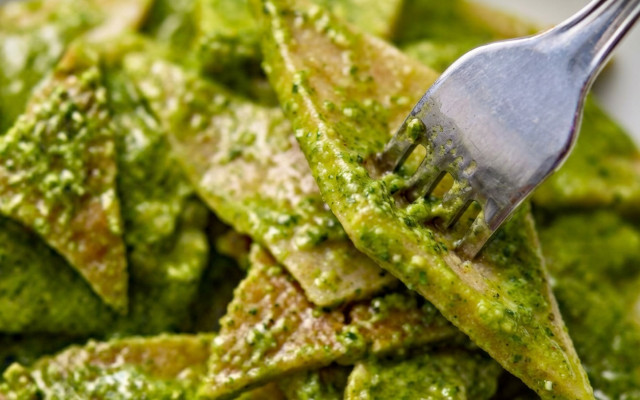
I Traditional Agri-food Products (PAT) are foods that the Regions and the autonomous Provinces of Trento and Bolzano register in their lists because they are processed, preserved, and aged locally, in a uniform manner and according to traditional rules, for at least twenty-five years. The Ministry of Agriculture, Food Sovereignty and Forests (MASAF) publishes thenational list, which in 2026 reached the twenty-sixth revision.
The registration documents a cultural heritage and promotes its knowledge. However, it is not a certification, does not attest origin, and does not grant exclusive use of the name. On this last point, European Union law leaves no room: the Court of Justice of the European Union has repeatedly stated that the protection of qualified geographical names belongs exclusively to the European system of PDO and PGI. This results in precise practical consequences for labels, trademarks, enhancement policies, and hygiene exemptions, examined below.
What are PAT
The regulatory basis is article 8 of legislative decree 173/1998, entitled to the enhancement of gastronomic heritage. The implementing regulation, adopted with ministerial decree 350/1999, considers traditional agri-food products those whose ‘methods of processing, preservation and aging are established over time (d.m. 350/1999, art. 1.1). The Regions verify that such methods are practiced uniformly in the territory and according to traditional rules for a period not less than twenty-five years‘ (d.m. 350/1999, art. 1.2).
The requirement concerns the continuity of production practices, not the seniority of a company nor the rhetoric of the ancient recipe. For each product the Region compiles a identification form bearing category, name and related synonyms or dialect terms, territory, description, methods, materials and equipment, processing locations and elements proving the homogeneous practice for at least twenty-five years. Theregistration can occur on regional initiative or at the request of public and private entities (ministerial circular no. 10 of December 21, 1999).
The regional procedures vary. In Lombardy, for example, applications are processed by territorial offices, the Region approves the annual review by December 31 and MASAF publishes the updated national list by February 12 of the following year (Regione Lombardia, 2026). On the operational level the document file collected for registration – consisting of archival sources, testimonies and technical descriptions – is the real capital that can also serve, if necessary, in a future European registration application.
The national list
The first national list was published by ministerial decree on July 18 2000, qualifying it as the first census, not exhaustive, of definable traditional products (d.m. July 18, 2000, art. 2). Theannual update is now provided for by law 238/2016, article 12, paragraph 1, referenced in all revision decrees. The twenty-sixth revision, published in 2026 with table by Region and product category, counts 5,813 entries numbered in the 21 territorial sheets of the annex (MASAF, 2026; processing on the ministerial file).
This figure measures the scope of the census, not the market. It does not indicate how many companies produce individual foods, nor with what volumes and revenues, and a single entry may include several local variants.
The interministerial decree of April 9, 2008 then identified the products of the lists as an expression of Italian cultural heritage. The recognition enhances the work of the communities that have preserved these productions, which contribute to the richness and heterogeneity of Italian cuisine recognized by UNESCO. Neither this recognition nor the registration in the list protect their names, however.
The legal value of the registration in the list
The decree that established the list clarifies that ‘the inclusion of a product in the aforementioned list does not establish rights resulting from the publication e any reference to the geographical name does not constitute recognition of origin or provenance of the product from the territory to which the said geographical name can be traced (Ministerial Decree 18 July 2000, art. 3). The ministry reiterated these concepts with a note dated 27 November 2007, specifying that the regional sheet does not equate to exhaustive production regulations and does not bind producers (Piedmont Region, s.d.).
It follows that the registration:
- does not certify the product of any company;
- does not guarantee the origin of the product nor the provenance of the raw materials;
- does not establish or lay the groundwork for any compliance checks.
Nonetheless, the registration, the result of an administrative procedure, places the product on an official list approved by ministerial decree and, as will be seen, produces a precise negative effect in terms of trademarks.
The name of a PAT is not registered as a trademark
The July 18, 2000 decree contains a rule often ignored: ‘The name of each product, its possible synonym or dialect term cannot be the subject of filing or application for registration‘, pursuant to European and national industrial property legislation, effective from the publication in the Official Gazette (ministerial decree July 18, 2000, art. 5).
The logic of this rule is clear: a descriptive name of collective knowledge, lacking distinctive character, cannot be exclusively appropriated by a single entity.
Its legal value must however be evaluated realistically. A national act of secondary rank cannot alter the registrability conditions established by Union law, nor bind the EUIPO (European Union Intellectual Property Office) in applying Regulation (EU) 2017/1001 on the European Union trademark. However, it may have evidential or interpretative relevance depending on its content and the context in which it is invoked.
In practice, the strongest argument against anyone attempting to appropriate a PAT name remains trademark law, which excludes the registration of descriptive signs of the species or origin and signs capable of deceiving the public (EU Reg. 2017/1001, art. 7.1, letters ‘c’ and ‘g’). Registration in the list then becomes useful documentary evidence, demonstrating that the name designates a product and not a company.
For operators, the consequence is twofold. Those who create a trademark must build it on imaginative elements or the company name, using the PAT name only as the product denomination. Those operating in foreign markets must know that protection against others' registrations of the name comes through oppositions and nullity actions before the competent offices, not through registration in the Italian list.
The case law of the Court of Justice
The choice not to grant exclusive rights to PAT is indeed imposed by European Union law. Regulation (EU) 2024/1143 declares the establishment of a unitary and comprehensive system of geographical indications (Reg. EU 2024/1143, Art. 4; Recital 18), codifying an approach that the Court of Justice has developed over fifteen years of case law.
In the case of Budějovický Budvar the Court established that the protection system for PDOs and PGIs is comprehensive and excludes the application of national or bilateral regimes protecting as an origin denomination a name for which no European registration has been requested (Court of Justice EU, case C-478/07, 2009). This principle was applied to an Italian case with the ruling Felino Salami: an unregistered geographical name does not enjoy European protection and can only be protected by national law if it designates a product lacking a specific link between characteristics and geographical origin, provided that protection does not prejudice the objectives of European rules and respects the free movement of goods (Court of Justice EU, case C-35/13, 2014).
The Court extended the same interpretation to wines in the case of Port Charlotte, denying relevance to the Portuguese national protection of the denominations ‘Porto’ and ‘Port’ alongside the European one (Court of Justice EU, case C-56/16 P, 2017), and confirmed it in the case of Champanillo, where it reaffirmed the uniform and comprehensive nature of the regime (Court of Justice EU, case C-783/19, 2021).
Applied to PAT, jurisprudence draws a clear boundary. A name that identifies a product with quality, reputation, or characteristics linked to a territory potentially falls within the scope of PGI or PDO: in that case, no state or regional law can grant it exclusive protection outside the European registration. National protection is only allowed on a transitional basis, from the date of submission of the application to the European Commission until the registration decision, with effects limited to the territorynational (EU Reg. 2024/1143, art. 11). The Felino Salami it followed exactly this path: transient national protection in 2007, with a two-year adaptation period for those who marketed 'Salame tipo Felino', then registration as PGI in 2013 (Ministry of Agricultural, Food and Forestry Policies, 2007; EU implementing reg. 186/2013).
PAT, PDO, PGI and TSG: what are the differences?
Registration as PAT is not a mandatory step towards European schemes, although the documentation collected for the regional sheet can serve as the starting point for the application. Ministerial instructions exclude from the lists products already registered as PDO or PGI and provide for their removal in case of subsequent registration (ministerial circular no. 10 of December 21, 1999).
This step has concrete consequences: with PDO and PGI registration the name becomes a reserved collective right for producers who comply with the specification and undergo checks. Those who produced outside the designated area, or with different methods, lose the right to use it at the end of any transitional periods. Before submitting an application, it is therefore necessary to map all producers using the name, including processing companies outside the area, and assess the impact on the supply chain.
The guaranteed traditional speciality (STG) is the instrument most similar to PAT because it protects a name linked to a method of production or a traditional composition rather than a territory. The regulation defines ‘traditional’ as the proven historical use of the name by producers of a community for at least 30 years (EU reg. 2024/1143, art. 2.3). The threshold is different for the object and duration compared to the twenty-five years required for PAT, which concern processing methods. An STG can also be used by any producer who complies with the specifications,wherever they are in the Union, while the registered name remains reserved for compliant products.
| Profile | PAT | PDO and PGI | TSG |
| Function | Census and enhance local food practices | Protect names linked to geographic origin (for PDOs, the geographic environment with its natural and human factors) | Protect product names with traditional composition or method |
| Source | Legislative Decree 173/1998; Ministerial Decree 350/1999 | EU Reg. 2024/1143 | EU Reg. 2024/1143 |
| Time requirement | Methods practiced for at least 25 years | No minimum period: link between product and area (quality, characteristics or reputation) | Use of the name for at least 30 years |
| Production document | Descriptive sheet, not binding | Binding specifications | Binding specifications |
| Controls | None deriving from registration | Official conformity controls | Official conformity controls |
| Exclusive right on the name | No; prohibition of registration as trademark | Yes, against usurpation, imitation and evocation | Yes, against usurpation, imitation and unfair practices |
Evocation: the risk for names close to PDO and PGI
The exhaustive nature of the European system has a downside that directly affects PAT producers. Registered PDOs and PGIs are protected against any usurpation, imitation or evocation, even if the true origin of the product is indicated (EU Reg. 2024/1143, art. 26.1). According to the Court, evocation does not require products to be identical or similar, nor a risk of confusion: it is decisive that the average European consumer, faced with the name or sign, establishes a direct connection with the protected product (Court of Justice EU, case C-783/19, 2021; EU Reg. 2024/1143, recital 35).
A PAT name, a trademark or an image on the label that calls to mind a PDO or PGI of the same product category can therefore expose to disputes, even when the PAT is legitimately registered. Registration in the national list does not act as a shield. Before choosing graphics, trade names and territorial references, it is therefore necessary to carefully check the European register eAmbrosia and the specifications of the nearby denominations.
Labeling and advertising
The name of the PAT can function as usual denomination of the food only if it is accepted as such by consumers in the Member State in which the food is sold (EU Reg. 1169/2011, art. 2.2, lett. ‘o’). A dialect name known only locally may therefore require a descriptive denomination also in Italy (EU Reg. 1169/2011, art. 17.1). For sale in other Member States, the traditional name may be retained but must be accompanied by descriptive information when it does not allow the consumer to know the nature of the product (EU Reg. 1169/2011, art. 17.2 and 17.3).Ilthe ministry has excluded that registered products may bear the qualification ‘traditional‘ at the time of placing on the market, and only admitted the reference to the national list in labeling (circular July 3, 2000; ministerial note November 27, 2007; Piedmont Region, n.d.). The choice is motivated by the contrary position of the European Commission, which has no binding value, since the official interpretation of European law belongs to the Court of Justice, as well as to the legislator. Circulars in turn bind the administration and not the operators, yet guide the controls. A cautious formula is therefore ‘Product included in the national list of Traditional Agri-food Products,Region [name]', if the product actually corresponds to the sheet.
Wording such as 'PAT certificate', 'guaranteed by the ministry' or 'PAT origin' instead attribute to the recognition effects that it does not possess and violate the prohibition of unfair information practices (EU Reg. 1169/2011, art. 7), as well as expose to disputes for unfair commercial practice (Legislative Decree 206/2005, arts. 21 and 22). If the PAT name contains a place name and the product is manufactured elsewhere, theindication of the place of origin may in turn become mandatory when its omission could mislead the consumer (EU Reg. 1169/2011, art. 26.2, lett. 'a'). The operator who claims the product’s correspondence to a PAT also has the burden of demonstrating the product’s conformity to the regional specification, in compliance with the general criteria of information fairness (EU Reg. 1169/2011, arts. 7 and 36).
Regional trademarks and promotion policies: the limit of free movement
Public initiatives to enhance PATs encounter a further European limitation. In the case of the mark 'Markenqualität aus deutschen Landen', assigned with public support to products manufactured in Germany of a certain quality, the Court of Justice found a measure having equivalent effect to a quantitative restriction, because it linked quality to national origin (EU Court of Justice, case C-325/00, 2002). Regional logos, public collective marks and promotional campaigns dedicated to PATs must therefore enhance verifiable characteristics, without suggesting that a product is better because it is Italian or regional.
The topic is current. The bill S. 768, communicated to the Senate Presidency on January 22, 2026, proposes a voluntary national label ‘Quality Exercise – PAT and Italian supply chain’ for public establishments and reward criteria for the use of PAT and quality Italian products in collective catering contracts, in compliance with European regulations (Senate of the Republic, 2026). Implementation will require criteria based on objective characteristics such as seasonality, short supply chain, and documentary traceability, because rewardslinked solely to national origin would be hardly compatible with the jurisprudence on the free movement of goods.
Hygiene exemptions: no automatism
The discipline of PAT also arose to allow derogations from hygiene regulations to protect materials, environments and microflora essential for certain processes (Legislative Decree 173/1998, art. 8.2; Ministerial Decree 350/1999, art. 4).
Article 7 of Regulation (EC) 2074/2005 allows Member States derogations for foods with traditional characteristics concerning premises and materials of equipment and utensils, within the flexibility framework provided by Regulation (EC) 852/2004 (Reg. EC 852/2004, art. 13). These foods also include those protected as traditional products by national, regional or local legislation (Reg. EC 2074/2005, art. 7.1).
The Member State granting a derogation must in any case inform the Commission and the other Member States within twelve months of the granting. The notification must describe the measures taken, indicate the products and establishments concerned and provide any other relevant information (Reg. EC 2074/2005, art. 7.3).
Registration in the list therefore does not in itself grant any derogation, except as a potential premise.
Conclusions
PAT offer a valuable map of Italian food culture: they document practices, preserve knowledge and give visibility to often small productions. Their value grows when communicated for what they are. Registration does not certify, guarantee origin or grant exclusivity on the name, and European Union law reserves the protection of qualified geographical names to PDO and PGI.
Dario Dongo
Credit cover ilgenovese_official
References
Case law of the Court of Justice of the European Union
Court of Justice of the European Union. (2002, 5 November). Judgment in case C-325/00, European Communities Commission v Federal Republic of Germany. https://curia.europa.eu/juris/liste.jsf?num=C-325/00
Court of Justice of the European Union. (2009, 8 September). Judgment in case C-478/07, Budějovický Budvar, national enterprise v Rudolf Ammersin GmbH. ECLI:EU:C:2009:521. https://curia.europa.eu/juris/liste.jsf?num=C-478/07
Court of Justice of the European Union. (2014, 8 May). Judgment in case C-35/13, Assica and Kraft Foods Italy versus Association of producers for the protection of ‘Salame Felino’ and others. ECLI:EU:C:2014:306. https://curia.europa.eu/juris/liste.jsf?num=C-35/13
Court of Justice of the European Union. (2017, 14 September). Judgment in case C-56/16 P, EUIPO versus Instituto dos Vinhos do Douro e do Porto. ECLI:EU:C:2017:693. https://curia.europa.eu/juris/liste.jsf?num=C-56/16
Court of Justice of the European Union. (2021, 9 September). Judgment in case C-783/19, Comité Interprofessionnel du Vin de Champagne versus GB. https://curia.europa.eu/juris/liste.jsf?num=C-783/19
European Union normative sources
Regulation (EC) No 852/2004 of the European Parliament and of the Council of 29 April 2004 on the hygiene of foodstuffs. Consolidated text: 24/03/2021. http://data.europa.eu/eli/reg/2004/852/2021-03-24
Commission Regulation (EC) No 2074/2005 of 5 December 2005 laying down implementing measures for certain products under Regulation (EC) No 853/2004 and for the organisation of official controls under Regulation (EC) No 854/2004 and Regulation (EC) No 882/2004, derogating from Regulation (EC) No 852/2004 and amending Regulations (EC) No 853/2004 and (EC) No 854/2004. Consolidated text: 14/12/2019. http://data.europa.eu/eli/reg/2005/2074/2019-12-14
Regulation (EU) No 1169/2011 of the European Parliament and of the Council of 25 October 2011 on the provision of food information to consumers. Consolidated text: 01/04/2025. http://data.europa.eu/eli/reg/2011/1169/2025-04-01
Commission Implementing Regulation (EU) No 186/2013 of 5 March 2013 entering a name in the register of protected designations of origin and protected geographical indications (Salame Felino (PGI)). http://data.europa.eu/eli/reg_impl/2013/186/oj
Regulation (EU) 2017/1001 of the European Parliament and of the Council of 14 June 2017 on the European Union trade mark (codification). Consolidated text: 01/12/2025. Regulation (EU) 2017/1001 of 1 December 2025
Regulation (EU) 2024/1143 of the European Parliament and of the Council of 11 April 2024 on geographical indications for wine, spirit drinks and agricultural products, as well as traditional specialities guaranteed and optional quality terms for agricultural products. Consolidated text: 18/03/2026. http://data.europa.eu/eli/reg/2024/1143/2026-03-18
Italian normative and administrative sources
Legislative Decree 30 April 1998, no. 173, Provisions on containing production costs and on the structural strengthening of agricultural enterprises. Normattiva. Last consolidated version: 06/05/2015. https://www.normattiva.it/atto/caricaDettaglioAtto?atto.codiceRedazionale=098G0223&atto.dataPubblicazioneGazzetta=1998-06-05&tipoDettaglio=multivigenza
Legislative Decree 6 September 2005, no. 206, Consumer Code. Normattiva. Last consolidated version: 15/05/2026. https://www.normattiva.it/atto/caricaDettaglioAtto?atto.codiceRedazionale=005G0232&atto.dataPubblicazioneGazzetta=2005-10-08&tipoDettaglio=multivigenza
Law 12 December 2016, no. 238, Organic discipline of vine cultivation and wine production and trade. Normattiva. Last consolidated version: 14/05/2026. https://www.normattiva.it/atto/caricaDettaglioAtto?atto.codiceRedazionale=16G00251&atto.dataPubblicazioneGazzetta=2016-12-28&tipoDettaglio=multivigenza
Ministerial Decree 8 September 1999, no. 350, Regulation containing rules for the identification of traditional products pursuant to article 8, paragraph 1, of Legislative Decree 30 April 1998, no. 173. Official Gazette no. 240 of 12 October 1999. https://www.gazzettaufficiale.it/eli/id/1999/10/12/099G0423/sg
Ministerial Decree 18 July 2000, National list of traditional agri-food products. Ordinary supplement to the Official Gazette no. 194 of 21 August 2000. Text reproduced by the Piedmont Region: https://www.regione.piemonte.it/web/media/3062/download
Ministry of Agricultural, Food and Forestry Policies. Circular no. 10 of 21 December 1999, protocol 63885, Criteria and methods for the preparation of lists of regions and autonomous provinces of traditional agri-food products. Text reproduced by the Piedmont Region: https://www.regione.piemonte.it/web/media/3061/download
Interministerial decree April 9, 2008, Identification of Italian agri-food products as an expression of the Italian cultural heritage. Official Gazette no. 93 of April 19, 2008.
Ministry of Agricultural, Food and Forestry Policies. (2007, August 3). Decree amending Article 5 of the decree June 4, 2007 concerning the temporary protection granted at the national level to the denomination ‘Salame Felino’. https://it.vlex.com/vid/salame-felino-stata-inviata-istanza-29354243
MASAF. (2026). Twenty-sixth revision of the list of traditional agri-food products, with table by Region and product category. https://www.masaf.gov.it/flex/cm/pages/ServeBLOB.php/L/IT/IDPagina/24151
Institutional and parliamentary documents
Lombardy Region. (2026). Traditional agri-food products of Lombardy: inclusion of a product in the list. https://www.regione.lombardia.it/agricoltura/inserimento-di-un-prodotto-elenco
Piedmont Region. (n.d.). Regulations on traditional agri-food productions PAT, with summary of the circular July 3, 2000, prot. 62359, and the ministerial note November 27, 2007, prot. 22514. https://www.regione.piemonte.it/web/temi/agricoltura/promozione-qualita-educazione-alimentare/normativa-sulle-produzioni-agroalimentari-tradizionali-pat
Senate of the Republic. (2026). Bill S. 768, 19th legislature, Provisions for strengthening the quality agricultural policy, enhancing traditional agri-food products and establishing a voluntary national mark for public establishments that use quality Italian agri-food products. https://www.senato.it/service/PDF/PDFServer/DF/446472.pdf

Dario Dongo, lawyer and journalist, PhD in international food law, founder of WIISE (FARE - GIFT – Food Times) and Égalité.


 sono gli alimenti che le Regioni e le Province autonome di Trento e Bolzano iscrivono nei propri elenchi poiché lavorati, conservati e stagionati sul territorio, in modo omogeneo e secondo regole tradizionali, da almeno venticinque anni.)