

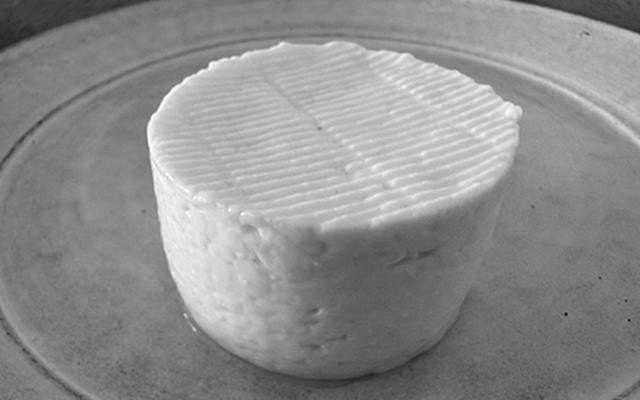
The freshly made cheese is one of the freshest cheeses most present on the shelves of Italian distribution, yet it has no production disciplinary or protected geographical indication. Under this commercial denomination coexist cow's milk products from the Po Valley and young pecorinos from Sicily, produced with different technologies and raw materials. Understanding the origin of salting, the transformation processes and the label information allows navigating a highly varied product category.
Varieties and product definitions of primosale in Italy
The dictionary records both souls of the product. The Nuovo De Mauro defines primosale as ‘fresh cow's milk cheese, with white paste, without rind‘ and, in Sicily and Sardinia, as ‘pecorino cheese in the early stages of maturation‘ (De Mauro, n.d.). On the shelf, the two definitions overlap within the context of a broader range:
- freshly made cheese cow's milk, the most widespread in large-scale distribution, with white and compact paste, sweet milky taste, made from pasteurized milk with selected starters;
- freshly made cheese sheep's milk, mainly of central-southern and insular origin, more savory and with a more readable pasture note, sometimes made from raw or thermized milk (Dongo, 2024);
- freshly made cheese goat's or mixed milk, less represented but present in local productions and in specialized cutting counters;
- versions flavored, with whole black pepper, chili flakes, arugula, olives, aromatic herbs;
- versions organic, lactose-free, or both.
The important distinction is not between artisanal and industrial productions but rather between the processes: indeed coexist small industries that process local milk using almost unchanged techniques, large industries with standardized productions (and shelf life usually longer) and artisanal dairies that have adopted selected starters to stabilize the product.
The cheese-making technology and the issue of pasteurization
The basic technology is presalting coagulation. The milk is brought to cheesemaking temperature, rennet is added and it is left to coagulate; the curd is cut to facilitate whey drainage, transferred into molds or baskets, left to drain, then salted dry on the surface or in brine. The product is packaged and distributed within a few days.
The Sicilian sheep variant has an official description of the process, contained in a regional public act that will be discussed later. It involves whole sheep's milk with natural microflora, coagulation in a wooden vat at 34-35 °C with lamb paste rennet in about 45 minutes, manual draining in baskets made of rushes called fascedde (which imprint the characteristic pattern on the surface), a rest of about four hours in hot whey, drying on a wooden board and salting the next day.
A technical detail deserves to be clarified, as it is often misunderstood: scalding with whey at temperatures close to 80 °C does not correspond to pasteurization. Measurements conducted on pecorino cheeses with probes placed in the core and sub-rind detected that, at the end of immersion, the internal temperature does not exceed 43.6 °C (Pisana et al., 2025).
On the other side of the range, university research has documented a protocol for sheep primo sale cheese on Milk pasteurized, with selected strains of Lactococcus lactis inoculated as starter, pressed curd technology and maturation at 13 °C with 85% relative humidity (Gaglio et al., 2021). The two approaches — natural microflora of raw milk and selected starters on pasteurized milk — produce cheeses with different microbiological risk and aroma profiles.
The salting times in the decree of the Sicilian Region
Since primo sale has no official regulation, the only numerical parameter established by a public authority is found in a regional decree of 1998, whose value is not legal but cultural: the decree of the Department of Agriculture and Forestry of the Sicilian Region dated December 28, 1998, ‘Recognition of dairy-based products as traditional historic products’.
The decree outlines the salting scale in four steps:
- tuma: fresh, without any salting;
- freshly made cheese: fresh cheese of about 8-10 days, which has undergone dry salting or in saturated brine (i.e., high salt content);
- secondo sale: semi-aged for about 2-4 months, salted in the same manner;
- aged: maturation over 4 months.
The document extends the references to Sicilian goat cheese and canestrato, produced with cow's milk sometimes mixed with sheep's or goat's milk. It expressly provides the possibility of flavoring the cheese at the moment of molding, by adding black pepper whole o flakes of chili pepper
Primosale, in other words, was born as a unit of salting measurement, in turn variable, applied to different milks and technologies. This is why the name could migrate so naturally from Sicilian pecorino to cow’s milk cheese of Northern Italy.
Historical traces of milk transformation in Sicily
The historical depth of this family of cheeses is documented by archival records. For canestrato, the Sicilian decree refers to two registers of the Palermo Municipal Archive: the dairy price list of December 5, 1407, in which the product appears as tumazza, and the price list imposed by jurors and magistrates for retail sale in the markets of March 21, 1412, which distinguishes ‘cacio vacchino’ from Palermitan caciocavallo, pricing it lower (Pisana et al., 2025).
A methodological clarification is worth mentioning: those registers note product categories and prices, not the word ‘primosale’. What is documented from the 15th century is the practice — transforming milk, draining the curd in baskets, dry salting — not the term that today describes it.
The same decree lists, among the historical references to Sicilian sheep cheesemaking, book IX of theOdyssey By Homer, the Bucolics and Georgics By Virgil, the Naturalis Historia by Pliny the Elder and the Liber ruralium commodorum by Pietro de’ Crescenzi from 1294. This is the apparatus that the regional legislative department has adopted to justify the historical character of the production: a genealogy of the technique, more than a proof of the antiquity of the individual product.
Economic framework in the fresh cheese sector
There are no official, national or European statistics isolating primosale as a single product category: neither production surveys nor customs codes go into this level of detail. The product is absorbed into the aggregate of fresh cheeses, which is one of the most dynamic in the sector.
In 2025 the Italian milk supply chain reached a total turnover of 31.9 billion euros, of which 28.5 billion was generated by the industry, with exports of 6.7 billion and 13.5 million tons of cow's milk sent for processing, an increase of 2.1% (ANSA, 2026). In the geographic distribution of sales, fresh products are concentrated on European market, while aged and semi-hard cheeses grow in extra-EU markets.
Nutritional values and permitted label indications
The food composition tables provided by CREA — Food and Nutrition Research Centre (2019) do not list an entry for 'primosale'. However, they report the nutritional profiles of some short-ripened cheeses which can be considered to give an order of magnitude.
For cow’s milk primosale, the closest reference is the fresh caciottina, which provides per 100 g:
- energy: 263 kcal;
- fat: 21.3 g;
- of which saturated fatty acids n.d. (not provided by CREA);
- carbohydrates: 0.5 g;
- of which sugars: 0.5 g;
- protein: 17.3 g;
- salt: n.d.;
- vitamin A: 202 µg of retinol equivalent (equal to 25.3% of the NRV*).
For the short-ripened sheep milk version, the reference is the Roman sheep caciotta. Nutritional values per 100 g:
- energy: 364 kcal;
- fat: 27.3 g;
- of which saturated fatty acids: n.d.;
- carbohydrates: 2.1 g;
- of which sugars: 2.1 g;
- protein: 27.7 g;
- salt: n.d.;
- vitamin A: 380 µg of retinol equivalent (equal to 47.5% of the NRV*).
(*) The NRV (nutrient reference value) established for vitamin A is 800 µg (EU regulation no. 1169/2011, Annex XIII).
The operators responsible for commercial information — after verifying the actual content of vitamin A in individual products through analysis of their representative samples — can therefore use the following on labels and advertising nutrition claim, pursuant to regulation (EC) No 1924/2006:
- ‘source of vitamin A‘ in fresh cow's milk caciottina, or in primosale from cow's milk, where it is equal to or greater than 15% of the NRV (120 µg);
- ‘high in vitamin A‘ in sheep's milk caciotta, or in primosale from sheep's milk, if > 30% of the NRV (240 µg).
The CREA sheets for both products do not report the mineral quantities and it is therefore not possible to calculate the NRVs of calcium and phosphorus, which it is nevertheless easy to assume are present in significant amounts. Our team of FARE (Food and Agriculture Requirements) is available to operators who intend to enhance the nutritional and health properties of their foods, in the name of legality and transparency.
It is also interesting to compare with the end point of the supply chain of Sicilian pecorino which in turn, according to the appropriate CREA table (2019), provides on average per 100 g:
- energy value: 427 kcal;
- fat: 33.6 g;
- of which saturated fatty acids n.d. (not provided by CREA);
- carbohydrates: 2.4 g;
- of which sugars: 2.4 g;
- proteins: 28.9 g;
- salt: 1.13 g salt (450 mg sodium);
- vitamin A: 573 µg (71.6% of NRV);
- calcium: 1,162 mg (145% of NRV);
- phosphorus: 798 mg (114% of the NRV).
Between fresh cheese (ovine caciotta) and the more mature one (pecorino) there is no qualitative difference, but a simple dehydration. The water content drops from 54.8 to 30.3 g per 100 g and consequently both macronutrients and micronutrients are concentrated. It is still useful to consult the nutritional declaration on the label of the individual products, to better understand their characteristics (Dongo, 2016).
Integration of agricultural co-products and innovation perspectives
The scientific literature specifically dedicated to primosale is limited. Two experimental studies are noted on an innovation perspective that embraces nutraceuticals and circular economy:
- on ovine primosale, the addition of 1% by weight of grape pomace flour of Nero d’Avola has reduced fat content and increased protein content, without interfering with the development of cultures. After simulated gastrointestinal digestion, the bioaccessible fraction of the enriched cheese showed a antioxidant capacity 60% higher than the control (0.590 versus 0.371 µmol Trolox equivalents per gram). (Gaglio et al., 2021);
- on cow's milk primosale, the experimentation with flours from agricultural by-products — in addition to pomace from white and red grapes, tomato skins, broccoli and artichoke waste, at 50 and 100 g/kg — confirmed the possibility of enhancing the bioactive profile of the product, while paying attention to calibrate its sensory attributes (Costa et al., 2018).
Gastronomic uses and regional traditions
The gastronomic quality of primosale is the useful neutrality: a mildly sweet and sour milky taste that does not overpower other ingredients and is suitable both for consumption raw and for cooking in the oven or pan. This is the reason for its versatility and its growing popularity beyond its regional area of origin.
The Sicilian repertoire
The pane cunzato is the most representative pairing. In the version documented by Silver Spoon, thin slices of primosale are layered with tomato ripe, anchovies in oil, oregano and extra virgin olive oil on a mafalda of semolina — one of the most characteristic Sicilian breads — toasted in the oven (Il Cucchiaio d’Argento, n.d.-b).
Primosale cheese is also the protagonist of scaccia ragusana — a very thin sheet of bread dough, stuffed and folded several times — in the variant of Timilia durum wheat with anchovies and herbs, where it is inserted into the thin dough before baking in the oven (Il Cucchiaio d’Argento, n.d.-c).
Cold dishes and modern interpretations
Cubed primo sale goes well with salads and vegetables, also paired with fruit, as well as with cous cous, rice salads and other cereals (e.g. spelt).
Among contemporary reinterpretations, the Silver Spoon proposes a small lasagna of pane carasau with primo sale, which exploits its ability to bind to vegetables, fruit and extra virgin olive oil, and some uses in savory baked preparations (Il Cucchiaio d’Argento, n.d.-a).
Criteria for conscious product choice
The first criterion is not the brand, it is knowing which primo sale you have in front of you. The elements to consider on the label are essentially four:
- animal species: sheep, cow, goat or mixed milk, with significant effects on fat, proteins and aromatic profile;
- pasteurized milk or ‘made with raw milk’, whose wording must appear on the label (Dongo, 2024);
- organic certification, to be favored if available;
- origin of the milk.
At thevisual examination the dough is white, soft but not watery, the structure compact and the clean milky aroma are consistent with a young product in good condition.
Raw milk, not for everyone
Primosale is by definition a cheese with very short maturation. When produced with raw milk or ‘thermized’ — but not pasteurized — the absence of an effective thermal treatment and the short maturation time do not allow inactivation of any pathogens present; high humidity, high pH and low salt content also create an environment favorable to microbial persistence (Pisana et al., 2025).
It follows that the vulnerable groups of the population — children, elderly, pregnant women, immunocompromised people — must absolutely refrain from consuming fresh and semi-aged raw milk cheeses, to prevent the risk of serious complications in cases of STEC and Listeria monocytogenes (Dongo, 2024).
The advantages of organic
Regulation (EU) 2018/848 — in defining the rules to be applied in certified organic farms — establishes specific requirements to guarantee animal welfare, such as maximum density and housing conditions, as well as access to open air and pasture. Specific rules for cattle, sheep, and goats also apply to feeding and forage availability. In a cheese whose profile depends almost entirely on the starting milk, choosing the organic product therefore has a dual ethical and organoleptic meaning.
Concluding considerations
The heterogeneous nature of primosale constitutes its true peculiarity. From the absence of legal protection arises a family of cheeses rich in nuances, where industrial technology complements the continuity of artisanal practices. For the buyer, the guarantee of choice is therefore linked to the analysis of mandatory label indications — and to the technical sheet, for professional buyers.
Dario Dongo
References
Scientific studies
Costa, C., Lucera, A., Marinelli, V., Del Nobile, M. A., & Conte, A. (2018). Influence of different by-products addition on sensory and physicochemical aspects of Primosale cheese. Journal of Food Science and Technology, 55(10), 4174-4183. https://doi.org/10.1007/s13197-018-3347-z
Gaglio, R., Barbaccia, P., Barbera, M., Restivo, I., Attanzio, A., Maniaci, G., Di Grigoli, A., Francesca, N., Tesoriere, L., Bonanno, A., Moschetti, G., & Settanni, L. (2021). The use of winery by-products to enhance the functional aspects of the fresh ovine ‘Primosale’ cheese. Foods, 10(2), 461. https://doi.org/10.3390/foods10020461
Pisana, C., Caccamo, M., Barbera, M., Marino, G., Serio, G., Franciosi, E., Settanni, L., Gaglio, R., & Caggia, C. (2025). Comprehensive characterization of the microbiological and quality attributes of traditional Sicilian Canestrato Fresco cheese. Foods, 14(17), 3123. https://doi.org/10.3390/foods14173123
European Union regulatory sources
Regulation (EC) No 853/2004 of the European Parliament and of the Council of 29 April 2004 laying down specific hygiene rules for food of animal origin. Consolidated text: 07/05/2026. http://data.europa.eu/eli/reg/2004/853/2026-05-07
Regulation (EC) No 1924/2006 of the European Parliament and of the Council of 20 December 2006 on nutrition and health claims made on foods. Consolidated text: 13/12/2014. http://data.europa.eu/eli/reg/2006/1924/2014-12-13
Commission Regulation (EC) No 2073/2005 of 15 November 2005 on microbiological criteria for foodstuffs. Consolidated text: 01/07/2026. http://data.europa.eu/eli/reg/2005/2073/2026-07-01
Regulation (EU) No 1169/2011 of the European Parliament and of the Council of 25 October 2011 on the provision of food information to consumers. Consolidated text: 01/04/2025. http://data.europa.eu/eli/reg/2011/1169/2025-04-01
Regulation (EU) 2018/848 of the European Parliament and of the Council of 30 May 2018 on organic production and labelling of organic products and repealing Council Regulation (EC) No 834/2007. Consolidated text: 25/03/2025. http://data.europa.eu/eli/reg/2018/848/2025-03-25
Regional institutional acts
Sicilian Region, Department of Agriculture and Forests. Decree 28 December 1998, Recognition of dairy-based products as traditional historic products. Official Gazette of the Sicilian Region, part I, no. 6 of 6 February 1999. http://www.gurs.regione.sicilia.it/Gazzette/g99-6-b.htm
Institutional and sector sources
ANSA. (2026, 18 June). Dairy sector, export record at 6.7 billion in 2025 (based on data from the 2026 Strategic Report by TEHA Group for Assolatte). https://www.ansa.it/sito/notizie/economia/2026/06/18/lattiero-caseario-export-record-a-67-miliardi-nel-2025_9bb6fc58-6cd4-4b4a-8a31-d6706722a2ad.html
CREA — Research Center for Food and Nutrition. (2019). Food composition tables: Roman sheep Caciotta cheese (food code 160830). https://www.alimentinutrizione.it/tabelle-nutrizionali/160830
CREA — Research Center for Food and Nutrition. (2019). Food composition tables: Fresh Caciottina (food code 160860). https://www.alimentinutrizione.it/tabelle-nutrizionali/160860
CREA — Research Center for Food and Nutrition. (2019). Food composition tables: Sicilian Pecorino (food code 166070). https://www.alimentinutrizione.it/tabelle-nutrizionali/166070
Lexicographic sources
De Mauro, T. (n.d.). Primosale. In The new De Mauro. International. https://dizionario.internazionale.it/parola/primosale
Gastronomic sources
The Silver Spoon. (n.d.-a). Recipes with primosale. https://www.cucchiaio.it/ricette/formaggi-e-latticini_primosale~1/
The Silver Spoon. (n.d.-b). pane cunzato. https://www.cucchiaio.it/ricetta/pane-cunzato/
The Silver Spoon. (n.d.-c). Ragusana scaccia of Timilia durum wheat with anchovies, primosale, and herbs. https://www.cucchiaio.it/ricetta/scaccia-ragusana-di-grano-duro-timilia-con-acciughe-primosale-e-erbe/
Insights on FARE
Dongo, D. (2024, November 16). 'Termizzato' or raw milk cheese? Lawyer Dario Dongo answers. FARE — Food and Agriculture Requirements. https://fareagrifood.com/2024/11/15/formaggio-latte-termizzato-crudo/
Dongo, D. (2016, October 30). Nutritional labeling declaration. The ABC of EU rules. FARE — Food and Agriculture Requirements. https://www.foodagriculturerequirements.com/notizie/dichiarazione-nutrizionale-obbligatoria-al-via-il-14-12-16-labc-delle-norme-da-applicare/
Dongo, D. (2025, January 14). Raw milk cheeses, no to children and elderly. FT (Food Times). https://www.foodtimes.eu/it/sistemi-alimentari/formaggi-a-latte-crudo-no-a-bambini-e-anziani/

Dario Dongo, lawyer and journalist, PhD in international food law, founder of WIISE (FARE - GIFT – Food Times) and Égalité.


