

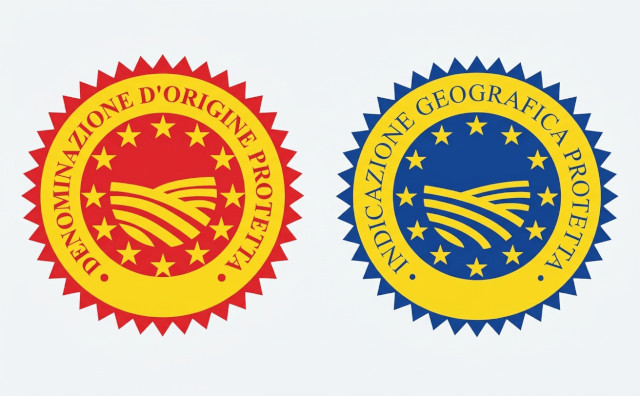
The acronyms DOP (Protected Designation of Origin), PGI (Protected Geographical Indication) e STG (Traditional Specialty Guaranteed) identify three European quality regimes that protect names, territories and recipes. Regulation (EU) 2024/1143 brings together geographical indications (GI) of agricultural products, wines and spirits in a common framework and regulates traditional specialties guaranteed. Legal protection is accompanied by significant economic results in some, but not all strategic supply chains Made in Italy agri-food.
European quality regimes: origin, recipe and organic method
The European construction of food quality regimes dates back to first nineties. Regulation (EEC) no. 2092/91 introduced the rules on organic production, then merged into the reg. (EU) 2018/848. The following year, regulation (EEC) no. 2081/92 established the protection of designations of origin and geographical indications, while Regulation (EEC) no. 2082/92 introduced certificates of specificity, which later became guaranteed traditional specialities. The two 1992 regulations were first replaced by regulations (EC) no. 510/2006 and n. 509/2006, later merged into Regulation (EU) no. 1151/2012. Wines and spirits have followed their own sectoral rules, now coordinated in a single legal framework.
The regulation (EU) 2024/1143, in force from 13 May 2024, repealed Regulation (EU) no. 1151/2012 and includes:
- PDO and PGI for agricultural products and wines;
- GI for spirit drinks;;
- optional quality indications, including 'mountain product';
- TSG (EU reg. 2024/1143, articles 1, 82, 94 and 97).
FoodTimes examined the path of reform in the article on new European rules for PDO and PGI. For spirit drinks the rules on categories, designation and presentation remain unchanged Spirits Regulation, reg. (EU) 2019/787, while the related GIs fall within the common system of 2024. The reg. (EU) 2026/471 then modified the reg. (EU) 2024/1143 on some labeling rules for spirit drinks, as well as intervening in the wine sector.
Market data
In Italy, the XXIII ISMEA-Qualivita Report, published on 26 November 2025 by the Institute of Services for the Agricultural Food Market and the Qualivita Foundation with 2024 data, quantifies the PDO economy of food and wine in 20.7 billion euros in production (+3.5%), with exports equal to 12.3 billion (+8.2%). The PDO, PGI and TSG food sector is worth 9.64 billion (+7.7%), PDO and PGI bottled wine 11.04 billion. THE wines with geographical indications represent 88% of national wine exports (ISMEA & Qualivita Foundation, 2025).
The strength of the food sector is concentrated on cheeses, meat products And balsamic vinegars. In 2024 the top denominations by production value are Grana Padano DOP (2.19 billion euros), Parmigiano Reggiano DOP (1.76 billion), Prosciutto di Parma DOP (860 million) and Balsamic Vinegar of Modena PGI (378 million). In wine, Prosecco DOP stands out, with 951 million euros of bulk value (ISMEA & Qualivita Foundation, 2025).
In other supply chains strategic factors for Made in Italy, denomination productions remain marginal. To cite a few examples, the 50 denominations ofextra virgin olive oil – between PDO and PGI – have reached 6.5% of Italian production in 2024; the certified harvest expresses 5% of Italian lemons and only 2% of Italian oranges; the situation is no better for i tomatoes.
PDO: meaning and connection with the territory
DOP means Protected Designation of Origin. For agricultural products, it means a product originating from a specific place, region or, in exceptional cases, a specific country, the quality or characteristics of which are essentially or exclusively due to a particular geographical environment, including natural and human factors. All phases of production must take place in the defined geographical area (EU regulation 2024/1143, art. 46.1). Among the production phases, the regulation also includes those relating to raw materials, up until the moment the product is ready to be placed on the market (EU regulation 2024/1143, art. 2.1, letter 'd').
The territory, therefore, must explain the protected characteristics: environment, resources and productive knowledge count. The disciplinary translates this link into verifiable prescriptions, from raw materials to processing methods.
An exemption on only live animals, meat and milk applies to names recognized as such in the country of origin before 1 May 2004: the raw materials can come from a larger or different area, as long as it is delimited and subjected to specific conditions and controls (EU regulation 2024/1143, art. 46.3). Furthermore, for PDOs of animal origin, i feed they must come from the delimited area; when this is not possible, the specifications may allow external contributions of up to 50% of the dry substance on an annual basis, without prejudice to the quality and connection with the environment (EU regulation 2024/1143, art. 47.1 and 47.2).
For i DOP wines sectoral definitions remain in the reg. (EU) no. 1308/2013: le grapes they must come exclusively from the area delimited (EU regulation 1308/2013, art. 93.1, letter 'a'). The Italian terms DOC (Controlled Designation of Origin) and DOCG (Controlled and Guaranteed Designation of Origin) are in turn included in the European PDO system.
PGI: meaning and origin of raw materials
PGI means Protected Geographical Indication. For agricultural products, it designates a product originating from a specific place, region or country, to which a given quality, reputation or other characteristics are essentially attributable to its geographical origin. At least one phase of production must take place in the demarcated area (EU regulation 2024/1143, art. 46.2).
The difference from the PDO therefore concerns the intensity of the geographical constraint. A PGI can be based on recognizable territorial processing and on the reputation gained over time. The origin of the raw material must instead be verified in the individual specifications, because it does not necessarily coincide with the territory referred to by the name; any restrictions on the origin of the raw materials must in any case be justified by the connection with the area (EU regulation 2024/1143, art. 47.4).
For i PGI wines at least the85% of the grapes it must come from the geographical area concerned, where production must also take place (EU regulation 1308/2013, art. 93.1, letter 'b'). The Italian term IGT (Indicazione Geografica Tipica) corresponds to this European regime. For spirit drinks, only the category is used IG (EU regulation 2024/1143, art. 22.3).
STG: meaning and case of Neapolitan Pizza
STG means Traditional Specialty Guaranteed. The name of a product obtained with a production, transformation or composition method compliant with traditional practice, or obtained from traditionally used raw materials or ingredients, can be registered as a TSG. The name, in turn, must have been traditionally used to refer to the product or must identify its traditional character (EU regulation 2024/1143, art. 53.1 and 53.2).
Traditional means proven historical use of the name by the producers of a community for at least thirty years (EU reg. 2024/1143, art. 2.3). The 2024 reform eliminated the specificity requirement, which previously hindered registrations (EU regulation 2024/1143, recital 64). The STG protects one recipe or a method, without reserving its production to the place evoked by the name: the product can be made elsewhere, in compliance with the specifications and controls.
This is the case of Neapolitan Pizza TSG. The initial registration, which took place in 2010 without reservation of the name (EU Reg. 97/2010), was replaced in 2022 by the registration with reservation of the name (EU Implementing Reg. 2022/2313). Since then the name can only be used for products that comply with the specifications: it is not enough to omit the STG symbol to use it freely. The specification regulates ingredients, preparation and cooking, but does not require that the pizza be produced in Naples.
Certification and controls: how the system works
There European registration protects a name and its specification; there certification verifies that the productions respect those rules. Adherence to the regime is voluntary, but anyone who uses or even just evokes the protected name must respect the regulations and undergo checks.
For PDO and PGI agricultural products, the operator enters the control system and maintains recordings own that demonstrate the origin of the raw materials, traceability, quantity and respect for the production process. Before being placed on the market, compliance with the specifications is verified by the competent authority or by the bodies to which official control tasks are delegated. The control plan translates the specifications into checks documentation, inspections and, where applicable, product analysis. The delegated and certification bodies must be accredited according to the EN ISO/IEC 17065 standard, specific to product certification, or EN ISO/IEC 17020, specific to inspection (EU reg. 2024/1143, articles 38-41; EU reg. 2017/625).
In Italy the system uses authorized control bodies and designated public authorities, under the supervision of the Ministry of Agriculture, Food Sovereignty and Forestry (MASAF). The protection consortium represents and enhances the denomination and carries out the protection functions attributed to it, distinct from the independent verification of conformity. The MASAF decree of 3 June 2026 redefined the establishment and recognition of consortia in light of the regulation. (EU) 2024/1143; the consortia already recognized must comply by 14 May 2027 (DM 3 June 2026, art. 28). The right to the name is not reserved for the members of the consortium, but belongs to each operator who markets products compliant with the specifications (EU regulation 2024/1143, art. 36). The checks continue on the market, too online, with interventions on irregularities and the abusive use of names (EU regulation 2024/1143, articles 42 and 43).
The STG they follow a similar logic, with verification of compliance with the specifications and controls on the market, without the territorial constraints of PDO and PGI (EU regulation 2024/1143, articles 71-74). For i wines, the head of the controls of the reg. (EU) 2024/1143 is limited to verifying the use of GIs on the market (EU reg. 2024/1143, art. 38.2); the verification of compliance with the specifications remains entrusted to the reg. (EU) no. 1308/2013, art. 116 bis, and in Italy law 238/2016, art. 64.
Mention of DOP and IGP ingredients on the label
A compound food can obviously contain a PDO or PGI certified ingredient. Its mention on the label is, however, subject to distinct rules: the mention of the protected name in the ingredient list only is not subject to specific conditions, beyond the general obligations of traceability and correctness of the information reported.
To use the geographical indication in name of the processed product, in other parts of the labeling or in the advertising, three cumulative conditions must be met:
- the transformed product Not contains other comparable products to the ingredient designated by the geographical indication;
- the certified ingredient is used in sufficient quantity to give the product a essential feature;
- There percentage of the PDO or PGI ingredient appears on the label (EU regulation 2024/1143, art. 27.1, letters 'a', 'b' and 'c').
The regulation does not establish a minimum percentage: what matters is that the ingredient actually confers an essential characteristic; the European Commission admits that even a small quantity may be sufficient, if suitable for this purpose. The ban on comparable products excludes the addition of other non-certified ingredients of the same category (European Commission, 2026a). The reference to a PDO cheese on a ready-made sauce, for example, presupposes that no other comparable cheese has been used.
European notification and authorization in Italy
Who produces a pre-packaged food and intends to use the geographical indication in its name, including in advertising, it must send a prior written notification to the recognized producer group, if any, documenting compliance with the three conditions. The group confirms receipt within four months; use may begin upon receipt of confirmation or expiration of the term, whichever is earlier. The group and the producer can also stipulate agreements on the technical and visual aspects of the presentation (EU regulation 2024/1143, art. 27.2 and 27.3). According to the European Commission, the notification obligation becomes operational only when the recognized groups are communicated by the Member State and published by the Commission (EU regulation 2024/1143, art. 33.8; European Commission, 2026a).
The regulation allows Member States to add procedural rules for producers established in their territory. In Italy it is therefore also necessary to consider theauthorization from the recognized protection consortium or, in its absence, of MASAF: for agricultural products, pursuant to Legislative Decree 297/2004, art. 1.1, letter. 'c', point 1; for wines, of law 238/2016, art. 44.9 and 44.10. The MASAF decree of 3 June 2026 attributes the issuing of this authorization to the recognized consortium, subject to verification of the three European conditions (DM 3 June 2026, art. 19). The ministry updated to 23 February 2026 criteria and forms, distinguished by agricultural products and wines.
Graphic presentation and proof of use
The DOP and PGI labels they must appear next to the ingredient name, clearly identified as such, and the Union symbol cannot be placed next to the name of the processed food (EU regulation 2024/1143, art. 37.7). The MASAF criteria for wines, in the 2.0 revision of 23 February 2026, prohibit both the symbols of the Union and the logo of the denomination on processed products; require quotation marks for the protected name and acronym, as well as the use of smaller characters than the company name, company trademarks and sales name.
The documentation must allow you to link purchases of the certified ingredient to the quantities used and the packages produced. The same criteria include purchases from suppliers subject to controls, monthly registrations, separate storage and presentation of the technical data sheet and labels. The message must remain unambiguous: the ingredient is certified, not the entire preparation. Article 27 does not apply to spirit drinks, which are instead subject to the specific rules of the regulation. (EU) 2019/787 (EU reg. 2024/1143, art. 27.4).
Protection from counterfeits, imitations and evocations
Registration protects the name throughout the European Union. The reg. (EU) 2024/1143 combats theundue commercial use for comparable products or that exploits, undermines or damages the reputation of the name, even when the product is used as an ingredient; it also prohibits usurpations, imitations and evocations, false or misleading indications and any other practice that may mislead about the origin (EU regulation 2024/1143, art. 26.1). Indicating the true origin, translating the name or placing terms such as type, style, method or imitation alongside it does not make the contested use lawful.
THE'evocation it can exist even without copying the name. The Court of Justice of the European Union has clarified that it is necessary to evaluate whether the contested name creates, in the mind of the average European consumer, who is normally informed and reasonably attentive and circumspect, a sufficiently clear and direct connection with the protected product. Just in case Champanillo, relating to Spanish catering establishments, the Court specified that the protection also concerns services and does not require identity or similarity between the products concerned (Court of Justice of the European Union, 2021).
The protection also covers i domain names accessible in the Union, distance sales, products introduced into the customs territory without release for free circulation and those intended for export (EU regulation 2024/1143, articles 26.2, 26.4 and 35). The TSGs in turn benefit from their own protection against usurpation, imitation and evocation, too online: the lack of a territorial constraint does not mean absence of name protection, at least in theory (EU regulation 2024/1143, articles 68 and 75).
The rigor of protection in Italy
The protection of PDOs and PGIs in Italy combines official controls, administrative sanctions and criminal liability. The framework includes the Legislative Decree 297/2004 for agri-food denominations and sectoral standards, including the law 238/2016 for wine. The Central Inspectorate for the protection of quality and repression of fraud in agri-food products (ICQRF), the Carabinieri, the Guardia di Finanza and the Customs and Monopolies Agency operate according to their competence.
There law 21 April 2026, n. 75, in force since May 29, 2026, has strengthened this apparatus. Article 517-quater of the penal code, on the counterfeiting of geographical indication and protected denomination signs of agri-food products, now provides for the imprisonment from one to four years e There fine from 10,000 to 50,000 euros. The punished conduct expressly includes introduction into the territory of the State, even in temporary custody or in a customs warehouse, shipment in transit, export, transport and detention for sale (law 75/2026, art. 1.1, letter 'd').
The reform introduced i crimes of food fraud and trade of food with false signs (articles 517-sexies and 517-septies of the criminal code), extended the administrative liability of entities (legislative decree 231/2001, article 25-bis.1) and modified the administrative sanctions of legislative decree 297/2004 (law 75/2026, articles 1 and 7).
Protection in third countries
Outside the European Union, protection is limited only to PDOs and PGIs that appear in the lists of international agreements for mutual recognition of Geographical Indications (GIs) with individual partner countries, under the conditions and with the exceptions provided therein. Some examples:
- In Canada CETA, applied provisionally since 21 September 2017, protects 145 European agri-food GIs (173 products); Asiago, Feta, Fontina, Gorgonzola and Munster remain usable by those who used them before 18 October 2013, while Parmesan it is considered a common name (Ministère de l'Agriculture, 2018; Lavery, 2017);
- In Japan the Economic Partnership Agreement, in force since 1 February 2019, protected 263 European GIs before the enlargement on 30 September 2023 (European Commission, 2023);
- There South Korea has protected European GIs since December 2015, with an updated list in 2022 (European Commission, s.d.-b);
- There China protects 100 from 1 March 2021, with extension expected to include a further 175 names (European External Action Service, 2020);
- The Vietnam it protects 169 from 1 August 2020 (European Commission, s.d.-c);
- Singapore, as of 21 November 2019, had registered 139 of the 196 listed as of 1 February 2020 (European Commission, 2020);
- In New Zealand, from 1 May 2024, 163 European agri-food GIs and over 2,000 of wines and spirits are protected, with prior users allowed for some names and transitions of five or nine years (European Commission, n.d.-d);
- The Chile, from 1 February 2025, protects 216 European agri-food GIs, while 1,745 GIs of wines and 257 of spirit drinks remain covered by the association agreement (WKO, n.d.);
- the interim agreement with the Mercosur, applied provisionally from 1 May 2026, protects over 350 European GIs (European Commission, 2026b), of which 57 are Italian (Il Sole 24 Ore, 2024). However, previous users can continue to use Parmesão, Parmesano And Reggianito, in Brazil Grain and, temporarily, Gorgonzola, and in all four countries Fontina after at least five years of use (DairyReporter, 2026);
- In Australia the agreement concluded on 24 March 2026, not yet in force, will protect 396 European GIs (165 agri-food and 231 spirit drinks), leaving free Parmesan and eliminating in ten years Prosecco on exported wines (DFAT, 2026);
- In the United Kingdom European GIs registered on 31 December 2020 remain protected by the Withdrawal Agreement (oriGIn, 2021);
- The United States they have no agreements on GIs: the 2006 wine agreement reserves 16 semi-generic names plus Retsina for European wines, including Chianti and Marsala, but only for new brands (TTB, n.d.).
Conclusions
PDO, PGI and TSG offer complementary guarantees: closer territorial link for PDOs, quality or reputation linked to origin for PGIs. The STGs maintain a residual role. The reg. (EU) 2024/1143 consolidates name protection and updates its application to e-commerce and processed foods.
Italy is the undisputed protagonist of the DOP Economy which is very effective in some supply chains - cheeses and cured meats, wines and balsamic vinegars first of all – and less effective in others, where the volumes of certified products remain marginal compared to overall production, for a series of reasons that deserve analysis and strategic interventions.
Dario Dongo
References
European Union regulatory sources
Council Regulation (EEC) No 2092/91 of 24 June 1991 on organic production of agricultural products and indications referring thereto on agricultural products and foodstuffs (repealed). OJ L 198, 22.7.1991. http://data.europa.eu/eli/reg/1991/2092/oj
Council Regulation (EEC) No 2081/92 of 14 July 1992 on the protection of geographical indications and designations of origin for agricultural products and foodstuffs (repealed). OJ L 208, 24.7.1992. http://data.europa.eu/eli/reg/1992/2081/oj
Council Regulation (EEC) No 2082/92 of 14 July 1992 on certificates of specific character for agricultural products and foodstuffs (repealed). OJ L 208, 24.7.1992. http://data.europa.eu/eli/reg/1992/2082/oj
Council Regulation (EC) No 509/2006 of 20 March 2006 on agricultural products and foodstuffs as traditional specialties guaranteed (repealed). OJ L 93, 31.3.2006. http://data.europa.eu/eli/reg/2006/509/oj
Council Regulation (EC) No 510/2006 of 20 March 2006 on the protection of geographical indications and designations of origin for agricultural products and foodstuffs (repealed). OJ L 93, 31.3.2006. http://data.europa.eu/eli/reg/2006/510/oj
Commission Regulation (EU) No 97/2010 of 4 February 2010 entering a name in the register of traditional specialties guaranteed [Pizza Napoletana (TSG)]. OJ L 34, 5.2.2010. http://data.europa.eu/eli/reg/2010/97/oj
Regulation (EU) No 1169/2011 of the European Parliament and of the Council of 25 October 2011 on the provision of food information to consumers. Consolidated text: 04/01/2025. http://data.europa.eu/eli/reg/2011/1169/2025-04-01
Regulation (EU) No 1151/2012 of the European Parliament and of the Council of 21 November 2012 on quality schemes for agricultural products and foodstuffs (repealed). OJ L 343, 14.12.2012. http://data.europa.eu/eli/reg/2012/1151/oj
Regulation (EU) No 1308/2013 of the European Parliament and of the Council of 17 December 2013 establishing a common organization of the markets in agricultural products. Consolidated text: 08/18/2026. http://data.europa.eu/eli/reg/2013/1308/2026-08-18
Regulation (EU) 2017/625 of the European Parliament and of the Council of 15 March 2017 on official controls and other official activities. Consolidated text: 05/01/2025. http://data.europa.eu/eli/reg/2017/625/2025-01-05
Regulation (EU) 2018/848 of the European Parliament and of the Council of 30 May 2018 on organic production and labeling of organic products. Consolidated text: 03/25/2025. http://data.europa.eu/eli/reg/2018/848/2025-03-25
Regulation (EU) 2019/787 of the European Parliament and of the Council of 17 April 2019 on the definition, description, presentation and labeling of spirit drinks, the use of the names of spirit drinks in the presentation and labeling of other foodstuffs, the protection of geographical indications for spirit drinks, the use of ethyl alcohol and distillates of agricultural origin in alcoholic beverages. Consolidated text: 05/13/2024. http://data.europa.eu/eli/reg/2019/787/2024-05-13
Commission Implementing Regulation (EU) 2022/2313 of 25 November 2022 entering a name in the register of traditional specialties guaranteed [Pizza Napoletana (TSG)]. OJ L 307, 28.11.2022, p. 45. http://data.europa.eu/eli/reg_impl/2022/2313/oj
Regulation (EU) 2024/1143 of the European Parliament and of the Council of 11 April 2024 on geographical indications for wine, spirit drinks and agricultural products, as well as traditional specialties guaranteed and optional quality terms for agricultural products. Consolidated text: 03/18/2026. http://data.europa.eu/eli/reg/2024/1143/2026-03-18
Regulation (EU) 2026/471 of the European Parliament and of the Council of 24 February 2026 amending Regulations (EU) No 1308/2013, (EU) No 251/2014 and (EU) 2021/2115 as regards certain market rules and sectoral support measures in the wine sector and for flavored wine products and Regulation (EU) 2024/1143 as regards certain labeling rules for spirit drinks. OJ L, 2026/471, 26.2.2026. http://data.europa.eu/eli/reg/2026/471/oj
Italian regulatory sources
Legislative decree 19 November 2004, n. 297, Sanctioning provisions in application of Regulation (EEC) no. 2081/92, relating to the protection of geographical indications and designations of origin of agricultural and food products. Regulatory. Latest consolidated version: 05/14/2026. https://www.normattiva.it/uri-res/N2Ls?urn:nir:stato:decreto.legislativo:2004-11-19;297
Law 12 December 2016, n. 238, Organic discipline of vine cultivation and wine production and trade. Regulatory. Latest consolidated version: 05/14/2026. https://www.normattiva.it/uri-res/N2Ls?urn:nir:stato:legge:2016-12-12;238
Law 21 April 2026, n. 75, Sanctioning provisions for the protection of Italian food products. Regulatory. Latest consolidated version: 05/14/2026. https://www.normattiva.it/eli/id/2026/05/14/26G00089/CONSOLIDATED
Decree of the Minister of Agriculture, Food Sovereignty and Forestry 3 June 2026, General provisions regarding the establishment and recognition of protection consortia for protected designations of origin and protected geographical indications of agricultural and food products pursuant to Regulation (EU) no. 2024/1143. Official Journal, General series n. 157 of 9 July 2026 (26A03404).
Statistics and institutional documents
European Commission. (2026a, September 10). Frequently asked questions on GI and TSG systems. DG AGRI, non-binding document. FAQs on GI and TSG regimes
European Commission. (2026b, April 30). Application of the EU-Mercosur interim trade agreement on 1 May 2026. Access2Markets. Communication from the Commission
European Commission. (s.d.). Geographical indications. DG Trade. Accessed 15 October 2026. International protection of geographical indications
European Commission. (2020, April 6). EU-Singapore FTA: highlight on improvements in intellectual property. IP Helpdesk. https://intellectual-property-helpdesk.ec.europa.eu/news-events/news/eu-singapore-fta-highlight-improvements-intellectual-property-2020-04-06_en
European Commission. (2023, September 27). EU-Japan: an additional 42 geographical indications protected for both sides. DG AGRI. https://agriculture.ec.europa.eu/media/news/eu-japan-additional-42-geographical-indications-protected-both-sides-2023-09-27_en
European Commission. (s.d.-a). EU-Japan Economic Partnership Agreement. Access2Markets. Accessed 15 October 2026. https://trade.ec.europa.eu/access-to-markets/en/content/eu-japan-economic-partnership-agreement
European Commission. (s.d.-b). Asia and Australasia: bilateral agreements. DG AGRI. Accessed 15 October 2026. https://agriculture.ec.europa.eu/international/agricultural-trade/bilateral-agreements/asia-and-australasia_en
European Commission. (s.d.-c). EU-Vietnam Free Trade Agreement. Access2Markets. Accessed 15 October 2026. https://trade.ec.europa.eu/access-to-markets/en/content/eu-vietnam-free-trade-agreement
European Commission. (s.d.-d). Factsheet: EU-New Zealand trade agreement, agriculture trade. DG Trade. Accessed 15 October 2026. https://policy.trade.ec.europa.eu/eu-trade-relationships-country-and-region/countries-and-regions/new-zealand/eu-new-zealand-agreement/factsheet-eu-new-zealand-trade-agreement-agriculture-trade_en
DairyReporter. (2026, January 9). What's in for dairy from the EU-Mercosur agreement? https://www.dairyreporter.com/Article/2026/01/09/eumercosur-deal-new-opportunities-for-dairy-trade/
DFAT. (2026). Australia-EU FTA: overview of EU geographical indications and protected treatments. Department of Foreign Affairs and Trade. https://www.dfat.gov.au/sites/default/files/australia-eu-overview-eu-geographical-indications-protected-treatments.pdf
Il Sole 24 Ore. (2024). EU-Mercosur Agreement: 57 Italian Protected Geographical Indication products protected with safeguard clauses. https://en.ilsole24ore.com/art/mercosur-grana-padano-prosecco-here-are-57-italian-products-protected-in-the-agreement-AIj9RNn
ISMEA & Qualivita Foundation. (2025, November 26). XXIII Ismea-Qualivita Report on Italian DOP IGP STG products and IG spirit drinks. Press release no. 1. Press release and summary data
Lavery. (2017, September 14). What every agri-food company must know about the new geographical indications which will come into force on September 21st. https://www.lavery.ca/en/publications/our-publications/3106-what-every-agri-food-company-must-know-about-the-new-geographical-indications-which-will-come-into-force-on-september-21st.html
MASAF. (2026, February 23). Criteria for the use of reference to a PDO or PGI in the labelling, presentation or advertising of a composed, elaborated or transformed product. Revision 2.0, separate documents for agricultural products and wines. Official criteria and forms
MASAF. (s.d.). Authorized control structures. Accessed 15 October 2026. Lists of control structures
Ministère de l'Agriculture et de l'Alimentation. (2018, October 16). Reply to question paper no. 9994. Journal officiel, p. 9278. https://www.assemblee-nationale.fr/dyn/15/questions/QANR5L15QE9994.pdf
oriGIn. (2021, February 17). Brexit TCA: clarification of the main issues concerning GIs. https://www.origin-gi.com/web_articles/17-02-2021-brexit-tca-clarification-of-the-main-issues-concerning-gis-after-the-eu-uk-trade-and-cooperation-agreement/
European External Action Service. (2020). Landmark agreement will protect 100 European geographical indications in China. https://www.eeas.europa.eu/delegations/china/landmark-agreement-will-protect-100-european-geographical-indications-china-0_en
TTB. (s.d.). U.S.-EU Wine Trade Agreement. Alcohol and Tobacco Tax and Trade Bureau. Accessed 15 October 2026. https://www.ttb.gov/import-export/agreements/us-eu-wine-trade-agreement
WKO. (s.d.). Handelsabkommen der EU mit Chile. Wirtschaftskammer Österreich. Accessed 15 October 2026. https://www.wko.at/aussenwirtschaft/handelsabkommen-eu-chile
International agreements and jurisprudence
Canada, European Union & Member States. (2016). Comprehensive Economic and Trade Agreement (CETA), Chapter 20, Subsection C, and Annex 20-A. OJEU L 11 of 14 January 2017. Text of the agreement
Court of Justice of the European Union. (2021, September 9). Comité Interprofessionnel du Vin de Champagne v GB, C-783/19, ECLI:EU:C:2021:713. Judgment; press release no. 154/21
European Union & Japan. (2018). Economic Partnership Agreement, chapter 14 and annex 14-B, with subsequent updates. Text of the agreement
European Union & People's Republic of China. (2020). Agreement on cooperation on geographical indications and their protection. Text of the agreement
European Union & Mercosur. (2026). Interim trade agreement: text and annexes. European Commission, DG Trade. Official texts of the agreement

Dario Dongo, lawyer and journalist, PhD in international food law, founder of WIISE (FARE - GIFT – Food Times) and Égalité.


, IGP (Indicazione Geografica Protetta) e STG (Specialità Tradizionale Garantita) identificano tre regimi europei di qualità che proteggono nomi, territori e ricette.)