

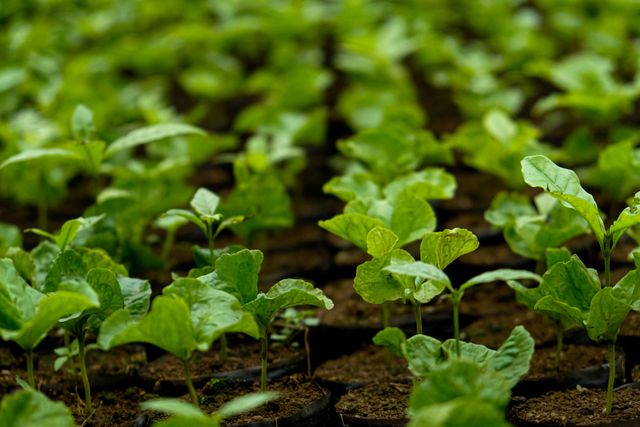
The National Quality System for Integrated Production consolidates its central role in the ecological transition of the Italian agri-food sector. In addition to ensuring agronomic practices with reduced chemical impact, this public scheme today offers fundamental legal protection to businesses. In the European and national regulatory context marked by legislative decree 30/2026 against greenwashing, adherence to the SQNPI indeed provides objective and certified evidence of the truthfulness of environmental claims, differentiating products in the market in full respect of transparency towards consumers.
Regulatory evolution of the SQNPI standard
The Law no. 4 of February 3, 2011 (articles 2, paragraphs 3-9) formally establishes the SQNPI system and defines its operation. The ministerial decree of May 8, 2014 subsequently established the 'equivalence regime' between the pre-existing regional integrated production quality systems and the SQNPI, harmonizing the national regulations with the community framework.
The system, operational since January 2016, is applicable to all plant productions, processed and unprocessed. The regulatory framework is completed with:
- The National Integrated Production Guidelines, periodically updated by the Scientific Technical Body (OTS), which provide guidelines for drafting regional specifications and control plans;
- i regional integrated production regulations (DPI), approved by MASAF, which contain specific requirements for each crop and territory.
Mandatory agronomic requirements and distances from organic farming
Access to the SQNPI system is subject to compliance with regional integrated production specifications approved by MASAF. These specifications, developed by the Regions based on the National Guidelines, must guarantee:
- minimization of the use of synthetic chemical products, favoring integrated pest management techniques, biological control, mating disruption, beneficial insects, and preventive agronomic practices;
- rationalization of fertilization, through soil analyses, balanced fertilization plans, and the use of low environmental impact fertilizers;
- respect for ecological, economic and toxicological principles, with limitations in the choice of phytosanitary products and the number of treatments;
- crop rotation and agronomic diversification, to maintain soil fertility and counteract the emergence of resistances;
- complete traceability along the supply chain, from primary production to the finished product.
The system envisages thevoluntary membership of subjects who commit to guaranteeing these requirements whose strictness, it is worth highlighting, not è comparable to the strict regime established for the biological system (EU regulation 2018/848).
How the National Guidelines and the regional regulations work
I regional integrated production regulations (DPI) they represent the operational core of the SQNPI system. They are divided into two main sections: the General Part — containing the cross-cutting provisions applicable to all crops — and the Technical Rules for Integrated Pest Management and Agronomic Techniquesspecific to each crop and territory.
The National Guidelines for Integrated Production 2025-2026approved by the Technical Scientific Body (OTS) and updated to June 13, 2025, are divided into:
- Integrated Pest Management Section: defines the control strategies, monitoring techniques, intervention thresholds, allowed plant protection products, and application methods for each crop;
- Agronomic Techniques Section: establishes criteria for fertilization, irrigation, soil management, variety selection, crop rotation, and conservation practices;
- Guidelines for drafting regional control plans: define operational procedures for inspections, control frequency, non-compliances, and related sanctions.
Each Region adapts the National Guidelines to its own climatic-environmental, crop and phytosanitary peculiarities, motivating any differences. The regional regulations are periodically updated and submitted for a compliance opinion by the competent technical groups of MASAF-SQNPI.
Rules for soil analysis and opening to NGT (New Genomic Techniques)
The SQNPI regulations present differentiated structures and technical contents based on crop specificities. All regulations define requirements related to:
- soil analysis: execution in the first year of activity on homogeneous plots, determining granulometry, pH, CEC, organic matter, total and active lime, total nitrogen, exchangeable potassium, assimilable phosphorus;
- fertilization plan: identification by crop/cycle of quantities and distribution times, with the possibility of adopting standard forms, the AgrelanWeb program or crop balances;
- crop rotation: five-year with at least three main crops (reducible to two in mountainous and hilly areas for predominant horticulture);
- propagation material: obligation to use CE certified material, with a ban on GMOs (not also of NGT, as they are excluded from the relevant definition and discipline by specific EU regulation, in 2026);
- integrated pest management: monitoring of adversities, intervention thresholds, priority to non-chemical methods, limitation of the number of treatments and choice of low-impact products;
- management of crop residues: shredding and incorporation practices, burning ban;
- farm records: documentation of all crop operations, purchase and use of phytosanitary products and fertilizers.
Steps to obtain the SQNPI Certificate of Conformity
The SQNPI certification process is divided into the following phases:
- establishment/update of the company file, pursuant to DPR 503/99 and Legislative Decree 99/2004. For other operators (conditioners, processors, distributors) the establishment of a file in registry form is foreseen;
- submission of the membership application through the SIAN/National Rural Network portal, with the choice of the Control Body (OdC) among those accredited and registered in the MASAF list. The company must adopt the integrated production disciplinary of the Region where the operational headquarters is located;
- preliminary assessment: the OdC verifies that the documentation presented meets the requirements of the subscribed regional disciplinary;
- inspection verification: the OdC performs the compliance checks provided for by regional control plans. For single operators, the control is carried out on 100% of the companies; for associates, on a sample corresponding to the square root of the associated companies;
- issuance of the Certificate of Conformity: in case of a positive outcome, the company is included in the official list of certified entities and can use the ‘Sustainable Quality’ brand (known as the 'yellow bee');
- surveillance and periodic controls: the certification is maintained through annual checks and updating of the company file.
Technical updates and agricultural area objectives
The two-year period 2025-2026 marked an important phase of consolidation for SQNPI, with significant regulatory updates and substantial growth in memberships.
Update of the 2025-2026 National Guidelines
On November 24, 2025, the Technical Scientific Body approved the Standard ‘SQNPI for Membership, Management and Control Rev. 15 of 2026’, including the 2026 National Integrated Production Guidelines, divided into two sections on protection and agronomic techniques, and those for drafting regional control plans. On May 28, 2026, the OTS approved the revision 15.2 of the standard, which extends the deadline for submitting applications to July 25, 2026.
The numbers for 2025: towards one million hectares
2025 saw significant growth of the system: according to certification bodies' data, there are about 45.000 The SQNPI certified operators, with an involved area of about 1 million hectares. SQNPI positions itself as the leading sustainability certification system for plant productions in Italy. In the wine sector alone, the 52% of the surface of Conegliano Valdobbiadene Prosecco DOCG is certified SQNPI, demonstrating the system's penetration even in high-quality supply chains.
Access to funding from Rural Development Plans
Certification SQNPI is a fundamental requirement to access numerous calls for Rural Development Plans (RDP). The SRA01 – ACA call of the Lazio Region for the 2026-2028 period, for example, requires adherence to SQNPI for interventions on hazelnut and vine. Similarly, in many Italian regions, SQNPI is a requirement to access public contributions linked to sustainability and quality (Measure 10 and Measure 3.1 of the RDP).
The role of citizens in reporting non-compliance
TheSQNPI Observatory, to which every citizen can report any non-compliant behavior with the standard by operators under quality regime, according to the procedures set out in paragraph 8.4 of the standard. The reporting system strengthens transparency and consumer protection, integrating the controls by Certification Bodies with civil society oversight.
Rules for the use of the ‘Sustainable Quality’ label
Compliance with the SQNPI system can be highlighted inlabeling and advertising of products derived from certified supply chains. Certified operators are assigned the official ‘Sustainable Quality’ mark — depicting a yellow bee on a green background — which can be affixed directly on the label, as a symbol of certified quality and transparency towards the consumer.
The SQNPI mark can be used:
- free of charge by all operators in the European Union (producers, conditioners, packers, distributors) who adhere to the system and use it solely to distinguish certified productions;
- in combination with private or collective marks which qualify the product based on different standards, provided that no confusion is caused to the consumer;
- on promotional material and other related material, with a safeguard clause of non-misleading communication.
These provisions respond to the need to provide the consumer with clear and verifiable elements on the origin and qualitative characteristics of the product, strengthening transparency and traceability throughout the supply chain.
Accredited control bodies and ministry oversight
The MASAF performs functions as the competent authority for the recognition of regional regulations, the keeping of the official list of control bodies and the management of the National Information System (SIPI). TheTechnical Scientific Body (OTS), established pursuant to art. 2 paragraph 6 of law no. 4/2011 and DM 4890 of May 8, 2014, has duties to approve the National Guidelines, the methods of adhesion and management of the system and regional control plans.
The system provides for a double level of control:
- company self-control: verification of compliance requirements by operators, with recording of cultivation operations, purchase and use of phytosanitary products, invoices, results of soil analyses, calibration of spraying machines;
- control by the CBs: periodic inspections, with frequency and sampling defined by regional control plans.
The Control Bodies currently operating include: RINA, CSQA, CCPB, ICEA, Bioagricert, Valoritalia, Ecogruppo Italia, Suolo e Salute, QCertificazioni — all accredited according to ISO 17065:2012 and registered in the official MASAF list.
Substantial differences between the public standard and UNI 11233 norm
The SQNPI, as quality system regulated established by law, must be distinguished from voluntary technical standards standardization rules that regulate integrated production on a private law basis. The main one is UNI 11233, ‘Integrated production systems in agri-food chains – General principles for the design and implementation in plant supply chains‘, published by UNI (Italian Standardization Body) in 2007 and still in force in the 2009 edition. This is a standard exclusively national: there is no equivalent European (EN) or international (ISO) version.
The substantial difference with the SQNPI is twofold:
- the standard UNI 11233:2009 sets general principles and entrusts the operator (company, consortium, producers' organization) with the drafting of its own technical specification of integrated production, subject to third-party conformity assessment; adherence is purely voluntary and lacks legislative basis, with a three-year validity certification and annual surveillance audits;
- The SQNPI, on the other hand, is a system public (Law 4/2011), managed by MASAF, with technical requirements established by National and Regional Guidelines as well as a collective trademark publicly owned.
However, both schemes share theaccreditation infrastructure, based on horizontal conformity assessment standards:
- ISO 17065:2012 ('Conformity assessment – Requirements for bodies certifying products, processes and services’), reference for ACCREDIA accreditation of Certification Bodies;
- ISO 17067:2013 ('Fundamentals of product certification and guidelines for product certification schemes’).
At the European level there is no dedicated CEN/EN standard to integrated production as such:
- The integrated pest management (IPM) is generally regulated by Directive 2009/128/EC on the sustainable use of pesticides (Annex III), transposed in Italy by Legislative Decree 150/2012 and the National Action Plan, while
- the reference agronomic principles date back to the technical-scientific guidelines ofIOBC-WPRS (International Organisation for Biological and Integrated Control), which however have no binding regulatory value.
Italy therefore represents a peculiar case, equipped with both a national technical standard (UNI 11233) and a regulated public scheme (SQNPI).
Crops and production sectors allowed for certification
The MASAF has progressively recognized the regional disciplinary protocols of integrated production of all Italian Regions, covering a wide range of crops and production sectors. The disciplinary protocols are structured by homogeneous areas (plain, hill, mountain) and by crop types:
- horticultural: tomato, zucchini, eggplant, pepper, cabbage, carrot, onion, lettuce, spinach, fennel, chard, radicchio;
- fruit crops: apple tree, pear, peach, apricot, cherry, kiwifruit, table and wine grapevine, citrus fruits, olive;
- wood trees: hazelnut tree, chestnut;
- field herbaceous crops: durum wheat, soft wheat, corn, barley, rice, soybean, sunflower, sugar beet;
- legumes: broad bean, bean, pea, chickpeas, lentils;
- industrial crops: sugar beet, tobacco, hemp;
- floriculture and ornamentals.
Each disciplinary protocol is accompanied by a regional control plan which defines the operational methods of the verifications, the frequency of controls, non-compliances and related sanctions. Certification can be requested for the entire company or for individual crops, with the obligation that the entire surface of the certified crop is subject to a control regime.
Preference criteria in green procurement and large-scale retail
A relevant provision of the SQNPI system concerns the use of certified products in public collective catering and in large-scale retail distribution. Products obtained in accordance with the system, as 'quality products', can constitute a preferential title in the awarding of supplies intended for collective catering and are increasingly requested by large-scale retail buyers as a guarantee of sustainability.
The preference in public tenders promotes the integration of quality and sustainability criteria in the procurement policies of public administrations, in line with the European objectives of Sustainable Public Procurement (SPP). The SQNPI certification also facilitates entry into foreign markets, where integrated production is recognized as a sustainability standard.
National quality systems compared and protection against greenwashing
The SQNPI is alongside the National Zootechnical Quality System (SQNZ), the National Quality System for Animal Welfare (SQNBA) and to the scheme 'Made Green in Italy’ as a pillar of the Italian strategy for the sustainability of agri-food productions. If the SQNZ certifies 'sustainable farms', the SQNBA superior animal welfare, and Made Green in Italy the environmental footprint according to the PEF method (Product Environmental Footprint), the SQNPI specializes in sustainability of plant productions through the reduction of synthetic chemical use and the rationalization of agronomic practices.
The four systems — although with different scopes — share the public matrix, the third-party certification and the goal of providing consumers with transparent and verifiable information. In light of Legislative Decree 30/2026 which implements the Directive (EU) 2024/825 on environmental claims, adherence to these certified systems takes on a new meaning: it offers companies a more solid compliance basis — and therefore lower risks of sanctions in the matter of greenwashing — founded on objective requirements and independent verifications. Legislative Decree 30/2026 indeed allows the display of 'sustainability labels' only if based on a third-party certification system or provisions of a public authority: a condition that schemes with a public matrix like SQNPI satisfy by definition.
A comparative table of the systems highlights synergies and complementarities:
| Scheme | Focus | Scope | Third Party Certification | public matrix | Economic Driver |
| SQNPI | Integrated production, reduction of synthetic chemicals | Plant-based | Yes (ISO/IEC 17065) | Yes (MASAF) | RDP, public tenders, large-scale retail trade, foreign markets |
| SQNZ | Sustainable farming | Zootechnical | Yes (ISO/IEC 17065) | Yes (MASAF) | Public tenders, large-scale retail trade, foreign markets |
| SQNBA | Superior animal welfare | Zootechnical | Yes (ISO/IEC 17065) | Yes (MASAF/Ministry of Health) | Eco-scheme 1 Level 2 CAP, public tenders, large-scale retail trade, foreign markets |
| Made Green in Italy | Environmental footprint (PEF method) | Transversal (also extended to non-food products and services) | Yes (validation/verification ISO/IEC 17029) | Yes (MASE) | MASE calls, public tenders, large-scale retail trade, foreign markets |
SQNPI is the only among the mentioned systems to have had an appreciable level of diffusion. The ministries involved should therefore dedicate resources and investments to encourage adherence also to the other systems — with particular attention to SMEs, which are the basis of the Italian production system — and to their knowledge by stakeholders.
It would also be useful, in the humble opinion of the writer, to consider the hypothesis of renaming the systems different from ‘Made Green in Italy’ — through development and synthesis of the respective acronyms (e.g. ‘Certified Sustainable Farming’ instead of SQNZ, ‘Certified Animal Welfare‘ instead of SQNBA, ‘Certified Integrated Agriculture’ in place of SQNPI, and respective translations in the languages of destination of the goods) — with the dual objective of:
- facilitating the understanding of the meaning of each public certification by operators and consumers;
- specifying the perimeter of the certified activities and performances, in line with the requirements of directive (EU) 2024/825.
Digitalization and reforms useful for market transparency
The SQNPI system is part of a broader strategy aimed at supporting the process of transition of the agricultural sector towards a more sustainable production model, reducing the use of synthetic chemical products, protecting biodiversity and soil health, and ensuring the competitiveness of Italian productions in national and international markets.
The implementation of the system will depend on the sector's ability to encourage growth in memberships (from the current 45,000 operators towards a critical mass threshold) and the market response to the demand for certified products. Future regulatory developments will have to address issues such as:
- theharmonization of regional regulations with the National Guidelines, reducing disparities between territories;
- theintegration with other certification systems (organic, PDO/PGI, SQNZ, SQNBA, ‘Made Green in Italy’);
- the development of blockchain systems for digital notarization of data and greater appeal towards consumers, in Italy and abroad;
- the promotion of knowledge of the 'yellow bee' brand to consumers, through coordinated institutional campaigns.
Our team of DO (Food and Agriculture Requirements) is available to associations, consortia, companies and public bodies who intend to explore these and other opportunities to better enhance food sustainability in the name of compliance with current rules and transparency, without risks of greenwashing.
Dario Dongo
Credit cover_ptv 22
Bibliography
National legislation
Law February 3, 2011, No. 4 Provisions on labeling and quality of food products. Normattiva. https://www.normattiva.it/uri-res/N2Ls?urn:nir:stato:legge:2011;4
Legislative Decree August 14, 2012, No. 150. Implementation of Directive 2009/128/EC establishing a framework for Community action for the sustainable use of pesticides. Normattiva (last update to the act published on 12/03/2025). https://www.normattiva.it/uri-res/N2Ls?urn:nir:stato:decreto.legislativo:2012-08-14;150
Decree of the Ministry of Agricultural, Food and Forestry Policies May 8, 2014, No. 4890. Equivalence regime between regional integrated production quality systems and the National Integrated Production Quality System (SQNPI).
National Action Plan (PAN) on the sustainable use of plant protection products. Ministerial Decree January 22, 2014.
Legislative Decree February 20, 2026, No. 30. Implementation of Directive (EU) 2024/825. Normattiva. https://www.normattiva.it/eli/id/2026/03/09/26G00047/ORIGINAL
European legislation
Directive (EU) 2024/825 of the European Parliament and of the Council of 28 February 2024 amending Directives 2005/29/EC and 2011/83/EU as regards empowering consumers for the green transition. http://data.europa.eu/eli/dir/2024/825/oj
Directive 2009/128/EC of the European Parliament and of the Council of 21 October 2009 establishing a framework for Community action to achieve the sustainable use of pesticides. Consolidated text: 26/07/2019. http://data.europa.eu/eli/dir/2009/128/2019-07-26
Regulation (EU) 2021/2115 of the European Parliament and of the Council of 2 December 2021 establishing rules on support for strategic plans to be drawn up by Member States under the common agricultural policy (CAP Strategic Plans) and financed by the European Agricultural Guarantee Fund (EAGF) and by the European Agricultural Fund for Rural Development (EAFRD). Consolidated text: 18/03/2026 http://data.europa.eu/eli/reg/2021/2115/2026-03-18
Technical standards (UNI, CEN, ISO)
UNI 11233:2009. Integrated production systems in agri-food chains – General principles for the design and implementation in plant supply chains. UNI Italian Standardization Body. https://store.uni.com/uni-11233-2009
ISO/IEC 17065:2012. Conformity assessment — Requirements for bodies certifying products, processes and services. https://www.iso.org/standard/46568.html
ISO 17067:2013. Conformity assessment — Fundamentals of product certification and guidelines for product certification schemes. https://www.iso.org/standard/55087.html
ISO 17029:2019. Conformity assessment — General principles and requirements for validation and verification bodies. https://www.iso.org/standard/29352.html
SQNPI guidelines and technical standards
National and Regional Guidelines of Integrated Production. PAC Network 2025-2027. https://www.reterurale.it/flex/cm/pages/ServeBLOB.php/L/IT/IDPagina/26259
Data and statistics
- CCPB. (2025, October 15). SQNPI: the numbers of 2025. 45,000 certified operators, 1 million hectares. https://www.ccpb.it/blog/2025/10/15/sqnpi-i-numeri-del-2025/
- Prosecco.it. (2026, February 2). Sustainability: 52% of the Denomination SQNPI certified. https://www.prosecco.it/it/sostenibilita-certificato-sqnpi-il-52-della-superficie/

Dario Dongo, lawyer and journalist, PhD in international food law, founder of WIISE (FARE - GIFT – Food Times) and Égalité.


