

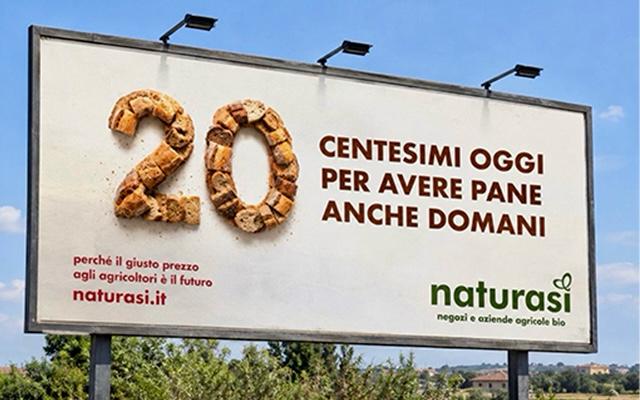
NaturaSì presented the campaign on October 8, 2026, in Milan “20 cents today so we can have bread tomorrow, too”. From October 2, 2026, to September 30, 2027, the Bread Products sold under this brand cost 20 cents more per kilo, and all proceeds go to the farmers in the supply chain who grow them wheat and spelt. The goal is to pay twenty cents more per kilogram of grain harvested in 2026 than the official price of the Bologna Commodities Exchange. If consumer contributions are not enough, EcorNaturaSì covers the difference with its own funds (NaturaSì, 2026).
Italian Wheat: Declining Figures
NaturaSì bases its analysis on ISTAT data on agricultural production. Between 2006 and 2025, the durum wheat, grown on more than 1.1 million hectares, saw a 15.5% decrease in acreage and a 9.3% decrease in production, while yields increased by 7.4%. The soft wheat It lost 21.4% of its production and 12.3% of its cultivated area, and its yield per hectare fell by 10.4%. In 2025, Italy imported approximately 97 million quintals of wheat, compared with domestic production of approximately 59.5 million (Istat, 2026).
Added to this decline are prices that do not cover costs. On August 27, 2026, in the midst of the harvest, the Bologna Stock Exchange listed organic soft wheat at 33 cents per kilogram and conventional soft wheat at 22 cents. According to NaturaSì, at these prices, cultivation is not sustainable in either case. For conventional wheat, a comparison with data from ISMEA (Institute of Services for the Agricultural and Food Market) confirms this: the average production cost of soft wheat is 230 euros per metric ton, or 23 cents per kilogram (Alessandria-Asti Chamber of Commerce, 2026). The same Ismea parameter also serves as a reference for the Regulations on Unfair Commercial Practices.
How the subsidy works
For years now, EcorNaturaSì has been paying farmers in its supply chain an agreed-upon price that is higher than the Bologna market price. This higher price applies to all soft wheat, durum wheat, and spelt delivered to the company, including the portion intended for pasta, flour, and cookies.
Consumers, on the other hand, are asked to contribute only on bread. The prices of other wheat products, such as pasta, flour, and pizza, remain unchanged, even though they account for about half of the raw material. Bread accounts for the other half. Thus, the 20 cents paid for each kilogram of bread is spread across the entire agricultural production, including what is used to make pasta or flour.
The goal is the same for every type of grain: to achieve a total surcharge of 20 cents per kilogram compared to the Bologna rate as of August 27, 2026. The calculation combines what EcorNaturaSì already pays and what consumers pay.
| Emmer wheat | Spelt wheat | Durum wheat | Soft wheat | |
| Contract price (€/kg) | 0,44 | 0,42 | 0,45 | 0,40 |
| Bologna Stock Exchange Price as of August 27, 2026 (€/kg) | 0,37 | 0,375 | 0,32 | 0,33 |
| Target price, current price + 20 cents (€/kg) | 0,57 | 0,575 | 0,52 | 0,53 |
| Contract Price Supplement (€/kg) | 0,13 | 0,155 | 0,07 | 0,13 |
| 2026 Harvest (kg) | 85.120 | 202.900 | 1.081.450 | 1.383.170 |
| Total Prize (€) | 11.065,60 | 31.449,50 | 75.701,50 | 179.884,90 |
Table 1. 2026 wheat and spelt harvest from the EcorNaturaSì supply chain and projected price supplements. Source: NaturaSì (2026). The total reported by NaturaSì is 298,101.50 euros.
The supply chain’s 2026 harvest exceeds 2,750 metric tons. The total premium amounts to approximately 298,000 euros, averaging about 11 cents more per kilogram compared to the previously agreed-upon prices. Organic soft wheat, currently priced at 33 cents, will be paid at 53 cents per kilogram. To finance the entire premium solely through customer contributions, approximately 1,490 metric tons of bread would need to be sold during the year. However, EcorNaturaSì’s guarantee ensures a certain outcome for farmers, regardless of sales volume.
If the contributions exceed the target, the surplus will be distributed among three biodynamic farms in the supply chain that are managed according to the closed-loop model: Di Vaira, Cerreto, and Decima. The distribution will be based on the volume of wheat sold to EcorNaturaSì in 2026.
For consumers, the cost is minimal. With 100 grams of bread a day, the contribution amounts to 2 cents—or about 7.30 euros a year. For farms, NaturaSì writes, that amount can mean the chance to have a future.
From Transparent Pricing to Fair Pricing
GIFT has followed NaturaSì’s journey regarding the value of agricultural work from the very beginning.
In 2025, the “Let’s Support Agriculture” campaign introduced the transparent pricing bread, tomato sauce, fennel, oranges for juicing, and kiwis. The labels indicate the portion of the price that goes to farmers and processors, and the organic durum wheat from the supply chain It was already being paid at 45 cents per kilo.
In 2026, the campaign “The Right Price for Food for the Health of People and the Earth” divided the payment to farmers into two components. One covers the product, and the other covers the ecosystem services: soil fertility, biodiversity, health, and landscape conservation. The example of the salad, with its 67 “green” cents, brought the second item into focus.
The bread campaign rounds out the series. First, NaturaSì showed how the price is determined; then it explained its environmental value. Now it sets a measurable goal, twenty cents above the market price for each kilogram of grain. It specifies the crop to which it applies, the period during which the subsidy is collected, and the farms that will receive any surplus.
Toward a Food Community
NaturaSì recognizes that this step alone is not enough to resolve a complex issue such as fair pricing for agricultural products. It proposes it as a contribution toward building a "food community", in which informed consumers and distributors provide adequate compensation for agricultural labor. Those who buy bread know how much extra they are paying, who receives that money, and what guarantees are in place. Farmers can count on a price that is known from the time of harvest and on a commitment that applies to the entire production of Italian wheat throughout the supply chain.
Dario Dongo
References
Primary source
NaturaSì. (2026). 20 cents today so we can have bread tomorrow, too. https://www.naturasi.it/20-centesimi-per-il-pane-di-domani
Statistics and Price Lists
Chamber of Commerce, Industry, Crafts, and Agriculture of Alessandria-Asti, Grain Commission. (May 8, 2026). Wholesale Price List for Grains. https://www.aa.camcom.it/sites/default/files/contenuto_redazione/pagina_base/allegati/Listino%20prezzi%20cereali%208%20maggio%202026.pdf
Istat. (September 4, 2026). Agricultural and Livestock Production – Year 2025. https://www.istat.it/comunicato-stampa/produzioni-agricole-e-zootecniche-anno-2025
Related articles on GIFT and Food Times
The Right Price for Food: NaturaSì’s “Contribution” to the Planet. GIFT – Great Italian Food Trade. https://www.greatitalianfoodtrade.it/notizie/prezzo-giusto-cibo-naturasi/
NaturaSì: We Support Agriculture with Fair Prices. GIFT – Great Italian Food Trade. https://www.greatitalianfoodtrade.it/notizie/naturasi-sosteniamo-agricoltura-prezzo-giusto-trasparente/
Unfair Commercial Practices in the Agri-Food Supply Chain, Legislative Decree 198/2021: The Basics. Food Times. https://www.foodtimes.eu/it/?p=60620

Dario Dongo, attorney and journalist, PhD in international food law, founder of WIISE (FARE - GIFT – Food Times) and Égalité.


