

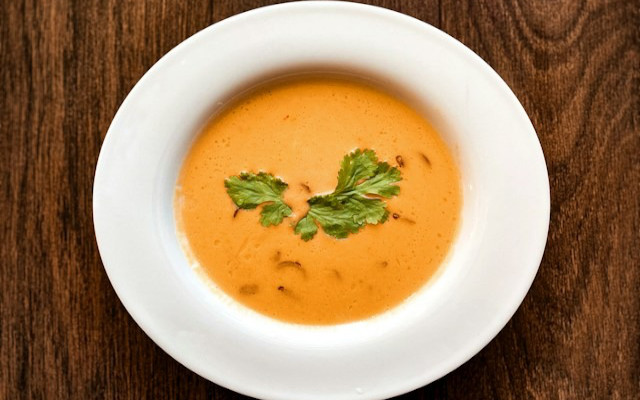
Soups, veloutés, minestrone, grilled and steamed side dishes. The V range is the most dynamic segment of ready-to-eat vegetables. Market, producers, safety, nutritional values and indications for buyers.
There V range includes cooked and packaged vegetables, ready to eat: grilled, boiled or steamed side dishes, purees, soups, veloutés and minestrone. They are stored in the refrigerator, have a short shelf life and only require heating before consumption.
Unlike fresh-cut, fifth-range has no legal definition. Law 77/2011 regulates the suns 'fresh, packaged and ready-to-eat fruit and vegetable products intended for human consumption which, after harvesting, are subjected to minimal technological processes' (law 77/2011, art. 2.1), and cooking goes outside this perimeter. The 'ranges' therefore remain a classification of use, based on the technologies and processes applied to the product from collection to sale. Knowing them helps to understand which products need to be washed or cooked and which are ready for consumption, as explained by the Istituto Zooprofilattico Sperimentale delle Venezie (2025).
The companies of the two sectors are however brought together in a single associative headquarters, the IV and V Range Fruit and Vegetable Products Group of the Unione Italiana Food (Colombo, 2026).
Market and consumption
According to NielsenIQ (NIQ) data for the year ending May 24, 2026, IV and V range they are worth together approximately 1.3 billion euros in large-scale retail trade (GDO). Growth is 1.5% in value and 1.3% in volume (Modern Distribution, 2026).
In this whole the fifth range vegetables it is the second most important segment - with 12% of the value and 14.6% of the volumes - and the more marked growth, +9.7% in value and +9.9% in volume, supported by a broader assortment. In the same period, fresh-cut vegetables, which account for 82.2% of turnover, recorded a slight decline (Distribuzione Moderna, 2026). Based on the total indicated, the share of the fifth range corresponds to approximately 156 million euros.
The estimates released in previous years vary according to the perimeter considered. In 2025 the fifth range was valued at 170 million euros, with an annual growth of 2% and the objective of 250 million in the next few years (Fruitbook Magazine, 2025).
In the same period Simone Zerbinati, president of the IV and V Gamma Group of the Italian Food Union, attributed to the sole soups a value of 175 million euros in 2024. The figure was growing by 5% and almost doubled in five years. Zerbinati also reported the marked growth in sales of cooked vegetables in the last two years (Colombo, 2025).
On the price a widespread prejudice weighs heavily. A study by AstraRicerche for Group IV and V Gamma of the Unione Italiana Food, presented in July 2026, compared seven ready-made products with their home-prepared equivalents. In addition to the price per kilo, he considered:
- the yield of raw materials;
- the purchase and preparation time, valued at 9 euros gross per hour;
- energy consumption for cooking.
THE savings the highest concern the fifth range: 55% for ready soup and 42% for minestrone, which require the use of many different ingredients and long processing times. 'If you consider the real cost of the entire process, and not just the purchase price, the perspective changes', commented Zerbinati (Fruitbook Magazine, 2026).
Major manufacturers
Zerbinati (Casale Monferrato and Borgo San Martino, Alessandria) is a family business founded in 1970. It has made fresh soups and veloutés one of its main segments, alongside side dishes, vegetable burgers, ready meals and salads. It has more than 70 references and over 200 collaborators. According to Circana data reported by the company, in 2025 the Lunch Box line grew by 18% in value and 8% in volume (Zerbinati, 2026).
The Green Line (Manerbio, Brescia) offers classic soups under the DimmidiSì brand, in 620 gram packs and 350 gram single portions, and the Viaggio nel gusto line. The offer is completed by side dishes such as purée (DimmidiSì, 2026).
OrthoRomi, an agricultural cooperative with over 700 hectares of cultivation, combines salads with vegetables to be cooked, purees and ready-made soups (OrtoRomi, 2026). In 2018 it had renewed its V range with the Insal'Arte brand, introducing grilled side dishes - such as peppers, aubergines and courgettes - and steamed ones, such as spinach, carrots, cauliflower and chard (Food Info, 2018).
Technologies and food safety
The V range combines three elements:
- a heat treatment, which performs the function of domestic cooking;
- The packaging, vacuum or in a protective atmosphere;
- There conservation in the cold.
In some cases cooking takes place directly in the sealed package, using the technique sous vide, based on precisely controlled temperatures. A review of the scientific literature found that this method allows the preservation of vegetables to be prolonged. It largely preserves its original characteristics, taste and consistency (Zavadlav et al., 2020).
Cooking drastically reduces the microbial load, without however eliminating the spores of some bacteria that can germinate if the cold chain is interrupted.
The European Food Safety Authority (EFSA) took care of Bacillus cereus, spore-forming bacterium widespread in foods of plant origin. It found that the majority of disease infections attributed to this bacterium are associated with concentrations above 100,000 colony forming units per gram (EFSA BIOHAZ Panel, 2016).
The constant refrigeration serves precisely to prevent the spores that have survived cooking from germinating and the bacteria from multiplying to those levels. For this reason the cold chain and compliance with the expiry date are decisive.
Scientific evidence on cooking
The nutritional value of cooked vegetables depends on the method and duration of treatment.
A study from the University of Milan compared boiling, steaming and microwave cooking on cauliflower, carrot and sweet potato:
- There boiling it reduced vitamin C, total polyphenols and antioxidant activity, but made carotenoids more accessible;
- The steam it in turn reduced vitamin C but increased measured polyphenols and carotenoids;
- the microwave had little effect on vitamin C.
The shortest cooking times were the most favorable (Buratti et al., 2020).
A group from the University of Molise analyzed spinach, chicory and two spontaneous species of the genus Sonchus (grethorn). Steaming reduced lutein by an average of 20% and beta-carotene by 15%. Boiling, considering the losses of solid substance, did not significantly affect these fat-soluble compounds (Fratianni et al., 2021).
This experimental evidence concerns the cooking methods themselves and not the individual products on the market, which may differ in recipe, treatment and shelf life. However, they indicate that one short and controlled cooking, like the industrial one, can preserve most of the useful compounds of vegetables. This applies to leafy vegetables – such as spinach and chard – and for cruciferous vegetables, how cauliflowers And broccoli.
Tips for purchasing
Those who buy for home can start from the label. The fifth range should be placed immediately in the refrigerator and consumed within the expiry date; once opened, it must be consumed within the times indicated on the package.
Before consumption, the product must be heated at a temperature high temperature throughout the mass, with particular attention to soups. It is useful to compare the list of ingredients, favoring simple recipes, and choose the biological – where available – for the best protection of ecosystems and biodiversity.
Professional buyers, from large-scale retail trade to collective catering, have additional tools. In the supply specifications it is appropriate to request:
- studies in support of shelf life declared;
- documentation on the heat treatment parameters;
- temperature control procedures along the distribution, since the risk linked to spore-forming bacteria depends on their multiplication (EFSA BIOHAZ Panel, 2016).
The growth of the segment, supported by an expanding assortment (Modern Distribution, 2026), also offers space for references with raw materials of Italian origin and certified.
Conclusions
The fifth range is still a fraction of the ready-to-eat vegetable market, but it is the one that is growing the fastest. Different estimates place its value at over 150 million euros.
Soups, soups and cooked side dishes respond to the demand for quick meals and, at the same real cost, compete with home preparation. Safety depends on the quality of the heat treatment and the cold chain, while the nutritional profile rewards short and controlled cooking.
Dario Dongo
References
Italian regulatory sources
Law 13 May 2011, n. 77. Provisions concerning the preparation, packaging and distribution of fourth range fruit and vegetables. Regulatory. Latest consolidated version: 12/30/2023. https://www.normattiva.it/uri-res/N2Ls?urn:nir:stato:legge:2011-05-13;77
Scientific studies
Buratti, S., Cappa, C., Benedetti, S., & Giovanelli, G. (2020). Influence of cooking conditions on nutritional properties and sensory characteristics interpreted by e-senses: Case-study on selected vegetables. Foods, 9(5), 607. https://doi.org/10.3390/foods9050607
Fratianni, A., D’Agostino, A., Niro, S., Bufano, A., Paura, B., & Panfili, G. (2021). Loss or gain of lipophilic bioactive compounds in vegetables after domestic cooking? Effect of steaming and boiling. Foods, 10(5), 960. https://doi.org/10.3390/foods10050960
Zavadlav, S., Blažić, M., Van de Velde, F., Vignatti, C., Fenoglio, C., Piagentini, A. M., Pirovani, M. E., Perotti, C. M., Bursać Kovačević, D., & Putnik, P. (2020). Sous-vide as a technique for preparing healthy and high-quality vegetable and seafood products. Foods, 9(11), 1537. https://doi.org/10.3390/foods9111537
Institutional reports and company documents
Tell me Yes. (2026). Soups and side dishes [Company website]. https://www.dimmidisi.it/
EFSA Panel on Biological Hazards (BIOHAZ). (2016). Risks for public health related to the presence of Bacillus cereus and others Bacillus spp. including Bacillus thuringiensis in foodstuffs. EFSA Journal, 14(7), 4524. https://doi.org/10.2903/j.efsa.2016.4524
Experimental Zooprophylactic Institute of Venice. (2025, October 15). What are the fruit and vegetable product ranges? [Video, 100 second series]. https://www.izsvenezie.it/gamme-prodotti-ortofrutticoli-video/
OrthoRomi. (2026). Products [Company website]. https://www.ortoromi.it/
Zerbinati. (2026). Family cuisine [Company website]. https://www.zerbinati.com/
Specialized and information press
Colombo, D. (2025, July 22). Simone Zerbinati: 'Fourth and fifth ranges are growing, but more communication is needed' #vocidellortofrutta. Fresh Point Magazine. https://www.freshpointmagazine.it/vocidellortofrutta/zerbinati-quarta-quinta-gamma-uif/
Colombo, D. (2026, October 19). Unione Italiana Food applauds the exclusion of fourth range from the compostability obligation. Fresh Point Magazine. https://www.freshpointmagazine.it/tech-logistica/packaging/unione-italiana-food-esenzioni-insalate-compostabilita-quarta-gamma/
Modern Distribution. (2026, September 24). IV and V range: lots of health without effort. Ready-to-eat products are growing. Modern Distribution. https://distribuzionemoderna.info/mercati/iv-e-v-gamma-tanta-salute-senza-fatica-crescende-i-prodotti-pronti-al-consumo
Food Info. (2018, April 20). Ortoromi begins 2018 by presenting a fifth range completely renewed in cooking methods and flavours. Food Info. https://foodinfo.it/news/ortoromi-gini-il-2018-presentando-una-v-gamma-completely-rinnovata-nei-metodi-di-cottura-e-nei-sapori
Fruitbook Magazine. (2025, September 24). Fourth Italian range over one billion: a leading market in Europe. Fruitbook Magazine. https://www.fruitbookmagazine.it/quarta-gamma-italiana-oltre-il-miliardo-un-mercato-leader-in-europa/
Fruitbook Magazine. (2026, July 14). IV and V range, a myth dispelled: they cost less than fresh, up to 55%. Fruitbook Magazine. https://www.fruitbookmagazine.it/iv-e-v-gamma-sfatato-un-mito-costano-meno-del-fresco-fino-al-55/

Dario Dongo, lawyer and journalist, PhD in international food law, founder of WIISE (FARE - GIFT – Food Times) and Égalité.


