

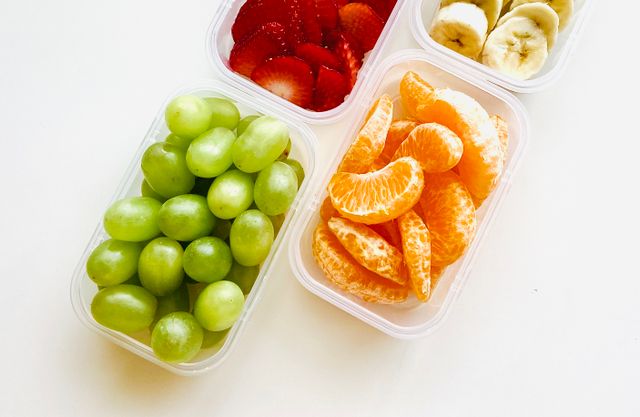
Diced pineapple, sliced melon, sliced apple, fruit salads. Ready-to-eat fruit is the smallest part of fresh-cut fruit, but it is the one that grows the most. Market, producers, technologies, safety and information for buyers.
There fresh-cut fruit it is selected fresh fruit, washed, peeled where necessary, cut and packaged, ready to eat. It falls under the same discipline as bagged salads, since Italian law refers to all 'fresh fruit and vegetable products intended for human consumption, packaged and ready for consumption which, after harvesting, are subjected to minimal technological processes aimed at valorising them following good processing practices' (law 77/2011, art. 2.1). There V range instead it designates packaged vegetables subjected to cooking.
In trade statistics the boundaries are less clear. NielsenIQ (NIQ), for example, detects a 'fresh-cut and fifth-range fruit' segment, which brings together ready-to-eat fruit regardless of treatment (Modern Distribution, 2026).
Market and consumption
In 2025 the ready-to-eat fruit was the most dynamic segment of service fruit and vegetables: +10.5% in volume and +12.2% in value, for a market that exceeds 65 million euros (Colombo, 2026). The most recent push comes fromoffer. According to NIQ, in the year ending May 24, 2026 the fruit segment grew thanks to a greater number of products on the shelves and more promotions (Modern Distribution, 2026).
On the front of the price, a study by AstraRicerche for Unione Italiana Food compared the ready-made product with that to be prepared at home, also considering the preparation time and the yield of the raw material. On this basis, for pineapple the overall cost of the ready product is substantially equivalent to that of the whole fruit (Fruitbook Magazine, 2026).
Where ready-made fruit is born
The production of fresh-cut fruit is concentrated in two main areas, the Trentino-Alto Adige and the Campania. Trentino, followed by other northern regions, leads the transformation, starting with apples (Fondazione Symbola et al., 2024).
Among businesses, Agribologna is a cooperative with 110 members that markets a line of fresh-cut fresh fruit under the Fresco Senso brand (Agribologna, 2026).
Fructalof the group Orser, processes fresh-cut fruit in four hubs: Verona, Florence, Cagliari and Bari. In 2026 it doubled the processing room in Verona, inaugurated in 2019, to over 1,100 square metres. It added a second line for pineapple and melon and a new line for coconut (Teleborsa, 2026).
Anti-browning technologies
The cut breaks the cells and brings the enzymes into contact with the polyphenols of the fruit. This results in the typical browning of apples, pears and peaches. To counter it, the industry resorts to solutions antioxidants such as ascorbic acid and packaging in protective atmosphere, in addition to the necessary preservation of the cold chain.
In the meantime, Italian research is working on alternatives of natural origin. An edible coating based on aloe vera gel, enriched with lemon essential oil, has been developed at the University of Palermo. On Fuji apple slices stored in the cold for nine days it delayed browning and maintained an excellent color, without negative effects on taste, aroma and flavor (Farina et al., 2020).
The cutting technologies in turn reveal: a study by the Universities of Foggia and Pisa observed that dull blades significantly increase the browning of cut Golden Delicious apples, to the point of reducing the shelf life of the product - in the tests carried out - from 14 to around 5 days (Incardona et al., 2024).
Food safety
Food safety is entrusted to good hygiene practices and strict temperature control, which Italian discipline oversees at every stage. Processing environments cannot exceed 14°C (Ministerial Decree 20.6.2014, Annex 1) and distribution must take place below 8°C (Ministerial Decree 20.6.2014, art. 6.1). 'The packaging'in turn - as underlined by Simone Zerbinati, president of the IV and V Range Fruit and Vegetables Group of the Italian Food Union -'it is not a simple wrapper: it protects the product, helps to guarantee its safety and preserves its freshness' (Columbus, 2026).
The reform of microbiological criteria on Listeria monocytogenes, from 1 July 2026 at EU level, has further strengthened food safety guarantees. The criterion of absence of the bacterium in 25 grams now applies to the entire commercial life of ready-to-eat foods that allow its growth, unless the manufacturer demonstrates that the limit of 100 cfu/g will not be exceeded (EC regulation 2073/2005, Annex I, as amended by EU regulation 2024/2895). Companies in the sector therefore validate the duration of each reference with studies shelf life And challenge test, verifying the behavior of the bacterium in real distribution conditions.
Nutritional values during storage
Refrigerated storage affects the useful compounds of individual fruits differently. In a Cornell University study, cut produce was stored at 5°C for nine days. Total polyphenols and vitamin C remained stable in cantaloupe melon, while they decreased in pineapple (Zhang et al., 2024). The data suggests consuming ready fruit quickly, especially the more delicate ones.
Indications for consumption and purchasing specifications
It is first of all important to control the temperature, taking into account that fresh-cut fruit must be stored below 8°C at every stage (Ministerial Decree 20.6.2014, art. 6.1) and scientific data indicate that storage close to 4°C best protects against the growth of Listeria, particularly for melon (Luciano et al., 2022). It is therefore best to place the products in the coldest part of the refrigerator and consume them 'within two days of opening the package and in any case no later than the expiry date' (Ministerial Decree 20.6.2014, art. 8.1, letter 'd').
The Italian origin of the raw material, when indicated, allows us to enhance supply chains such as those of Trentino apples (Strinati, 2025) and melons with geographical indications (Dongo, 2025). The choice of products organic certified in turn guarantees compliance with the highest standards of protection of ecosystems and biodiversity (EU regulation 2018/848).
Professional buyers can request in specifications the studies of shelf life and i challenge test on the growth of Listeria monocytogenes, now necessary to demonstrate compliance with the criterion throughout the commercial life of the products that allow its growth (EC regulation 2073/2005, Annex I). Controls on the raw material, especially imports, and temperature monitoring during transport and exposure must also be verified (Alsanius et al., 2025).
Conclusions
Fresh-cut fruit is a growing and increasingly dynamic segment in service fruit and vegetables: it exceeds 65 million euros and shows significant potential, alongside a market for ready-made vegetables worth over a billion. It is supported by a wider assortment, new industrial investments and growing demand for ready-to-eat and healthy snacks.
Dario Dongo
References
European Union regulatory sources
Commission Regulation (EC) No 2073/2005 of 15 November 2005 on microbiological criteria for foodstuffs (Text with EEA relevance). Consolidated text: 01/07/2026. http://data.europa.eu/eli/reg/2005/2073/2026-07-01
Commission Regulation (EU) 2024/2895 of 20 November 2024 amending Regulation (EC) No 2073/2005 as regards Listeria monocytogenes. OJ L, 2024/2895, 21.11.2024. http://data.europa.eu/eli/reg/2024/2895/oj
Regulation (EU) 2018/848 of the European Parliament and of the Council of 30 May 2018 on organic production and labeling of organic products and repealing Council Regulation (EC) No 834/2007. Consolidated text: 03/25/2025. http://data.europa.eu/eli/reg/2018/848/2025-03-25
Italian regulatory sources
Decree of 20 June 2014. Implementation of article 4 of law 13 May 2011, n. 77, containing provisions concerning the preparation, packaging and distribution of fourth range fruit and vegetable products. Official Journal no. 186 of 12.8.2014. https://www.gazzetta ufficio.it/eli/id/2014/08/12/14A06303/sg
Law 13 May 2011, n. 77. Provisions concerning the preparation, packaging and distribution of fourth range fruit and vegetables. Regulatory. Latest consolidated version: 12/30/2023. https://www.normattiva.it/uri-res/N2Ls?urn:nir:stato:legge:2011-05-13;77
Scientific studies
Farina, V., Passafiume, R., Tinebra, I., Palazzolo, E., & Sortino, G. (2020). Use of aloe vera gel-based edible coating with natural anti-browning and anti-oxidant additives to improve post-harvest quality of fresh-cut 'Fuji' apple. Agronomy, 10(4), 515. https://doi.org/10.3390/agronomy10040515
Incardona, A., Fatchurrahman, D., Amodio, M. L., Peruzzi, A., & Colelli, G. (2024). Effect of cutting blade sharpness on physical and nutritional quality of fresh-cut 'Golden Delicious' apples. Horticulture, 10(9), 955. https://doi.org/10.3390/horticulturae10090955
Luciano, W. A., Griffin, S., Targino de Souza Pedrosa, G., Alvarenga, V., Valdramidis, V., & Magnani, M. (2022). Growth behavior of low populations of Listeria monocytogenes on fresh-cut mango, melon and papaya under different storage temperatures. Food Microbiology, 102, 103930. https://doi.org/10.1016/j.fm.2021.103930
Zhang, Y., Gao, H., Nock, J. F., Al Shoffe, Y., & Watkins, C. B. (2024). γ-Aminobutyric acid and antioxidant changes in fresh-cut cantaloupe, pineapple, and cauliflower during storage. HortScience, 59(9), 1335-1339. https://doi.org/10.21273/HORTSCI17821-24
Institutional reports and company documents
Agribologna. (2026). Fresh Sense [Company website]. https://www.agribologna.it/
Symbola Foundation, BCC Campania Centro, BCC Capaccio Paestum and Serino, & BCC Magna Grecia. (2024). Sustainable supply chains from Piana del Sele – IV range (The Symbola Notebooks). ISBN 979-12-81830-00-4. https://iris.santannapisa.it/retrieve/b67114ef-b802-4d52-915e-078652902f56/Rassociazione%20Ricerca%20IV%20Gamma.pdf
Specialized and information press
Colombo, D. (2026, October 19). Unione Italiana Food applauds the exclusion of fourth range from the compostability obligation. Fresh Point Magazine. https://www.freshpointmagazine.it/tech-logistica/packaging/unione-italiana-food-esenzioni-insalate-compostabilita-quarta-gamma/
Modern Distribution. (2026, September 24). IV and V range: lots of health without effort. Ready-to-eat products are growing. Modern Distribution. https://distribuzionemoderna.info/mercati/iv-e-v-gamma-tanta-salute-senza-fatica-crescende-i-prodotti-pronti-al-consumo
Fruitbook Magazine. (2026, July 14). IV and V range, a myth dispelled: they cost less than fresh, up to 55%. Fruitbook Magazine. https://www.fruitbookmagazine.it/iv-e-v-gamma-sfatato-un-mito-costano-meno-del-fresco-fino-al-55/
Telebag. (2026, May 27). Orsero expands the Verona plant dedicated to fresh-cut produce. Telebag. https://www.teleborsa.it/News/2026/05/27/orsero_amplia_lassociazione_di_verona_dedicato_alla_iv_gamma-91.html
Related GIFT items
Dongo, D. (2025, July 1). PGI Mantuan melon: a treasure of the Italian Renaissance. GIFT – Great Italian Food Trade. https://www.greatitalianfoodtrade.it/frutta/melone-mantovano-igp-italiano/
Strinati, M. (2025, October 30). Italian apples: a prodigious (false) fruit. GIFT – Great Italian Food Trade. https://www.greatitalianfoodtrade.it/frutta/mele-italiane-salutari/

Dario Dongo, lawyer and journalist, PhD in international food law, founder of WIISE (FARE - GIFT – Food Times) and Égalité.


