

The journey that brings fish from fishing nets to tables in Italy is changing trajectory. Although the Fish products remain central in the Italian food model, eight out of ten consumers declare that they encounter practical obstacles in the their domestic preparation. The fear of cooking mistakes, time management, and perceived difficulty are creating a mass delegation towards the modern distribution. The response of large-scale retail is the birth of a true ‘fourth range of the sea’: an offer focused on the content of service and on the ready-to-use product that drives the retail sector value beyond the threshold of 4 billion euros.
The fear of cooking rewrites the market rules
Fish remains central in the diet of Italians, but the journey from the fish shop to the table is strewn with obstacles. According to an analysis by Confcooperative Agroalimentare e Pesca, about eight out of ten consumers in Italy declare themselves inexperienced in cooking fish products (Il Sole 24 Ore, 2026; ANSA, 2026). The fear of making preparation mistakes weighs, the perceived difficulty and the time required for cooking.
This hesitation translates into delegation and is rewriting the market rules. Whole fish to be filleted or otherwise cooked is giving way to fish products that require few minutes, or no intervention, before consumption. And the Large-scale retail trade was the first to intercept this phenomenon, transforming the fish counters into spaces increasingly oriented towards service.
The value of convenience in the shopping cart
In 2026 the fish sector in the Italian retail channel reaches 4.012 billion euros, growing by +3,6% compared to the previous year and by +6,3% in the two-year period 2024-2026. The data comes from the Norwegian Seafood Seminar 2026, presented in Milan during TuttoFood based on NielsenIQ and Circana analysis (Adnkronos, 2026; InformaCibo, 2026). Driving factors are i packaged formats, which are growing faster than loose weight fish.
This direction aligns with a structural fact: according to NielsenIQ, 54% of Italians today consider quality more important than price (it was 44% a year before). The main purchase drivers are:
- food safety and freshness (64%);
- quality (61%);
- sustainability environmental (52%);
- traceability of origin (49%).
‘The priorities of consumers', observes Andrea Succi of NielsenIQ. 'Even in an economic context still influenced by inflation, the search for quality, safety, and nutritional value is increasing. Fish benefits from this change thanks to an increasingly strong positioning in terms of reliability, perceived quality, and consumption versatility' (InformaCibo, 2026).
The paradox of salmon in a country surrounded by the sea
The salmon remains the most dynamic item in the fish market in Italy. A somewhat surprising figure, if we consider that Italy has approximately 8,300 km of maritime coasts; to these are added internal waters, such as lakes and artificial basins, where aquaculture of various fish species is practiced. Nevertheless:
- Italy is the third largest global market for Norwegian salmon, increasing (+6%) in 2025, and the sixth for Atlantic salmon, (Adnkronos, 2026);
- over 90% of the salmon consumed in Italy comes from Norway (ANSA, 2025).
- this species generates in retail 757 million euros on fixed weight products, with packaged fresh at +12.9% and frozen at +3.2%;
- thesmoked the main segment remains with 565 million euros, substantially stable;
- the private label is worth 320 million, 42% of category retail, and discounts register the most sustained growth (InformaCibo, 2026).
Consumption driven by the sushi effect
The most emblematic case is the sushi:
- in the year ending October 2025 the large-scale retail trade sold over 20.4 million packages (+2.5%), for stable turnover at 167.8 million euros; volume is supported by the decrease in average price (-2%) and per package (-2.7%);
- the product enters 3.2 million families and concentrates 47.7% of volumes in the North-West;
- i discount stand out with +14.3% volume and +9.6% value (Il Sole 24 Ore, 2026).
The real accelerator, however, is the out of home:
- the orders of salmon in the channel Out of Home grew in 2025 by +15,6%, five times more than retail, and the sushi alone accounts for the 69% of salmon orders consumed out of home;
- ‘Salmon intercepts new consumption models’, summarizes Matteo Figura of Circana: quick service and sushi have made it a daily and transversal product (InformaCibo, 2026).
Salt cod and stockfish, the silent transition
Equally clear, although less marked, the transformation of consumption in the two historical categories of northern cod:
- the stockfish packaged grows by +3,4% to 5.8 million euros, driven by the formats ready to eat (71% of value) and frozen (+10.9%);
- The salted cod retreats slightly (-1.6%) to 20.7 million, but frozen products grow (+2.9% in volume) and ready to eat (+19%), while the classic product to soak loses 18.5% (InformaCibo, 2026).
In 2025 the Italian imports of processed cod products reached 275 million euros, +11% in volume (Agenfood, 2025).
The evolution of the refrigerated counter following the model of bagged salads
Operators refer to a 'fourth range of the sea', recalling the sector that revolutionized packaged salads. The IV range — fresh vegetables washed, cut and packaged — exceeded 1.2 billion euros in value in the retail segment and 1.5 billion euros with Horeca and export (Fruitbook Magazine, 2025).
The analogy lends itself well to the fish sector: bringing a product to the table practical, healthy and traceable. Boneless fillets, marinated anchovies, pre-cooked vacuum-packed octopus and mussels, seafood salads — but also cuttlefish ink sauces, with Bottarga or sea urchin pulp, cod cream — populate a rapidly expanding offer. The point, warns the specialized publication Pesce in Rete, is not to confuse the service with standardization: making fish more convenient does not mean making it anonymous (Pesce in Rete, 2026).
The success of gastronomy served at the counter
Retail records the highest growth in the departments of fresh:
- in the progressive 2025, according to NielsenIQ, the sector grows by +5,6% in value, with the gastronomy at +6.8% and the fish market at +5.5%, above average together with fruits and vegetables (+8.3%), butcher and poultry (+5.4%) and cheese (+5.2%) (CibusLink, 2025). A dynamic that rewards ready-to-eat and fish gastronomy served at the counter;
- Overall, the Italian food mass distribution closed 2024 with an aggregate turnover of 109.8 billion euros and a sales growth is estimated at +4,3%, for 2025 (Borsa Italiana, 2026; Italiafruit News, 2026).
The Italian route for the fishery transition
Vitality also concerns the out of home: in 2024 Italians consumed over 1,093 million portions of fish and seafood, +3% over the year, with salmon at +6.2% and cod at +5.2% (Agenfood, 2025). The market therefore appears increasingly oriented towards service and focuses on species (imported) where it is more consolidated.
The challenge for the Italian fish supply chain is to offer ‘fourth range of the sea’ solutions — and water basins — based on species farmed and caught in Italy, where it is also possible to optimize sustainability and traceability performance related to the short supply chain, with the added value of the Mediterranean diet and Italian cuisine recognized by UNESCO.
The clear opportunity is to help the consumer overcome the gap of inexperience and lack of time. It is no longer enough to put fish on the counter: it needs to be made understandable, usable, close to everyday life.
Dario Dongo
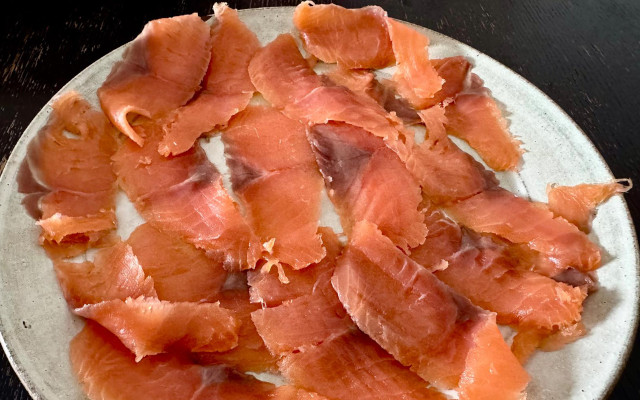
Credit cover Dario Dongo, ‘The Queen of San Daniele’ by FriulTrota
References
Adnkronos. (2026, May 19). Food, the Italian retail fish market grows again: over 4 billion euros in 2026. https://www.adnkronos.com/economia/food-il-mercato-ittico-retail-italiano-cresce-ancora-oltre-4-miliardi-di-euro-nel-2026_2awd5ioKZRxfU3MKjJE86z
Agenfood. (2025, June 10). Norwegian Seafood Seminar 2025: sustainability, traceability and quality. https://www.agenfood.it/eventi/norwegian-seafood-seminar-2025-sostenibilita-tracciabilita-e-qualita/
ANSA. (2025, June 10). Norwegian Seafood Council, ‘salmon always loved by Italians’. https://www.ansa.it/canale_lifestyle/notizie/food/2025/06/10/norwegian-seafood-council-salmon-always-loved-by-italians_02672cff-71df-4baa-9dd1-71e8390374a9.html
ANSA. (2026, June 21). Cooking fish slows down 80% of Italians, the 'ready-made' supply chain advances. https://www.ansa.it/canale_terraegusto/notizie/dal_mare/2026/06/21/cooking-fish-slows-down-80percent-of-italians-the-ready-made-supply-chain-advances_c63a8ee1-6f8b-4f98-af36-c79ec71378fe.html
Borsa Italiana – Il Sole 24 Ore Radiocor. (2026, March 31). GDO: Mediobanca estimates +4.3% sales in 2025 in Italy, turnover 109.8 billion in 2024. https://www.borsaitaliana.it/borsa/notizie/radiocor/economia/dettaglio/gdo-mediobanca-estimates-43-sales-2025-in-italy-turnover-1098-billion-in-2024-nRC_31032026_1103_311204046.html
CibusLink. (2025, August 7). GDO: Fresh and Grocery, categories that drive and those that slow down turnover.https://cibuslink.it/gdo-fresh-and-grocery-categories-that-drive-and-those-that-slow-down-turnover/
Fresh Cut News. (2025, May 15). Turnover, sales, average price, channels and regions: all data of IV and V Gamma. https://www.freshcutnews.it/2025/05/16/turnover-sales-average-price-channels-regions-all-data-iv-v-gamma/
Il Sole 24 Ore. (2026, February 6). Sushi in Italy, sales boom in discount stores and supermarkets thanks to price drops. https://www.ilsole24ore.com/art/sushi-price-drop-accelerates-sales-in-discount-stores-and-supermarkets-AIzsV1CB
Il Sole 24 Ore. (2026, June 21). Cooking fish slows down 80% of Italians, the 'ready-made' supply chain advances. https://www.ilsole24ore.com/art/cooking-fish-slows-down-80percent-of-italians-ready-made-supply-chain-advances–AI6qIjnD
InformaCibo. (2026, May 19). Italian fish market 2026: over 4 billion, salmon leads.https://www.informacibo.it/italian-fish-market-data-2026-salmon-cod-bacalao-and-stockfish/
Italiafruit News. (2026, March 31). Italian GDO, sales +4.3% in 2025: the sector is worth 109.8 billion euros.https://www.italiafruit.net/italian-gdo-sales-at-43percent-in-2025-sector-worth-1098-billion-euros
NielsenIQ. (2025, January 30). GDO trend in Italy according to NielsenIQ surveys: overall results of 2024 and December analysis. https://nielseniq.com/global/it/news-center/2025/andamento-gdo-in-italia-secondo-le-rilevazioni-di-nielseniq-i-risultati-complessivi-del-2024-e-lanalisi-di-dicembre-2/
Fish on the Net. (2026, June 23). Ready-to-eat fish products: how consumption is changing. https://www.pesceinrete.com/prodotti-ittici-pronti-consumo-italia/

Dario Dongo, lawyer and journalist, PhD in international food law, founder of WIISE (FARE - GIFT – Food Times) and Égalité.


