

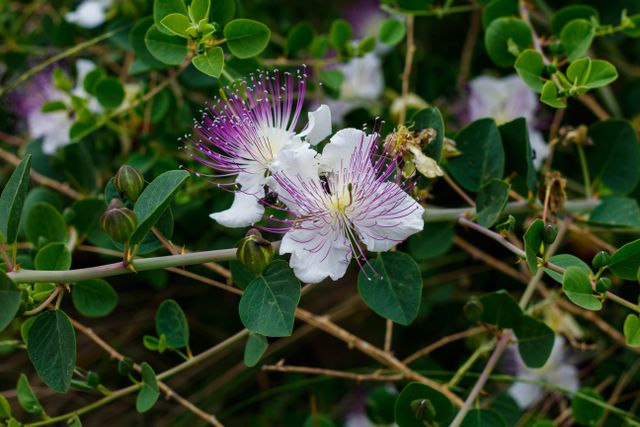
The caper is a bud. It is harvested by hand before the flower opens, then salted and left to ferment. A few grams are enough to give character to a sauce, a salad or a fish dish. In Italy, quality production is concentrated on two Sicilian archipelagos, Pantelleria and the Aeolian Islands, protected respectively by a protected geographical indication (PGI) and a protected designation of origin (PDO). Minor productions are found in other areas of Sicily, Puglia and Sardinia. Most of the capers processed in Italy come from abroad, especially from Morocco.
This short guide collects the most recent data on foreign trade, history and botany, the two geographical indications of Pantelleria and the Aeolian Islands, the other cultivation areas, nutritional profile and bioactive compounds, uses in the kitchen and choice criteria for consumers and buyers.
Market, import and export
The overall Italian production of capers is unfortunately devoid of official statistics, since neither the National Institute of Statistics (Istat) nor Eurostat survey the crop and agricultural surfaces separately.
The only disaggregated data partially concerns the foreign trade. The customs heading CN 0711 90 70 identifies capers temporarily preserved in brine or other solutions and not suitable for immediate consumption, i.e. the product semi-finished:
- In the 2025 the'Italy ha imported with this voice 8,968 tons of capers, for a value of 19.1 million euros, against 10,025 tons and 20.8 million in 2024. Volumes therefore fell by approximately 10.5%, the value by 8.2%, with an average price rising from 2.08 to 2.13 euros per kilo. The Morocco supplied 6,993 tonnes, equal to 78% of the total, Turkey 314 tonnes. Almost all the semi-finished products (8,846 tonnes) come from non-EU countries;
- the exports Italians with the same voice are instead marginal: 430 tonnes in 2025, for 1.6 million euros, at an average price of 3.78 euros per kilo (Eurostat, 2026).
However, data on the processing and sale of capers packaged in vinegar or salt intended for final consumption are not available, which fall under other customs headings that aggregate other matrices. The only production estimates available concern Pantelleria, and are reported in the dedicated paragraph.
History and botanical characteristics
The caper has accompanied Mediterranean cuisine since ancient times. Pliny the Elder, in the Naturalis historia, favorably distinguished the Italian caper from the overseas one, reporting the belief that its daily consumption protected from paralysis and pain in the spleen (Pliny the Elder, 1855).
The caper (Capparis spinosa THE.) is a perennial shrub of the family Capparaceae, with fleshy leaves and large white or pinkish-white flowers. It tolerates salinity, resists drought (Annaz et al., 2022) and thus thrives in cracks in rocks and walls, preferably exposed to midday (Slow Food Foundation, s.d.-a).
Production and consumption affect two parts of the plant:
- The caper strictly speaking it is the closed floral button;
- The cucuncio it is the fruit, with an elongated shape, harvested when it reaches a maximum diameter of 20 millimeters (MASAF, s.d.-b).
The species includes two subspecies: Capparis spinosa subsp. thorny, with thorns at the base of the leaves, and subsp. helpless, without thorns and therefore easier to collect.
The season coincides with the warm months. The harvest is manual and gradual: the buds are picked before they open, returning to the same plants a few days later, every 8-10 days in Salina (Slow Food Foundation, s.d.-a).
Pantelleria and the Aeolian Islands, the two geographical indications
Pantelleria and the Aeolian Islands volcanic origin, are the historical areas of production of the Italian caper. Their productions are protected by two geographical indications, with specifications that establish varieties, yields, harvesting and processing.
Caper of Pantelleria PGI
The PGI Cappero di Pantelleria was registered in 1996 with Regulation (EC) no. 1107/96, then amended in 2010 (EU regulation 880/2010). The production area includes the entire island, in the province of Trapani in Sicily (MASAF, s.d.-a).
The first documented information on the island's capers appears in Calcara's essay on the geognosy and agriculture of Pantelleria, published in Palermo in 1855, and in the German encyclopedia Brockhaus of 1894. Over the course of the twentieth century, the caper progressively replaced the vine in part of the cultivated areas (European Commission, 2010).
ENEA (National Agency for New Technologies, Energy and Sustainable Economic Development) currently estimates an annual production of between 300 and 400 tonnes. A drastic decline compared to the 1980s, when production (in 1983) reached 1,200 tonnes (European Commission, 2010). The quota certified as PGI is around 120-130 tonnes (ANSA, 2026).
The specification allows only variety helpless, cultivar Nocellara. There density cannot exceed 2,000 plants per hectare and the surrender maximum is 3 tons per hectare. In more generous years, the excess must be eliminated through sorting. The harvest takes place by hand and in a gradual manner, from 1 May to 31 October, leaving the buds on the plant that are not yet ripe (MASAF, s.d.-a).
There salting is performed dry, with sea salt, always on the island. In the first phase, which lasts eight-ten days, salt equal to 30-40% of the weight of the capers is added and the mass is mixed to favor the lactic fermentation. The vegetation water is then eliminated and more salt is added, equal to 20-25% of the weight.
When consumed, capers have a globular shape and green color tending towards mustard, humidity between 50% and 70% and caliber between 4 and 15 millimetres. The salt in the packages cannot exceed 25% of the weight of the capers. Capers sold outside the island before having acquired these characteristics lose the right to the denomination (regulations, articles 5 and 6).
From 16 September 2026 the controls are entrusted to CSQA Certifications, which takes over from the Trapani Chamber of Commerce (Disciplinare.it, 2026).
The main threat to the island's capers today comes from African bedbug Bagrada hilaris, which causes the leaves to wither and blocks production (Il Post, 2021; Madeddu, 2026). To contain it without insecticides, ENEA e Biotechnology and Biological Control Agency they experiment with the sterile insect technique: releasing males made sterile by radiation, which mate without generating offspring (ANSA, 2026). The authors of an experimental study indicate Pantelleria as a possible model area for eradication, but field validation has yet to be completed (Mainardi et al., 2025).
Caper from the Aeolian Islands PDO
The PDO Caper of the Aeolian Islands was registered in 2020 (EU executive reg. 2020/624). The opposition presented by the municipalities of the island of Salina (Malfa, Leni and Santa Marina Salina) was declared inadmissible by the European Commission, since oppositions presented by residents in a Member State submitting the application must follow the national procedure (EU Executive Reg. 2020/624, recital 2).
Commercial correspondence mentions the name 'Caper of the Aeolian Islands' since the beginning of Sixteenth century (MASAF, n.d.-b). TO Saline the caper was the fulcrum of the island's economy, together with Malvasia, until the arrival of tourism (Slow Food Foundation, s.d.-a).
There production area includes all the islands of the archipelago, in the province of Messina (Sicily). The soils are rich in phosphorus and potassium, as well as iron, magnesium, calcium, manganese and molybdenum. The sea reduces temperature variations and increases air humidity, with the so-called 'hidden precipitation' which provides additional water to plants (MASAF, s.d.-b).
The specification allows both subspecies, including biotypes Nocellara, Nocella And Salina buckthorn. The maximum density is lower than on Pantelleria, 1,600 plants per hectare, and the plants are propagated only by cuttings from identified mother plants, to preserve the local genetic heritage. The transplant must be done between January and the second ten days of February. Winter pruning leaves short spurs, and the training method is sapling or prostrate. The maximum yield of capers and cucunci is 9 tons per hectare in specialized cultivation, or 8 kilos per plant in mixed cultivation. The harvest goes from April to the end of August (MASAF, s.d.-b). In Salina the most widespread cultivar remains the nocellara, also called tondina, preferred to the spinosa due to its firmer and heavier buds (Slow Food Foundation, s.d.-a).
There name it covers both capers and cucunci. Within 24 hours of harvesting the product must be layered with coarse sea salt and stirred every day for eight days, then once a week for another three weeks. It is packaged with sea salt or in brine, obtained by dissolving 25 kilos of salt in 75 liters of water. The color it is green tending towards mustard with purple streaks, the minimum size of capers is 4 millimeters and the content of oleic acid – which the specification associates with intense flavor and oxidation stability – cannot be less than 6% (MASAF, s.d.-b).
The PDO logo, the European symbol and the location of the packaging plant are mandatory on the label, while laudatory terms are prohibited. The checks are carried out by the Experimental Zooprophylactic Institute of Sicily 'A. Mirri' (MASAF, s.d.-b).
The difficulties of the two islands
Pantelleria and Salina however share the same difficulty: the harvest is entirely manual and the available labor is scarce, and at the same time it is difficult to sustain the North African competition on prices (Slow Food Foundation, s.d.-a; Il Post, 2021).
The other cultivation areas
The caper is also grown in other areas of Italy, in smaller quantities and without available statistics:
- in Sicily the lists of Traditional Agri-food Products record 'Capers' and 'Capers and cucunci' (Sicilian Region, s.d.). In Linosa, in the Pelagie Islands, local biotypes suitable for new plantings were selected (La Bella et al., 2021),
- in Puglia the 'Capers of Gargano, Mattinata' appear (Puglia Region, 2025);
- in Sardinia the cultivation of capers in Selargius, on the outskirts of Cagliari, has been documented since the early nineteenth century (Laore Sardegna, 2021). Today a Slow Food Presidium valorises them and has recovered over 600 centuries-old plants from abandonment (Slow Food Foundation, s.d.-b).
Nutritional profile
The food composition tables of CREA, the Council for Agricultural Research and Analysis of the Agricultural Economy, do not include capers. The following values therefore come from the Norwegian national food composition table, maintained by the food safety authority Mattilsynet. The entry 'Capers, canned' refers to pickled capers, drained, and incorporates most of the data published in the United States Department of Agriculture database (Mattilsynet, s.d.).
The table compares the values per 100 grams with those of an indicative portion of 10 grams, approximately one tablespoon.
| Nutritional values | Per 100 g | Per 10 g portion |
| Energy | 104 kJ, 25 kcal | 10 kJ, 2.5 kcal |
| Fats | 0.9g | 0.09g |
| of which saturated fatty acids | 0.2g | 0.02g |
| Carbohydrates | 0.4g | 0.04g |
| of which sugars | 0.4g | 0.04g |
| Fibers | 3 g | 0.3g |
| Proteins | 2.4g | 0.24g |
| Salt | 6.9g | 0.69g |
| Copper | 0.37 mg (37% NRV) | 0.037 mg (3.7% NRV) |
The calculation of the percentages is based on the nutritional reference values set out in Annex XIII to Regulation (EU) no. 1169/2011. Among the micronutrients only the Copper exceeds the threshold of 15% per 100 grams.
A 10 gram portion provides almost 0.7 grams of salt, which may increase in the case of dry stored capers. It is therefore recommended to rinse the capers and leave them in cold water before use, as well as reducing the salt from other sources in the recipe where they are used.
Bioactive compounds
The scientific interest in capers mainly concerns i phenolic compounds and i glucosinolates. A review of the literature describes antioxidant, anti-inflammatory, antimicrobial and hepatoprotective activities for the plant. However, these are largely studies on cells and animal models. Fermentation lowers total bud phenolics from 18.43 to 11.98-15.39 milligrams per gram (Annaz et al., 2022).
Pantelleria capers fermented in salt contain flavonols, including rutin and derivatives of quercetin and kaempferol, as well as glucosinolates. In the laboratory, their extracts have shown antioxidant activity and the ability to trap methylglyoxal and glyoxal, reactive compounds involved in the formation of advanced glycation products (Lo Bosco et al., 2019).
Human studies mainly concern the fruit (cucuncio). A meta-analysis of five randomized clinical trials, with 178 adults suffering from fatty liver disease, type 2 diabetes, metabolic syndrome or hyperlipidemia, associated the consumption of caper fruit for 2-12 weeks with a reduction in the liver enzyme ALT of approximately 12 units per liter. Also observing a slight increase in HDL cholesterol (0.72 mg/dl) and a weight loss of approximately one kilo. The effects on triglycerides, LDL cholesterol, total cholesterol and fasting blood sugar were not significant. The authors consider the data preliminary and call for new studies (Perna et al., 2023).
In summary, caper contains small amounts of bioactive compounds. The effects demonstrated on humans are few and concern only the fruits or extracts.
In the kitchen: from Artusi's recipes to regional dishes
In the Science in the kitchen by Pellegrino Artusi capers appear in caper croutons, prepared with pickled capers, sugar, Passolina grapes, pine nuts and candied fruit in a sweet-sour mixture (Artusi, 1891a). They return to the caper and anchovy sauce, heated in a pan with oil and poured onto the steak as soon as it is removed from the grill (Artusi, 1891b).
Among the regional dishes there is caponata Siciliana combines capers with aubergines, celery, olives, pine nuts, raisins and vinegar (Il Cucchiaio d'Argento, s.d.-a). There puttanesca pasta – whose motherhood is disputed between Campania and Lazio – combines them with tomato, black olives and anchovies (Il Cucchiaio d'Argento, s.d.-c). THE'pantelleria salad combines potatoes, cherry tomatoes, onion, olives and desalted Pantelleria capers, with vinegar and extra virgin olive oil (Il Cucchiaio d'Argento, s.d.-b).
Tips for choosing
The first criterion is theItalian origin. The two denominations guarantee it by definition, because IGP and DOP certify capers grown and processed in Pantelleria and the Aeolian Islands (MASAF, s.d.-a; MASAF, s.d.-b). For other products, the indication of the origin of the capers is not mandatory, unless its omission could mislead the consumer. However, if the label contains a geographical reference to Italy, outside of the brand, and this does not coincide with that of the capers, the different origin of the capers must also be indicated (EU reg. 1169/2011, art. 26.2, letter 'a', and art. 26.3; EU reg. 2018/775).
Where available, it is recommended to favor capers organic. since they guarantee the highest level of protection of ecosystems and their biodiversity. Furthermore, next to the European organic logo, the label indicates the place of cultivation of the raw materials with the words 'EU Agriculture', 'Non-EU agriculture' or 'EU/non-EU agriculture', which can be replaced or completed by the name of the country, when all the agricultural raw materials have been grown there (EU regulation 2018/848, art. 32.2). The wording 'Agricoltura Italia' is therefore the most direct guarantee of national origin.
The offer of certified organic capers, especially of Italian origin, is still limited. Yet crop conversion is within the reach of many companies, thanks to natural resilience of the plant, which tolerates drought and salinity (Annaz et al., 2022). Who chooses the biological, when it finds it, it also supports the demand that can push producers to become certified and thus enhance their production.
The enthusiasts they appreciate the more complete aromatic profile in capers preserved dry with sea salt, to be desalted before use. Capers in brine or pickled are more practical but more neutral, since the vinegar tends to partially cover the aroma. For products in preserving liquid the label also shows the drained net weight, useful for comparing the actual quantity (EU regulation 1169/2011, Annex IX, point 5).
Conclusions
The Italian caper is a niche product in a market dominated by imports: around 9,000 tonnes of semi-finished products in 2025, almost all from non-EU countries, compared to a few hundred tonnes produced in Pantelleria and smaller productions in the Aeolian Islands and other cultivation areas, for which there are no statistics. Its value lies in verifiable quality.
For those who purchase, the optimal choices are capers of Italian origin, with denomination or organic where available, to be rinsed before use to contain the salt. For territories, the continuity of cultivation depends on manpower, conversion to organic farming and defense against Bagrada hilaris, on which research is working with low environmental impact methods.
Dario Dongo
References
Peer-reviewed scientific studies
Annaz, H., Sane, Y., Bitchagno, G. T. M., Ben Bakrim, W., Drissi, B., Mahdi, I., El Bouhssini, M., & Sobeh, M. (2022). Caper (Capparis spinosa L.): An updated review on its phytochemistry, nutritional value, traditional uses, and therapeutic potential. Frontiers in Pharmacology, 13, 878749. https://doi.org/10.3389/fphar.2022.878749
Cincotta, F., Merlino, M., Verzera, A., Gugliandolo, E., & Condurso, C. (2022). Innovative process for dried caper (Capparis spinosa L.) powder production. Foods, 11(23), 3765. https://doi.org/10.3390/foods11233765
La Bella, S., Rossini, F., Licata, M., Virga, G., Ruggeri, R., Iacuzzi, N., Leto, C., & Tuttolomondo, T. (2021). Four-year study on the bio-agronomic response of biotypes of Capparis spinosa L. on the island of Linosa (Italy). Agriculture, 11(4), 327. https://doi.org/10.3390/agriculture11040327
Lo Bosco, F., Guarrasi, V., Moschetti, M., Germanà, M. A., Butera, D., Corana, F., & Papetti, A. (2019). Nutraceutical value of Pantelleria capers (Capparis spinosa THE.). Journal of Food Science, 84(8), 2337–2346. https://doi.org/10.1111/1750-3841.14718
Mainardi, C. E., Peccerillo, C., Musmeci, S., Paolini, A., Sforza, R. F. H., Cemmi, A., Di Sarcina, I., Anfora, G., Porretta, D., Marini, F., & Cristofaro, M. (2025). Sterile but sexy: Assessing the mating competitiveness of irradiated Bagrada hilaris males for the development of a sterile insect technique. Insects, 16(4), 391. https://doi.org/10.3390/insects16040391
Perna, S., Rafique, A., Rondanelli, M., Allehdan, S., Riso, P., & Marino, M. (2023). Effect of caper fruit (Capparis spinosa L.) consumption on liver enzymes, lipid profile, fasting plasma glucose, and weight loss. A systematic review and a preliminary meta-analysis of randomized controlled trials. Biomedicine & Pharmacotherapy, 168, 115638. https://doi.org/10.1016/j.biopha.2023.115638
Institutional and statistical sources
European Commission. (2010). Publication of an application for amendment pursuant to Article 6(2) of Regulation (EC) No 510/2006 of the Council, 'Caper of Pantelleria' (2010/C 22/11). Official Journal of the European Union, C 22, 48. https://eur-lex.europa.eu/legal-content/IT/TXT/?uri=CELEX:52010XC0129(09)
Eurostat. (2026). EU trade since 1988 by HS2-4-6 and CN8 (DS-045409), product CN 0711 90 70, declaring Italy, 2024-2025 [Data set]. Accessed 25 October 2026. https://ec.europa.eu/eurostat/api/comext/dissemination/statistics/1.0/data/DS-045409
Slow Food Foundation for Biodiversity. (s.d.-a). Salina caper. https://www.fondazioneslowfood.com/it/presidi-slow-food/cappero-di-salina/
Slow Food Foundation for Biodiversity. (s.d.-b). Selargius Caper. https://www.fondazioneslowfood.com/it/presidi-slow-food/cappero-di-selargius/
Laore Sardinia. (2021). Selargius capers and capers [Traditional Agri-Food Product sheet]. https://www.agenzialaore.it/documenti/14_43_20210916104655.pdf
Mattilsynet. (s.d.). Capers, canned (ID 06.129). Matvaretabellen. Accessed 25 October 2026. https://matvaretabellen.no/en/capers-canned
Ministry of Agriculture, Food Sovereignty and Forestry. (s.d.-a). Production regulations for the protected geographical indication 'Cappero di Pantelleria'. https://www.masaf.gov.it/flex/cm/pages/ServeAttachment.php/L/IT/D/f%252F2%252F3%252FD.6d29fd47d84b453e2089/P/BLOB%3AID%3D3343/E/pdf?mode=download
Ministry of Agriculture, Food Sovereignty and Forestry. (s.d.-b). Production regulations for the protected designation of origin 'Caper of the Aeolian Islands'. https://www.masaf.gov.it/flex/cm/pages/ServeAttachment.php/L/IT/D/2%252Fd%252Fa%252FD.a13f1ee77219816e9575/P/BLOB%3AID%3D3343/E/pdf?mode=download
Puglia region. (2025). National list of traditional agri-food products, Annex I, Puglia Region (XXV revision). https://www.regione.puglia.it/documents/42866/3533988/editore+PAT+PUGLIA_2025_XXV_rev.pdf/48a6fa8d-4d3f-ab66-40f4-5c8629bf88e6?version=1.0&t=1742470938334&download=true
Sicilian region. (s.d.). List of traditional agri-food products, Annex 1. https://www.regione.sicilia.it/sites/default/files/2024-04/ELENCO~1.pdf
European Union regulatory sources
Commission Implementing Regulation (EU) 2020/624 of 30 April 2020 entering a name in the register of protected designations of origin and protected geographical indications (Caper of the Aeolian Islands (PDO)). OJ L 144, 7.5.2020. http://data.europa.eu/eli/reg_impl/2020/624/oj
Commission Regulation (EC) No 1107/96 of 12 June 1996 on the registration of geographical indications and designations of origin under the procedure laid down in Article 17 of Council Regulation (EEC) No 2081/92. OJ L 148, 21.6.1996. http://data.europa.eu/eli/reg/1996/1107/oj
Commission Regulation (EU) No 880/2010 of 6 October 2010 approving non-minor amendments to the specification for a name entered in the register of protected designations of origin and protected geographical indications (Cappero di Pantelleria (PGI)). OJ L 264, 7.10.2010, p. 9. http://data.europa.eu/eli/reg/2010/880/oj
Regulation (EU) 2018/848 of the European Parliament and of the Council of 30 May 2018 on organic production and labeling of organic products and repealing Council Regulation (EC) No 834/2007. Consolidated text: 03/25/2025. http://data.europa.eu/eli/reg/2018/848/2025-03-25
Regulation (EU) No 1169/2011 of the European Parliament and of the Council of 25 October 2011 on the provision of food information to consumers. Consolidated text: 04/01/2025. http://data.europa.eu/eli/reg/2011/1169/2025-04-01
Regulation (EU) 2024/1143 of the European Parliament and of the Council of 11 April 2024 on geographical indications for wine, spirit drinks and agricultural products, as well as traditional specialties guaranteed and optional quality terms for agricultural products. Consolidated text: 03/18/2026. http://data.europa.eu/eli/reg/2024/1143/2026-03-18
Press and gray literature
HANDLE. (2026, July 10). Pantelleria PGI caper, Enea in the project to defend it from parasites. https://www.ansa.it/sicilia/notizie/2026/07/10/cappero-igp-di-pantelleria-enea-nel-progetto-per-difenderlo-dai-parassiti_d326c1ee-7d73-426a-bebb-0dae296c2772.html
Disciplinare.it. (2026, September 15). Capero di Pantelleria PGI, controls by CSQA Certifications Srl, 2026 [text of the MASAF authorization decree]. https://www.disciplinare.it/cappero-di-pantelleria-igp-controlli-da-csqa-certificazioni-srl-2026.html
The Post. (2021, August 9). In Pantelleria fewer and fewer people collect capers. https://www.ilpost.it/2021/08/09/capperi-pantelleria-raccolta/
Madeddu, D. (2026, July 13). A parasite puts Pantelleria capers at risk. Il Sole 24 Ore. https://www.ilsole24ore.com/art/un-parassita-mette-rischio-capperi-pantelleria-AJZUFgH
Historical and gastronomic sources
Artusi, P. (1891a). Caper crostini (n. 108). In Science in cooking and the art of eating well. https://www.pellegrinoartusi.it/index-ingredienti/108-crostini-di-capperi
Artusi, P. (1891b). Caper and anchovy sauce (n. 121). In Science in cooking and the art of eating well. https://www.pellegrinoartusi.it/index-ingredienti/121-salsa-di-capperi-e-acciughe
The Silver Spoon. (s.d.-a). caponata. https://www.cucchiaio.it/ricetta/ricetta-caponata-classica/
The Silver Spoon. (s.d.-b). pantelleria salad. https://www.cucchiaio.it/ricetta/salad-pantesca/
The Silver Spoon. (s.d.-c). puttanesca pasta. https://www.cucchiaio.it/ricetta/pasta-alla-puttanesca/
Pliny the Elder. (1855). The natural history (J. Bostock & H. T. Riley, Trans.; Book XX, Chap. 59). Taylor and Francis. http://www.perseus.tufts.edu/hopper/text?doc=Perseus%3Atext%3A1999.02.0137%3Abook%3D20%3Achapter%3D59

Dario Dongo, lawyer and journalist, PhD in international food law, founder of WIISE (FARE - GIFT – Food Times) and Égalité.


