

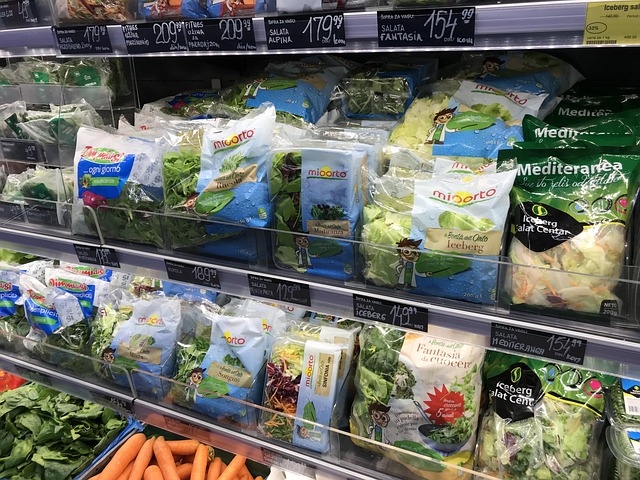
Bagged salads and vegetables to cook. From the Bergamo area to the Piana del Sele, the Italian fresh-cut supply chain including market data, innovations, rules and useful information for those who purchase.
There IV range it is the vegetable that arrives on the shelf already selected, cleaned, washed, dried and packaged, ready to eat or cook. Italian law defines it as the set of 'fresh fruit and vegetable products intended for human consumption, packaged and ready for consumption which, after harvesting, are subjected to minimal technological processes aimed at valorising them following good processing practices' (law 77/2011, art. 2.1). The definition also includes ready-to-eat fruit, to which it is dedicated an article apart.
The retail market in Italy is mature and has surpassed in 2025 billion euros for ready-to-eat vegetables alone, with 154 thousand tonnes sold and a penetration into families of over 85% (Colombo, 2026). Behind every envelope of lettuce or of rocket a supply chain works that unites specialized agricultural companies, highly automated factories and a cold chain that cannot be interrupted, from harvesting to the home refrigerator.
Market, consumption and exports 2025-2026
The elaborations of Italian Food Union based on NielsenIQ data they show a solid sector. In 2025, fresh-cut salads and vegetables exceeded one billion euros in sales (Colombo, 2026). Considering all fruit and vegetables ready for consumption, including fruit, the Confindustria association estimates a value of around 1.2 billion euros (Fruitbook Magazine, 2026b).
The growth of 2025 follows, among other things, a two-year period of stagnation, since in 2023 sales were estimated by Ismea at around 1.1 billion euros (+0.2%), with volumes down by 4%, and in the first nine months of 2024 the Circana data reported a decline of 0.6% in both value and volume (Scarci, 2025).
Two new features have marked 2026:
- Packaging. When converting the decree on compostability, the legislator excluded fresh-cut products from the national obligation to use biodegradable and compostable materials for disposable packaging of fresh fruit and vegetables under 1.5 kg (legislative decree 143/2026, converted by law 173/2026), recognizing the crucial technological role of the packaging in the preservation of a highly perishable food (Colombo, 2026);
- climate. From July 2026 the availability of some raw materials, in particular chicory, endives, lettuces and spinach, has fallen by up to 30-40%, with yield losses of 10-20% on the crops most affected by heat and drought (Fruitbook Magazine, 2026b).
On theexport There are no dedicated official statistics, since customs nomenclatures do not distinguish washed and packaged salads from fresh vegetables. However, the available indicators describe a sector that looks abroad. Linea Verde generates around 50% of its turnover outside Italy (Fruitbook Magazine, 2026c), and Barduca from Padua, specialized in organic produce, exports over 90% of its production (Fruitbook Magazine, 2026a). Italy, on the other hand, has for years been the leading European market for per capita consumption of ready-made salads: 1.73 kg already in 2017 (Baccino, 2017).
From the Bergamo greenhouses to the Sele Plain
The history of Italian fresh-cut produce begins in the province of Bergamo. It was the Frenchwoman Bonduelle to lead the way, stipulating the first supply agreements with the agricultural companies in the area, near its salad processing plant (Baccino, 2017).
In the mid-80s Santino 'Tino' Bellina took over his father's horticultural business in San Paolo d'Argon (Bergamo), giving it the name of Ortobell. In 1988 he purchased the first packaging machine to bag salads. Some entrepreneurs from Verona and Alessandria had already been making large salads, such as radicchio, for a couple of years, while Bellina chose small leaves, babyleaf: lettuce, lettuce, rocket, spinach. In 1990, to produce all year round, he searched and found in the Sele Plain, in Eboli, a climate that allows the salad to ripen in 50 days even in winter. In 2001 Ortobell, with a turnover of 60 million euros, was sold to Bonduelle (Arrighetti, 2015).
In the same 1988, in Borgoricco (Padua), Francesco Barduca and his wife Anna decided to package the salads produced by their farm, starting the first production of organic salads washed and ready to eat. From that intuition, a fresh-cut Venetian district was born (Fruitbook Magazine, 2026a).
Since then the sector has been organized around two complementary hubs, the Lombardy plain between Bergamo and Brescia and the Piana del Sele in Campania, which together supply the factories throughout the year.
The rules they arrived later, precisely at the instigation of the Italian industry in the sector. Law 13 May 2011, n. 77 defined the category and entrusted the production, conservation and distribution parameters to a ministerial decree. The decree of 20 June 2014, applied since 13 August 2015, prescribes at least two wash cycles (Ministerial Decree 20.6.2014, Annex 2), processing environments not exceeding 14°C (Ministerial Decree 20.6.2014, Annex 1) and a temperature lower than 8°C in each phase of distribution (Ministerial Decree 20.6.2014, art. 6.1). The non-fresh or dried vegetable ingredients added cannot exceed 40% of the weight of the finished product (Ministerial Decree 20.6.2014, art. 7.1). Primary packaging must be made with materials suitable for separate waste collection and recycling (Ministerial Decree 20.6.2014, art. 9.2).
Innovations in the field, in the factory and in packaging
Innovation in the fresh-cut range proceeds on multiple fronts, documented by companies and research.
In the factories theautomation. The Green Line has introduced automatic dosing lines for bowl salads, optical selection systems and robots with artificial vision for checking the finished product. The plan Fast Farm to Fork, launched in 2021 to integrate agriculture and industry 4.0, reduced water consumption by 18% and increased self-produced energy by 58% (Fruitbook Magazine, 2026c).
On the pitch, or rather indoors, the vertical farming. In Cirimido (Como) Planet Farms has built one of the largest plants in the world, with 20 thousand square meters of cultivated area, a declared saving of 95% of water and 90% of soil, and a photovoltaic park of 8 thousand square meters on the roof of the warehouses. The salads are packaged within 60 seconds of cutting without the need for washing, as they grow in a controlled environment, and reach over 500 supermarkets in Northern Italy (Canali, 2025).
On the packaging companies work on more easily recyclable mono-material films, on alternative cellulose-based materials as well as on reducing thicknesses, verifying on a case-by-case basis the barrier performance necessary to guarantee the durability of the product (Colombo, 2026).
The most relevant front for safety concerns the validation of shelf life. From 1 July 2026 the absence criterion Listeria monocytogenes in 25 grams applies to ready-to-eat foods that allow growth for their entire commercial life, unless the manufacturer demonstrates that the limit of 100 cfu/g will not be exceeded (EC regulation 2073/2005, Annex I, as amended by EU regulation 2024/2895). A study by the Experimental Zooprophylactic Institute of Lombardy and Emilia-Romagna applied the challenge test standardized to five salads on the market, simulating storage at 7°C for two thirds of the shelf life and at 10°C for the remaining third. The ability of the bacterium to multiply was highly variable from product to product: high in lettuce and in a mix with mustard, negligible in both samples of lamb's lettuce. The authors draw two practical indications from this: specific risk assessments for each product and rigorous temperature control throughout the supply chain (Muhammad-Ehtesham et al., 2026).
The main Italian producers
The Green Line (Manerbio, Brescia) is the first Italian group in the sector, with the DimmidiSì brand, which turns twenty in 2026. In 2025 it had a turnover of approximately 400 million euros, with a gross operating margin of 34.7 million and over 400 million packs sold. Around half of the turnover is generated abroad: after Spain and Serbia, the group started production in Canada in 2025 through a co-packers and builds a plant worth around 15 million euros in Ohio, operational from 2027 (Fruitbook Magazine, 2026c).
Bonduelle Italy (San Paolo d'Argon, Bergamo, and Battipaglia, Salerno), branch of the French group, achieved revenues of 217.3 million euros (+4.7%) in the 2023/24 financial year (+4.7%), of which approximately 60% in fresh products (Scarci, 2025). The group incorporated the pioneer Ortobell in 2001 (Arrighetti, 2015).
OrthoRomi (Borgoricco, Padua, and Bellizzi, Salerno) is an agricultural cooperative with 700 employees in two factories and a turnover of 119 million euros in 2022 (+8%), powered by around fifty agricultural companies gathered in the Co.Ve.Ca.A. cooperative, mainly in the South (Il Nordest, 2023).
Zerbinati (Borgo San Martino and Casale Monferrato, Alessandria), a family business founded in 1970, produces conventional and organic fresh-cut salads and vegetables, fresh soups and ready meals, with over 48 million euros in revenues in 2025 and more than 200 collaborators (Zerbinati, 2026). Simone Zerbinati chairs the fresh-cut and fifth-range fruit and vegetable products group of the Unione Italiana Food (Colombo, 2026).
In the biological stands out Barduca (Borgoricco), entirely specialized in organic salads and export-oriented (Fruitbook Magazine, 2026a), while Planet Farms represents the technological frontier of agriculture in a controlled environment (Canali, 2025).
The most popular product categories
According to an AstraRicerche survey for Unione Italiana Food, in Italians' shopping carts, fresh-cut produce is mainly represented bysalad in a bag (73% of those interviewed), followed by ready-to-cook vegetables (67%), salads in bowls (36%) and soups and purees (30%), which are included in the V range.
The monovarietal salads as small leaves they are the heart of the offer. Lettuce is the basis of many mixes (Dongo, 2026d), rocket brings the spicy note and often boasts the Rocket from Piana del Sele PGI, Protected Geographical Indication registered in 2020 and also intended for the fourth range (Dongo, 2026f; EU executive reg. 2020/1767). Spinach combines raw and pan-fried use (Dongo, 2026g), while lettuce, delicate in taste, is also distinguished by its poor ability to encourage the growth of Listeria observed in the laboratory even at temperatures higher than those recommended (Muhammad-Ehtesham et al., 2026).
The chicory and i radicchio, including mixes with Venetian geographical indication varieties, offer the bitter notes appreciated in Italian cuisine (Dongo, 2026c; Strinati, 2025). The mixed salads they combine leaves of different colors and textures.
Among them vegetables ready to cook spinach prevails, chard, damn And broccoli already cleaned and portioned (Dongo, 2026a; Dongo, 2026b). The salad in bowl, complete with condiments and sometimes proteins, have conquered the lunch break. The ready-to-eat vegetable model is also extending to other sectors, as demonstrated by the case of already processed fish (Dongo, 2026e).
Advice for purchasing, from the cart to the specifications
Those who buy for their table can start from the label. The wording ‘product washed and ready for consumption‘ (d.m. 20.6.2014, art. 8.1, letter 'a') indicates that the content must not be disclosed; packages without this indication should be washed before use. The bag must be placed immediately in the refrigerator, as prescribed by the warning 'store in the refrigerator at temperatures below 8°C' (Ministerial Decree 20.6.2014, art. 8.1, letter 'c'), and once opened it must be consumed, according to the other mandatory wording, 'within two days of opening the package and in any case no later than the expiry date' (Ministerial Decree 20.6.2014, art. 8.1, letter 'd'). It is best to buy the bags last when shopping and choose those with the furthest expiry date.
The preferable choice is biological certificate, to guarantee the highest standards of protection of ecosystems and biodiversity (EU regulation 2018/848). Organic salads in bags are now available in large-scale retail trade both under the brands of producers and those of distributors and the price differential compared to similar conventional products is generally modest. Italian origin of raw materials and products with geographical indications, such as rocket from Piana del Sele, complete the selection criteria for enthusiasts.
The professional buyers, from large-scale retail trade to restaurants and foreign importers, have more complex tools at their disposal. In the supply specifications it is advisable to request organic certification of the raw materials and, for conventional products, documentation on residue control plans. The presence of duration studies and data must then be verified challenge test which demonstrate compliance with the criterion for Listeria monocytogenes throughout their commercial life, now mandatory for products that allow their growth (EC regulation 2073/2005, Annex I).
There cold chain below 8°C (Ministerial Decree 20.6.2014, art. 6.1) must also be guaranteed in the loading, unloading and exposure phases, since temperatures between 7°C and 10°C can favor the multiplication of the pathogen in some products (Muhammad-Ehtesham et al., 2026). The recyclability of primary packaging is a legal requirement (Ministerial Decree 20.6.2014, art. 9.2).
Finally, the climate crises of the summer of 2026 suggest diversifying supply sources between the production basins of the North and South (Fruitbook Magazine, 2026b) and favoring multi-year agreements with organized producers.
Conclusions
The fourth range Made in Italy it is a sector worth over a billion euros, present in more than eight out of ten Italian families. Born almost forty years ago from the brilliant intuitions of some entrepreneurs in Lombardy and Veneto, it was consolidated thanks to the complementarity between the Po Valley and the Sele Plain and specific national rules on washing, temperatures and labelling.
The challenges of 2026, between climate, new rules on Listeria and sustainability of packaging, find the supply chain equipped, with investments in automation and agriculture in a controlled environment. The growth of organic, together with exports that are still underdeveloped, indicates the spaces on which Italian companies can build the next phase.
Dario Dongo
References
European Union regulatory sources
Commission Implementing Regulation (EU) 2020/1767 of 20 November 2020 entering a name in the register of protected designations of origin and protected geographical indications 'Rucola della Piana del Sele' (PGI). OJ L 398, 27.11.2020. http://data.europa.eu/eli/reg_impl/2020/1767/oj
Commission Regulation (EC) No 2073/2005 of 15 November 2005 on microbiological criteria for foodstuffs (Text with EEA relevance). Consolidated text: 01/07/2026. http://data.europa.eu/eli/reg/2005/2073/2026-07-01
Commission Regulation (EU) 2024/2895 of 20 November 2024 amending Regulation (EC) No 2073/2005 as regards Listeria monocytogenes. OJ L, 2024/2895, 21.11.2024. http://data.europa.eu/eli/reg/2024/2895/oj
Regulation (EU) 2018/848 of the European Parliament and of the Council of 30 May 2018 on organic production and labeling of organic products and repealing Council Regulation (EC) No 834/2007. Consolidated text: 03/25/2025. http://data.europa.eu/eli/reg/2018/848/2025-03-25
Italian regulatory sources
Decree of 20 June 2014. Implementation of article 4 of law 13 May 2011, n. 77, containing provisions concerning the preparation, packaging and distribution of fourth range fruit and vegetable products. Official Journal no. 186 of 12.8.2014. https://www.gazzetta ufficio.it/eli/id/2014/08/12/14A06303/sg
Legislative Decree 7 August 2026, n. 143. Urgent provisions regarding the obligation to compost certain types of packaging, converted with amendments by law 5 October 2026, n. 173 (Official Journal no. 232 of 6.10.2026). Regulatory. Latest consolidated version: 06/10/2026. https://www.normattiva.it/uri-res/N2Ls?urn:nir:stato:decreto.legge:2026-08-07;143
Law 13 May 2011, n. 77. Provisions concerning the preparation, packaging and distribution of fourth range fruit and vegetables. Regulatory. Latest consolidated version: 12/30/2023. https://www.normattiva.it/uri-res/N2Ls?urn:nir:stato:legge:2011-05-13;77
Scientific studies
Muhammad-Ehtesham, A., Cipriani, P., Cosciani-Cunico, E., Monastero, P., Ducoli, S., Norton, A., Merigo, D., Pavoni, E., Finazzi, G., Losio, M.-N., & Dalzini, E. (2026). Safety of ready-to-eat green leafy salads: Growth potential of Listeria monocytogenes during shelf life. Foods, 15(7), 1136. https://doi.org/10.3390/foods15071136
Institutional reports and company documents
Zerbinati. (2026). Since 1970, our family cuisine [Company Presentation, PLMA Amsterdam 2026]. https://plmaamsterdam26.digital.ice.it/wp-content/uploads/2026/03/ZERBINATI-EN-2026.pdf
Specialized and information press
Arrighetti, G. (2015, March 1). With me the salad was reborn. Prewashed. The Echo of Bergamo, 10. https://oplamaggiolina.it/images/documenti/eco-di-bergamo-2015-03-01.pdf
Baccino, F. (2017, May 5). The fresh-cut range is innovation. Fresh Point Magazine. https://www.freshpointmagazine.it/prima-fila/la-iv-gamma-e-associazione/
Canali, R. (2025, January 8). Planet Farms, the Arabian phoenix. The fire and the green rebirth. The Day. https://www.ilgiorno.it/economia/planet-farms-cirimido-nb15kc31
Colombo, D. (2026, October 19). Unione Italiana Food applauds the exclusion of fourth range from the compostability obligation. Fresh Point Magazine. https://www.freshpointmagazine.it/tech-logistica/packaging/unione-italiana-food-esenzioni-insalate-compostabilita-quarta-gamma/
Fruitbook Magazine. (2026a, July 1). Goodbye to Francesco Barduca, inventor of bagged salads and organic pioneer. Fruitbook Magazine. https://www.fruitbookmagazine.it/addio-a-francesco-barduca-inventore-delle-insalate-in-busta-e-pioniere-del-bio/
Fruitbook Magazine. (2026b, September 9). Fresh-cut produce, the alarm goes off: bagged salads missing from the shelves. Fruitbook Magazine. https://www.fruitbookmagazine.it/iv-gamma-scatta-larmonia-insalate-in-busta-mancanti-a-scaffale/
Fruitbook Magazine. (2026c, September 10). For La Linea Verde, turnover in 2025 will be 400 million, 50% of which will be abroad. Fruitbook Magazine. https://www.fruitbookmagazine.it/per-la-linea-verde-fatturato-2025-a-400-milioni-il-50-e-allestero/
The Northeast. (2023, September 17). Ortoromi, new board of directors Pelosin is president. The Northeast. https://www.ilnordest.it/economia/imprese/ortoromi-nuovo-cda-pelosin-e-presidente-encioqcn
Scarci, E. (2025, January 15). Food, Bonduelle Italia's revenues are growing. Profits, however, are not. ItaliaOggi. https://www.italiaoggi.it/settori/agroalimentare/alimentare-crescano-i-ricavi-di-bonduelle-italia-gli-utili-invece-no-ipkc36k7

Dario Dongo, lawyer and journalist, PhD in international food law, founder of WIISE (FARE - GIFT – Food Times) and Égalité.


