

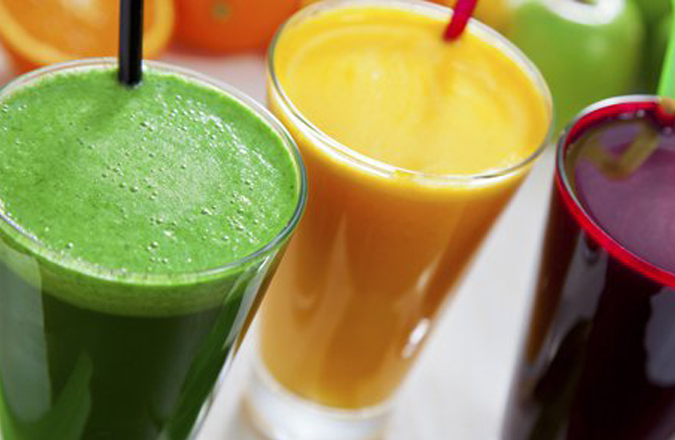
The sector of Fruit juices Italian combines agriculture, industrial technology and food culture. The processing of raw materials, from the citrus groves of the South to the orchards of the North, meets stringent production and preservation requirements. In a phase of consumption contraction and evolving demand towards naturalness, regulatory adjustments and technological innovation guide the strategic repositioning of the entire supply chain.
Fruit juice, legal definition and EU rules
I Fruit juices, together with nectars, are distinguished from many other fruit drinks as they are subject to a specific legislation — directive 2001/112/EC (implemented in Italy with legislative decree 151/2004), as amended by Breakfast Directive (EU) 2024/1438, transposed in Italy by Legislative Decree 207/2025 — which defines production methods, characteristics and labeling. In particular:
- the fruit juice is obtained from healthy and ripe fruit, by pressing or other physical processes, in order to preserve its characteristic color, aroma and taste. It may be integrated with fruit pulp and contains no added sugars;
- the fruit juice from concentrate is instead obtained by reconstitution of concentrated fruit juice with drinking water. It retains the essential characteristics of the juice of the fruit from which it is obtained and may be mixed with fruit puree and/or concentrated fruit puree;
- the label of both such products may state that 'fruit juices contain only naturally occurring sugars‘, with the specific purpose of clarifying to European consumers their difference from other beverages.
The same reform also affected jams and marmalades, including raising the minimum fruit content.
The Brix value, the measure that prevents dilution
I Brix degrees express the content of soluble solids of a juice, measured by refractometer in grams of sucrose equivalent per 100 grams of solution. Since these solids are largely fruit sugars, the value reveals how much water the juice contains.
The juice directive therefore requires that juices from concentrate have Brix degrees equal to or higher than those defined in Annex V for each species — from 4.5 for coconut, the only novelty of Breakfast Directive, to 21.0 for banana — thus ensuring that the reconstitution with water reflects thebalance of the original juice.
The rule does not apply instead to NFC juices, as they are undiluted, nor to the new reduced sugar juices mentioned in the following paragraph, whose Brix value is by definition lower than that of the juice extracted from the fruit.
The new categories of 'reduced sugar' juices
The most commercially significant novelty introduced by Breakfast Directive, concerns the denominations:
- reduced sugar fruit juice, reduced sugar fruit juice from concentrate and reduced sugar concentrated fruit juice. They assume a reduction of at least 30% of naturally present sugars, achieved only with physical processes and without the addition of sweeteners.
The provisions apply from June 14, 2026. Products placed on the market or labeled before that date under the previous regulations may be marketed until stocks are exhausted.
Production, market and export
According to Circana's analyses, in the year ended August 31, 2025, the consumption in Italy of juices, nectars and other fruit drinks in the modern distribution Italian (hypermarkets, supermarkets, superettes, and discount stores) reached about 515 million liters, with a contraction of about 6% compared to the previous year. The sales value was around 864 million euros, down 3%, while the average retail price rose to 1.68 euros per liter — 1.88 in large-scale retail, 1.31 in discount stores (Beverfood.com, 2025).
ISMEA had also recorded, in the first half of 2025, a 3% decline in domestic purchase volumes of fruit juices, in a context where overall household food expenditure grew by 5.2% (ISMEA, 2025).
However, the market is not homogeneous. The juices and the 100% squeezed juices represent a minor share of the total volume of fruit drinks, while drinks with lower fruit content continue to have significant weight — a gap that GIFT had already documented in 2024, comparing 50 among squeezed juices, juices, and orange-based drinks. Fresh products, squeezed juices, and refrigerated smoothies at the same time reach significantly higher prices per liter compared to classic UHT products.
The industrial history of fruit processing
The industrial history of Italian fruit juices has its roots in fruit processing developed between the late 1800s and early 1900s, along two distinct paths: the Alpine one, family- and fruit-based, and the Romagna one, cooperative-based.
The alpine route, Zuegg
The story Zuegg comincia nel 1860 a Lana d’Adige, dove Ernst August e Maria Zuech avviarono la coltivazione di frutta assieme ai quattordici figli, vendendo le proprie mele nei mercati vicini e poi fino a San Pietroburgo. Nel 1890 i due figli maggiori, Karl e Vigil, trasformarono l’attività familiare in impresa moderna. La lavorazione industriale della frutta inizia nel 1917 a Laces, con i primi esperimenti sulla conserva di mele, e la produzione vera e propria di confetture prese il via nel 1923, conquistando rapidamente i mercati del Nord Italia (Zuegg, s.d.).
1954 marked the birth of Fruttino, and in the early Sixties Frutta Viva arrived, preservative- and coloring-free preserves. The decisive step for the beverages sector was in 1962, with the opening of the Verona plant and the start of production of fruit-based semi-finished products — the industrial platform on which the group later built the offer of juices and nectars with the brands Zuegg e Skipper. Followed the Avellino plant (1985) and production internationalization among Germany, France, Austria and Russia.
The Romagna route, Massalombarda and Yoga
Another emblematic case is that of Massa Lombarda, in Romagna, where the growth of fruit growing favored the birth of processing activities. On July 11, 1926, the Massalombarda S.A., first Italian company dedicated to the industrial production of fruit juices, which in 1946 launched the brand Yoga, destined to become one of the most recognizable names in the Italian sector (Yoga, n.d.).
A decisive step occurred with the development of agri-food cooperation. Conserve Italia was established in 1976 by fifteen cooperatives for the processing of fruit, vegetables, and tomatoes, progressively building an industrial and commercial structure. In 1979 it acquired the Mirandola plants from the Belgian Mon Jardin, then Salfa S.p.A. with the Derby brand, and in 1994 Massalombarda Colombani S.p.A., owner of the Yoga and Jolly Colombani brands (Conserve Italia, n.d.).
The protagonists of the Italian supply chain
The companies that produce or distribute fruit juices and beverages in Italy are more than fifty, but national production is fed by few large operators. The first three — Conserve Italia, Parmalat and Zuegg — alone absorb more than half of consumption the quantity of Italian market (Beverfood.com, n.d.):
- Conserve Italia, a cooperative group based in San Lazzaro di Savena, is the absolute leader and operates with the brands Yoga, Derby Blue, Valfrutta, Jolly Colombani, and Cirio, overseeing retail, Ho.Re.Ca. and vending, in addition to a significant private label production;
- Parmalat, part of the Lactalis group, it dominates the segment especially with the line Santàl, historically strong in brik and in citrus-based references;
- Zuegg, Verona-based family-controlled group, operates with the brands Zuegg and Skipper and is at the same time one of the main European suppliers of fruit-based semi-finished products;
- La Doria, Campania-based group, is among the largest Italian producers of juices and nectars under large retail brands, with a smaller presence under its own brand;
- Fruttagel, Romagna-based cooperative company, specializes in the processing of fruit and vegetables, cereals and legumes and is particularly active in private label and in food service.
Alongside these are the imports, accounting for about one sixth of volumes and mainly come from Austria, with the brands Rauch, Pfanner and Pago. Finally, the weight of the private label brand, which exceeds 40% of volumes in modern distribution and 70% in discount stores.
On the side of raw citrus material, a significant technical role is played by Sicilian and Calabrian processors who produce juices, concentrates, purees, and essential oils for both national and international industry.
Organic, the main operators
In the certified organic segment, some recognizable key players also operate:
- Alce Nero, Italian producer of organic juices and nectars from fruit grown in Italy by farmers within its own system, with a line dedicated to early childhood;
- Fruttagel, which produces for Almaverde Bio organic nectars, 100% juices and fruit beverages, with Italian fruit supplied by member producers and glass packaging for the Ho.Re.Ca. channel;
- Fonte Plose, South Tyrol company which with the line BioPlose offers 100% organic juices and nectars without added sugars, colorants or preservatives, in 20 cl format for bars and catering.
Organic, moreover, is one of the few positioning levers that has continued to grow: in 2024 the Italian organic market exceeded 6.5 billion euros, with domestic consumption close to 5.2 billion, as already noted in the GIFT analysis on vegetable juices.
The main Italian production areas
There is not a single Italy of juice. The sourcing areas change radically depending on the fruit.
Citrus fruits, Sicily and Calabria in the spotlight
Thenational citrus growing reaches about 3.2 million tons of production and over 1.8 billion euros in value, on 150,000 cultivated hectares and more than 49,000 farms (CREA, 2025a). For the Italian oranges the production center of gravity is insular and southern. The most recent ISTAT data indicate a national utilized agricultural area just under 84,000 hectares, down 2.9% compared to 2024, of which only Sicily represents the 64% (ISMEA, 2026).
2025 was an unfavorable year: in ISTAT's agricultural economic accounts the production in volume of citrus fruits has decreased by 1%, against a 7.3% decrease for fruit as a whole (ISTAT, 2026). The effects of climate change weigh heavily, including reduced chilling hours and prolonged droughts, which have caused an increased irrigation requirement and generally smaller fruit size (ISMEA, 2026).
Temperate fruit, Emilia-Romagna and Northern Italy
Peaches, nectarines, pears, apples and other fruits destined for processing have a strong presence in the northern and central regions, with a historic role ofEmilia-Romagna and other fruit districts. Also the red fruits are increasingly used in premium formulations.
The processing allows absorbing also part of the production that does not present optimal characteristics for the fresh market, provided it obviously meets the necessary quality and health requirements. In this sense, juice helps reduce agricultural value loss and extend the commercial life of the raw material.
Agronomic practices and sustainability
The sustainability The juice supply chain starts in orchards. However, its narrative on labels and advertising is about to change radically: Directive (EU) 2024/825, Empowering Consumers for the Green Transition, transposed in Italy with Legislative Decree 30/2026 (Dongo et al., 2026), comes into effect on September 27, 2026. From that date, generic or unproven environmental claims — so-called greenwashing — constitute unfair commercial practices, subject to sanctions by the Italian Competition Authority, without prejudice to the adoption of appropriate compliance (Dongo, 2026a). Our team of FARE (Food and Agriculture Requirements) assists operators in the activities of reviewing and adjusting commercial information.
the organic remains the certification of excellence, since Regulation (EU) 2018/848 generally excludes the use of synthetic pesticides and fertilizers and limits the few permitted substances to the lists of Implementing Regulation (EU) 2021/1165, for the best protection of ecosystems. Organic juices of orange, peach, apple, pear, apricot, pomegranate, kiwi and other fruits are available on the Italian market, both for final consumption and as semi-finished products destined for industry.
Other environmental sustainability declarations and sustainability marks may only be used if based on a system of certification or established by public authorities — such as the National Quality System for Integrated Production (SQNPI), in Italy — with the obligation for operators to clarify its meaning. Such protocols must express environmental performance superior to conventional supply chains, although they do not reach the highest standards of the organic supply chain.
Phases of the industrial extraction and packaging process
The process depends on the raw material and the technology adopted, but can be outlined in some main stages:
- selection and acceptance of the fruit, with quality, ripeness, defect and safety checks;
- washing and preparation;
- juice extraction, by squeezing, pressing or specific systems for the individual fruit;
- separation or standardization of the pulp, when provided;
- possible concentration, through the removal of part of the water;
- possible reconstitution, in the case of juices from concentrate;
- microbiological stabilization, through thermal or innovative treatments (HPP, High Pressure Processing);
- packaging;
- storage and distribution, at room temperature or refrigerated.
Technological and qualitative differences between NFC and concentrated juices
An important distinction for the professional buyer is between NFC (Not From Concentrate) and juice obtained from concentrate. In the first case, the juice is not subjected to the industrial process of concentration and subsequent reconstitution. In the second, the juice is concentrated to facilitate storage and transport and then reconstituted with water according to regulatory requirements.
The two technologies respond to different industrial needs, where NFC is suited to positioning in the segment premium oriented to the enhancement of the raw material. The GIFT comparison on freshly squeezed, orange juice and beverage shows how much this distinction affects the quality perceived by the consumer, as well as the production costs and the final price of the product.
Assortment of traditional flavors and formulation of mixes
In the Italian market the traditional flavors mainly include orange, peach, pear, apricot, apple and pineapple, alongside fruit mixes and citrus-based formulations. The mix allow to modulate acidity, sweetness, color and aroma. Particularly common combinations are:
- orange-apple;
- orange-apple-carrot;
- ACE, generally built around orange, carrot and lemon;
- multifruit;
- red fruits;
- apple-peach;
- apple-tropical fruits;
- blood orange with apple and berries.
DOP and IGP, the most used denominations
In the juice sector, it is important not to confuse the geographical certification of the raw material with a protected designation related to the processed product.
The most significant case is that ofSicilian Red Orange PGI, whose regulations were updated by decree of MASAF published in the Official Gazette on March 27, 2026. The new text:
- includes all cultivars of Tarocco, Moro, and Sanguinello selected in the last thirty years;
- allows planting density up to 1,111 plants per hectare and mechanized pruning;
- recognizes new rootstocks;
- raises the maximum allowed production to 45 tons per hectare.
On the industrial destination front, the regulation allows — exclusively for obtaining juices and juice drinks — the use of oranges sized between the minimum size provided for each variety and size 10, that is, a minimum diameter of 60 mm, without the obligation of individual fruit stamping (regulation, article 7).
The Sicilian Red Orange PGI is particularly interesting for juice because the pigmented cultivars have anthocyanins water-soluble in the pulp and peel, responsible for the typical blood-orange color of the juice.
Innovation, current events and prospects
High pressure and refrigerated products
The technology HPP — High Pressure Processing — represents one of the most interesting innovations for juices, fresh juices, extracts, and purees (Carlini, 2024). It is a non-thermal treatment in which foods, generally already packaged, are subjected to isostatic pressures of 400-600 MPa for holding times between 1.5 and 6 minutes.
TheEFSA has concluded that HPP does not present additional food safety, microbiological, or chemical issues compared to treatments commonly applied to foods, such as pasteurization (EFSA BIOHAZ Panel et al., 2022). The industrial goal is to maintain the organoleptic profile closest to the fresh product, while also extending the shelf life.
Reformulation, the technological challenge of reduced sugar content
The innovation perspective on fruit juice ‘with reduced sugar content’ is partly defined at the regulatory level but not yet at the industrial and commercial levels. This category presupposes a reduction of at least 30% of the naturally occurring sugars, maintaining the essential characteristics of the original juice, obtained only by physical processes e without added sweeteners. The Breakfast Directive has included the new techniques among the authorized treatments (in Annex I, Part II, point 3, to Directive 2001/112/EC as amended), reserving to the Commission the definition of the chemical, organoleptic, and nutritional characteristics of these products. The following are noted in this regard, three issues to address:
- the reference parameter. The 30% threshold effectively recalls the conditions of use of nutrition claim ‘reduced content of [name of the nutrient]‘ pursuant to Regulation (EC) No. 1924/2006, which require the analysis of the average composition of the most sold similar products on the reference market (Dongo, 2022);
- The selectivityThe most studied physical routes are nanofiltration and diafiltration with membranes at cut-off between 200 and 500 daltons (Gaglianò et al., 2022). But glucose, fructose, ascorbic acid, and most phenolic compounds have molecular weights of the same order: the membrane that retains sugars also retains bioactives. On an industrial scale, in tests on apple juice, the percentage losses of polyphenols and antioxidant capacity were almost coincident with the reduction of sugars, so much so as to require a preliminary mechanical fractionation of the fruit (Pruksasri et al., 2020). The commercial consequence is concrete: aorange juice with a reduced sugar content risks losing the vitamin C content that justifies its positioning and nutritional declaration;
- the non-physical paths. Enzymatic and microbial approaches convert sugars into fibers or indigestible sugars instead of removing them, but generate reaction by-products (Cywińska-Antonik et al., 2023). Since the list of authorized treatments is restrictive, their applicability to the new denominations remains an open question, left to future acts of the Commission.
The further challenge concerns the valorization of the removed sugar fraction, in addition to that of other secondary flows, within a circular economy logic. Research on citrus by-products has already suggested possible pathways for upcycling, aimed at transforming waste and residues into extracts, functional ingredients, nutraceuticals, or components for other applications (CREA, 2024), including bioplastics (Dongo, 2026b).
Nutritional properties of juices
The food composition tables indicated by CREA — Research Center for Food and Nutrition (2019) report the nutritional values for six distinct products as follows. The data refer to the specific matrices indicated in the respective sheets, and not obviously to the juices available on the market.
Average values per 100 g
| CREA Product | Energy (kJ / kcal) | Fats (g) | of which saturated fatty acids | Carbohydrates (g) | of which sugars (g) | Fibers (g) | Proteins (g) | Salt (g) |
| Oranges juice, fresh (008010) | 137 / 33 | traces | n.d. | 8,2 | 8,2 | 0 | 0,5 | 0,01 |
| Blond oranges juice, fresh (008011) | 159 / 38 | traces | n.d. | 9,6 | 9,6 | 0 | 0,5 | n.d. |
| Red oranges juice, fresh (008012) | 163 / 39 | traces | n.d. | 9,8 | 9,8 | 0 | 0,5 | n.d. |
| Fruit juice, apricot and pear (008930) | 236 / 56 | 0,1 | n.d. | 14,5 | 14,5 | traces | 0,3 | n.d. |
| Tomatoes, juice (006690) | 66 / 16 | traces | n.d. | 3,0 | 3,0 | 0,6 | 0,8 | 0,58 |
| Grapes, juice, carton (007420) | 277 / 66 | traces | n.d. | 17,3 | 17,3 | 0 | 0,3 | 0,01 |
n.d. = data not reported in the specific CREA sheet. Salt is calculated as sodium × 2.5.
Vitamins and minerals in several cases exceed 7.5% of the reference nutritional values in Annex XIII to Regulation (EU) No. 1169/2011, per 100 ml:
- fresh orange juice: vitamin C 44 mg (55% NRV), potassium 180 mg (9%);
- blond orange juice: vitamin C 44 mg (55%), vitamin A 119 µg retinol equivalent (14.9%);
- blood orange juice: vitamin C 45 mg (56.3%), vitamin A 107 µg RE (13.4%);
- tomato juice: vitamin A 200 µg RE (25%), potassium 230 mg (11.5%);
- carton grape juice: vitamin C 340 mg (425%. Unlikely, to be verified on the label of individual products).
After analytical verification of the actual micronutrient content in products under their brand (Dongo, 2023), operators can therefore enhance their presence or richness through appropriate nutrition claim: ‘source of…’ (> 7.5% NRV per 100 ml or per serving if the package contains a single serving), or ‘high content of…’ (> 15% NRV).
Selection criteria for conscious consumption
For gourmets and conscious consumers
To choose a good Italian fruit juice, it is appropriate to consider the following aspects:
- legal denomination: verify whether it is truly juice, concentrate juice, reduced sugar juice, nectar or another fruit beverage;
- production technology: NFC, pressing, cold extraction, HPP help to understand the premium positioning of the respective products;
- organic: the added advantage in terms of environmental sustainability, as well as reducing exposure to pesticides and their residues;
- DOP and IGP, where mentioned, to enhance the short supply chain Made in Italy with particular but not exclusive regard to the Italian citrus district.
For importers and professional buyers
For an buyer international buyer the selection should also consider the following aspects:
- food safety certifications, as well as organic or environmental sustainability;
- traceability of raw materials;
- origin and seasonal availability of the fruit;
- production capacity;
- formats and Minimum Order Quantity (MOQ);
- shelf life remaining at arrival;
- transport and temperature conditions;
- microbiological and analytical specifications, allergens;
- labeling compliance with the destination market;
- declarations of conformity of packaging materials, according to PPWR (Packaging and Packaging Waste Regulation);
- availability of private label;
- ability to develop recipes and mixes on specification.
The team of GIFT (Great Italian Food Trade) can support international buyers in the search and selection of reliable Italian suppliers, providing expertise on food legislation, technical product characteristics, and supply chain evaluation.
Conclusions
The evolution of the Italian fruit juice supply chain reflects a dynamic balance between connection with the territory, food innovation, and transparency towards the consumer. New reformulation options and the regulation of environmental claims provide clear references for label transparency. For the domestic market and international operators, the quality of production remains linked to the traceability of the raw material, the rigor of processing, and the reliability of controls throughout the entire process.of the value chain.
Dario Dongo
References
European Union regulatory sources
Council Directive 2001/112/EC of 20 December 2001 relating to fruit juices and certain similar products intended for human consumption. Consolidated text: 14/06/2026. http://data.europa.eu/eli/dir/2001/112/2026-06-14
Directive (EU) 2024/1438 of the European Parliament and of the Council of 14 May 2024 amending Council Directives 2001/110/EC, 2001/112/EC, 2001/113/EC and 2001/114/EC. http://data.europa.eu/eli/dir/2024/1438/oj
Directive (EU) 2024/825 of the European Parliament and of the Council of 28 February 2024 amending Directives 2005/29/EC and 2011/83/EU as regards empowering consumers for the green transition. http://data.europa.eu/eli/dir/2024/825/oj
Regulation (EU) No 1169/2011 of the European Parliament and of the Council of 25 October 2011 on the provision of food information to consumers. Consolidated text: 01/04/2025. http://data.europa.eu/eli/reg/2011/1169/2025-04-01
Regulation (EU) 2018/848 of the European Parliament and of the Council of 30 May 2018 on organic production and labelling of organic products. Consolidated text: 25/03/2025. http://data.europa.eu/eli/reg/2018/848/2025-03-25
Commission Implementing Regulation (EU) 2021/1165 of 15 July 2021 authorising certain products and substances for use in organic production. Consolidated text: 01/01/2026. http://data.europa.eu/eli/reg_impl/2021/1165/2026-01-01
Regulation (EC) No 1924/2006 of the European Parliament and of the Council of 20 December 2006 on nutrition and health claims made on foods. Consolidated text: 13/12/2014. http://data.europa.eu/eli/reg/2006/1924/2014-12-13
Italian regulatory sources
Legislative Decree 21 May 2004, No. 151. Implementation of Directive 2001/112/EC concerning fruit juices and certain similar products intended for human consumption. NormattivaLast update to the act published on 05/01/2026: https://www.normattiva.it/uri-res/N2Ls?urn:nir:stato:decreto.legislativo:2004;151
Legislative Decree 30 December 2025, No. 207. Implementation of Directive (EU) 2024/1438. Normattiva. https://www.normattiva.it/uri-res/N2Ls?urn:nir:stato:decreto.legislativo:2025-12-30;207
Legislative Decree 20 February 2026, no. 30. Implementation of Directive (EU) 2024/825. Normattiva. https://www.normattiva.it/uri-res/N2Ls?urn:nir:stato:decreto.legislativo:2026-02-20;30!vig=
Ministry of Agriculture, Food Sovereignty and Forests. (2026). Ministerial Decree 18.3.2026. Ordinary amendment to the production specification of the PGI ‘Red Orange of Sicily’. Official Gazette of the Italian Republic, General Series no. 72 of 27.3.2026. https://www.gazzettaufficiale.it/eli/id/2026/03/27/26A01490/SG
In-depth articles
Carlini, F. (2024, 8 August). High pressure processes, HPP, applications. FT (Food Times). https://www.foodtimes.eu/it/ricerca/processi-ad-alta-pressione-hpp-applicazioni/
Dongo, D., Della Penna A.A. (2026, 15 May). Environmental claims and unfair commercial practices. FT (Food Times). https://www.foodtimes.eu/it/consumatori-e-salute/direttiva-asserzioni-ambientali-pratiche-sleali/
Dongo, D. (2026a, 14 July). Environmental claims and warehouse stocks, the roadmap. FT (Food Times). https://www.foodtimes.eu/it/sistemi-alimentari/environmental-claims-scorte-magazzino-road-map/
Dongo, D. (2022, 26 February). Comparative claims on innovative foods? FARE (Food and Agriculture Requirements). https://fareagrifood.com/2022/02/26/claim-comparativi-alimenti-innovativi/
Dongo, D. (2023, 29 June). Nutrition and health claims, what tolerances on declared values? FT (Food Times). https://www.foodtimes.eu/it/consumatori-e-salute/nutrition-health-claims-tolleranze-valori-dichiarati/
Dongo, D. (2026b, 28 March). Transforming orange waste into sustainable bioplastics. FT (Food Times). https://www.foodtimes.eu/it/ricerca/scarti-arancia-bioplastiche-sostenibili/
Statistics, market and supply chains
Beverfood.com. (2025, 26 November). Juices and fruit drinks in 2025, volumes still declining in modern distribution. https://www.beverfood.com/mercato-succhi-bevande-frutta-italia-calo-vendite/
ISMEA. (2025, 14 November). Food consumption of Italian families — January-June 2025, no. 2/2025. ISMEA Markets. https://www.ismeamercati.it/flex/cm/pages/ServeBLOB.php/L/IT/IDPagina/13672
ISMEA. (2026, March). Monitoring of average production costs in agriculture: oranges, clementines and kiwifruit. ISMEA Markets. https://www.ismeamercati.it/flex/cm/pages/ServeBLOB.php/L/IT/IDPagina/13634
ISTAT. (2026, June 12). Economic accounts of agriculture — Year 2025. https://www.istat.it/wp-content/uploads/2026/06/Report_Conti-economici-dellagricoltura-_Anno-2025.pdf
Scientific research and nutrition
CREA. (2024). Citrus fruits: the state of CREA research at the annual pomological exhibition. Council for Agricultural Research and Economics Analysis. https://www.crea.gov.it/-/agrumi-il-punto-sulla-ricerca-crea-nell-annuale-mostra-pomologica
CREA. (2025a, February 21). Citrus growing: CREA's research between tradition, varietal and technological innovation. https://www.crea.gov.it/en/-/agrumicoltura-la-ricerca-del-crea-fra-tradizione-innovazione-varietale-e-tecnologica
CREA. (2019). Food Composition Tables, AlimentiNUTrizione. Food codes 008010, 008011, 008012, 008930, 006690, 007420. https://www.alimentinutrizione.it/tabelle-nutrizionali/008010
Cywińska-Antonik, M., Chen, Z., Groele, B., & Marszałek, K. (2023). Application of emerging techniques in reduction of the sugar content of fruit juice: current challenges and future perspectives. Foods, 12(6), 1181. https://doi.org/10.3390/foods12061181
EFSA Panel on Biological Hazards (BIOHAZ), Koutsoumanis, K., Alvarez-Ordóñez, A., Bolton, D., Bover-Cid, S., Chemaly, M., Davies, R., De Cesare, A., Herman, L., Hilbert, F., Lindqvist, R., Nauta, M., Peixe, L., Ru, G., Simmons, M., Skandamis, P., Suffredini, E., Castle, L., Crotta, M., Grob, K., Milana, M. R., Petersen, A., Roig Sagués, A. X., Vinagre Silva, F., Barthélémy, E., Christodoulidou, A., Messens, W., & Allende, A. (2022). The efficacy and safety of high-pressure processing of food. EFSA Journal, 20(3), 7128. https://doi.org/10.2903/j.efsa.2022.7128
Gaglianò, M., Conidi, C., De Luca, G., & Cassano, A. (2022). Partial removal of sugar from apple juice by nanofiltration and discontinuous diafiltration. Membranes, 12(7), 712. https://doi.org/10.3390/membranes12070712
Pruksasri, S., Lanner, B., & Novalin, S. (2020). Nanofiltration as a potential process for the reduction of sugar in apple juices on an industrial scale. LWT — Food Science and Technology, 133, 110118. https://doi.org/10.1016/j.lwt.2020.110118
History, industry and operators
Alce Nero. (n.d.). Organic nectars and fruit juices. https://www.alcenero.com/collections/nettari-e-succhi-di-frutta
Conserve Italia. (n.d.). Key milestones. https://www.conserveitalia.it/it/il-gruppo/la-storia/tappe-fondamentali
Fonte Plose. (n.d.). BioPlose Juices. https://acquaplose.com/en/products/organic-juices/
Fruttagel. (n.d.). Nectars, juices, fruit drinks and teas. https://www.fruttagel.it/en/nectar-juices-fruit-juices-and-teas/
Yoga. (n.d.). Our story. https://www.succhiyoga.it/
Zuegg. (n.d.). Our story. https://www.zuegg.it/chi-siamo/la-nostra-storia/

Dario Dongo, lawyer and journalist, PhD in international food law, founder of WIISE (FARE - GIFT – Food Times) and Égalité.


