

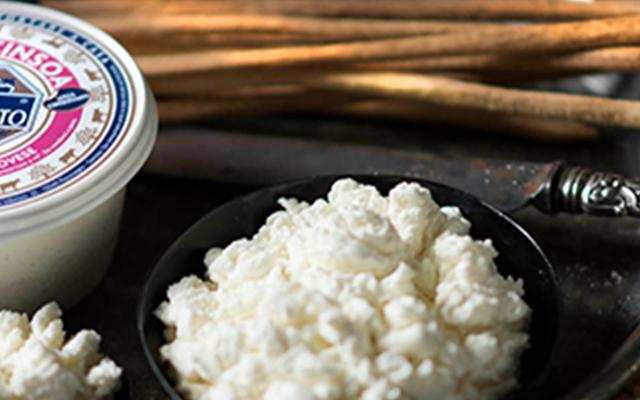
the prescinseua is the fresh curd of cow's milk from the Genoa area, with a texture halfway between yogurt and ricotta and a tangy taste. Registered among the Traditional Agri-food Products of Liguria, it binds the fillings of the Easter pie and pansoti and the Recco focaccia, although its Protected Geographical Indication (PGI) specification today requires a different cheese.
The name prescinsêua, in Genoese dialect, owes its name to presû, the rennet. It appears as a white and moist cream, without crust or own shape, with the smell of milk and yogurt, and is used mainly as an ingredient in various traditional Ligurian culinary preparations (National Organization of Cheese Tasters – ONAF, n.d.).
Historical sources, from 1413 to the eighteenth century
The ONAF technical sheet places the first attestations in a law of the Republic of Genoa of 1413, which listed prescinseua and giuncata among the few gifts that the Genoese could offer to the Doge (ONAF, n.d.). 1413 is the year when Genoa, closing the French domination period, returned to elect a doge. Art historian Michela Cucicea also refers to archival documents from the 13th and 14th centuries and the same regulation, known as Politicum Janue.
In the second half of the fifteenth century, the Genoese physician Ambrogio Oderico recommended its frequent use because it was light and easily digestible (ONAF, n.d.). At the beginning of the eighteenth century, the poet Carlo Innocenzo Frugoni defined it as the cheese ‘that only Genoa knows how to do’. The cagliata also appears in painting: two Flemish-style canvases by Giacomo Legi and Jan Roos (Giovanni Rosa), exhibited in the ‘Rubens in Genoa’ exhibition at Palazzo Ducale between 2022 and 2023, portray market sellers offering it to passersby.
A lexical detail helps to read the historical recipe books. In the Italian-Genoese glossary of True Genoese cook by Emanuele Rossi, published a few years after the work of Giovanni Battista Ratto, the entry ‘ricotta’ refers to ‘quagliata’, translated prescinsèua, and a note on ravioli talks about ‘ricotta (curdled milk)’ (Rossi, n.d.). Where the Genoese sources of the nineteenth century write ricotta, they often mean sour cagliata, precisely prescinseua.
From the upper Val d’Aveto to the ovens of Recco
The geography of prescinseua follows that of the pastures. ONAF recalls the transhumance of the shepherds of the upper Val d’Aveto who, from September to May, wintered at lower altitudes in the Val Fontanabuona and supplied cagliata to the restaurateurs of Recco and Camogli. The local historian Franco Accame, in the volume Mandilli de saea (De Ferrari, 2008), describes the shepherds who went down to the beaches and sold the cagliata also to children, who ate it as a snack with sugar or cinnamon. Once drained, the cagliata was also pressed with salt and pepper and consumed in slices, or grated like formaggetta (ONAF, n.d.).
The cow’s milk from the Apennines, with the aromatic herbs of the pastures, gives the product its lactic and acidic profile. The local pairing is with white wines from Bianchetta Genovese grapes, fresh and not particularly full-bodied (ONAF, n.d.).
In the 1970s prescinseua had become almost unavailable, entrusted to shepherds or for self-consumption. In the 1980s the Rapallo Milk Center (Latte Tigullio, now part of the Central Milk Group of Italy) brought it back to refrigerated shelves together with the Genoese Lylag, active since 1952, with sizes for families and larger packages for processors. In Val d’Aveto it is produced by the Val d’Aveto Dairy of Rezzoaglio (Val d’Aveto Dairy, n.d.).
How it is produced
The ONAF sheet describes a double coagulation of whole pasteurized cow's milk, possibly supplemented with lactic ferments. The milk rests for about 48 hours and initiates acid coagulation; half is then heated to 40-50 °C, reunited with the rest, and added with liquid calf rennet. After about four hours the curd is roughly broken to avoid drying it too much, and collected by hand directly into sales containers. It is not salted, not aged, and is preserved for a few days at 2-4 °C (ONAF, n.d.).
The home version of the regional sheet follows the same steps: two liters of fresh milk resting for two days, half a liter heated to about 50 °C with five grams of rennet, four hours of rest, until the curd can be cut with a spatula (Region Liguria, n.d.).
The PAT recognition
Prescinseua appears in the list of Traditional Agri-food Products (PAT) of Liguria (ONAF, n.d.), included in the national list updated annually by the Ministry of Agriculture. Registration – which requires processing methods consolidated for at least twenty-five years – does not confer rights nor restrict the use of the related name; moreover, the registered product name cannot be trademarked or registered as a trademark.
The registration of a PDO or PGI, on the other hand, guarantees protection of the Geographical Indication (GI) – in the European Union and in non-EU countries that have specifically agreed to recognize GIs – against improper commercial use, imitations and evocations (EU regulation 2024/1143, art. 26.1).
Focaccia di Recco PGI
The 'Focaccia di Recco with cheese' has been registered as PGI with the implementing regulation (EU) 2015/39 of January 13, 2015. The European Commission rejected the oppositions of the United Kingdom and Portugal, focused on the ban on precooking and freezing (implementing reg. EU 2015/39). The production area includes Recco and the neighboring municipalities of Avegno, Sori, and Camogli. The dough contains no yeast, the two sheets are less than a millimeter thick, the baking is done at 270-320 °C for 4-8 minutes and any treatment of precooking, freezing or deep-freezing is excluded (specifications, article 5).
The requested cheese is a ‘fresh soft cheese’ of fresh pasteurized cow's milk, creamy, without added cream, capable of withstanding cooking ‘without stretching, creating bubbles or releasing whey’. The parameters as is are precise: moisture 57-60%, protein 13-15%, fat 21-24%, fat on dry matter 48-60% (regulation, article 5.1). The ordinary amendment approved in 2024 has removed the parallelepiped shape requirement of the cheese, without altering these values (European Commission, 2025).
Comparison with CREA tables clarifies the picture:
- the crescenza shows 58.3% moisture and 23.3% fat, values within the limits of the regulation (CREA, 2019);
- prescinseua instead declares on the label 4.7 g fat and 8.8 g protein per 100 g (Caseificio Val d’Aveto, n.d.) and, like every acid curd, tends to release whey. Its parameters effectively exclude it from the IGP focaccia.
The Metropolitan City of Genoa describes the focaccia with melted crescenza at least since the post-World War II period (Metropolitan City of Genoa, n.d.), while ONAF attributes the substitution to the scarce availability of prescinseua (ONAF, n.d.).
Nutritional values
The food composition tables indicated by CREA — Food and Nutrition Research Center (2019) do not include prescinseua and report for the crescenza, the cheese that replaced it in the focaccia of Recco, the nutritional values listed below. For prescinseua, the average nutritional values declared on the label by Caseificio Val d’Aveto of Rezzoaglio (Caseificio Val d’Aveto, n.d.) are reported.
| Values per 100 g | Prescinseua (Caseificio Val d’Aveto, label) | Crescenza (CREA, code 160890) |
| Energy | 381 kJ, 91 kcal | 1,177 kJ, 281 kcal |
| Fats | 4.7 g | 23.3 g |
| of which saturated fatty acids | 1.2 g | n.a. |
| Carbohydrates | 3.4 g | 1.9 g |
| of which sugars | 3.4 g | 1.9 g |
| Fibers | n.a. | 0 g |
| Proteins | 8.8 g | 16.1 g |
| Salt | 0.8 g | 0.88 g |
| Calcium | n.a. | 557 mg (70% NRV) |
| Phosphorus | n.a. | 285 mg (41% NRV) |
| Zinc | n.a. | 2.33 mg (23% NRV) |
| Vitamin A | n.a. | 135 µg (17% NRV) |
The percentages refer to the reference nutritional values listed in Annex XIII to Regulation (EU) No. 1169/2011. For the same weight, prescinseua provides about one-third of the energy and one-fifth of the fats of crescenza, and its proteins cover almost 40% of the calories.
In the kitchen: savory pies, pansoti and sauces
In the Liguria kitchen prescinseua works as a sour binder. The torta pasqualina is the best-known example: the recipe of the Genoese cook by Ratto (1863) distinguishes the torta pasqualina from other vegetable pies and describes its layered filling, first chard, then prescinseua, then other vegetables bound with eggs, grated cheese, and aromatic herbs. In the sixteenth century, Genoese vegetable pies were known as gattafura, a name also documented in theOpera by Bartolomeo Scappi. The version codified by the Municipality of Genoa recalls the 33 layers, one for each year of Christ. A reference recipe for domestic preparation is the one proposed by La Cucina Italiana (n.d.).
I pansoti are more recent, born as a variant of lean ravioli. The municipal portal recipe requires 200 g of prescinseua for every 500 g of preboggion, with eggs, Parmesan and marjoram, and the classic dressing with walnut sauce. In Rossi's cookbook, the preboggion indicated bunches of chard, early cabbage and parsley (Rossi, s.d.).
The curd also goes into rice pie, baked lasagna, and vegetable meatloaf. There is also a version of Genoese pesto and one of walnut sauce with a spoonful of prescinseua; it once became pudding or sweet snack for children, with sugar, cinnamon, or chestnuts (ONAF, n.d.).
Conclusions
Prescinseua is a cheese with six centuries of documentation, from the gift to the Doge in 1413 to the Genoese cookbooks of the nineteenth century. The PAT recognition preserves its name and method, but does not protect it like a PGI. The case of Focaccia di Recco shows how a specification can codify the use of the present cheese, crescenza, leaving out the cheese of memory. Its place remains in savory pies, pansoti, and Ligurian refrigerated counters, where industrial producers and mountain dairies make it available every day.
Dario Dongo
Credit cover Caseificio Val d’Aveto
References
Normative sources of the European Union
Commission Implementing Regulation (EU) 2015/39 of 13 January 2015 entering a name in the register of protected designations of origin and protected geographical indications (Focaccia di Recco col formaggio (PGI)). OJ L 8, 14.1.2015, p. 7-9. http://data.europa.eu/eli/reg_impl/2015/39/oj
Commissione Europea. (2025). Publication of an approved standard amendment to the product specification of ‘Focaccia di Recco col formaggio’ (PGI), EU No PGI-IT-0944-AM01. Official Journal of the European Union, C/2025/473. http://data.europa.eu/eli/C/2025/473/oj
Regulation (EU) No 1169/2011 of the European Parliament and of the Council of 25 October 2011 on the provision of food information to consumers. Consolidated text: 01/04/2025. http://data.europa.eu/eli/reg/2011/1169/2025-04-01
Regulation (EU) 2024/1143 of the European Parliament and of the Council of 11 April 2024 on geographical indications for wine, spirit drinks and agricultural products, as well as traditional specialities guaranteed and optional quality terms for agricultural products, amending Regulations (EU) No 1308/2013, (EU) 2019/787 and (EU) 2019/1753 and repealing Regulation (EU) No 1151/2012. Consolidated text: 18/03/2026. http://data.europa.eu/eli/reg/2024/1143/2026-03-18
Institutional and sector sources
Chamber of Commerce of Genoa. (2024). Production regulations of the Protected Geographical Indication ‘Focaccia di Recco with cheese’ (September 2024 version). https://www.ge.camcom.gov.it/it/promuovi/prodotti-tipici/prodotti-dop-e-igp/disciplinare_focaccia_di_recco_settembre_2024.pdf
ONAF – National Organization of Cheese Tasters. (n.d.). Ligurian curd cheese (Prescinseua), sheet and technical datasheet. https://www.onaf.it/index.php?c=index&a=schedaformaggio&id=973 e https://www.onaf.it/uploads/public/11292_quagliata-ligure-prescinseua-.pdf
Liguria Region. (n.d.). Ligurian curd cheese – prescinseua [PAT sheet]. https://www.onaf.it/uploads/public/formaggi/11277_quagliata-ligure-agriligurianet.pdf
Historical sources
Rossi, E. (n.d.). The true Genoese cook, easy and economical (new edition). Mendrisio: Giovanni Prina. Project Gutenberg, eBook no. 51857 (2016). https://www.gutenberg.org/ebooks/51857
Editorial and press sources
La Cucina Italiana. (n.d.). Pasqualina pie of Liguria. https://www.lacucinaitaliana.it/ricetta/antipasti/torta-pasqualina-della-liguria/
Sources of producers
Val d’Aveto Dairy. (n.d.). Prescinsöa, typical Ligurian cheese. https://www.caseificiovaldaveto.com/prodotti/prescinsoa/

Dario Dongo, lawyer and journalist, PhD in international food law, founder of WIISE (FARE - GIFT – Food Times) and Égalité.


