

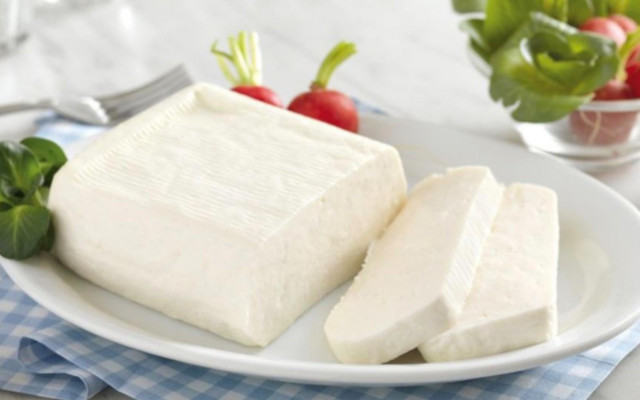
In a region famous for great long-aged cheeses, the crescent cheese and the stracchino represent the fresh and vital face of Lombard cheese-making tradition. These products, recognized as Traditional Agri-food Products (PAT), tell thepeasant ingenuity of the Po Valley in ennobling the milk of cows returning from alpine pastures. Characterized by an essential ingredient list and a delicate organoleptic profile, they are now pillars of food modernity: digestible, natural, and extraordinarily versatile for catering and quality industry.
The term ‘stracchino’ derives from the Lombard dialect tired, literally ‘tired’. The name refers to the milk produced by cows returning from the summer transhumance from the alpine pastures to the Po Valley: fatigued animals, with milk of slightly different composition, which Lombard cheesemakers learned to enhance already in the Middle Ages.
The name ‘crescenza’, instead, has a parallel and debated etymology: it could derive from Latin crescentia — since the cheese ‘grows’, i.e. comes out of the mold due to lactic fermentation — or from the Milanese term carsenza, which indicated a typical focaccia of the area. Both entries reflect a peasant history progressively industrialized without losing the connection with the territory of origin.
‘Clean Label’: the excellence of an essential recipe
The ingredients of crescenza are four:
- pasteurized cow's milk;
- lactic ferments;
- rennet;
- salt.
A ‘clean label’ ante litteram, where the quality and composition of the bacterial starters play a crucial role in the organoleptic profile of the cheese.
The production process is divided into the following stages:
- standardization and pasteurization of the milk;
- inoculation of thermophilic lactic ferments (typically Streptococcus thermophilus e Lactobacillus spp.), to start acidification;
- pre-rennet coagulation with rennet at controlled temperature;
- delicate breaking of the curd into large fragments, to preserve moisture;
- placement in square molds (side 15–20 cm, height ~5 cm) and whey draining with 3–4 turnings over about 6 hours;
- brining concentrated (15°C, about 2 hours);
- ripening in refrigerated cells (5–6°C, humidity >90%) for 2–7 days, with further turnings.
The moisture content of crescenza tends to be equal to or greater than 50%. It is precisely the high water percentage that requires a short shelf-life and the strict respect of the cold chain, from the dairy to the table. Lactic bacteria play an essential role in acidification, partial hydrolysis of lactose and biosynthesis of bioactive peptides, contributing to the digestibility of the finished product (Bettera et al., 2023; Mulet-Cabero et al., 2024).
Crescenza and stracchino: technological affinities and differences
The names ‘crescenza’ and ‘stracchino’ are often used as synonyms, even by producers and distributors. However, there are some differences:
- the crescent cheese has a very short ripening (2–7 days), creamier and spreadable consistency, sweet and mildly acidic flavor;
- the stracchino can have a maturation of 15–20 days, sometimes up to a month, with a firmer texture and a more pungent flavor.
Nutritional properties: calcium, proteins and ferments
According to the food composition tables of CREA (2019), 100 g of crescent cheese provide on average:
| Nutrient | Value per 100 g | % NRV* |
|---|---|---|
| Energy | 281 kcal | |
| Proteins | 16.1 g | |
| Total fats | 23.3 g | |
| Carbohydrates | 1.9 g | |
| Salt | 2.25 g | |
| Calcium | 557 mg | 68,9% |
| Phosphorus | 285 mg | 40,7% |
| Zinc | 2.33 mg | 23,3% |
| Vitamin A | 135 μg | 16,9% |
(*) NRV is the Nutrient Reference Value indicated in Annex XIII to Regulation (EU) No 1169/11 for individual micronutrients (minerals and vitamins)
CREA dedicates a distinct entry to the organoleptic characteristics of stracchino, which are essentially distinguished by the contributions of:
- energy: 300 kcal;
- proteins: 18.5 g;
- fats: 25.1 g;
- phosphorus: 367 mg, equal to 53.4% of the NRV (700 mg).
Organoleptic characteristics
The organoleptic characteristics of crescenza – although to date not codified in any provision or disciplinary regulation – are the following:
- appearance: bright white dough, homogeneous and free of holes, glossy and slightly moist surface, sometimes with a very thin barely noticeable crust;
- texture: compact but yielding to the cut. Crescenza is soft, creamy and melting, easily spreadable, with a silky and enveloping sensation in the mouth, lacking elasticity and with slight adhesiveness on the palate;
- smell: to the nose it expresses a medium-low but clear intensity, with notes of fresh milk, cream and yogurt and a delicate lactic-acid hint, without marked animal scents or aggressive fermentations;
- taste: delicate but well characterized, in a balance between lactic sweetness and pleasant acidity, with moderate sapidity; the aftertaste is short, clean, with a reminder of cream. The trigeminal sensations (that is, tactile and irritative sensations felt in the mouth, beyond taste and aroma) convey freshness and moisture, without traces of spiciness or astringency.
Beyond the table: a technical ingredient for haute cuisine and pizza
Crescenza is an extremely versatile fresh cheese, suitable for various pairings and consumption occasions. The main culinary uses include:
- pairing with salads o grilled vegetables, for light meals;
- spread on bread, rice cakes, crackers e focaccias, for fresh consumption;
- creamy base – lighter, and with a more pronounced flavor, compared to mascarpone – for sauces, dressings and risottos (at the end of cooking);
- pizza topping – as an alternative to mozzarella, characteristic of pizza Margherita – for a more intense, milky and slightly acidic flavor, with notes of yogurt and fresh cream;
- focaccia di Recco with PGI Cheese: la crescenza — or a very fresh baked stracchino — is the traditional filling of this protected Ligurian specialty, produced only in the municipalities of Recco, Camogli, Sori and Avegno (province of Genoa). The specification describes it as ‘fresh soft cheese, obtained from fresh pasteurized cow's milk’. The PGI is recognized at the European level since June 2015,
The delicate sensory profile — sweet, milky, with a slight acidity — makes crescenza flexible even in gourmet preparations that require balance without overpowering the flavors.
Quality sourcing: certifications and traceability for export
For importers and international buyers, it is recommended to:
- select suppliers with quality certifications and HACCP systems compliant with FSSC 22000 and/or IFS and/or BRC standards or equivalents;
- evaluate options for organic products certified for greater attention to animal welfare and supply chain sustainability, as well as for high value-added positioning;
- consider protective atmosphere packaging to extend shelf life in items intended for export.
The team of GIFT (Great Italian Food Trade) offers specific expertise in supporting international buyers in the selection of qualified Italian suppliers, with particular attention to quality, regulatory compliance and supply chain transparency.
Conclusions
Crescenza and/or stracchino — fresh cheese, without rind, from the Lombard tradition — represents an exemplary case of a dairy product capable of combining simplicity of ingredients, historical depth and adaptability to the needs of the contemporary market. Organic versions, certified short supply chains and innovative formats for export represent the most promising directions for the enhancement of this authentic, everyday and extraordinarily versatile cheese.
Dario Dongo
Credit cover: Arrigoni
Bibliography
- Bettera, L., Levante, A., Bancalari, E., Bottari, B., & Gatti, M. (2023). Lactic acid bacteria in cow raw milk for cheese production: Which and how many? Frontiers in Microbiology, 13, 1092224. https://doi.org/10.3389/fmicb.2022.1092224
- CREA – Food and Nutrition Research Center. (2019). Food composition tables – Crescenza. Rome, CREA. https://www.alimentinutrizione.it/tabelle-nutrizionali/160890
- CREA – Food and Nutrition Research Center. (2019). Food composition tables – Stracchino. Rome, CREA. https://www.alimentinutrizione.it/tabelle-nutrizionali/167250
- ISMEA – Institute of Services for the Agricultural Food Market. (2025, July). Milk trends: Italy in second place among world exporters of cheese and dairy products. Historic overtaking of the Netherlands and France in 2024. https://www.ismea.it/flex/cm/pages/ServeBLOB.php/L/IT/IDPagina/13365
- Mulet-Cabero, A.-I., Torres-Gonzalez, M., Geurts, J., Farhang, B., Marmonier, C., … Peters, S. (2024). The role of milk components, pro-, pre-, and synbiotic foods in calcium absorption and bone health maintenance. Nutrients, 16(17), 2908. https://doi.org/10.3390/nu16172908
- Lombardy Region. (2024). PAT Lombardy Region – Numbered List. https://www.buonalombardia.regione.lombardia.it/wps/wcm/connect/bc92c0e0-27fa-4f86-875c-fa6d4716634d/PAT+Regione+Lombardia-2024.pdf
- Regulation (EU) No 1169/2011 of the European Parliament and of the Council of 25 October 2011 on the provision of food information to consumers. Latest consolidated text: 01/04/2025 http://data.europa.eu/eli/reg/2011/1169/2025-04-01
- Rizzoli, R. (2022). Dairy products and bone health. Aging Clinical and Experimental Research, 34(1), 9–24. https://doi.org/10.1007/s40520-021-01970-4

Dario Dongo, lawyer and journalist, PhD in international food law, founder of WIISE (FARE - GIFT – Food Times) and Égalité.


