
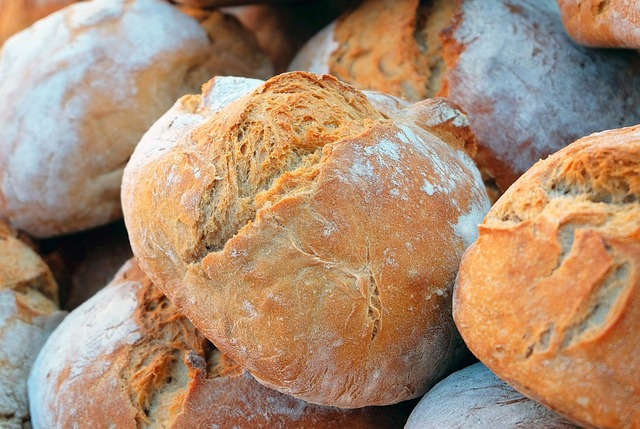
The Italian bread is an archipelago of products, knowledge and terroirs, told here through the 30 most iconic. From the Alps to the islands, each region – and often each municipality – preserves its own shapes, flours, fermentation techniques. Three breads with Protected Designation of Origin (PDO), five with Protected Geographical Indication (PGI), dozens of Traditional Agri-food Products (PATs) and some Municipal Designations (De.Co..).
In recent decades, consumption bread consumption has declined, but market model has moved upwards: people buy less, favoring products with greater added value and a higher price range. From a basic food - inevitable at every meal and once subject to controlled prices, to respond to a primary need of the population - bread has transformed into a product of careful choice.
Mother yeast, selected flours and ancient grains are the main differentiating factors, while technological innovation aims to improve the nutritional profile and shelf life.
Bread market in Italy, production, consumption and trade
I 190 Italian mills process over 5.8 kt of soft wheat, from which approximately 4.3 K tonnes of flour are obtained, of which 58% (2.4 K tonnes) is destined for Bread and substitute products (Italmopa, 2025). According to another estimate, the 60% approximately of the flour products used annually in Italy (1.5 out of 2.5 K tonnes) would be absorbed by artisanal sector. The artisanal bakery and pastry sector has approximately 46 K enterprises, for a turnover of 13 billion euros, 8.4 of which generated by bread alone (Manuelli, 2025).
Artisanal production still prevails in volume, while packaged bread gains space in retail. The 57% of Italians buy bread especially in retail, with spending of 3.8 billion euros, and in the modern channel specialty breads grow more than traditional ones, +11% in volume versus +5% (Soressi, 2026).
I consumption they are measured directly by the national food surveys of CREA (Council for agricultural research and analysis of the agricultural economy). In the fourth survey, conducted in 2017-2020, bread is still confirmed the cereal product most consumed in quantity, with 70 grams per day (Mistura et al., 2025). However, the comparison with the 2005-2006 survey shows a 16% decline in the bread, pasta and rice group (Di Veroli et al., 2025), consistent with the long-term decline reported by the milling industry (Italmopa, 2025). The most recent data indicates a recovery: in the first half of 2025, domestic purchases of bread grew by 4.9% in volume and 6.1% in value (Ismea, 2025), with a +3.1% in volume in the first nine months of the year (Gambero Rosso, 2026).
On the front of exchanges with foreign countries, the tariff heading for common bread (NC 1905 90 30) includes bread without the addition of Honey, eggs, cheese or fruit, with sugars and fats not exceeding 5% each on dry matter; excluded from this are rusks, sweet baked products and those richer in fat. In 2025 Italy has exported 59.031 kt of this bread for €176.9 million (+3.6% in volume and +9.4% in value compared to 2024), compared to imports equal to 103.332 kt for €178.3 million (Eurostat, 2026). The unit value of export, approximately €3.00/kg, exceeds that of imports by more than 70%., approximately 1.73 euro/kg (GIFT processing on Eurostat data). Furthermore, bakery and pastry products are among the most dynamic items in the agri-food exports Italian market in 2025 (Gambero Rosso, 2026).
From Roman pistores to fresh bread by law
Pliny the Elder (1st century A.D.) recalls that in Rome there were no professional bakers, i pistores, until the war against King Perseus, over 580 years after the foundation of the city; until then bread was prepared at home by women. In the Middle Ages bread becomes an instrument of hospitality along the pilgrims' routes: in Altopascio, a stop on the Via Francigena, the hospital of the Knights of Tau refreshed travelers with a bread without salt, still prepared today with a starter dough called sconcia. Tuscan fool bread also enters poetry, with the exile Dante who is heard predicting 'You will taste as salty as / other people's bread' (Paradise, XVII, 58-59, 1316–1321 AD).
Foreign rulers left traces in shapes. The michetta panettone is born in the Lombardo-Veneto period (1815-1859) to respond to the Austrian request for small rose-shaped loaves, adapted by bakers to the climate of Milan to the point of emptying them of the crumb (Milan State Archives, n.d.).
The Nineteen Hundreds brought the industry, the packaged bread and, in recent times, protection of freshness. It is called fresh bread prepared with a continuous process, 'free of interruptions aimed at freezing or quick freezing', except for the slowing down of leavening, as well as 'free of preservative additives and other treatments with a preservative effect' (DM 131/2018, art. 2.1). The process is considered continuous if no more than 72 hours elapse between the start of processing and the sale (DM 131/2018, art. 2.2). The bulk bread to which a method of storage further must instead bear a additional statement which highlights it, with methods of conservation and consumption (DM 131/2018, art. 3.2).
Over two hundred types of bread: classification criteria
In Italy are counted over 200 types of bread (Italmopa, 2025). The Atlas of typical products of the National Institute of Rural Sociology (INSOR) estimated around 200, up to about 1,500 considering the variants (INSOR, 2000). Geographic origin alone is not enough to classify them:
- a first criterion concerns the raw materials: soft wheat or hard, rye, maize, local varieties, flour type, accessory ingredients such as oil, lard, seeds and spices;
- followed by the fermentation technologies, with brewer's yeast, sourdough, biga or other pre-ferments, times and temperatures;
- the characteristics of the dough, such as hydration and processing; the shape and sizing, from loaf to batard, from sheet to decorated bread;
- the baking techniques, in wood-fired or electric oven, direct or indirect, single or double;
- complete the picture the characteristics physical (moisture, porosity, crust thickness, shelf-life), chemical, nutritional and microbiological characteristics, as well as the sensory profile.
Recognition schemes must be kept distinct. PDO e PGI are European quality schemes, based on production specifications as well as third-party controls (Regulation (EU) 2024/1143). The Traditional Agri-food Products (PATs) are products registered by the Regions and autonomous Provinces in their own lists, as they have been obtained with methods consolidated for at least twenty-five years and are included in the national list updated every year. The Municipal Designations (De.Co.) are finally established by Municipalities and attest to an identity link with the municipal territory, without constituting a quality mark or certification.
The review of the thirty most famous breads follows this order, along the lines of Italian sweets: first the PDO, then the PGI, then the PATs and finally the De.Co..
PDO breads, delimited territories and sourdough
The Pane di Altamura PDO was registered in 2003 (Regulation (EC) 1291/2003). It is obtained from re-milled semolina of durum wheat, sourdough starter, sea salt and water; the grains are grown in Altamura, Gravina in Puglia, Poggiorsini, Spinazzola, Minervino Murge, and at least 80% must come from the Appulo, Arcangelo, Duilio, Simeto varieties. There are two shapes, the high and overlapping one, called u skuanète, and the low one, called a cappidd d'prévte; the minimum size is half a kilo, the crust does not go below 3 millimeters and contains a straw yellow crumb.
The Pane Toscano PDO, registered in 2016 (Implementing Regulation (EU) 2016/303), is the unsalted bread par excellence: soft wheat flour grown, stored and milled in Tuscany, water, sourdough starter, no added salt. Following the amendment approved in 2023 (Implementing Regulation (EU) 2023/382), in addition to type 0 flour, type 1 and 2 flours with wheat germ are also permitted. The small loaf weighs about half a kilo, the loaf about one or two kilos; the crust is crumbly, dark hazelnut colour, the flavour slightly tangy with notes of roasted hazelnut.
The Pagnotta del Dittaino PDO (Regulation (EC) 516/2009, as amended by Implementing Regulation (EU) 613/2014) is produced in fourteen municipalities in the province of Enna and three in that of Catania, in Sicily. At least 70% of the semolina comes from varieties of durum wheat grown in the area, such as Simeto, Duilio, Arcangelo and Mongibello, with proteins equal to at least 12% of the dry matter. The natural yeast matures for at least five hours; the loaf weighs from 500 to 1,100 grams, has a crust of 3-4 millimeters, straw-yellow crumb that is compact and uniform, and retains aroma and freshness for up to five days.
PGI breads, from Basilicata to Alto Adige
The Pane di Matera PGI (Regulation (EC) 160/2008, as amended by Implementing Regulation (EU) 2018/124) uses reground semolina of durum wheat, at least 20% of which comes from local ecotypes or ancient varieties grown in the province of Matera, such as Senatore Cappelli, Duro Lucano, Capeiti and Appulo. The sourdough starter comes from semolina and fresh fruit pulp; the shapes are the croissant and the tall bread, marked with the letters 'MT' before cooking, from 0.5 to 10 kilos; the rind measures at least 3 millimetres, the shelf life is up to fourteen days for the larger sizes.
The Pane casareccio di Genzano PGI (EC reg. 2325/97) was the first bread in Europe to obtain the protected geographical indication (ARSIAL, 2025). Flour common wheat type 0 or 00, natural yeast, salt and water make up loaves or filoni from 0.5 to 2.5 kilos, with dark crust of about 3 millimeters sprinkled with bran.
The Coppia Ferrarese PGI (EC reg. 2036/2001, modified by EU exec. reg. 1140/2012) joins two pieces of dough in a central ribbon and twists the ends into four horns, the croutons. The flour dough common wheat type 0 contains lard, extra virgin olive oil, malt and mother yeast; each pair weighs from 80 to 250 grams, with a maximum humidity of 12-15% which makes it crunchy and storable.
The Piadina Romagnola PGI (Implementing Regulation (EU) 1174/2014) provides for flour of wheat or By spelt, lard and/or olive or extra virgin oil, up to 250 grams per kilo of flour; the Rimini variant, soft and wider, measures from 23 to 30 centimetres. According to data released at the beginning of 2025, certified production reached 25,675 tonnes, for a value of 62 million euros (Soressi, 2025).
The Südtiroler Schüttelbrot/Schüttelbrot Alto Adige PGI (Regulation (EU) 2020/1084) is a dry, flat and crispy bread, with at least 50% flour of rye, flavored with cumin, fennel, trigonella, anise or coriander. The humidity of 4-6% allows it to be kept for up to eighteen months; the production area coincides with the autonomous province of Bolzano.
Traditional Agri-food Products (PATs) of the North
The pan ner from the Aosta Valley it is the black bread from village bakeries, mixed with at least 60% rye and wheat flour; it was once baked once a year at the beginning of winter, and the Lo Pan Ner festival rekindles the community ovens every October (Valle d'Aosta, n.d.).
Piedmont registers among the TAPs the biova, white bread made from soft wheat, as well as the grissino, in the two versions ironed and robatà, the latter rolled by hand, widespread in the Monregalese area as in the Chierese area (Piedmont Region, 2009; Province of Cuneo, s.d.).
The pane di Triora (Imperia), typical of the village that was a granary of the Republic of Genoa, is made with type 1 soft wheat flour, beer yeast, salt, bran and water (e-borghi, N/A); once it was baked once a week in the community oven (Chamber of Commerce Riviere di Liguria, 2015; Touring Club Italiano, N/A).
Alto Adige keeps two more spare loaves. The Paarl from Val Venosta is a pair of rye loaves joined to form a flattened eight, whose oldest variant, the Ur-Paarl, is also a Slow Food Presidium; The Palabirabrot is the bread with pears registered in the same provincial list (MASAF, N/A; Slow Food Foundation, N/A).
The pan di sorc from Gemona del Friuli (Udine) combines grains of cinquantino corn, wheat and rye; long confined to home consumption, it has been recovered thanks to a Slow Food Presidium (Slow Food Foundation, N/A).
PATs of the Centre
The Strettura bread, hamlet of Spoleto (Perugia), is presented as a loaf or small loaf; it is made with soft wheat flour, spring water and yeast, without salt like other Umbrian and Tuscan breads (Umbria Region, N/A).
Abruzzo values the grains of its mountains. The bread of Solina is obtained from the homonymous variety of soft wheat grown in the internal areas of the region, while the Cappelli bread uses Senatore Cappelli durum wheat semolina; both appear in the regional list of PATs, alongside the homemade bread from L'Aquila and the noble bread from Guardiagrele (Abruzzo Region, 2023).
The peasant bread, symbol of popular bread-making in Campania, is registered among the PATs of Lazio for Castelforte and Santi Cosma and Damiano (Latina), municipalities that belonged to the Terra di Lavoro until 1927. The name recalls the bread of the people. Worked mainly by hand with a natural yeast known locally as 'grown', cooked in a chestnut wood oven, it comes in loaves or loaves of one to two kilos, with a golden crust, full flavor and shelf life of about a week (ARSIAL, 2026). In Campania it owes its name to the raw soft wheat flour and is distinguished by the absence of incisions on the surface before cooking (Gambero Rosso, 2019).
PATs of the South
Campania has numerous traditional breads (Regione Campania, N/A). The Montecalvo bread (Avellino) uses durum wheat semolina Saragolla, water, salt and natural yeast, the crescente; the crust is thick, the crumb high and compact, and the bread keeps for up to a week, becoming more flavorful over time (Discover Campania, N/A). The bread of Saragolla, obtained from the same variety, is registered as an autonomous PAT. The Padula bread (Salerno), in the Vallo di Diano, is a round loaf of about two kilos on which four cuts are made before baking, a legacy of the Roman panis quadratus (Gambero Rosso, 2019).
The Laterza bread (Taranto), PAT of Puglia, is a durum wheat semolina bread that shares with Altamura the durum wheat culture of the Murgia (MASAF, 2026).
PATs of the Islands
The carasau bread is the music paper of Sardinia: durum wheat semolina durum wheat, water, salt and yeast form extremely thin disks that, after the first baking, are separated into two sheets, then twice-baked with a second baking, the carasatura. Guttiau bread is carasau seasoned with extra virgin olive oil and salt.
The civraxiu, from the Latin cibarius, is the daily bread of South Sardinia, the large bread of Campidano, with Sanluri as the main centre (Sardegna Turismo, N/A). The coccoi a pitzus it is the prized bread for special occasions, made of durum wheat semolina, from which the very rich heritage of decorated breads on the island derives (Sardinia Region, 2022; Sardegna Turismo, s.d.).
In Sicily the regional list includes the Saint Joseph bread, linked to the feast of 19 March, alongside homemade bread, Monreale bread and naturally leavened bread (Regione Siciliana, 2024).
Municipal designations, the bread of bell towers
The michetta, the puffed and empty bread inside the symbol of Milan (Milan State Archives, n.d.), has obtained the De.Co. by the Municipality (Gambero Rosso, s.d.).
The Cerchiara bread (Cosenza), in the Pollino National Park, is De.Co. of Cerchiara di Calabria, city of bread (Italia.it, N/A). Mother yeast, type 0 and 00 flours, bran, mountain water, with slow baking, make a large loaf with long shelf life (Ministero della Cultura, N/A).
The Castelvetrano black bread (Trapani, Sicily) is an identity bread to which the Municipality dedicates a festival, which reached its second edition in 2025 (City of Castelvetrano, 2025). Its mixture employs local durum wheat tumminia, or timilia (Slow Food Foundation, N/A).
Sourdough, ancient grains and legumes, scientific evidence
The sourdough fermentation it modifies the rheology, sensorial profile and shelf life of the bread. Some effects, such as the reduction of the glycemic index, the increase in the bioavailability of minerals and the reduction of gluten content, have been demonstrated almost definitively, while others, from the reduction of salt to the management of irritable bowel syndrome, are being studied (Gobbetti et al., 2019). A systematic review of 18 clinical studies confirms that sourdough bread causes a lower glycemic increase than industrially fermented bread (Rolim et al., 2024).
I Ancient grains – that is, ancient varieties of wheat, which have remained unchanged over the last century – show an interesting nutritional and phytochemical profile in numerous laboratory studies, also conducted on animals (Dinu et al., 2018). A more recent review found that ancient varieties, like historical ones, have a gluten content similar to modern ones. In animal studies and in some clinical studies, however, they are associated with more marked anti-inflammatory and antioxidant effects, perhaps linked to the action on inflammation or intestinal permeability, albeit in still small samples (Spisni et al., 2019). The type 1 flours and type 2, or semi-wholemeal – such as whole grain varieties – they provide more fiber as well as minerals; it is no coincidence that the specifications for Pane Toscano PDO have accepted them and that for Pane di Matera PGI prescribes a quota of ancient grains. Furthermore, purchasing choices for bakery products are influenced by concerns for health and the environment (Nicolosi et al., 2023).
Integration with flours of Legumes or pseudocereals enriches the bread with proteins as well as fibre. Fermentation with sourdough has proven to be the most effective process for overcoming technological and sensorial limitations, maintaining high acceptability for the consumer (Gobbetti et al., 2020). The offer of bread is also consolidated thanks to these ingredients gluten-free, intended for people with celiac disease.
Packaged bread, fibers, proteins and shelf-life
The baking industry has launched innovation paths oriented towards the nutritional profile. The brand bread of Esselunga offers an example: alongside white or semolina breads, the 100% wholemeal line and the six-cereal line, with extra virgin olive oil, linseed, sesame, contain less salt; protein bread combines soy and wheat proteins with flax, sunflower, sesame and pumpkin seeds: rich in fibre, it has the lowest glycemic index and sodium content in the range (Dongo, 2023).
Among the treatments of storage figures the one with ethyl alcohol, declared on the label together with the words 'preserved bread' (Dongo, 2023). Naturally leavened, long-leavened, seeded, high-protein and low-glycemic index breads are growing in the modern channel (Soressi, 2026), a sign of a demand that does not give up on bread but seeks versions more suited to its needs.
Nutritional profiles of bread
The food composition tables indicated by CREA — Food Research and Nutrition Centre (2019) report the nutritional values for the main types of bread as follows, per 100 grams of product.
| Values per 100 g | White bread (type 0) | Rosetta (type 00) | Semi-wholemeal bread (type 1) | Wholemeal bread | Rye bread |
| Energy | 1120 kJ / 268 kcal | 1152 kJ / 275 kcal | 1001 kJ / 239 kcal | 938 kJ / 224 kcal | 954 kJ / 228 kcal |
| Fat (g) | 0,5 | 1,9 | 0,3 | 1,3 | 1,7 |
| of which saturated fatty acids (g) | N/A | N/A | N/A | N/A | N/A |
| Carbohydrates (g) | 59,5 | 57,6 | 52,0 | 44,1 | 45,4 |
| of which sugars (g) | 2,0 | 7,5 | 2,2 | 2,0 | 1,8 |
| Fibre (g) | 3,8 | 3,1 | 4,2 | 6,5 | 4,6 |
| Protein (g) | 8,1 | 9,0 | 8,3 | 8,5 | 8,3 |
| Salt (g) | 0,73 | 0,79 | N/A | 1,28 | 1,45 |
| Iron (mg) | – | – | – | 2.5 (18% NRV) | 2.5 (18% NRV) |
| Phosphorus (mg) | – | – | – | 180 (26% NRV) | 160 (23% NRV) |
| Copper (mg) | – | 0.19 (19% NRV) | – | – | – |
| Thiamine (mg) | – | – | – | – | 0.29 (26% NRV) |
N/A: data not available in CREA tables. Salt is calculated by multiplying sodium by 2.5. Vitamins and minerals are reported only if they exceed 15% of the Nutrient Reference Values.
All the breads considered can carry the claim 'source of protein', since proteins provide over 12% of the energy value, as well as the claim 'source of fibre', with at least 3 grams per 100 grams; The Wholemeal bread reaches the 'high fiber content', with 6.5 grams (EC reg. 1924/2006, Annex). Wholemeal bread, such as rye bread, also provides more than 15% of the nutritional reference values set out in Annex XIII to Regulation (EU) No. 1169/2011 for iron as well as phosphorus; rye bread is also distinguished by thiamine, rosette by copper.
Conclusions, an identity food and contemporary
Italian bread preserves an agricultural, microbiological and cultural biodiversity of extraordinary richness. The PDOs and PGIs guarantee their origin with precise specifications. PAT and De.Co. attest to its cultural tradition in the different territories. Scientific research confirms the value of sourdough, ancient grains and legumes, also at the service of the celiac community. In a market where overall volumes have reduced, but demand is oriented towards quality, health and service, Italian bread presents itself to consumers and foreign buyers as an identifying and contemporary product.
Dario Dongo
Frequently Asked Questions
How many types of bread exist in Italy? Over 200 types according to the milling industry, up to around 1,500 considering the local variants registered by INSOR.
Which Italian breads are PDO and PGI? PDO breads are Pane di Altamura, Pane Toscano and Pagnotta del Dittaino; PGI breads are Pane casareccio di Genzano, Coppia Ferrarese, Pane di Matera, Piadina Romagnola and Schüttelbrot Alto Adige.
What is the difference between PDO, PGI, PAT and De.Co.? PDO and PGI are European regimes with specifications and third-party controls; PATs are registered by Regions in a national list for consolidated methods dating back at least twenty-five years; De.Co. are determined by Municipalities and do not constitute a quality mark.
When can bread be sold as fresh? When the production process is continuous, without freezing or freezing or preservatives, and no more than 72 hours elapse from the start of processing to sale.
How much bread does Italy export? In 2025, 59,031 kt of common bread, for 176.9 million euros, with a unit value of approximately 3 euros per kilo.
Is naturally fermented bread good for you? Studies indicate a lower glycaemic response compared to industrially fermented bread, greater bioavailability of minerals and reduced gluten content.
References
European Union regulatory acts
Commission Implementing Regulation (EU) No 613/2014 of 3 June 2014 approving a minor amendment to the specification for a name entered in the register of protected designations of origin and protected geographical indications [Pagnotta del Dittaino (PDO)]. http://data.europa.eu/eli/reg_impl/2014/613/oj
Commission Implementing Regulation (EU) No 1140/2012 approving non-minor amendments to the specification for a name entered in the register of protected designations of origin and protected geographical indications [Coppia Ferrarese (PGI)]. OJ L 332, 4.12.2012. http://data.europa.eu/eli/reg_impl/2012/1140/oj
Commission Implementing Regulation (EU) No 1174/2014 entering a name in the register of protected designations of origin and protected geographical indications [Piadina Romagnola/Piada Romagnola (PGI)]. http://data.europa.eu/eli/reg_impl/2014/1174/oj
Commission Implementing Regulation (EU) 2016/303 of 1 March 2016 entering a name in the register of protected designations of origin and protected geographical indications [Pane Toscano (PDO)]. OJ L 58, 4.3.2016. http://data.europa.eu/eli/reg_impl/2016/303/oj
Commission Implementing Regulation (EU) 2018/124 of 15 January 2018 approving non-minor amendments to the specification for a name entered in the register of protected designations of origin and protected geographical indications [Pane di Matera (PGI)]. OJ L 22, 26.1.2018. http://data.europa.eu/eli/reg_impl/2018/124/oj
Commission Implementing Regulation (EU) 2020/1084 of 17 July 2020 entering a name in the register of protected designations of origin and protected geographical indications [Südtiroler Schüttelbrot/Schüttelbrot Alto Adige (PGI)]. OJ L 239. http://data.europa.eu/eli/reg_impl/2020/1084/oj
Commission Implementing Regulation (EU) 2023/382 of 14 February 2023 approving a non-minor amendment to the specification for a name entered in the register of protected designations of origin and protected geographical indications [Pane Toscano (PDO)]. OJ L 53, 21.2.2023. http://data.europa.eu/eli/reg_impl/2023/382/oj
Commission Regulation (EC) No 2325/97 of 24 November 1997 supplementing the Annex to Regulation (EC) No 1107/96 on the registration of geographical indications and designations of origin [Pane casareccio di Genzano (PGI)]. OJ L 322, 25.11.1997. http://data.europa.eu/eli/reg/1997/2325/oj
Commission Regulation (EC) No 2036/2001 of 17 October 2001 supplementing the Annex to Regulation (EC) No 2400/96 [Coppia Ferrarese (PGI)]. OJ L 275, 18.10.2001. http://data.europa.eu/eli/reg/2001/2036/oj
Commission Regulation (EC) No 1291/2003 of 18 July 2003 supplementing the Annex to Regulation (EC) No 2400/96 [Pane di Altamura (PDO)]. OJ L 181, 19.7.2003. http://data.europa.eu/eli/reg/2003/1291/oj
Commission Regulation (EC) No 160/2008 of 21 February 2008 registering certain names in the Register of protected designations of origin and protected geographical indications [Pane di Matera (PGI), Tinca Gobba Dorata del Pianalto di Poirino (PDO)]. OJ L 48, 22.2.2008. Commission Regulation (EC) No 160/2008 of 21 February 2008 laying down detailed rules for the application of Council Regulation (EC) No 1234/2007 as regards marketing standards for olive oil. OJ L 52, 22.2.2008.
Commission Regulation (EC) No 516/2009 of 17 June 2009 entering a name in the register of protected designations of origin and protected geographical indications [Pagnotta del Dittaino (PDO)]. OJ L 155, 18.6.2009. Commission Regulation (EC) No 516/2009 of 17 June 2009 entering a name in the register of protected designations of origin and protected geographical indications [Pagnotta del Dittaino (PDO)]. OJ L 155, 18.6.2009.
Regulation (EU) No 1169/2011 of the European Parliament and of the Council of 25 October 2011 on the provision of food information to consumers. Consolidated text: 01/04/2025. Regulation (EU) No 1169/2011 of the European Parliament and of the Council of 25 October 2011 on the provision of food information to consumers. Consolidated text: 01/04/2025.
Regulation (EU) 2024/1143 of the European Parliament and of the Council of 11 April 2024 on geographical indications for wine, spirit drinks and agricultural products, as well as traditional specialities guaranteed and optional quality terms for agricultural products. Consolidated text: 18/03/2026. Regulation (EU) 2024/1143 of the European Parliament and of the Council of 11 April 2024 on geographical indications for wine, spirit drinks and agricultural products, as well as traditional specialities guaranteed and optional quality terms for agricultural products. Consolidated text: 18/03/2026.
Italian Legislation
Ministerial decree 1 October 2018, n. 131. Regulation governing the denomination of "bakery", "fresh bread" and the adoption of the term "preserved bread". Regulatory. Latest consolidated version: 12/19/2018. https://www.normattiva.it/eli/id/2018/11/19/18G00156/ORIGINAL
MASAF. (2026). Update of the national list of traditional agri-food products pursuant to article 12, paragraph 1, of law 12 December 2016, n. 238 (DM no. 59360 of 6 February 2026, twenty-sixth revision). Official Journal no. 40 of 18 February 2026.
Specifications, Traditional Agri-food Products (PATs) lists and regional sources
ARSIAL. (2025). Pane casareccio di Genzano PGI. In Lazio agri-food heritage. https://www.arsial.it/wp-content/uploads/2025/06/PaneCasereccioGenzanoIGP.pdf
ARSIAL. (2026). Traditional agri-food from the territories of Lazio. DO-IG and PAT quality products. Lazio region. https://www.arsial.it/wp-content/uploads/2026/07/VOLUME-PAT-ITALIANO-2026_Intero-bassa.pdf
Chamber of Commerce Riviere di Liguria. (2015). List of traditional products Liguria Gourmet (rev. 01, 16 April 2015). https://rivlig.camcom.gov.it/sites/default/files/contenuto_redazione/oldsite/iniziativePromozionali/91/9159_CCIAASV_2272015.pdf
Consortium for the Protection of Altamura Bread PDO. (n.d.). Production Specification. https://www.panealtamuradop.it/pane-dop/disciplinare/
MASAF. (n.d.). National List of Traditional Agri-food Products. Autonomous Province of Bolzano (Annex to the update decree). https://informacibo.it/wp-content/uploads/2018/11/bolzano.pdf
Province of Cuneo. (n.d.). Typical Breads. https://natura.provincia.cuneo.it/prodotti-tipici/altri-prodotti/pani-tipici
Abruzzo Region. (2023). Updated List of Abruzzo PATs Year 2023. https://trasparenza.regione.abruzzo.it/system/files/servizi-erogati/1204/elenco-pat-abruzzo-aggiornato-anno-2023.pdf
Campania Region. (n.d.). Traditional Products. Fresh pasta and bakery, pastry, biscuit and confectionery products. https://agricoltura.regione.campania.it/tipici/tradizionali-dolci.htm
Piedmont Region. (2009). Traditional Agri-food Products. Bread, breadsticks, focaccia and savoury pies (Annex to Regional Government Resolution no. 18-11822 of 20 July 2009). https://www.regione.piemonte.it/governo/bollettino/abbonati/2009/30/attach/dgr_11822_180_20072009_a3.pdf
Sardinia Region. (2022). List of Traditional Agri-food Products. Fresh pasta and bakery, biscuit, pastry and confectionery products. https://www.sardegnaambiente.it/documenti/1_422_20220329150856.pdf
Sicilian Region. (2024). List of Traditional Agri-food Products. Sicilian Region (Annex 1). https://www.regione.sicilia.it/sites/default/files/2024-04/ELENCO~1.pdf
Umbria region. (s.d.). Identification sheet of traditional Umbrian agri-food products. Stretch bread. https://regione.umbria.it/documents/18/9035346/pane_di_strettura.pdf/fd80ee99-942c-4159-8c04-c49039e4f34e
Sardinia Tourism. (n.d.). Flavours of Bread, Tradition and Fragrance. Autonomous Region of Sardinia. https://www.sardegnaturismo.it/it/sapori-di-pane-tradizione-e-fragranza
Aosta Valley. (s.d.). Black bread from the Aosta Valley. Lovevda, tourist portal of the Aosta Valley Region. https://www.lovevda.it/en/database/10/bakery-products/valle-d-aosta/black-bread-from-the-aosta-valley/9014891
Municipal Designations and Slow Food Presidia
City of Castelvetrano. (2025). Municipal Council Resolution no. 209 of 17 October 2025. Festival of black bread of Castelvetrano, approval of agreement draft. https://www.amministrazione-trasparente-comune-castelvetrano.it/wp-content/uploads/2025/01/delibere-di-giunta_209_17-10-2025.pdf
e-borghi. (n.d.). Liguria: Triora, land of bread and witches. https://www.e-borghi.com/en/traditional-cooking/liguria-triora-land-of-bread-and-witches
Slow Food Foundation. (n.d.-a). Ur-Paarl of Val Venosta. Slow Food presidia. https://www.fondazioneslowfood.com/it/presidi-slow-food/ur-paarl-della-val-venosta/
Slow Food Foundation. (n.d.-b). Pan di sorc. Slow Food presidia. https://www.fondazioneslowfood.com/it/presidi-slow-food/pan-di-sorc/
Slow Food Foundation. (n.d.-c). Timilia wheat. Ark of Taste. https://www.fondazioneslowfood.com/it/arca-del-gusto-slow-food/grano-timilia/
Red Shrimp. (s.d.). Here comes 'the little girl from 2034'. The return to the future by Davide Longoni. https://www.gamberorosso.it/?p=94329
Italia.it. (n.d.). Bread of Calabria: a journey among artisanal excellences. Ministry of Tourism. https://www.italia.it/it/calabria/cosa-fare/pane-di-calabria-viaggio-tra-le-eccellenze-artigianali
Ministry of Culture. (n.d.). Bread Museum of Cerchiara di Calabria. https://cultura.gov.it/luogo/museo-del-pane-di-cerchiara-di-calabria
Italian Touring Club. (n.d.). 5 Orange Flag villages where you are welcomed by the scent of bread. https://www.touringclub.it/notizie/bandiere-arancioni/5-borghi-bandiera-arancione-dove-si-e-accolti-dal-profumo-del-pane
Market Data and Foreign Trade
Eurostat. (2026). EU trade since 2002 by CN8 (DS-045409). Italy, NC 1905 90 30, flows 2024 and 2025 (extraction of 19 November 2026). https://ec.europa.eu/eurostat/comext/newxtweb/
Gambero Rosso. (2026, 28 January). New record Italian agri-food export 2025. Ismea. New record for Italian agri-food exports in 2025 - Ismea
Ismea. (2025, 14 November). Food consumption of households. Dynamics in the first semester of 2025 (Report No. 2/2025). https://www.ismeamercati.it/flex/cm/pages/ServeBLOB.php/L/IT/IDPagina/13672
Italmopa. (2025, 16 October). 16 October: World Bread Day [Press Release]. http://italmopa.com/wp-content/uploads/2025/10/Giornata-Mondiale-del-Pane-2025_Comunicato-stampa-Italmopa.docx.pdf
Manuelli, M. T. (2025, 3 March). Bread is no longer the same: infinite varieties from diet to the Jubilee. Il Sole 24 Ore. https://en.ilsole24ore.com/art/il-pane-non-e-piu-stesso-varieta-infinite-dieta-giubileo-AGBBKk8C
Soressi, M. (2025, 5 February). Breads and sweets: small PDOs in great expansion. Il Sole 24 Ore. https://en.ilsole24ore.com/art/pani-e-dolci-piccole-dop-grande-espansione-AGi0wNbC
Soressi, M. (2026, 16 October). Low carb diets? Yes, but Italians won't give up bread (which is changing). Il Sole 24 Ore. https://en.ilsole24ore.com/art/low-carb-diets-yes-but-italians-wont-give-up-bread-thats-changing-AJn9BJjB
National Food Consumption Surveys
Di Veroli, J. N., Capruzzi, S., Scognamiglio, U., & Rossi, L. (2025). The 15-year trend in adherence to dietary recommendations and ultra-processed food consumption in Italy. Frontiers in Nutrition, 12, 1623827. https://doi.org/10.3389/fnut.2025.1623827
Mistura, L., Le Donne, C., D’Addezio, L., Ferrari, M., Comendador, F. J., Piccinelli, R., Martone, D., Sette, S., Catasta, G., & Turrini, A. (2025). The Italian IV SCAI dietary survey: Main results on food consumption. Nutrition, Metabolism and Cardiovascular Diseases, 35(7), 103863. https://doi.org/10.1016/j.numecd.2025.103863
Food Composition Tables
CREA. (2019). Food composition tables: white bread (000530), rosetta bread (000560), semi-wholemeal bread (000540), wholemeal bread (000550), rye bread (000510). Research Centre for Food and Nutrition. https://www.alimentinutrizione.it/tabelle-nutrizionali/ricerca-per-alimento
Scientific Studies on Sourdough, Ancient Grains and Legumes
Dinu, M., Whittaker, A., Pagliai, G., Benedettelli, S., & Sofi, F. (2018). Ancient wheat species and human health: Biochemical and clinical implications. Journal of Nutritional Biochemistry, 52, 1-9. https://doi.org/10.1016/j.jnutbio.2017.09.001
Gobbetti, M., De Angelis, M., Di Cagno, R., Calasso, M., Archetti, G., & Rizzello, C. G. (2019). Novel insights on the functional/nutritional features of the sourdough fermentation. International Journal of Food Microbiology, 302, 103-113. https://doi.org/10.1016/j.ijfoodmicro.2018.05.018
Gobbetti, M., De Angelis, M., Di Cagno, R., Polo, A., & Rizzello, C. G. (2020). The sourdough fermentation is the powerful process to exploit the potential of legumes, pseudo-cereals and milling by-products in baking industry. Critical Reviews in Food Science and Nutrition, 60(13), 2158-2173. https://doi.org/10.1080/10408398.2019.1631753
Rolim, M. E., Fortes, M. I., Von Frankenberg, A., & Duarte, C. K. (2024). Consumption of sourdough bread and changes in the glycemic control and satiety: A systematic review. Critical Reviews in Food Science and Nutrition, 64(3), 801-816. https://doi.org/10.1080/10408398.2022.2108756
Spisni, E., Imbesi, V., Giovanardi, E., Petrocelli, G., Alvisi, P., & Valerii, M. C. (2019). Differential physiological responses elicited by ancient and heritage wheat cultivars compared to modern ones. Nutrients, 11(12), 2879. https://doi.org/10.3390/nu11122879
Consumer Studies
Nicolosi, A., Laganà, V. R., & Di Gregorio, D. (2023). Habits, health and environment in the purchase of bakery products: Consumption preferences and sustainable inclinations before and during COVID-19. Foods, 12(8), 1661. https://doi.org/10.3390/foods12081661
Historical Sources and Repertories
Alighieri, D. (N/A). Divine Comedy. Paradise, canto XVII, vv. 58-59.
State Archive of Milan. (N/A). Typical Lombard products and dishes. Movio, Ministry of Culture. https://movio.beniculturali.it/asmi/undocumentounastoria/it/31/prodotti-e-piatti-tipici-lombardi
Gambero Rosso. (2019, November 14). The best bakeries in Campania: 2 addresses not to miss. https://www.gamberorosso.it/?p=89941
INSOR. (2000). Atlas of typical products: Bread (G. Picchi, ed.). National Institute of Rural Sociology, Rai Libri-Agra.
Pliny the Elder. (2020). The Natural History of Pliny (Vol. 4, J. Bostock & H. T. Riley, trans., Book XVIII, chap. 28). Project Gutenberg. (Original work from the 1st century A.D.; translation published in 1856). https://www.gutenberg.org/ebooks/61113
Previous Articles by GIFT and Food Times
Caruso, P., & Dongo, D. (2020, January 26). Ancient grains vs modern grains and health, scientific review. GIFT (Great Italian Food Trade). https://www.greatitalianfoodtrade.it/cereali/grani-antichi/grani-antichi-vs-grani-moderni-e-salute-rassegna-scientifica/
Caruso, P., & Dongo, D. (2023, May 23). Whole wheat bread and sourdough, the ideal solution. Food Times. https://www.foodtimes.eu/it/ricerca/pane-integrale-e-lievito-madre-la-soluzione-ideale/
Dongo, D. (2018, November 30). Fresh and stored bread, ministerial decree ABC. Food Times. https://www.foodtimes.eu/it/consumatori-e-salute/pane-fresco-e-conservato-abc-decreto-ministeriale/
Dongo, D. (2023, February 16). Packaged bread according to Esselunga. GIFT (Great Italian Food Trade). https://www.greatitalianfoodtrade.it/prodotti-da-forno/pane/il-pane-confezionato-secondo-esselunga/
Dongo, D., & Della Penna, A. A. (2022, September 24). Hidden alcohol in foods and non-alcoholic beverages. Food Times. https://www.foodtimes.eu/it/consumatori-e-salute/alcol-nascosto-negli-alimenti-e-le-bevande-non-alcoliche/
Food Law Analysis
Dongo, D. (2025, July 19). Frozen and toasted bread at the point of sale, what limits? FARE (Food and Agriculture Requirements). https://fareagrifood.com/2025/07/19/pane-surgelato-e-dorato-sul-punto-vendita-quali-limiti/
Dongo, D. (2026, August 7). Gluten claims on the label: the rules to get it right. FARE (Food and Agriculture Requirements). https://fareagrifood.com/2026/08/07/claim-glutine-etichetta-regole-comparazione/

Dario Dongo, lawyer and journalist, PhD in international food law, founder of WIISE (FARE - GIFT – Food Times) and Égalité.


