

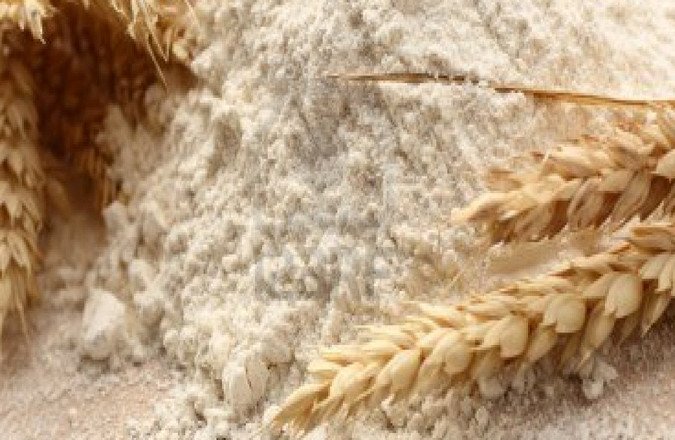
The soft wheat flour is one of the central raw materials of the Italian cereal supply chain and ‘Made in Italy’ food processing. Its technological and functional quality depends not only on the varietal characteristics of soft wheat (Triticum aestivum L.), but also on the degree of sifting, that is the progressive separation through sieves (bolters) of the different fractions obtained from the bran components after milling.
TheItalian milling industry, European leader with over 12 million tons of wheat processed annually (ITALMOPA, 2025), stands out for its ability to produce flours with consistent quality profiles and reproducible technological performances, essential features to enhance both industrial productions and excellent artisanal food craftsmanship
TheItalian milling art has evolved from stone milling – which better preserves the germ and lipid fraction, but reduces shelf-life due to the oxidation of unsaturated fats – to roller mills, introduced in the second half of the nineteenth century (Pomeranz, 2000). Thesifting, that is the mechanical separation by sieves (bolters) of floury fractions from bran components after milling, represents the key process to modulate the content of bran, ashes, and germ based on final uses.
Italian regulations classify soft wheat flours based on content in ash, parameter directly related to the degree of debranning and the presence of minerals concentrated in the peripheral layers of the grain kernel (Posner & Hibbs, 2005). Unlike what the improper use of the term 'refining' suggests, debranning is an exclusively physical-mechanical process, free of chemical treatments and regulated by precise regulatory parameters.
Soft wheat, cultivation in Italy and sustainability
The cultivation of soft wheat in Italy, which in 2025 involved about 498,000 hectares with a production of 2.7 million tons, +5% compared to 2024 (ITALMOPA, 2025), is mainly distributed in lowland and hill areas, where pedoclimatic conditions favor stable yields and technological quality: Po Valley (Emilia-Romagna, Lombardy, Veneto), Central Italy (Tuscany, Marche, Umbria), Southern and island Italy.
The national primary agricultural production covers on average 35-40% of the industrial demand of about 8 million tons, of which 6.5 million are destined for milling. The agronomic practices include crop rotations (frequently with maize, soy, or alfalfa), optimization of nitrogen fertilization and variety selection aimed at protein stability, with increasing attention to sustainable and integrated production systems, as well as the organic supply chain.
Milling production process
The production process of soft wheat flour includes:
- Cleaning and selection of the grain using sieves, magnetic separators and trieur;
- Conditioning (controlled humidification at 14-16% for 12-24 hours), aimed at facilitating the separation of the endosperm from the husks (Campbell et al., 2007);
- Milling progressive with smooth and grooved rollers (or stone milling for artisanal productions);
- sifting using plansichter with sieves of decreasing mesh, and classification of fractions;
- Mixing and standardization to ensure batch uniformity.
Modern milling technologies, equipped with automated inline NIR (Near Infrared Reflectance) control systems, allow precise control of quality parameters, ensuring consistent and traceable flours, in line with the requirements of international markets (Osborne, 2006).
Sifting and types of flour
Thesifting consists of mechanical separation of the milled fractions using progressive sieves (buratti), which allow obtaining flours with different contents of bran and mineral parts. The sifting rate expresses the amount of flour obtained relative to the milled grain: high values (>80%) indicate inclusion of peripheral fractions, while low values (72-75%) correspond to refined flours (Posner, 2009). Based on the degree of sifting and ash content on dry matter (DPR 187/2001), Italian regulations distinguish:
- type ’00’ flour: ashes ≤0.55%, high degree of sifting, low mineral content;
- type ‘0’ flour: ashes ≤0.65%, slightly lower sifting, greater structure;
- type ‘1’ flour: ashes ≤0.80%, significant presence of fine bran fractions;
- type ‘2’ flour: ashes ≤0.95%, flour with low degree of sifting;
- wholemeal flourAsh content 1.30-1.70%, obtained from the entire caryopsis, without separation of the fractions.
The degree of milling directly affects color (measured by Minolta colorimeter with decreasing L* values from type ’00’ to wholemeal), nutritional value, water absorption (variable from 50-55% to 65-70%) and rheological behavior of the dough (Cappelli et al., 2020).
Technological uses and applications
Soft wheat flours, differentiated by milling degree and strength (W), are used in:
- artisan and industrial bread making: preferably medium-high strength flours (W 220-350) with balanced P/L;
- dry and leavened pastry: typically weak flours (W
- fresh pasta and regional baked products: such as Romagna piadina, Modena tigelle, Ligurian focaccia;
- innovative applications: including functional flours enriched with fibers, vegetable proteins or dedicated blends for gluten-free products based on deglutinated starches.
The correct choice of flour allows optimization of structure, volume, crumb, and shelf life of the final product, with direct impact on sensory quality and preservation.
Composition
The soft wheat (Triticum aestivum L.) is a hexaploid species (2n=42 chromosomes) characterized by starchy caryopses, rich in starch and storage proteins. Its flour has a Composition variable depending on included fractions:
- starch (about 70–75%), main energy source and responsible for gelatinization between 55-85°C (Delcour & Hoseney, 2010);
- proteins (8–14%), including gluten fractions (gliadins and glutenins) which represent 80-85% of total proteins and determine the formation of the viscoelastic network (Shewry & Halford, 2002);
- lipids (1–2%), mainly concentrated in the germ, with structural and antioxidant function;
- minerals and fibers, increasing with decreasing milling degree, with dietary fiber content varying from 2-3% in type ’00’ to over 10% in wholemeal (Brouns et al., 2012).
The protein content and gluten quality determine the rheological properties of the flour, evaluated by alveographic (Chopin) and farinographic (Brabender) parameters.
Rheological parameters and performance
The technical evaluation of soft wheat flour is based on fundamental parameters for professional use:
- W (flour strength): espresso in 10⁻⁴ Joule, indica la capacità dell’impasto di resistere alla deformazione durante la lievitazione e cottura. Farine deboli (<180 W) sono adatte a biscotti e dolci secchi, mentre farine forti (>300 W) sono idonee a lievitazioni prolungate e grandi lievitati;
- P/L: ratio between tenacity (P, resistance to deformation) and extensibility (L, elongation capacity). Balanced values (0.5–0.7) are ideal for baking and pizza; high values (>0.8) indicate tough doughs, difficult to stretch;
- water absorption: related to protein content, starch state, and degree of milling, determined by Brabender farinograph;
- dough stability: expressed in minutes, an index of tolerance to mechanical processing and resistance to overmixing (Dobraszczyk & Morgenstern, 2003).
The correct balance of these parameters allows selecting the most suitable flour for each technological application, optimizing yield, structure, and sensory quality of the final product.
The Italian milling industry: economic data 2025
The Italian milling industry recorded an overall positive trend in soft wheat production volumes in 2024, despite a revenue contraction caused by the drop in raw material prices (ITALMOPA, 2025).
The production of soft wheat flours reached 4.303 million tons, with a 3.8% increase compared to 2023 (4.146 million tons). This result reflects differentiated market dynamics by distribution channel:
- The pizza sector confirmed a consolidated growth trend above 3.0%, driven by both fresh and frozen pizza;
- Theexport recorded an 11.9% increase, demonstrating the growing international appreciation for the quality and versatility of Italian flours;
- the production for fresh pasta recorded a slight increase of 2.0%;
- the sector is stable confectionery (-0.9%);
- instead in contraction the retail (-7.1%), in a normalization phase after the surge in purchases recorded during lockdown periods.
The revenue of the milling sector in soft wheat amounted to about 2.360 billion euros, with a decrease of 7.6% compared to 2.555 billion in 2023. This contraction is mainly attributable to the average reduction in flour prices (-6.1%) and milling by-products (-27.3%), resulting from the drop in raw material soft wheat prices (-10.5% compared to 2023), after the peaks recorded in 2022-2023.
These data confirm the structural solidity of the Italian milling sector, whose adaptability allows maintaining constant production levels and strengthening presence in foreign markets, representing a strategic link in the Italian agro-food supply chain.
Italian regulations
The production and marketing of soft wheat flour in Italy is mainly regulated by the DPR 9 February 2001, no. 187, which defines:
- the legal denominations of different soft wheat flours (types '00', '0', '1', '2' and wholemeal);
- the maximum ash content limits on dry matter;
- the commercial characteristics (e.g. maximum humidity 14.50%, ash 0.55% and minimum proteins 9%, on dry matter, for type '00') and quality aspects.
The national sector legislation complements the general consumer information discipline on food, established by Regulation (EU) No. 1169/2011.
Conclusions
Made in Italy soft wheat flour is the result of a balance between raw material quality, agronomic expertise and sifting technology. The Italian milling tradition – supported by a varietal heritage adapted to different territories which also includes minor productions of ancient grains, such as Maiorca, and advanced production systems – allows offering flours with high technological reliability and cultural value, key elements for enhancing Made in Italy in global markets.
The economic data for 2025 confirms the resilience of the sector, whose productive and commercial performance testifies to the excellence of an industry that continues to successfully oversee both the national and international markets.
Dario Dongo
Bibliography
- Borghi, B., Giordani, G., Corbellini, M., Vaccino, P., Guermandi, M., & Toderi, G. (1995). Influence of crop rotation, manure and fertilizers on bread making quality of wheat (Triticum aestivum L.). European Journal of Agronomy, 4(1), 37-45. https://doi.org/10.1016/S1161-0301(14)80015-8
- Brouns, F., Hemery, Y., Price, R., & Anson, N. M. (2012). Wheat aleurone: Separation, composition, health aspects, and potential food use. Critical Reviews in Food Science and Nutrition, 52(6), 553-568. https://doi.org/10.1080/10408398.2011.589540
- Campbell, G. M., Fang, C., & Muhamad, I. I. (2007). On predicting roller milling performance VI: Effect of kernel hardness and shape on the particle size distribution from first break milling of wheat. Food and Bioproducts Processing, 85(1), 7-23. https://doi.org/10.1205/fbp06005
- Cappelli, A., Oliva, N., & Cini, E. (2020). Stone milling versus roller milling: A systematic review of the effects on wheat flour quality, dough rheology, and bread characteristics. Trends in Food Science & Technology, 97, 147-155. https://doi.org/10.1016/j.tifs.2020.01.008
- Decree of the President of the Republic 9 February 2001, no. 187. Regulation for the revision of the legislation on the production and marketing of milled products and pasta, pursuant to article 50 of law 22 February 1994, no. 146. Official Gazette of the Italian Republic. https://www.normattiva.it/uri-res/N2Ls?urn:nir:presidente.repubblica:decreto:2001;187
- Delcour, J. A., & Hoseney, R. C. (2010). Principles of cereal science and technology (3rd ed.). AACC International. ISBN-13: 978-1-891127-63-2
- Dobraszczyk, B. J., & Morgenstern, M. P. (2003). Rheology and the breadmaking process. Journal of Cereal Science, 38(3), 229-245. https://doi.org/10.1016/S0733-5210(03)00059-6
- ITALMOPA (Association of Italian Milling Industry). (2025, June 13). Italmopa General Assembly: Milling industry, positive trend in production volumes in 2024 but contraction in turnover. Press release. https://www.italmopa.com/
- Osborne, B. G. (2006). Near-infrared spectroscopy in food analysis. In R. A. Meyers (Ed.), Encyclopedia of analytical chemistry (pp. 1-14). John Wiley & Sons. https://doi.org/10.1002/9780470027318.a1018
- Pomeranz, Y. (2000). Cereals and Cereal Products. In Ullmann’s Encyclopedia of Industrial Chemistry, (Ed.). https://doi.org/10.1002/14356007.a06_093
- Posner, E. S. (2009). Wheat flour milling. In K. Khan & P. R. Shewry (Eds.), Wheat: Chemistry and technology (4th ed., pp. 119-152). AACC International. https://doi.org/10.1016/B978-1-891127-55-7.50012-4
- Posner, E. S., & Hibbs, A. N. (2005). Wheat flour milling (2nd ed.). American Association of Cereal Chemists. ISBN-13: 978-1-891127-40-3
- Regulation (EU) No 1169/2011 of the European Parliament and of the Council of 25 October 2011 on the provision of food information to consumers. Latest consolidated text: 01/04/2025 http://data.europa.eu/eli/reg/2011/1169/2025-04-01

Dario Dongo, lawyer and journalist, PhD in international food law, founder of WIISE (FARE - GIFT – Food Times) and Égalité.


