

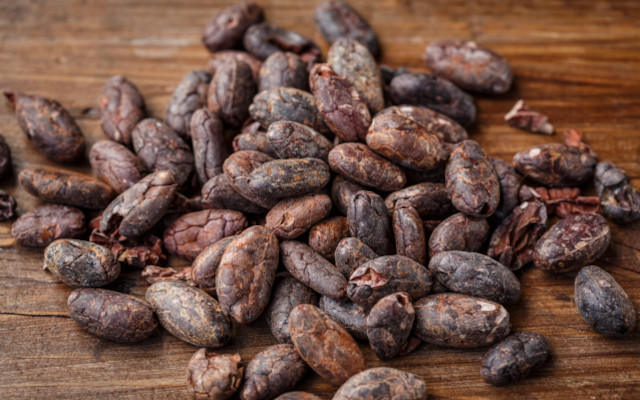
The cocoa (Theobroma cacao L.) is one of the most complex and studied food matrices in the field of functional nutrition. Its uniqueness lies in flavanols, bioactive compounds capable of interacting directly with human physiology. Unlike other polyphenols, cocoa flavanols enjoy specific regulatory recognition in the European Union and the USA, which binds their effectiveness to precise daily intake parameters and molecular characteristics.
Identity of cocoa: a treasure of polyphenols
Cocoa (Theobroma cacao L.) is a species native to America, whose fruits (pods) contain between 25-40 seeds used for the extraction of cocoa butter and for the production of cocoa powder, after roasting. Cocoa products, pursuant to the directive 2000/36/EC, include:
- cocoa: 'product obtained by transforming cleaned, shelled, and roasted cocoa seeds into powder and containing a minimum cocoa butter content of 20% (percentage calculated on the weight of the dry matter), and a maximum water content of 9%';
- lean cocoa: 'cocoa powder with a cocoa butter content less than 20% (percentage calculated on the weight of the dry matter)';
- Chocolate: 'the product obtained from cocoa products and sugars that has a minimum total dry cocoa matter content of 35%, of which not less than 18% cocoa butter and not less than 14% defatted cocoa solids'.
I flavanols (or flavan-3-ols) – a group of flavonoids belonging to the broader category of polyphenols – are compounds with antioxidant activity that perform, in plants, a natural protective function against environmental stresses and pathogens. Cocoa is one of the plant species that contains these polyphenols in greater amounts, and it is indeed the only food matrix subject to a health claim related to flavanols authorized in the European Union.
The EU claim: 200 mg of flavanols for arterial elasticity
The European Commission – following a specific scientific assessment by the European Food Safety Authority – has authorized the health claim: 'cocoa flavanols help maintain the elasticity of blood vessels, which contributes to normal blood flow'.
This claim can be included in commercial information relating to:
- ‘cocoa beverages (with cocoa powder) or dark chocolate that provide a daily intake of at least 200 mg of cocoa flavanols with a degree of polymerization between 1 and 10';
- ‘capsules or tablets containing cocoa extract with a high flavanol content that provide a daily intake of at least 200 mg of cocoa flavanols with a degree of polymerization between 1 and 10'.
‘Consumers should be informed that the beneficial effect is obtained with a daily intake of 200 mg of cocoa flavanols’ (European Commission, EU regulation 2015/539).
Cocoa extracts
The list of 'novel foods' in the European Union in turn lists the conditions of use of cocoa extracts:
- low-fat cocoa extract: usable only in food supplements at an amount of 730 mg per serving and about 1.2 g/day. It is necessary to indicate that it is not possible to consume more than 600 mg of cocoa flavanols per day;
- defatted cocoa powder extract: allowed in nutritional bars, milk-based beverages, and other foods, including dietary supplements, known to contain functional ingredients and generally intended for consumption by health-conscious adults.
Bioavailability: why the degree of polymerization matters
The degree of polymerization (Degree of Polymerisation, DP) indicates the number of monomers (units) that make up the polyphenol molecule. Scientific research (Jaramillo Flores, 2019) shows that flavanols with a low degree of polymerization (DP between 1 and 10) are more easily absorbed at the intestinal level, thus entering the bloodstream to exert biological effects in the body, such as antioxidant action and contribution to vascular function. To ensure this characteristic, an adequate titration of the raw materials used is essential.
In addition to the degree of polymerization, it is important to preserve products marketed from oxidation during the shelf life, so as to ensure the effectiveness of the indicated benefits (Hurst et al., 2009).
USA, FDA recognition for cocoa polyphenols
The Food and Drug Administration (FDA) of the United States has gone further, admitting the indication (Qualified Health Claim, QHC) according to which the intake of cocoa flavanols is associated not only with a physiological benefit but also with the ability to reduce the risk of cardiovascular diseases.
This indication does not apply to common cocoa powder, foods containing common cocoa powder, or other food products derived from cocoa beans, such as chocolate (FDA, 2023).
Metabolism and neuroprotection: beyond cardiac function
Recent scientific research suggests that the benefits of cocoa flavanols also extend to other biological functions useful for maintaining or improving an optimal health status (Martin et al., 2021), based on clinical studies conducted on humans.
Cardiovascular diseases
The main contribution is due to the ability to dilate blood vessels (from which the health claim authorized in the EU derives), observed in both healthy individuals and those at risk, such as smokers, obese, diabetics. Some positive effects have also been observed on the ability to increase elasticity and thus reduce the stiffness of arteries, as in the case of the study COcoa Supplement and Multivitamin Outcomes Study (COSMOS) (ClinicalTrials.gov, 2015).
A further contribution is due to the ability to reduce systolic blood pressure, regardless of the form of intake such as cocoa or dark chocolate. The best results were observed in patients with higher baseline blood pressure.
Positive results were found in relation to the improvement of HDL cholesterol (the so-called 'good cholesterol') and the general lowering of blood cholesterol levels. The results on the lipid profile, including LDL cholesterol (the so-called 'bad cholesterol') and triglycerides, are still controversial.
Obesity
Cocoa may exert anti-obesogenic effects through various mechanisms, such as modulation of lipid metabolism (reduction of lipogenesis and increase of lipolysis), reduction of adipogenesis (inhibition of differentiation and growth of adipocytes), attenuation of inflammatory response and oxidative stress, and reorganization of the microbiota.
Along with effects on body mass index and waist circumference, more scientific evidence is required. Nevertheless, several positive effects have been observed on marker of cardiovascular diseases.
The study Effects of COcoa Supplement in OBese Adolescent Subjects (COOBA) ClinicalTrials.gov, 2019) allowed a better understanding of the mechanisms related to cocoa flavanol intake in adolescents, and observed an appreciable reduction in body fat and related risks such as cardiovascular diseases, diabetes, and various inflammatory processes.
Diabetes
Short-term consumption of cocoa and cocoa-derived products by diabetic patients may have some beneficial effects on glycemic control and, to a greater extent, on factors involved in the risk of cardiovascular diseases.
The probable mechanisms appear to be related to both the proven beneficial effects of cocoa flavanols on vascular function and their ability to modulate key proteins involved in the insulin signaling pathway, inflammation, oxidative stress, and the microbiota.
A clinical study conducted on obese women, aimed at verifying the ability of cocoa flavanols to improve insulin function for glucose absorption, did not report significant differences. This highlights the need for further studies to confirm or reassess the observed findings (ClinicalTrials.gov, 2009; Simpson et al., 2023).
Cognitive functions
Data emerging from clinical studies conducted on humans appear to indicate that the consumption of cocoa and cocoa-based products could improve general cognitive functions and memory in both young and elderly individuals.
Two main mechanisms of action have been proposed to explain the potential beneficial effects of cocoa intake on these processes. The first involves the direct interaction of flavonoids with signaling pathways that promote neuronal function and brain connectivity. The second mechanism is related to cocoa's ability to improve cerebral blood flow, inducing changes in memory processing.
It is interesting to note that a third mechanism of action is emerging involving the gut-brain axis and the ability of the intestinal microbiota to improve the bioavailability of polyphenols.
Aging
Cocoa consumption appears to improve general cognitive functions and memory, thanks to its action in regulating cerebral blood flow and other cardiovascular parameters.
This can ultimately contribute to improving the quality of life of the elderly population through the consumption of flavanol-rich beverages, which are more easily consumed and assimilated by this subgroup of the population.
COSMOS-Web (ClinicalTrials.gov, 2016), an ancillary study of COSMOS, focused in more detail on evaluating the effects of cocoa flavanol administration in about 4,000 elderly subjects. Some primary observations concern improvements in verbal memory, accompanied by secondary results also related to reasoning abilities, dialogue, or spatial memory.
Other health effects
The chronic fatigue syndrome is a debilitating condition to which cocoa flavanols may contribute to remedy if taken at high concentrations and for prolonged periods. The mechanisms are still unclear and need to be explored. The same applies to the properties of improvement of vision, following acute administrations of cocoa (dark chocolate).
The intake of cocoa, especially the fibers, can help improve the state of intestinal eubiosis, and prevent various diseases, also thanks to the production of different microbial metabolites. The presence of high concentrations of flavanols in cocoa beverages has also yielded similar results.
Moderate consumption of cocoa appears to reduce symptoms of allergenicity and some forms of food intolerance. These observations require further verification to confirm these properties. On the skin, high and regular consumption of cocoa flavanols has resulted in greater photoprotection of the skin, maintaining healthy and structurally functional skin.

Preliminary conclusions
In conclusion, polyphenols, and specifically cacao flavanols, emerge as valuable tools in modern nutritional prevention. Research shows that the impact on blood vessels, metabolism, and cognitive functions is not random, but depends on the titration and stability of these molecules. To benefit from the described properties, it is essential to choose products or extracts that guarantee the supply of effective dosages of polyphenols (200-600 mg), thus ensuring a real added value for well-beingdaily.
Dario Dongo and Andrea Adelmo Della Penna
Bibliography
- ClinicalTrials.gov (2009, March) The Effects of Cocoa Flavanols on Insulin Resistance in an ‘At-risk’ Population. https://clinicaltrials.gov/study/NCT01201590
- ClinicalTrials.gov (2015, June) Cocoa Supplement and Multivitamin Outcomes Study (COSMOS). https://clinicaltrials.gov/study/NCT02422745
- ClinicalTrials.gov (2015, 15 December) Effects of Cocoa Supplement in Obese Adolescent Subjects (COOBA). https://clinicaltrials.gov/study/NCT04112251
- ClinicalTrials.gov (2016, 26 August) Investigating the Effects of Cocoa Flavanol on Cognition Assessed Online (COSMOS-Web). https://clinicaltrials.gov/study/NCT04582617
- Commission Regulation (EU) 2015/539 of 31 March 2015 authorising a health claim made on foods, other than those referring to the reduction of disease risk and to children’s development and health and amending Regulation (EU) No 432/2012. http://data.europa.eu/eli/reg/2015/539/oj
- FDA (2023, 3 February) Announces Qualified Health Claim for Cocoa Flavanols in High Flavanol Cocoa Powder and Reduced Risk of Cardiovascular Disease. FDA – Food and Drug Administration. https://www.fda.gov/food/hfp-constituent-updates/fda-announces-qualified-health-claim-cocoa-flavanols-high-flavanol-cocoa-powder-and-reduced-risk
- Hurst W.J., et al. (2009). Stability of Cocoa Antioxidants and Flavan-3-ols over Time. Journal of Agricultural and Food Chemistry, 57(20), 9547-9550. https://doi.org/10.1021/jf901457s
- Jaramillo Flores M.E. (2019). Cocoa Flavanols: Natural Agents with Attenuating Effects on Metabolic Syndrome Risk Factors. Nutrients, 11(4), 751. https://doi.org/10.3390/nu11040751
- Martin M.A., & Ramos S. (2021). Impact of cocoa flavanols on human health. Food and Chemical Toxicology, 151, 112121. https://doi.org/10.1016/j.fct.2021.112121
- Simpson E.J., et al. (2023) Cocoa Flavanol Supplementation and the Effect on Insulin Resistance in Females Who Are Overweight or Obese: A Randomized, Placebo-Controlled Trial. Nutrients, 15(3), 565. https://doi.org/10.3390/nu15030565

Dario Dongo, lawyer and journalist, PhD in international food law, founder of WIISE (FARE - GIFT – Food Times) and Égalité.

Graduate in Food Technology and Biotechnology, qualified food technologist, follows the research and development area. With particular regard to European research projects (Horizon 2020, PRIMA) in which the FARE division of WIISE S.r.l. benefit company participates.


