

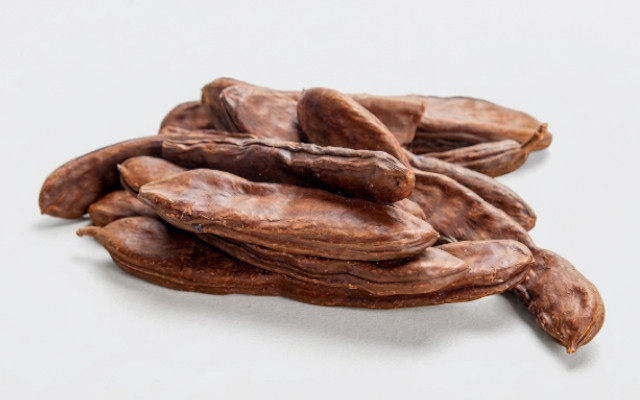
There carob it is the fruit of the carob tree (Ceratonia siliqua THE.). For centuries it served as fodder for livestock and as a food reserve in times of famine, so much so that in Sicily it earned the nickname 'poor man's chocolate'. Today the industry is interested for two reasons: carob seed flour (E 410) is a thickener widely used in ice cream and pastry making; the toasted pulp is instead proposed as alternative to cocoa, whose price remains unstable. Italy is among the main producers in the Mediterranean, with a supply chain concentrated almost entirely in Sicily.
Production and market
In Italy, according to ISTAT, the surface in production carob it is stable around 6 thousand hectares. In the five-year period 2019-2023 the collection fluctuated between 35.6 thousand and 37.6 thousand tonnes, with approximately 35,700 t in the last available year (Istat, 2024). Transformation operators estimate that the 90% of national production comes from from Sicily, with the province of Ragusa in the lead, and the remaining 10% from Puglia (AgroNotizie, 2025).
The carob tree alternates years of charging and discharging. 2024 was a slow year in Italy, after the abundant harvest of 2023. Carobs were paid to producers between 0.40 and 0.50 euros per kilo (400-500 €/t), a figure that growers consider barely sufficient (AgroNotizie, 2025). In the rest of the Mediterranean the cultivation has contracted: in the 21st century the carob area in the basin has reduced by 65%, despite industrial demand. The Iberian Peninsula covers approximately 41% of the area's production (Martins-Loução et al., 2024).
The comparison with cocoa explains the attention of the confectionery industry. In mid-October 2026 i future on the cocoa were quoted around 5,800 dollars (5.153 €/t), almost double compared to February. Worries about the next harvest in Côte d'Ivoire and Ghana weigh heavily (Trading Economics, 2026).
From siliques to carat
The name of the species, silique, is the Latin word with which carob also appears in Gospel. In the parable of the prodigal son, the young man, reduced to herding pigs, would have liked to feed himself with 'the carobs that the pigs ate' (Luke 15,16, CEI translation). In the same verse the Italian version of Giovanni Diodati wrote 'silique'. According to tradition, carobs were John the Baptist's food in the desert, hence the name of St. John's bread (Martins-Loução et al., 2024).
From Greek kerátion derives the carat, the unit of weight of precious stones. According to the current explanation, carob seeds were chosen as weights due to their extraordinary uniformity. Research conducted on 28 trees from a collection in Mallorca has also refuted this assumption. The variability of seed weight (coefficient of variation of 23%) was in line with the average of 63 plant species (25%). However, the same study showed that the human eye distinguishes weight differences of around 5%, the same variability as the carat standards in use before the metric system. It would therefore have been the manual selection of the seeds that made the 'carats' uniform, not their nature (Turnbull et al., 2006).
The plant and the harvest
The carob tree is a evergreen tree and dioecious of the family of Fabaceae. It resists at the drought and at the salinity and develops deep root systems (Gioxari et al., 2022). It is suitable for dry cultivation and for the recovery of marginal lands and reforestation programs (Martins-Loução et al., 2024).
The pod it is composed of approximately 90% pulp and 10% seeds (Gioxari et al., 2022). In Sicily the collection it generally takes place between August and October. In recent years, some operators have brought it forward to the end of July (AgroNotizie, 2025).
Nutritional profile
The food composition tables indicated by CREA - Food and Nutrition Research Center (2019) refer to carobs (code 008510, 100% edible part, 50 g portion) the nutritional values listed below.
| Average values per 100 g | Carob |
| Energy | 1058 kJ / 253 kcal |
| Fats | 0.7g |
| of which saturated fatty acids | not reported |
| Carbohydrates | 49.9g |
| of which sugars | 48.9g |
| Fibers | 23.1g |
| Proteins | 3.3g |
| Salt | not reported |
Fiber is mostly insoluble (19.07 g out of 23.1 g). Starch is almost absent (0.9 g), so the carbohydrates are almost all sugars. For this code, CREA does not report minerals or vitamins. It is therefore not possible to calculate the intake compared to the nutritional reference values set out in Annex XIII to Regulation (EU) no. 1169/2011.
A carob pulp flour with these values can bear the nutritional indication 'to high fiber content‘ (EC regulation 1924/2006, Annex). In pastry making, the sweetness of the fruit allows for the reduction of added sugars, although it maintains a significant sugar content.
Scientific research
Despite the high sugar content, carob pulp provides insoluble fiber, phenolic compounds and inositols. Among these there is in particular D-pinitol, to which effects on glucose metabolism are attributed (Gioxari et al., 2022). Literature reviews collect many in vitro and animal studies, while human trials are still limited (Gioxari et al., 2022; Ikram et al., 2023).
The most recent clinical studies move in this direction, with promising but limited preliminary results, and not yet evaluated by EFSA in view of the possible authorization of a specific health claim:
- in a randomized crossover study on 15 healthy men, a drink prepared with 30 g of carob powder from the Cretan cultivar Imera was tested. Compared to a drink with the same amount of sugars in the form of sucrose, it reduced blood sugar levels at 30 minutes (109.2 versus 120.3 mg/dL), with lower insulin levels (Amerikanou et al., 2025);
- a second work examined two commercial carob syrups, which showed a glycemic index of 56 and 60, compared to 100 for glucose. In the second part of the study, 72 healthy adults took 10 g of syrup or a sugary placebo per day for six weeks. Total cholesterol fell significantly in the treated group (−14.7 mg/dL) but also fell, to a lesser extent, in the control group (−9.6 mg/dL). The difference between the two groups therefore did not reach statistical significance (Planes-Muñoz et al., 2025). The authors themselves present the results as preliminary.
In the kitchen
The best known use is in confectionery. TO Palermo (Sicily), in the Ballarò district, the Terranova family has been producing the carob sweets. They are obtained by cooking sugar with the syrup obtained from ground carobs, according to the recipe developed by Antonio Terranova (Touring Club Italiano, 2022). TO Modica is produced carob, a tablet obtained from carob pulp (55%) with cocoa butter and without added sugars (Gambero Rosso, s.d.-a).
Pulp flour also enters savory dishes. The carob tagliatelle proposed by Gambero Rosso combine 25 g of carob powder with 250 g of flour Timilia, an ancient Sicilian durum wheat. The sauce recalls pasta with sardines: fresh and salted sardines, wild fennel, raisins, pine nuts, capers and extra virgin olive oil from Tonda Iblea (Gambero Rosso, s.d.-b).
Industrial uses and cocoa-free chocolate
The most valuable part of the fruit is the seed. From the ground endosperm we obtain the carob seed flour, classified as an additive with the code E 410. It is used as a thickener, stabilizer and gelling agent in ice creams, creams and baked goods.
Regulation (EU) 2026/196, in force since 18 February 2026, has revised its specifications and conditions of use in foods intended for infants and young children. The revision follows the EFSA opinion of 9 February 2023. Products placed on the market before 18 August 2026 may be sold while stocks last.
On the pulp bet instead Foreverland, startups Apulian founded in 2023. Produces Choruba (originally Freecao), an alternative ingredient to chocolate without cocoa intended for the confectionery industry, obtained from carob, pumpkin And chickpeas (The Next Web, 2026). In October 2024 the company closed a round seeds from 3.4 million euros (Foreverland, 2024). In March 2026 it raised another 6 million, for a total of 9.4 million. Kost Capital, Maia Ventures, CDP Venture Capital, the Linfa fund of Riello Investimenti SGR and Newtree Impact (CDP Venture Capital, 2026) participated.
The Putignano (Bari) plant was launched in October 2025 and is certified IFS Food and has a capacity of 500 tons per year. The company declares four agreements with European confectionery manufacturers and has launched an organic line (The Next Web, 2026).
Information for buyers
Buyer and consumers must first distinguish two different products:
- There carob flour it is obtained from toasted and ground pulp: it is brown, sweet, rich in fiber and can be used as an alternative to cocoa;
- There carob seed flour instead it is ivory white, almost tasteless, and is used in minimal doses as a thickener.
On the label it is advisable to check theorigin of the raw material and the absence of added sugars in pulp flours intended for direct consumption. Although carob is naturally gluten free, it is always advisable to check this condition on the label of products that contain it.
There organic certification adds the guarantee of compliance with the highest standards for the protection of ecosystems and biodiversity and should be encouraged precisely on a crop that is inherently resilient.
Conclusions
Italian carob production is stable at around 35 thousand tons and is concentrated in Sicily in the Iblei (provinces of Ragusa and Syracuse). Industrial demand ranges from thickeners to cocoa alternatives. The nutritional data confirm the high fiber and sugar content. Clinical research, although still limited, suggests possible favorable effects on glycemic response. The weak point of this promising supply chain remains the price paid to farmers, waiting for the Fairtrade Made in Italy.
Dario Dongo
Credit cover La Pira agricultural company of La Pira Corrado (Canicattini Bagni, Syracuse)
References
European Union regulatory sources
Commission Regulation (EU) 2026/196 of 28 January 2026 amending Regulation (EC) No 1333/2008 of the European Parliament and of the Council as regards the use of carrageenan (E 407), locust bean gum (E 410), guar gum (E 412), gum arabic (acacia gum) (E 414), xanthan gum (E 415), pectins (E 440) and starch sodium octenyl succinate (E 1450) and Commission Regulation (EU) No 231/2012 as regards specifications for locust bean gum (E 410), guar gum (E 412), gum arabic (acacia gum) (E 414), xanthan gum (E 415), pectins (E 440) and starch sodium octenyl succinate (E 1450). OJ L, 2026/196, 29.1.2026. http://data.europa.eu/eli/reg/2026/196/oj
Regulation (EC) No 1924/2006 of the European Parliament and of the Council of 20 December 2006 on nutrition and health claims made on foods. Consolidated text: 12/13/2014. http://data.europa.eu/eli/reg/2006/1924/2014-12-13
Regulation (EU) No 1169/2011 of the European Parliament and of the Council of 25 October 2011 on the provision of food information to consumers. Consolidated text: 04/01/2025. http://data.europa.eu/eli/reg/2011/1169/2025-04-01
Scientific studies
Amerikanou, C., Kleftaki, S.-A., Koutoulogenis, K., Tsiaka, T., Sigala, D., Tzavara, C., Zoumpoulakis, P., & Kaliora, A. C. (2025). Imera carob cultivar: Clinical glycemic effects and phytochemical profile. Food Chemistry, 496(Pt 2), 146823. https://doi.org/10.1016/j.foodchem.2025.146823
Gioxari, A., Amerikanou, C., Nestoridi, I., Gourgari, E., Pratsinis, H., Kalogeropoulos, N., Andrikopoulos, N. K., & Kaliora, A. C. (2022). Carob: A sustainable opportunity for metabolic health. Foods, 11(14), 2154. https://doi.org/10.3390/foods11142154
Ikram, A., Khalid, W., Zafar, K. U. W., Ali, A., Afzal, M. F., Aziz, A., Faiz ul Rasool, I., Al-Farga, A., Aqlan, F., & Koraqi, H. (2023). Nutritional, biochemical, and clinical applications of carob: A review. Food Science & Nutrition, 11(7), 3641–3654. https://doi.org/10.1002/fsn3.3367
Martins-Loução, M. A., Correia, P. J., & Romano, A. (2024). Carob: A Mediterranean resource for the future. Plants, 13(9), 1188. https://doi.org/10.3390/plants13091188
Planes-Muñoz, D., Rosell, M. de los Á., Frontela-Saseta, C., & López-Nicolás, R. (2025). Evaluation of commercial carob syrups (Ceratonia siliqua L.) in randomized controlled trials: Effects on lipid, glycemic, and anthropometric parameters. Foods, 14(21), 3676. https://doi.org/10.3390/foods14213676
Turnbull, L. A., Santamaria, L., Martorell, T., Rallo, J., & Hector, A. (2006). Seed size variability: From carob to carats. Biology Letters, 2(3), 397–400. https://doi.org/10.1098/rsbl.2006.0476
Institutional and statistical sources
CREA — Food and Nutrition Research Center. (2019). Food composition tables: Carob (code 008510). https://www.alimentinutrizione.it/tabelle-nutrizionali/008510
Istat. (2024). Italian statistical yearbook 2024, chapter 13 Agriculture, table 13.2. https://www.istat.it/storage/ASI/2024/capitoli/C13.pdf
Biblical texts
Italian Episcopal Conference. The Holy Bible, Gospel according to Luke, 15. https://www.vatican.va/archive/ITA0001/_PVB.HTM
Diodati, G. The Holy Bible (ed. 1885), Luke 15. https://ebible.org/study/content/texts/ita1885/LK15.html
Press and industry sources
AgroNews. (2025, February 5). Carob and seed flour: 2024 production amidst climate challenges and supply chain problems. https://agronotizie.imagelinenetwork.com/agricoltura-economia-politica/2025/02/05/carrube-e-farina-di-semi-formazione-2024-tra-sfide-climatiche-e-problemi-di-filiera/86645
CDP Venture Capital. (2026, March 24). Foreverland raises €6M to accelerate international expansion and scale Choruba® commercial growth. https://www.cdpventurecapital.it/en/news.page?contentId=COM52258
Foreverland. (2024, October 1). Foreverland closes a 3.4 million round to revolutionize the world of carob chocolate [press release]. https://bebeez.it/wp-content/uploads/2024/10/5.-Release-Round-Foreverland-ITA-1.4.pdf
Red Shrimp. (s.d.-a). The history of Ciokarrua's Carrubato di Sicilia, which rediscovers the 'chocolate of the poor'. https://www.gamberorosso.it/notizie/storie/la-storia-del-carrubato-di-sicilia-di-ciokarrua-che-riscopre-il-cioccolato-dei-poveri
Red Shrimp. (s.d.-b). carob tagliatelle. https://www.gamberorosso.it/ricette/scheda-ricetta/tagliatelle-al-carrubo/
The Next Web. (2026, March 24). Foreverland raises €6M to scale its cocoa-free chocolate ingredient across Europe. https://thenextweb.com/news/foreverland-6m-choruba-cocoa-free-chocolate
Italian Touring Club. (2022). Palermo, visit to the Terranova carob sweets factory. https://www.touringclub.it/eventi/palermo-visita-alla-fabbrica-di-caramelle-di-carruba-terranova
Trading Economics. (2026, October 13). Cocoa futures at 1-month high. https://tradingeconomics.com/commodity/cocoa/news/591579

Dario Dongo, lawyer and journalist, PhD in international food law, founder of WIISE (FARE - GIFT – Food Times) and Égalité.


