

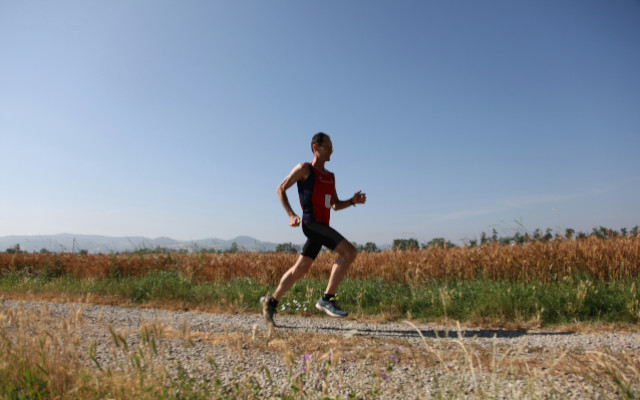
Electrolyte drinks intended for athletes are the most studied and best defined segment, from a legal standpoint, of all specialized nutrition. Available evidence supports a concrete benefit — replenishment of real losses, maintenance of endurance performance, water retention superior to water — and European food law has recognized part of this, authorizing health claims with precise and verifiable conditions of use.
Summer 2026 adds a second level of reading. The heat waves affecting Italy have shifted the topic of electrolyte hydration from the field of sports performance to that of public health and workplace safety. This article reconstructs the market numbers, the origins of the category, the available evidence on athletes and heat stress situations, and the exact scope of authorized health claims in the European Union.
Evolution of consumption and sales channels
Fortune Business Insights evaluates the global market of electrolyte beverages 39.93 billion dollars in the 2025, with a projection of 43.05 billion in 2026 and 82.12 billion in 2034 (CAGR 8.41%), assigning North America 41.34% and Europe 7.47 billion in 2025. Grand View Research instead estimates the market of sport drink, reporting 38.42 billion dollars in the 2023 with a projection of 69.23 billion by 2030 (CAGR 8.9%).
In Italy, according to Circana surveys for ASSOBIBE, in 2025 the non-alcoholic beverage sector lost 1.5% in volume — about 41 million liters — with a 1% growth in value, substantially aligned with inflation. Within this aggregate, sales of isotonic beverages have recorded -7,5% across all channels, those of energy drinks an 11.3% growth.
The double-digit global projections and the negative Italian data reflect two different markets. Growth is concentrated in powders and ‘hydration’ formulations sold online and in pharmacies, while the classic shelf isotonic — the one recorded by Circana — loses ground. The value is shifting away from the traditional channel, towards products that have a different communication space than that of the historic sport drink.
Origin of sports drinks and convergence with clinical practice
The category was born at 1965 the University of Florida, where nephrologist James Robert Cade and his group — prompted, according to the reconstruction of the museum dedicated to him, by a question from a former champion of American football on why players did not urinate during games — they measured the fluids lost by athletes and developed a solution of salts and sugars. The product was used for the first time in a Gators game in October 1965 (Cade Museum for Creativity and Invention, n.d.; University of Florida, n.d.).
It is worth remembering that in the same decade, and on a parallel track, the clinical case of the sodium-glucose cotransport. In the 1968 David Nalin, Richard Cash and colleagues publish in The Lancet the results of a clinical trial Conducted in Dhaka on adult patients affected by cholera: an oral solution of glucose and salts was able to maintain hydroelectrolytic balance, drastically reducing the need for intravenous therapy (Nalin et al., 1968). Fifty years later, the same authors reconstructed the story and its impact on infant mortality (Nalin & Cash, 2018). TheWHO adopted a unique formulation in the 1970s and in 2004, with UNICEF, recommends the reduced osmolarity oral rehydration solution: 245 mOsm/l, sodium 75 mmol/l, glucose 75 mmol/l, potassium 20 mmol/l, trisodium citrate 10 mmol/l (World Health Organization & UNICEF, 2004).
The two derivations share the same physiological mechanism but not the same legal fate: the oral rehydration solution remains a product with a fixed composition, the sports drink a food with free composition, whose communication space depends entirely on compliance with the conditions of use of health claims.
Hypotonic, isotonic, hypertonic: the role of carbohydrates
The classification by tonicity compares the osmolality of the drink — i.e., the amount of osmotically active particles present in a solution, expressed in osmoles per kilogram of solvent (Osm/kg) — with that of blood plasma, about 290 mOsm/kg of water:
- the drinks hypotonic are below this value and contain less than 4% carbohydrates. They therefore favor the speed of gastric emptying and water absorption;
- the isotonic are around the plasma value, with carbohydrates between 4 and 8%, and represent the classic compromise between rehydration and energy supply;
- the hypertonic exceed the plasma value, with over 8-10% carbohydrates. They therefore slow gastric emptying and transiently draw water into the intestinal lumen, which is why they are not recommended during exertion, while they are used in recovery, when the goal is to replenish muscle glycogen.
Il dato tecnico che orienta la formulazione è che l’osmolalità dipende dal numero di particelle disciolte, non dalla loro massa. Sessanta grammi per litro di glucosio, di peso molecolare 180, valgono circa 333 mOsm/kg; la stessa quantità di saccarosio, di peso molecolare 342, ne vale circa 175; la stessa quantità di maltodestrine appena qualche decina, perché ogni molecola di polimero conta come una singola particella pur trasportando numerosi residui di glucosio. Il sodio incide molto meno: 20-50 mmol/l di cloruro di sodio, che si dissocia in due ioni, aggiungono tra 40 e 100 mOsm/kg.
It follows that the glucose polymers are the leverage that allows simultaneously meeting the two cumulative conditions of the claim authorized in the EU — from 80 to 350 kcal/l from carbohydrates and osmolality between 200 and 330 mOsm/kg — which a glucose-only solution at the same energy concentration would not meet. Regulation 432/2012 explicitly mentions them, alongside glucose and sucrose, among the permitted high glycemic response carbohydrates.
Two clarifications apply when checking the label. Osmolality e osmolarity are not synonyms: the first is expressed per kilogram of water and is the parameter adopted by the European claim, the second per liter of solution and is the one referenced in the 2009 ministerial circular.
Scientific evidence on performance and water retention
The basic physiological mechanism is established: enterocytes absorb sodium and glucose coupled through the SGLT1 cotransporter, generating an osmotic gradient that promotes water reabsorption through the intestinal epithelium.
On the level of sports performance, the most updated synthesis is the systematic review with meta-analysis by Bravo-Sánchez and colleagues, published in March 2026 on twenty-six studies. The authors report, for carbohydrate and electrolyte solutions compared to placebo, a significant increase in:
- time to exhaustion (standardized mean difference 0.60; 95% CI 0.17-1.02; p = 0.006);
- blood glucose during exercise (SMD 0.82; p < 0.001);
- blood sodium level (concentration of sodium in blood. 95% CI 0.07-0.36; p = 0.004).
A practical takeaway also emerges: athletes consuming the solution maintained higher heart rates without reporting increased perceived exertion, suggesting the ability to sustain higher absolute intensity at equal perceived fatigue. The certainty of evidence according to the GRADE system was high specifically for blood mineral concentrations (Bravo-Sánchez et al., 2026).
The same authors are honest about the limitations: the overall effect on all performance measures does not reach significance, and the completion time of a time trial does not improve. The most plausible explanation is that dosage: the included studies administered carbohydrate amounts (about 20-30 g/hour) much lower than current recommendations for theendurance, which indicate 60-90 g/hour and, in disciplines such as road cycling, up to 120 g/hour subject to adaptation. The meta-analysis with meta-regression by Ramos-Campo and colleagues confirms the ergogenic (physical performance) effect of acute carbohydrate intake on endurance performance (Ramos-Campo et al., 2024).
On the side of water retention The picture is in turn clear. The randomized study that introduced the beverage hydration index (BHI), measuring diuresis in the two hours following ingestion of thirteen beverages in euhydrated subjects (i.e., in normal hydration conditions) and using water as a reference, had shown higher retention for the oral rehydration solution and for milk, while the commercial sports drink did not differ significantly (Maughan et al., 2016). Millard-Stafford and colleagues then broke down thecontribution of the individual components on nineteen healthy adults: the formulation with carbohydrates and electrolytes recorded a BHI higher than water at 120 minutes (1.15 ± 0.17; p = 0.007), and — a more interesting fact — electrolytes alone explain the major share of the effect, with over 12% net difference compared to water (Millard-Stafford et al., 2021). In other words: it is not sugar that makes the difference in retention, but sodium.
Consistent is the result of Choi and colleagues, who on ten young adults compared water and electrolyte drink before and after exercise to exhaustion, finding greater ability to retain body water, better exercise capacity, and less post-exercise fatigue, the latter assessed by lactacidemia (Choi et al., 2021). The small sample size calls for caution, but the trend converges with the literature.
On cramps The evidence is also interesting. Two crossover studies by the same group measured cramp susceptibility through the threshold frequency of electrical stimulation of the calf muscle, after downhill running at 35-36 °C with 1.5-2% loss of body weight. The intake of only spring water lowered the threshold — making the muscle more susceptible — while the oral rehydration solution raised it (Lau et al., 2019; Lau et al., 2021). The authors themselves note that the effect might depend more on glucose than onelectrolytes, and declare funding from the manufacturer of the solution used. The reference review remains cautious: the etiology of exercise-associated cramp is likely multifactorial, with a neuromuscular component independent of the hydroelectrolytic state (Maughan & Shirreffs, 2019).
Salt supplementation under heat stress conditions
In conditions of heat stress, the benefit of electrolytes appears more pronounced. The review by Périard, Eijsvogels, and Daanen on exercise physiology under heat stress documents how a dehydration greater than 2% of body mass is associated with decreased cardiac output, impaired thermoregulatory capacity, and increased perceived fatigue (Périard et al., 2021).
The most recent contribution is from Convit and colleagues (2025) on twelve trained female cyclists, using a double-blind crossover design. It is the first study to measure female self-paced performance under heat stress:
- participants consumed, two hours before exercise, 30 ml per kg of lean body mass of a liquid with 7.5 g/l of sodium chloride or placebo, before 75 minutes of cycling at constant intensity and a 200 kJ time trial at 34 °C and 60% relative humidity;
- with sodiumthe proportion of ingested fluid actually retained increased to 44.4% compared to 7.6% with placebo, sweat rate was lower, and the time to complete the test was reduced by 1.55 minutes, approximately 5%, with an average power output 10 W higher and without increased heat or cardiovascular stress nor gastrointestinal symptoms during exercise (Convit et al., 2025).
A noteworthy observation for formulators. The narrative review by Pérez-Castillo and colleagues — who are mostly affiliated with a company in the sector, a circumstance they declare — argues that precisely in conditions where hydroelectrolytic balance is most compromised, such as exercise in the heat, the classic isotonic sports drink may not be the optimal formulation: compositions hypotonic with moderate to high electrolytes (≥45 mmol/l, predominantly sodium) and carbohydrates below 6% would accelerate intestinal water absorption and improve retention during recovery (Pérez-Castillo et al., 2024). This is exactly the profile of many ‘hydration’ powders today growing — which, as will be seen, fall outside the perimeter of health claim authorized for carbohydrate and electrolyte solutions.
Protection of outdoor workers and public health indications
Attention to heat stress and hydration has extended in recent years from sports to workplace safety. In the United States, the ANSI/ASSP A10.50-2024 standard on management of heat stress on construction sites provides that workers engaged in strenuous activities for more than two hours in environments at 80°F (about 27°C) or higher be provided with free electrolyte replenishment drinks, advising against those containing caffeine and/or high sugar content. It should be noted, for transparency, that a manager from a hydration beverage company was among the drafting group participants.
In Italy the situation is different and moves along another axis:
- the Ministry of Labor has enacted by decree on July 9, 2025, the Framework protocol on occupational risks related to climate emergencies;
- the platform Worklimate, developed by INAIL and CNR, provides heat risk forecasts by area and job role, on which regional ordinances for suspension of outdoor activities in peak hours are based;
- the Ministry of Health distributes daily bulletins on four risk levels (circular May 21, 2026, no. 3873) and published, in July 2026, the new Guidelines on heat waves and air pollution, which update the 2013 and 2019 editions incorporating WHO Europe recommendations and extend the notion of vulnerability to outdoor workers and socially disadvantaged groups (Ministry of Health, 2026).
From these institutional sources comes a sober recommendation: for the general population, the advice remains to drink water regularly and prioritize fruits and vegetables. Salt replenishment may be useful when there is a loss to compensate related to profuse sweating, prolonged exposure, or strenuous physical activity. Those taking diuretics or following a low-sodium diet for hypertension should in any case consult a doctor before introducing high-sodium drinks.
European regulatory framework for health claims
Carbohydrate and electrolyte solutions
Regulation (EU) 432/2012 — containing the updated list of health claim authorized in the European Union — indicates two authorized claims for Carbohydrate and electrolyte solutions, based on a specific EFSA opinion (EFSA NDA Panel, 2011a). It is indeed possible to state that they:
- ‘contribute to the maintenance of endurance performance during prolonged physical exercise‘;
- ‘promote water absorption during physical exercise‘.
the conditions of use of these health claims are cumulative. The beverage must:
- provide 80-350 kcal/l from carbohydrates, with at least 75% of the energy derived from carbohydrates with high glycemic response (glucose, glucose polymers, sucrose);
- contain between 20 mmol/l (460 mg/l) and 50 mmol/l (1,150 mg/l) of sodium;
- have Osmolality between 200 and 330 mOsm/kg of water.
Carbohydrates and post-exercise recovery
Regulation (EU) 2015/7 then added a claim dedicated to recovery:
- i carbohydrates ‘contribute to the restoration of normal muscle function (contraction) after very intense and/or long-lasting physical exercise leading to muscle fatigue and depletion of glycogen stores in skeletal muscle‘;
- this effect relates to a total intake of 4 g per kg of body weight within the first four hours and in any case no later than six; the claim is to be used only on foods intended for adults who have performed that type of exercise.
Micronutrients
Furthermore, subject to the compositional requirements set out below, some health claim dedicated to minerals and vitamins:
- the potassium contributes to normal muscle function and normal functioning of the nervous system;
- the magnesium contributes to electrolyte balance, normal muscle function, normal energy metabolism, normal functioning of the nervous system, and reduction of tiredness and fatigue;
- the calcium contributes to normal muscle function and normal neurotransmission. Vitamin C contributes to normal energy metabolism and reduction of tiredness and fatigue.
These health claim can be used in commercial information related to foods that provide a significant amount of individual micronutrients (‘source of…), equal to at least 7.5% of the reference nutrient value (NRV) per 100 ml (or 15% of the NRV for solid foods). For powders to be reconstituted the condition must be verified on the ready-to-consume product according to the manufacturer's instructions (Reg. EU 1924/2006, Article 5, paragraph 3).
Non-authorized claims
Sodium and muscle function. The EFSA NDA panel had confirmed the existence of a cause-effect relationship between sodium intake and the maintenance of normal muscle function (ID 359; EFSA NDA Panel, 2011b). However, the Commission denied authorization of the related health claim, motivating in the recitals of Regulation (EU) 432/2012 that the use of that claim would convey a contradictory message, encouraging the consumption of a substance which European, national, and international authorities recommend reducing (in violation of Article 3, second paragraph, letter ‘a’ of Reg. EU 1924/2006).
Claims about water, not transferable to beverages. Regulation (EU) 432/2012 authorizes claims stating that water ‘contributes to the maintenance of normal physical and cognitive functions‘ and ‘to the maintenance of the normal regulation of body temperature‘, provided that the consumer is informed that the effect is obtained with the intake of at least 2 liters of water per day from all sourcesThese are particularly useful indications in the context of heat waves, but the restriction of use reserves them to waters compliant with directives 2009/54/EC on natural mineral waters and 98/83/EC on waters intended for human consumption. A flavored drink with electrolytes cannot bear them.
Conclusions
The scientific evidence collected on the benefits of sports drinks with electrolytes is convergent. The 2026 meta-analysis documents a significant lengthening of exhaustion time and the maintenance of blood glucose and sodium levels; the research on BHI attributes the largest share of the water retention advantage to electrolytes compared to water; the 2025 study on cyclists in a hot-humid environment records an improvement in performance of about 5% with sodium preloading alone. The benefits are limited to those who haveactual losses to be replenished, but real and measured.
European law precisely recognizes part of it: two indications for carbohydrate and electrolyte solutions, one for post-exercise recovery, and the entire set of claims on potassium, magnesium, calcium, and vitamins present in significant amounts. Our team of DO (Food and Agriculture Requirements) is available to operators and their associations, as well as research consortia intending to prepare new authorization requests for the use of specific health claim on this type of products, to promote consumer information on their respective benefits.
Dario Dongo
Credit cover Massimo Sartirana on Unsplash
References
Scientific studies
Bravo-Sánchez, A., Ramírez-delaCruz, M., Sánchez-Infante, J., Abián, P., & Abián-Vicén, J. (2026). Carbohydrate and electrolyte supplementation strategies to enhance sports performance: A systematic review and meta-analysis. Applied Sciences, 16(6), 2967. https://doi.org/10.3390/app16062967
Choi, D.-H., Cho, J.-Y., Koo, J.-H., & Kim, T.-K. (2021). Effects of electrolyte supplements on body water homeostasis and exercise performance during exhaustive exercise. Applied Sciences, 11(19), 9093. https://doi.org/10.3390/app11199093
Convit, L., Orellana, L., Périard, J. D., Carr, A. J., Warmington, S., Beaugeois, M., Abraham, A., & Snipe, R. M. J. (2025). Sodium hyperhydration improves performance with no change in thermal and cardiovascular strain in female cyclists exercising in the heat across the menstrual cycle. International Journal of Sport Nutrition and Exercise Metabolism, 35(2), 99. https://doi.org/10.1123/ijsnem.2024-0125
Evans, G. H., James, L. J., Shirreffs, S. M., & Maughan, R. J. (2017). Optimizing the restoration and maintenance of fluid balance after exercise-induced dehydration. Journal of Applied Physiology, 122(4), 945–951. https://doi.org/10.1152/japplphysiol.00745.2016
Lau, W. Y., Kato, H., & Nosaka, K. (2019). Water intake after dehydration makes muscles more susceptible to cramp but electrolytes reverse that effect. BMJ Open Sport & Exercise Medicine, 5(1), e000478. https://doi.org/10.1136/bmjsem-2018-000478
Lau, W. Y., Kato, H., & Nosaka, K. (2021). Effect of oral rehydration solution versus spring water intake during exercise in the heat on muscle cramp susceptibility of young men. Journal of the International Society of Sports Nutrition, 18, 22. https://doi.org/10.1186/s12970-021-00414-8
Maughan, R. J., & Shirreffs, S. M. (2019). Muscle cramping during exercise: Causes, solutions, and questions remaining. Sports Medicine, 49(Suppl. 1), 115–124. https://doi.org/10.1007/s40279-019-01162-1
Maughan, R. J., Watson, P., Cordery, P. A. A., Walsh, N. P., Oliver, S. J., Dolci, A., Rodriguez-Sanchez, N., & Galloway, S. D. R. (2016). A randomized trial to assess the potential of different beverages to affect hydration status: Development of a beverage hydration index. The American Journal of Clinical Nutrition, 103(3), 717–723. https://doi.org/10.3945/ajcn.115.114769
Millard-Stafford, M., Snow, T. K., Jones, M. L., & Suh, H. (2021). The beverage hydration index: Influence of electrolytes, carbohydrate and protein. Nutrients, 13(9), 2933. https://doi.org/10.3390/nu13092933
Nalin, D. R., & Cash, R. A. (2018). 50 years of oral rehydration therapy: The solution is still simple. The Lancet, 392(10147), 536–538. https://pubmed.ncbi.nlm.nih.gov/30152375/
Nalin, D. R., Cash, R. A., Islam, R., Molla, M., & Phillips, R. A. (1968). Oral maintenance therapy for cholera in adults. The Lancet, 292(7564), 370–373. https://doi.org/10.1016/S0140-6736(68)90591-6
Périard, J. D., Eijsvogels, T. M. H., & Daanen, H. A. M. (2021). Exercise under heat stress: Thermoregulation, hydration, performance implications, and mitigation strategies. Physiological Reviews, 101, 1873–1979.
Pérez-Castillo, Í. M., Williams, J. A., López-Chicharro, J., Mihic, N., Rueda, R., Bouzamondo, H., & Horswill, C. A. (2024). Compositional aspects of beverages designed to promote hydration before, during, and after exercise: Concepts revisited. Nutrients, 16(1), 17. https://doi.org/10.3390/nu16010017
Ramos-Campo, D. J., Clemente-Suárez, V. J., Cupeiro, R., Benítez-Muñoz, J. A., Andreu Caravaca, L., & Rubio-Arias, J. Á. (2024). The ergogenic effects of acute carbohydrate feeding on endurance performance: A systematic review, meta-analysis and meta-regression. Critical Reviews in Food Science and Nutrition, 64(30), 11196–11205. https://doi.org/10.1080/10408398.2023.2233633
EU regulations and institutional publications
Commission Regulation (EU) No 432/2012 of 16 May 2012 establishing a list of permitted health claims made on foods, other than those referring to the reduction of disease risk and to children’s development and health. Consolidated text: 20/08/2025. http://data.europa.eu/eli/reg/2012/432/2025-08-20
Commission Regulation (EU) 2015/7 of 6 January 2015 authorising a health claim made on foods, other than those referring to the reduction of disease risk and to children’s development and health and amending Regulation (EU) No 432/2012. GUUE L 3, 7.1.2015. http://data.europa.eu/eli/reg/2015/7/oj
EFSA Panel on Dietetic Products, Nutrition and Allergies (NDA). (2011a). Scientific Opinion on the substantiation of health claims related to carbohydrate-electrolyte solutions and reduction in rated perceived exertion/effort during exercise, enhancement of water absorption during exercise, and maintenance of endurance performance pursuant to Article 13(1) of Regulation (EC) No 1924/2006. EFSA Journal, 9(6), 2211. https://doi.org/10.2903/j.efsa.2011.2211
EFSA Panel on Dietetic Products, Nutrition and Allergies (NDA). (2011b). Scientific Opinion on the substantiation of health claims related to sodium and maintenance of normal muscle function (ID 359) pursuant to Article 13(1) of Regulation (EC) No 1924/2006. EFSA Journal, 9(6), 2260. https://doi.org/10.2903/j.efsa.2011.2260
EFSA Panel on Dietetic Products, Nutrition and Allergies (NDA). (2011c). Scientific Opinion on the substantiation of health claims related to water and maintenance of normal physical and cognitive functions (ID 1102, 1209, 1294, 1331), maintenance of normal thermoregulation (ID 1208) and ‘basic requirement of all living things’ (ID 1207) pursuant to Article 13(1) of Regulation (EC) No 1924/2006. EFSA Journal, 9(4), 2075. https://doi.org/10.2903/j.efsa.2011.2075
European Commission. (2016). Report from the Commission to the European Parliament and the Council on food intended for sportspeople (COM(2016) 402 final). https://eur-lex.europa.eu/legal-content/EN/TXT/HTML/?uri=CELEX:52016DC0402
European Commission. EU Register on nutrition and health claims made on foods. https://ec.europa.eu/food/food-feed-portal/backend/claims/files/euregister.pdf
Food Safety Authority of Ireland. (2021). Information on nutrition and health claims. https://www.fsai.ie/getmedia/d7e3c1bd-546c-4532-afec-ededab679c0f/10163_fsai_food_health_claims_agr_accessible_1.pdf
Ministry of Labour, Health and Social Policies. (2009). Circular 5 November 2009. Demarcation lines between food supplements, products intended for particular nutrition and foods fortified with vitamins and minerals, annex 1.
Ministry of Labour and Social Policies. (2025). Decree 9 July 2025, transposing the framework protocol for the adoption of measures to contain occupational risks related to climate emergencies in the workplace.
Ministry of Health. (2026a). Circular 21 May 2026, no. 3873. National operational plan for the prevention of the effects of heat waves.
Ministry of Health. (2026b). Guidelines for prevention. Heat waves and air pollution. https://www.salute.gov.it/new/sites/default/files/2026-07/LG%20CALDO%20INQUINAMENTO%20AGG%202026_0.pdf
Regulation (EC) No 1924/2006 of the European Parliament and of the Council of 20 December 2006 on nutrition and health claims made on foods. Consolidated text: 13/12/2014. http://data.europa.eu/eli/reg/2006/1924/2014-12-13
Regulation (EU) No 1169/2011 of the European Parliament and of the Council of 25 October 2011 on the provision of food information to consumers. Consolidated text: 01/04/2025. http://data.europa.eu/eli/reg/2011/1169/2025-04-01
Regulation (EU) No 609/2013 of the European Parliament and of the Council of 12 June 2013 on food intended for infants and young children, food for special medical purposes, and total diet replacement for weight control. Consolidated text: 01/09/2025. http://data.europa.eu/eli/reg/2013/609/2025-09-01
World Health Organization & United Nations Children’s Fund. (2004). Clinical management of acute diarrhoea: WHO/UNICEF joint statement. https://data.unicef.org/wp-content/uploads/2021/07/WHO-UNICEF_JOint-Statement_clinical-management-of-acurte-diarrhoea.pdf
Grey literature
American National Standards Institute & American Society of Safety Professionals. (2024). ANSI/ASSP A10.50-2024. Standard for heat stress management in construction and demolition operations. https://webstore.ansi.org/standards/asse/ansiasspa10502024
ASSOBIBE. (2026, 5 March). Soft drinks: difficult hold on the market in 2025 in an uncertain scenario. https://www.assobibe.it/assobibe-bevande-analcoliche-faticosa-tenuta-sul-mercato-nel-2025-in-uno-scenario-incerto/
Cade Museum for Creativity and Invention. (n.d.). Our history. Consulted on August 13, 2026. https://cademuseum.org/about/history/
Fortune Business Insights. (n.d.). Electrolyte drinks market size, share, growth, trends. Consulted on August 13, 2026. https://www.fortunebusinessinsights.com/electrolyte-drinks-market-113794
Grand View Research. (n.d.). Sports drink market size, share and growth report, 2030. Consulted on August 13, 2026. https://www.grandviewresearch.com/industry-analysis/sports-drink-market
University of Florida. (n.d.). Gatorade’s birthplace [historical plaque]. Consulted on August 13, 2026. https://explore.research.ufl.edu/historical-markers/gatorades-birthplace/

Dario Dongo, lawyer and journalist, PhD in international food law, founder of WIISE (FARE - GIFT – Food Times) and Égalité.


