

The acronyms DOCG, PDO e PGI in Italy correspond to the two European categories of geographical indication of wines, protected designation of origin (PDO) and the protected geographical indication (PGI).
They are collective intellectual property rights recognized by the European Union, based on specifications and third-party controls, which benefit from protection against imitations and evocations that extends to the entire single market as well as, through agreements, to some third countries.
This guide explains what each acronym guarantees, what standards it is based on, who checks their correct application, and how to read the label. With some data on the Italian system of geographical indication wines.
Two European categories, three Italian geographical indications
European Union law provides for two categories of Geographical Indication for wine:
- The Protected Designation of Origin (DOP) designates a wine whose grapes come exclusively from the defined geographical area, whose production takes place in that area and whose quality or characteristics are essentially or exclusively due to the geographical environment, with its natural and human factors;
- the'Protected Geographical Indication (PGI) designates a wine of which at least 85% of the grapes come from the area, whose production takes place in the area and which possesses a quality, reputation or other characteristics attributable to that origin (EU regulation 1308/2013, art. 93.1, letters 'a' and 'b').
The difference between PDO and PGI wines is therefore twofold: the quota of grapes from the territory, 100% versus 85%, and the intensity of the bond, essential for the PDO and also just reputational for the PGI.
Since 1 August 2009 - with the reform of the common organization of the wine market - the national denominations have been brought back to these two categories. In Italy the Consolidated Law on vines and wine establishes that:
- the PDO are divided into controlled and guaranteed designations of origin (DOCG) and controlled designations of origin (PDO), which represent the 'specific traditional terms' used by Italy to designate the PDO, whereas
- the PGI can be indicated with the traditional specific mention PGI (Law 238/2016, art. 28). Operators may use the Italian and European acronyms together or alternatively.
DOCG, DOC and IGT: a scale of constraints
The DOCG è the top of the national scale for wines with Protected Designation. It is reserved for wines:
- already recognised as DOC for at least seven years;
- of particular qualitative merit – also associated with the control of maximum yields and commercial reputation;
- claimed by at least 51% of winemakers representing at least 51% of the area declared in the last two years (law 238/2016, art. 33).
The PDO it is the ordinary denomination of origin; the'PGI allows broader regulations, with more grape varieties and higher yields, and permits vinification in neighbouring areas within the limits set by the regulation (Law 238/2016, arts. 26-31).
The scale DOCG-DOC-IGT therefore expresses a hierarchy of constraints and ties with the territory, as confirmed by producers' practices:
- The DOCG is reserved for top-tier wines, where stricter regulations, the State seal and batch-by-batch control support price positioning;
- The PDO is the leading path for quality production;
- The PGI it welcomes more varied productions, linked to large territories and to specifications that leave freedom regarding vines and yields, so much so that some of the most popular labels in Italy deliberately remain IGT.
I numbers describe this distribution. In the 2025/26 season, wines PDO represent 47% of Italian production by volume and PGI the 25%, while generic and varietal wines stop at 28% (MASAF, 2026). In terms of value, the DOCs cover 58% of the certified wine, the DOCGs and IGTs smaller shares (Valoritalia, 2025), and the system is very concentrated: the first fifteen denominations are worth 81% of the certified volumes and over 75% of the companies bottle less than 500 hectoliters per year (Valoritalia, 2026). In 2025, DOC and DOCG bottlings remained stable while IGTs lost 11%, a sign that in moments of contraction the market rewards the closer territorial link (Valoritalia, 2026).
The Consolidated Law also allows for downgrading of a batch to the lower designation or to generic wine, a frequent choice in difficult vintages or for commercial reasons (Law 238/2016, art. 38). Some examples of the first two acronyms are described in the GIFT articles on Barolo and Barbaresco DOCG, Fiano di Avellino DOCG, Friuli DOC, Grillo and Sicilia DOC e Nero d'Avola.
The production specification
Every denomination is geographical indication is based on its specification which defines:
- the name, synonyms and any additional mentions;
- the description of wines and their analytical and organoleptic characteristics;
- the delimited zone;
- the permitted varieties, maximum yields per hectare, cultivation and vinification practices, ageing requirements;
- the link with the origin;
- the possible conditions of bottling and labelling (Regulation (EU) 1308/2013, art. 94; Law 238/2016, art. 35).
the'bottling in the zone is not a requirement of the European definition but a condition that the specification may impose when it serves to preserve quality and reputation, as recognised by the Court of Justice in the case of Rioja (case C-388/95).
The path of recognition of geographical indications starts from the producers and passes through the Ministry of Agriculture, Food Sovereignty and Forestry (MASAF), with the opinion of the National Committee for PDO and PGI wines and a national opposition phase, to then reach the European Commission, publication in the Official Journal of the Union and registration in the register eAmbrosia (Regulation (EU) 2024/1143, arts. 9-21; Law 238/2016, arts. 32 and 40).
the amendments today they are divided into Union amendments, approved by the Commission, and ordinary amendments, approved by the Member State and published in the C series of the European Journal (EU reg. 2024/1143, art. 24; EU executive reg. 2025/26). Delegated Regulation (EU) 2019/33 and Implementing Regulation (EU) 2019/34, both updated in 2025, define the detailed rules on applications, oppositions and labeling relating to wines.
Protection consortiums and controls in Italy
Italian governance of geographical indications is based on three entities:
- the ministry of Agriculture recognizes the denominations, approves the specifications and control plans;
- i protection consortia they are recognized on a voluntary basis: 'For each PDO or PGI a protection consortium can be established and recognized by the Ministry' (law 238/2016, art. 41.1); if they represent at least 40% of the winemakers and 66% of the certified production, the consortia carry out the functions of protection, promotion, supervision and information towards all the subjects included in the control system, even non-members, who contribute to the costs (law 238/2016, art. 41.4; Ministerial Decree 18 July 2018);
- the control bodies, authorized by the ministry and accredited according to EN ISO/IEC 17065 standard, verify compliance with the specification and issue the certification of suitability.
As regards controls:
- on DOCG and DOC wines, each batch must be subjected, before bottling, to chemical-physical analysis and organoleptic examination by a tasting commission, with random checks for denominations under 10,000 hectolitres;
- on PGI wines controls are instead performed on a sample basis, on at least 10% of annual production (law 238/2016, arts. 64 and 65; DM 2 August 2018, n. 7552, and DM 3 March 2022);
- The certification is valid for 180 days for DOCG and two years for DOC.
The Central Inspectorate for Quality Protection and Fraud Repression (ICQRF) supervises the bodies and represses fraud (EU regulation 2017/625, art. 29). Since May 2026, the law on sanctions for the protection of Italian food products has tightened the consequences for those who do not fulfill their obligations towards the control body or hinder its activity, up to the precautionary inhibition of the use of the name (law 238/2016, art. 79, as amended by law 75/2026, art. 19).
Regulation (EU) 2024/1143 has further introduced the figure of the recognised producer group, an optional system for Member States which reserves certain exclusive functions such as requesting modifications and cancellations to associations representing more than half of the producers, or volumes and values (EU regulation 2024/1143, articles 32-33). Membership is not mandatory; groups recognized under national law before 13 May 2024 must comply by 14 May 2026, with the possibility of a one-year extension (EU regulation 2024/1143, art. 33.7). In Italy, the decree of 3 June 2026 implemented these rules for agri-food products, while the special regime referred to in Article 41 of the Consolidated Law and the 2018 decree continues to apply to wines.
Protection against imitations and evocations
The protection of PDOs and PGIs is today regulated in a uniform manner for wines, spirits and agricultural products. Registered names are protected against any direct or indirect commercial use for comparable products or that exploits, weakens, dilutes or damages the reputation of the name, even when the product is used as an ingredient; against any usurpation, imitation or evocation, even if the true origin is indicated, the name is translated or accompanied by expressions such as 'genre', 'type', 'method', 'in the manner', 'imitation', 'gusto', 'come' or similar; against false or misleading indications of provenance, origin, nature or essential qualities, including on online interfaces; and against any other practice that may mislead the consumer (EU regulation 2024/1143, art. 26.1, letters 'a', 'b', 'c' and 'd'). Article 103 of the CMO regulation, to which reference was made in the past, now refers to these provisions. The general picture is illustrated in the GIFT article on PDO, PGI and TSG.
Case-law of the Court of Justice EU
The notion of evocation was constructed by the Court of Justice of the European Union in a series of rulings:
- in the Viiniverla case the Court clarified that evocation exists when the average European consumer, faced with the contested name, is led to have the protected product in mind, even without any risk of confusion (case C-75/15);
- in the Scotch Whisky Association case the Court specified that only the conceptual proximity, and that the indication of the true origin does not save the sign (case C-44/17);
- in the Queso Manchego dispute the Luxembourg judges extended protection to figurative signs that recall the geographical area (Case C-614/17) and with Morbier to the reproduction of the characteristic shape or appearance of the product (Case C-490/19).
For wine the reference ruling is Champanillo. A Spanish entrepreneur ran some tapas bars with the sign 'Champanillo', in Castilian for 'little champagne', and promoted them with the image of two glasses full of a sparkling drink; the Comité Interprofessionnel du Vin de Champagne requested its cessation before the judges of Barcelona, who consulted the Court because the name designated a catering service and not a wine. The Court ruled that the PDO is also protected against the use of the name for services, that the evocation does not require any identity or similarity between the products and that the evaluation criterion is only one: the name must arouse, in the mind of the average European consumer who is normally informed and reasonably attentive, a 'sufficiently clear and direct connection' with the protected product, through partial incorporation of the name, phonetic or visual similarity or conceptual proximity (case C-783/19). The concrete analysis is up to the national judge, who can also refer only to consumers in a member state.
The controversial decisions: balsamic vinegar and Champagne sorbet
Two rulings of the EU Court of Justice have caused producers to discuss, in relation to Balsamic Vinegar of Modena and Champagne:
- in the first case, as illustrated in the previous article 'Balsamic Vinegar of Modena, green light for imitations', the Court ruled that the registration protects the name as a whole and not the words 'vinegar' and 'balsamic', when they have no geographical references. Thus paving the way for 'balsamic vinegars' produced outside Modena and Reggio Emilia and the issue of the Slovenian regulation on the quality of vinegars, notified to the European Commission and contested by Italy (case C-432/18);
- the second case instead concerned the Champagne sorbet, with 12% Champagne among the ingredients, marketed by a German discount chain. On this occasion, the Court established that the use of the PDO in the name of a food containing it does not constitute undue exploitation of the reputation if the product has as its essential characteristic a taste conferred mainly by the protected ingredient, leaving the evaluation on a case-by-case basis to the national judge; the quantity is a relevant but not decisive clue (case C-393/16). The writer at the time defined the decision a misstep, since it shifts protection from the collective right of producers to the gustatory perception of the individual product.
Regulation (EU) 2024/1143 has partly learned the lesson:
- the protection now expressly covers the use of the name even when the product is used as ingredient;
- the geographical indication can appear in the name of a processed food only if no comparable ingredient replaces it, if the quantity is sufficient to confer an essential characteristic and if the percentage is declared, with the obligation to inform the recognized producer group in advance (EU regulation 2024/1143, articles 26.1, letters 'a', and 27).
The Prosecco and Prošek case
The most followed matter concerns the Croatian application for protection of Prošek as a traditional mention for a dessert wine, published by the European Commission in September 2021 and followed by opposition from Italy and other entities. The Commission has not yet taken a decision. The new regulation has in the meantime introduced a rule that subordinates traditional terms to compliance with PDOs and PGIs, but the transitional provision excludes their application to applications submitted before 13 May 2024 (EU Reg. 1308/2013, articles 113a and 231.3, as amended by EU Reg. 2024/1143, Article 84). The issue, analyzed by GIFT in Prosecco and Prošek, possible synergies, therefore remains pending.
On the opposite front, the free trade agreement concluded by the European Union with Australia in March 2026 provides for the protection of Prosecco as a European geographical indication, with a transitional period for Australian producers who used it as a grape variety name: a significant result for the first Italian sparkling wine for exported volumes.
The PDO Economy of Italian wines
The official lists of the Ministry of Agriculture count in Italy, in the wine sector alone, 411 PDOs - of which 79 DOCG and 332 DOC - and 111 PGI (IGT), for a total of 522 geographical indications (MASAF, 2026); flavored wines and spirit drinks have distinct registers and are not included in the count. The Piedmont it is the region with the most denominations of origin, sixty between DOCG and DOC, followed by Tuscany with fifty-two and Veneto with forty-three; Puglia, Lazio, Lombardy, Sicily and Emilia-Romagna are placed between twenty and thirty-two.
The map reflects the history of quality viticulture and the ability of territories to organize themselves into consortia, and demonstrates how the South is fully represented. Such a large number of denominations is a wealth of diversity which also requires clear communication, since the average consumer tends to distinguish the different acronyms with difficulty.
The economic value of DOP Economy of Italian wines is even clearer: bottled PDO and PGI wine is worth 11.04 billion euros and its export reached 7.19 billion in 2024, equal to 88% of exports Italian categories (Ismea & Qualivita, 2025): almost nine out of ten bottles that leave Italy bear an acronym of origin, where the Prosecco DOC it is the first denomination by value. The data from the Ismea-Qualivita Report are analyzed in the GIFT article on PDO economy.
How to read the label
On the label the consumer finds the designation in full, followed or preceded by the mention DOCG, DOC or IGT or by the European expressions 'protected designation of origin' and 'protected geographical indication', and possibly by the Union symbol; for them DOCG The numbered State seal certifies the passage of inspections (law 238/2016, art. 48).
the State seal, printed by the State Printing and Mint Institute, is mandatory for DOCG and optional for DOC and IGT, and with the ministerial decrees of 2020, 2023 and 2025 it has become a digital tool: the new tricolor band with the emblem of the Republic bears, in addition to the alphanumeric code, a QR code that opens a Poligrafico platform where certification bodies, consortiums and companies upload the traceability data of the batch, using anti-counterfeiting techniques similar to those used for banknotes.
Sicilia DOC was the first to adopt the state label among the DOCs, from 2022, and renewed it with the QR code; Prosecco DOC has applied the tricolor bands since November 2025 and Delle Venezie DOC presented its digital seal in 2026. The QR code of the mark should not be confused with that of the electronic label, which from December 2023 can host the list of ingredients and the nutritional declaration of each wine, according to the new EU rules on wine labelling.
Additional mentions such as Classico, Riserva, Superiore, the sub-zones and additional geographical units follow the rules of the specification and the Consolidated Text (law 238/2016, art. 31). Those wishing to verify a designation can consult the European register eAmbrosia and the ministry lists, which publish every current specification.
What the geographical indication acronyms guarantee
The geographical indication acronyms on the labels of Italian wines guarantee three verifiable elements:
- a'territorial origin defined;
- a set of production rules, in the vineyard and in the cellar, written in a public specification;
- a third-party control with certification of suitability of each batch for DOCG and DOC and sampling checks for GI.
For consumers these designations, with the certification that accompanies them from the vineyard to the bottle, constitute a reliable guide; for producers a collective heritage protected throughout the European Union; for i buyer foreigners a common language with the PDOs and PGIs of each Member State. Understanding them means being able to choose consciously and defend a system that protects territories, businesses and buyers at the same time
For wine companies interested in valorising their products with the guarantee of aligning labels, communication and promotional materials with the rules of denominations and the rules on commercial information, FARE (Food and Agriculture Requirements) offers consultancy for the strategic planning of information compliance, also in the environmental and sustainability fields, with support for the development of corporate governance systems and operating procedures.
Dario Dongo
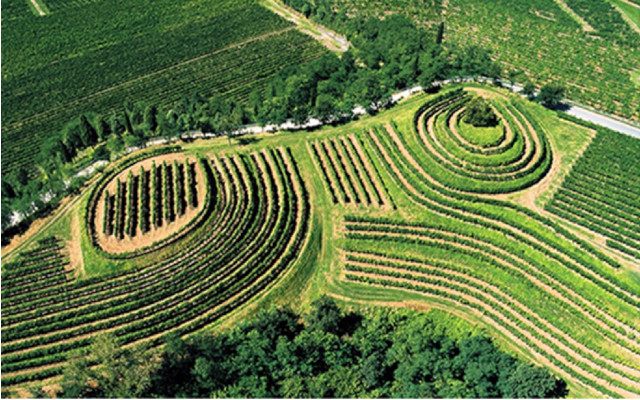
Credit cover: Consorzio Friuli Colli Orientali e Ramandolo DOCG. Azienda Conte Attimis, Buttrio (Udine)
References
European Union regulatory sources
Commission Delegated Regulation (EU) 2019/33 of 17 October 2018 supplementing Regulation (EU) No 1308/2013 of the European Parliament and of the Council as regards applications for protection of designations of origin, geographical indications and traditional terms in the wine sector, the objection procedure, restrictions of use, amendments to product specifications, cancellation of protection, and labelling and presentation. http://data.europa.eu/eli/reg_del/2019/33/oj
Commission Delegated Regulation (EU) 2025/27 of 30 October 2024 supplementing Regulation (EU) 2024/1143 of the European Parliament and of the Council with rules on the registration and protection of geographical indications. OJ L, 2025/27, 15.1.2025. http://data.europa.eu/eli/reg_del/2025/27/oj
Commission Implementing Regulation (EU) 2019/34 of 17 October 2018 laying down rules for the application of Regulation (EU) No 1308/2013 of the European Parliament and of the Council as regards applications for protection of designations of origin, geographical indications and traditional terms in the wine sector, the objection procedure, amendments to product specifications, the register of protected names, cancellation of protection and use of symbols. http://data.europa.eu/eli/reg_impl/2019/34/oj
Commission Implementing Regulation (EU) 2025/26 of 30 October 2024 laying down rules for the application of Regulation (EU) 2024/1143 of the European Parliament and of the Council as regards geographical indications. OJ L, 2025/26, 15.1.2025. http://data.europa.eu/eli/reg_impl/2025/26/oj
Regulation (EU) No 1308/2013 of the European Parliament and of the Council of 17 December 2013 establishing a common organisation of the markets in agricultural products. Consolidated text: 18/08/2026. http://data.europa.eu/eli/reg/2013/1308/2026-08-18
Regulation (EU) 2017/625 of the European Parliament and of the Council of 15 March 2017 on official controls and other official activities performed to ensure the application of food and feed law, rules on animal health and welfare, plant health and plant protection products. Consolidated text: 05/01/2025. http://data.europa.eu/eli/reg/2017/625/2025-01-05
Regulation (EU) 2024/1143 of the European Parliament and of the Council of 11 April 2024 on geographical indications for wine, spirit drinks and agricultural products, as well as traditional specialities guaranteed and optional quality terms for agricultural products, amending Regulations (EU) No 1308/2013, (EU) 2019/787 and (EU) 2019/1753 and repealing Regulation (EU) No 1151/2012. Consolidated text: 18/03/2026. http://data.europa.eu/eli/reg/2024/1143/2026-03-18
Italian regulatory sources
Decree of the Ministry of Agricultural, Food, Forestry and Tourism Policies 18 July 2018. General provisions on the establishment and recognition of protection consortia for designations of origin and geographical indications for wines. Official Gazette n. 232 of 5.10.2018.
Decree of the Ministry of Agricultural, Food, Forestry and Tourism Policies 2 August 2018, n. 7552. System of controls and supervision of DO and GI wines, pursuant to article 64 of law 12 December 2016, n. 238. Official Journal no. 253 of 10.30.2018.
Law 12 December 2016, n. 238. Organic regulation of vine cultivation and the production and trade of wine. Normattiva. Last consolidated version: 14/05/2026. https://www.normattiva.it/eli/id/2016/12/28/16G00251/CONSOLIDATED
Decree of the Ministry of Agricultural, Food and Forestry Policies 27 February 2020, n. 2183. Marks for DOCG and DOC wines and alternative traceability systems.
Decree of the Ministry of Agriculture, Food Sovereignty and Forestry of 19 December 2023. Amendment of the decree of 27 February 2020 on the labels of DOCG and DOC wines. Official Journal no. 16 of 20.1.2024.
Decree of the Ministry of Agriculture, Food Sovereignty and Forestry 12 March 2025. Amendment to the decree 27 February 2020. Official Journal no. 79 of 4.4.2025.
Decree of the Ministry of Agricultural, Food and Forestry Policies 3 March 2022. Amendments to the annexes of the decree of 2 August 2018, n. 7552. Official Gazette n. 62 of 15.3.2022.
Law 21 April 2026, n. 75. Penalty provisions for the protection of Italian food products. Official Gazette n. 110 of 14.5.2026.
Law containing measures for the consolidation and development of the agricultural sector ('Coltiva Italia', A.C. 2670), definitively approved by the Senate on 4.11.2026, awaiting publication in the Official Journal.
Case law of the Court of Justice of the European Union
Judgment of 16 May 2000, Kingdom of Belgium v Kingdom of Spain, case C-388/95 (Rioja).
Judgment of 21 January 2016, Viiniverla Oy v Sosiaali- ja terveysalan lupa- ja valvontavirasto, case C-75/15.
Judgment of 20 December 2017, Comité Interprofessionnel du Vin de Champagne v Aldi Süd Dienstleistungs-GmbH & Co. OHG, case C-393/16 (Champagner Sorbet).
Judgment of 7 June 2018, Scotch Whisky Association v Michael Klotz, case C-44/17.
Judgment of 2 May 2019, Fundación Consejo Regulador de la Denominación de Origen Protegida Queso Manchego v Industrial Quesera Cuquerella SL and Juan Ramón Cuquerella Montagud, case C-614/17.
Judgment of 4 December 2019, Consorzio Tutela Aceto Balsamico di Modena v Balema GmbH, case C-432/18.
Judgment of 17 December 2020, Syndicat interprofessionnel de défense du fromage Morbier v Société Fromagère du Livradois SAS, case C-490/19.
Judgment of 9 September 2021, Comité Interprofessionnel du Vin de Champagne v GB, case C-783/19 (Champanillo).
Registers and data
European Commission. (2026). eAmbrosia, the EU geographical indications register. https://ec.europa.eu/agriculture/eambrosia/geographical-indications-register/
Ismea & Fondazione Qualivita. (2025). Ismea-Qualivita 2025 Report on Italian agri-food and wine productions PDO PGI TSG. XXIII edition. https://www.qualivita.it/news/rapporto-ismea-qualivita-2025/
MASAF. (2026). Wine production declarations, campaign 2025/2026, data as of 20 April 2026.
MASAF. (2026). Alphabetical list of Italian PDO wines and Alphabetical list of Italian PGI wines. Lists and regulations of PDO and PGI wines. https://www.masaf.gov.it/flex/cm/pages/ServeBLOB.php/L/IT/IDPagina/4625
Valoritalia. (2025). Annual Report 2025. Italian certified wine in 2024. https://www.valoritalia.it/
Valoritalia. (2026). Annual Report 2026. Italian certified wine in 2025. https://www.valoritalia.it/
Wine Australia. (2026, 25 March). Australia–European Union agreements to bring changes for Australian wine. https://www.wineaustralia.com/news/media-releases/australia-european-union-agreements-to-bring-changes-for-australian-wine
GIFT and Food Times articles
Cavallina, S., & Dongo, D. (2021, 19 August). Spirits. Allusions, geographical references and compound terms, new rules. Food Times. https://www.foodtimes.eu/it/consumatori-e-salute/bevande-spiritose-allusioni-riferimenti-geografici-e-termini-composti-nuove-regole/
Dongo, D. (2018, 2 January). PDO ingredients, misstep by the Court of Justice on champagne sorbet. Food Times. https://www.foodtimes.eu/it/consumatori-e-salute/ingredienti-dop/
Dongo, D. (2019, 5 December). Balsamic vinegar of Modena, green light for imitations by the EU Court of Justice. GIFT. https://www.greatitalianfoodtrade.it/notizie/aceto-balsamico-di-modena-via-libera-alle-imitazioni-dalla-corte-di-giustizia-ue/
Dongo, D. (2021, 10 December). Prosecco and Prošek, sparkling wine and dessert wine. Possible synergies. GIFT. https://www.greatitalianfoodtrade.it/news/prosecco-and-prosek-possible-synergies/
Dongo, D. (2025, December 10). PDO Economy Italy: €20.7 billion in 2024. GIFT. https://www.greatitalianfoodtrade.it/news/pdo-economy-italy-2024/
Dongo, D. (2026, October 7). PDO, PGI and TSG: meaning, certifications and protection. GIFT. https://www.greatitalianfoodtrade.it/certifications-and-analysis/pdo-pgi-tsg-protection/

Dario Dongo, lawyer and journalist, PhD in international food law, founder of WIISE (FARE - GIFT – Food Times) and Égalité.


