

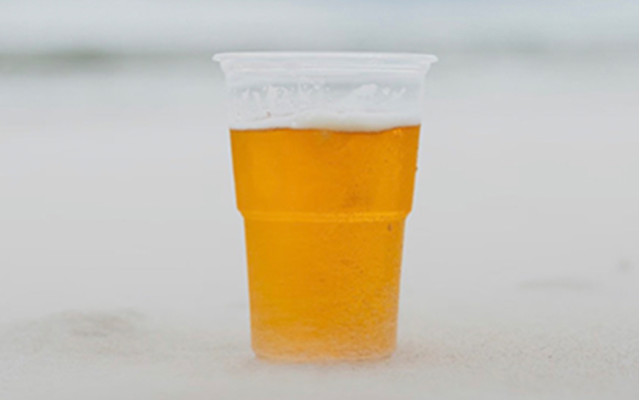
Non-alcoholic non-alcoholic beers and low-alcohol beers are the most dynamic segment of the Italian market. In 2025 their share of beer consumption in Italy rose from 2.1% to 3.9%, with a growth higher than 85%, compared to overall consumption stable above 21 million hectolitres and national production of 16.8 million hectolitres, down 2.5% (AssoBirra, 2026).
The trend is global. The world consumption of non-alcoholic beer exceeded 2.5 billion litres in 2024, with an estimate of 2.7 billion in 2025 (+40% on 2018) and an annual growth expected around 7% until 2028. In Germany the share of beer sales exceeds 14%, while in the United Kingdom, United States and Brazil it does not go beyond 2% (D'Andrea et al., 2026). THE'offer has expanded with products obtained both by limiting fermentation and by removing alcohol from an already fermented beer.
Furthermore, in the European Union there is no harmonized definition and at least four alcoholic strength thresholds coexist, equal to 0.5%, 1.0%, 1.15% and 1.2% (D'Andrea et al., 2026). Furthermore, the Italian threshold for non-alcoholic beer does not coincide with the 0.5% threshold used for customs and tax purposes.
Non-alcoholic beer, the definition under Italian law
The Italian law on beer has established the following legal designations:
- «non-alcoholic beer» is the 'product with a Plato degree of not less than 3 and not more than 8 and with an alcoholic strength by volume not exceeding 1.2%' (law 1354/1962, art. 2.1);
- «light beer» or «light beer» is the 'product with a Plato degree of not less than 5 and not more than 10.5 and with an alcoholic strength by volume greater than 1.2% and not more than 3.5%' (law 1354/1962, art. 2.2).
The two requirements are cumulative. The Plato degree measures the extract of the original must, not the alcohol of the finished beer, and contributes with the alcoholic strength to determine the denomination. A non-alcoholic beer can therefore contain ethanol, up to 1.2% by volume.
| Reference | Threshold | Function |
| Law 1354/1962, art. 2.1 | 3–8 °Plato and up to 1.2% vol. | Denomination 'non-alcoholic beer' |
| Law 1354/1962, art. 2.2 | 5–10.5 °Plato, over 1.2% and up to 3.5% vol. | Denomination 'light beer' or 'light beer' |
| Combined Nomenclature, chapter 22, note 3 | Up to 0.5% vol. | Customs classification as non-alcoholic beverage |
| Legislative Decree 504/1995, art. 34.2 | Over 0.5% vol. | Excise tax on beer |
| Regulation (EU) 1169/2011, arts. 9.1 and 16.4 | Over 1.2% vol. | Mandatory alcohol content; exemption from ingredients and nutritional declaration |
| Regulation (EC) 1924/2006, art. 4.3 | Over 1.2% vol. | Prohibition of health claims; limited nutritional claims |
0.5% and 1.2%, two thresholds with different functions
The customs nomenclature considers non-alcoholic beverages with an alcohol content of up to 0.5% by volume. The same threshold defines, in the consolidated text on excise duties, the tax concept of beer (Legislative Decree 504/1995, art. 34.2). As already illustrated in the guide to the legal definition of beer, a 'non-alcoholic beer' with a strength between 0.5% and 1.2% therefore falls within the tax concept of beer.
It follows that the legal name, customs classification and tax regime follow different criteria. A non-alcoholic beer according to Italian law is not necessarily a beverage with alcohol equal to or less than 0.5%.
De-alcoholized beer, what it means
The dealcoholization it is the process by which the ethanol of an already fermented beer is reduced. Not all non-alcoholic beers are alcohol-free: some are designed from the outset to develop little alcohol.
The Italian law on beer does not provide for an autonomous category of 'dealcoholised beer'. A literal reading of the provision also raises a practical problem. The 8 °Plato limit refers to the original wort, so a beer produced from a more concentrated wort and then dealcoholized may not meet the requirements for non-alcoholic beer. The issue may be clarified in the decree on the requirements for beers provided for by the law on small and medium-sized enterprises.
Different is the case of Wine, for which European Union law precisely regulates the terms 'de-alcoholized' and 'partially de-alcoholized' (EU regulation 1308/2013, art. 119 and Annex VII).
How low-alcohol beer is produced
| Method | Principle | Strengths | Limitations |
| Limited or interrupted fermentation, selected yeasts | Ethanol formation is reduced | Simpler equipment, suitable for small breweries too | Residual sugars, wort notes, lack of esters |
| Vacuum distillation | Ethanol separation at 60–200 mbar and approximately 34–50 °C | Effective removal of alcohol | Loss of volatile aromatic compounds, to be recovered |
| Reverse osmosis | Semipermeable membranes separate water and ethanol | Moderate temperature | Aroma loss; uneconomical below 0.45–0.5% vol. |
| Osmotic distillation and other membranes | Selective ethanol transfer | Delicate operating conditions | Variable yield depending on beer and equipment |
The data in the table derives from a recent review of the literature, which identifies the main technological issue as the compromise between ethanol removal and aroma preservation (D'Andrea et al., 2026). No technology is absolutely better: each balances efficiency, aromas, energy and costs.
In products obtained by limiting fermentation, the residual sugars influence sweetness and body, but also microbiological stability. If viable microorganisms remain, fermentation may resume, with an increase in alcohol content and pressure in the packaging.
Sensory quality, the role of ethanol
Ethanol contributes to taste directly and indirectly, and its reduction changes the balance between the most important aromatic compounds, such as Strecker aldehydes, higher alcohols and esters (Piornos et al., 2023). Organic methods tend to leave notes of must and lack of esters, while physical ones can generate a less balanced profile (D'Andrea et al., 2026).
A study on lager and stout dealcoholised to about 0.5% vol. with reverse osmosis detected significant losses of volatile compounds and reductions in fruity and estery, alcoholic, malty notes, sweetness and body. The losses depended on the structure of the compounds rather than their size, and stout required longer treatment times (Ramsey et al., 2021).
The quality of a non-alcoholic beer it is therefore not judged by the alcohol content alone. Formulation, technology and the producer's ability to preserve the balance of the product count, and dealcoholized beers are not in themselves inferior to those obtained with limited fermentation.
Labeling, what changes below 1.2%
| Information | Beer up to 1.2% vol. | Beer above 1.2% vol. |
| List of ingredients | Mandatory | Optional (Regulation (EU) 1169/2011, art. 16.4) |
| Nutrition declaration | Mandatory | Optional, may also be limited to energy value (art. 30.4) |
| Allergens | Mandatory | Mandatory |
| Actual alcoholic strength | Not mandatory | Mandatory (art. 9.1, letter 'k') |
The exemption from the list of ingredients and nutritional declaration only concerns drinks over 1.2% (EU regulation 1169/2011, art. 16.4). Non-alcoholic beers under Italian law are therefore subject to ordinary obligations, including other mandatory indications such as net quantity, minimum shelf life and responsible operator (EU regulation 1169/2011, art. 9.1).
The words '0.0', 'without alcohol' and 'alcohol free'
These expressions do not coincide with the legal denomination 'non-alcoholic beer', which allows up to 1.2% alcohol, and must always be shown on the label, in the same visual field where the quantity is indicated (EU regulation 1169/11, articles 9.1.a, 13.5, 17).
These terms can be legitimately used in the commercial name of the products - also to facilitate their correct identification - in compliance with the criteria of fairness of information practices (EU regulation 1169/2011, articles 7.1.a, 36).
The wording '0.0', in particular, communicates a zero or close to zero alcohol content and must be supported by consistent analytical data, taking into account the detection limits of the method and the variability between batches.
Nutritional and health claims
Non-alcoholic Beverages with content of alcohol higher than 1,2% cannot carry health claims in commercial communication, while they may only report nutrition claims relating to the reduction of alcohol or energy content (Regulation (EC) 1924/2006, art. 4.3).
Non-alcoholic non-alcoholic beverages – including beer with alcohol content of 1.2% vol. or less – are instead subject to the general rules of Regulation (EC) No 1924/06 on nutrition and health claims: any nutrition claim must comply with the conditions of the regulation and health claims must be authorized.
Food safety and stability
The lower alcohol content reduces one of beer's natural barriers against microorganisms. In a challenge test cited in the literature, Escherichia coli O157:H7 and Salmonella grew by approximately two logarithmic units in non-alcoholic beer below 0.5% stored at 14 °C for 63 days, but not at 4 °C. Pasteurization validated or filtration sterile and cold chain they therefore become decisive (D'Andrea et al., 2026).
This point concerns in particular craft beer, which cannot be pasteurized or microfiltered: for non-alcoholic versions stability relies on hygiene, process control and refrigerated storage. The self-control plan based on the HACCP system must consider residual fermentations, effectiveness of treatments, hygiene of packaging lines and verification of alcohol content (Regulation (EC) 852/2004, art. 5; Regulation (EC) 178/2002, art. 14).
For producers, distributors and consumers, the evaluation therefore starts from three elements: legal name, actual alcohol content and label information. Segment growth rewards those who manage them with transparency.
Our team of DOING supports breweries in the strategic planning of commercial information compliance, including nutrition & health claims, also with support for the development of governance corporate and operating procedures.
Dario Dongo
Frequently asked questions
How much alcohol can a non-alcoholic beer contain? In Italy up to 1.2% by volume, with a Plato degree between 3 and 8.
Are non-alcoholic beer and 0.0 beer the same thing? No. '0.0' indicates zero or close to zero content and must be supported by analysis; the legal denomination allows up to 1.2%.
Does non-alcoholic beer pay excise duty? Yes, if the alcohol content exceeds 0.5% by volume.
Why are there ingredients and nutritional values on the label of non-alcoholic beer? Because the exemption for alcoholic beverages only applies above 1.2% by volume.
Is a de-alcoholised beer always non-alcoholic? Not necessarily: both the alcohol limit and the Plato degree of the original wort must be complied with.
References
European Union regulatory sources
Council Regulation (EEC) No 2658/87 of 23 July 1987 on the tariff and statistical nomenclature and on the Common Customs Tariff (Annex I, Chapter 22, Note 3). Consolidated text: 01/01/2026. http://data.europa.eu/eli/reg/1987/2658/2026-01-01
Regulation (EC) No 178/2002 of the European Parliament and of the Council of 28 January 2002 laying down the general principles and requirements of food law, establishing the European Food Safety Authority and laying down procedures in matters of food safety. Consolidated text: 01/01/2026. http://data.europa.eu/eli/reg/2002/178/2026-01-01
Regulation (EC) No 852/2004 of the European Parliament and of the Council of 29 April 2004 on the hygiene of foodstuffs. Consolidated text: 24/03/2021. http://data.europa.eu/eli/reg/2004/852/2021-03-24
Regulation (EC) No 1924/2006 of the European Parliament and of the Council of 20 December 2006 on nutrition and health claims made on foods. Consolidated text: 13/12/2014. http://data.europa.eu/eli/reg/2006/1924/2014-12-13
Regulation (EU) No 1169/2011 of the European Parliament and of the Council of 25 October 2011 on the provision of food information to consumers. Consolidated text: 01/04/2025. http://data.europa.eu/eli/reg/2011/1169/2025-04-01
Regulation (EU) No 1308/2013 of the European Parliament and of the Council of 17 December 2013 establishing a common organisation of the markets in agricultural products. Consolidated text: 18/08/2026. http://data.europa.eu/eli/reg/2013/1308/2026-08-18
Italian regulatory sources
Law 16 August 1962, no. 1354, Hygiene regulation of beer production and trade. Normattiva. Last consolidated version: 23/03/2026. https://www.normattiva.it/uri-res/N2Ls?urn:nir:stato:legge:1962-08-16;1354!vig=
Legislative Decree 26 October 1995, no. 504, Consolidated text of legislative provisions concerning taxes on production and consumption and related criminal and administrative penalties (art. 34). Normattiva. Last consolidated version: 09/11/2026. https://www.normattiva.it/uri-res/N2Ls?urn:nir:stato:decreto.legislativo:1995-10-26;504!vig=
Market data
AssoBirra. (2026, June 23). Beer, an ecosystem for growth. AssoBirra presents the data from the 2025 Annual Report [Press release]. https://www.assobirra.it/wp-content/uploads/2026/06/Comunicato-Stampa_AssoBirra_23.06.2026.pdf
AssoBirra. (2026). Annual Report 2025. Beer, an ecosystem for growth. https://assobirra.it/pdf/AnnualReport-2025.pdf
Scientific studies
D’Andrea, A., Licciardo, F., Celi, E., & Carbone, K. (2026). Non-alcoholic and low-alcohol beer: Regulatory complexity, market expansion and technical bottlenecks in biological and physical dealcoholisation. Foods, 15(16), 2822. https://doi.org/10.3390/foods15162822
Piornos, J. A., Koussissi, E., Balagiannis, D. P., Brouwer, E., & Parker, J. K. (2023). Alcohol-free and low-alcohol beers: Aroma chemistry and sensory characteristics. Comprehensive Reviews in Food Science and Food Safety, 22(1), 233–259. https://doi.org/10.1111/1541-4337.13068
Ramsey, I., Yang, Q., Fisk, I., Ayed, C., & Ford, R. (2021). Assessing the sensory and physicochemical impact of reverse osmosis membrane technology to dealcoholize two different beer styles. Food Chemistry: X, 10, 100121. https://doi.org/10.1016/j.fochx.2021.100121
In-depth analysis
Dongo, D., & Perrone, G. (2022, February 8). De-alcoholised wines, new EU rules and high growth potential. The ABC. FoodTimes. https://www.foodtimes.eu/it/sistemi-alimentari/vini-dealcolizzati-nuove-regole-ue-e-alto-potenziale-di-crescita-labc/

Dario Dongo, lawyer and journalist, PhD in international food law, founder of WIISE (FARE - GIFT – Food Times) and Égalité.


