

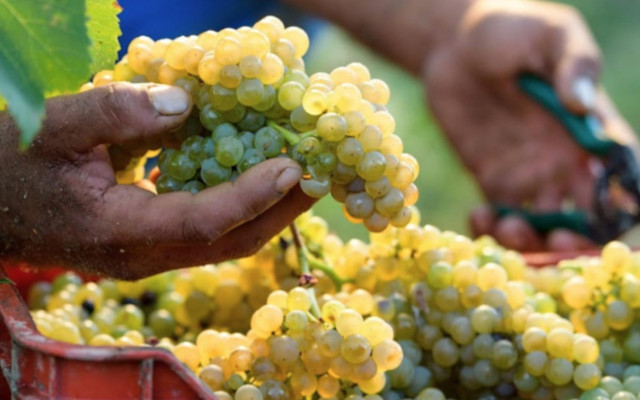
The Fiano is a native white grape variety whose identity precedes and goes beyond the boundaries of the single designation of origin. Distinguishing the botanical variety from the legal protection of the Fiano di Avellino DOCG allows reconstructing a path that unites documented historical roots, spread between Campania and Puglia, and a complex regulatory framework continuously updated. The integration of ampelographic data, anti-fraud molecular analyses, pedoclimatic evidence, and labeling rules offers a transparency tool to protect consumers and international buyers.
Fiano, the ampelographic profile
The official ampelographic description of Fiano is the one drafted by Violante and Ciarimboli and published by the Ministry of Agriculture and Forestry in 1960, now available in the National Register of Grape Varieties managed by the Ministry of Agriculture (MASAF) and CREA. The survey was conducted on a clone from the collection of the Agricultural Technical Institute of Avellino, checked with vines grown in Lapio. The technical framework, essentially:
- The bunch is small or medium (10-20 cm, 70-150 g), tight, pyramidal with a well-developed wing;
- Theberry is ellipsoidal, with slightly powdery skin, golden yellow, leathery consistency, slightly crunchy pulp and sweet, colorless juice;
- the production is regular but modest — 60-80 quintals per hectare — and the grape variety is subject to berry shrivel when it rains in June, during flowering. It fears downy mildew and is sensitive to powdery mildew. Ripening is late-season, and leaf fall is late.
The Register also reports the historical synonyms, which are an involuntary map of the ancient dissemination of the grape variety: ‘Fiana’ or ‘Foiano’ in the Lapio area, ‘Santa Sofia’ in Calitri, ‘Fiore Mendillo’ in Santeramo in Colle, ‘Latino Bianco’ in Ischia, ‘Minutola’ in Bitonto. A Campanian grape variety, therefore, but with documented roots also in Puglia.
As for the name, the regulations accept the dual hypothesis formulated already in the seventeenth century: derivation from ‘Apia’, the agricultural area now corresponding to Lapio, or from ‘api’, because of the ease with which insects attack the bunches attracted by the sweetness of the berries. The two explanations are complementary, actually.
Eight centuries of documented history
The history of Fiano does not need legends, as it is based on documents. The oldest is a purchase register of the court of Frederick II of Swabia — who reigned from 1198 to 1250 — where an order of three ‘salme’ each of Greco, Grecisco and Fiano appears: the grape variety was already then a commodity for commercial exchange. A few decades later, still in the 13th century, Charles II of Anjou commissioned commissioner Guglielmo dei Fisoni to find Fiano vines to send to Manfredonia for the royal estates. The studies collected by Antonio Calò for the Italian Academy of Vine and Wine quantify the operation at 16,000 plants transferred from Cava de’ Tirreni: not a symbolic purchase, but a real program of interregional varietal dissemination.
Instead, it dates back to November 5 1592 a note addressed to the Captain of Montefusco, capital of the Principato Ultra, reporting a tax in favor of the University, equal to four carlins on every load of wine, obtained by Royal Assent. Lapio produced, Montefusco commercialized. Half a century later Scipione Bella Bona, in the ‘Reports of the city of Avellino’ of 1642, describes three castles in Avellino, one of which in the place called Apia, where Apiano wine was produced, 'by corrupted speech' called Afiano and then Fiano.
TheNineteenth century marks the peak. The province of Avellino produces over one million hectoliters of wine, largely exported: such a central activity as to justify the construction of the first railway in Irpinia, soon renamed ‘wine railway’, with stations still existing in Avellino and Lapio. In 1882 Michele Carlucci, director of the Royal Enological School of Avellino, published observations on fourteen years of pure winemaking of the Fiano grape; the School would become the technical engine for the spread of the vine in the middle valley of the Sabato.
Then the collapse. Phylloxera (a small parasite that put European viticulture in crisis from the mid-19th century), emigration and post-war abandonment reduced Fiano almost to nothing. Violante and Ciarimboli themselves report that in the 1950 cultivation had dropped to just 2 hectares in specialized cultivation and 53 in mixed cultivation, for about 1,000 quintals of grapes in total. The cause is economic rather than phytosanitary — very low productivity and modest wine yield (60-63%) — and the data from the viticultural land registry of 1970, 17 specialized hectares and 10 mixed, indicates the slowness of the rise.
Recovery goes through recognition DOC with DPR April 27 1978, the registration in the European register with effect from December 30 1982 and the elevation to DOCG with DM July 18 2003. Today the regulations list over 560 hectares suitable, for a potential production of 39,000 hectoliters. The change from 2 to over 560 hectares in seventy years remains, quantitatively, the most emblematic story of varietal recovery among white wines of southern Italy.
Fiano di Avellino DOCG, the current regulation
The regulations of Fiano di Avellino DOCG, consolidated in the implementing regulation (EU) 2025/1086, is composed of nine articles. Below are its fundamental points.
Denomination and ampelographic basis
The DOCG is reserved for wine that meets the conditions of the regulations (article 1). The wine must be obtained from grapes of Fiano grape variety for a minimum of 85%, with the contribution — alone or together, up to a total maximum of 15% — of the grape varieties Greco, Coda di Volpe and Tuscan Trebbiano present in the company vineyards (regulations, article 2).
Production area
The production area coincides with the entire administrative territory of 26 municipalities of the province of Avellino, on a total surface of 276 km²: Avellino, Lapio, Atripalda, Cesinali, Aiello del Sabato, Santo Stefano del Sole, Sorbo Serpico, Salza Irpina, Parolise, San Potito Ultra, Candida, Manocalzati, Pratola Serra, Montefredane, Grottolella, Capriglia Irpina, Sant’Angelo a Scala, Summonte, Mercogliano, Forino, Contrada, Monteforte Irpino, Ospedaletto d’Alpinolo, Montefalcione, Santa Lucia di Serino and San Michele di Serino (regulations, article 3).
Viticulture rules
Only the following are suitable for registration hilly vineyards with good exposure, excluding humid and poorly sunny valley floors, and any forcing is prohibited. Replanting and new plantings require vertical training with a density not less than 2,500 vines per hectare.
The maximum yield is 10 tons of grapes per hectare, with a 20% tolerance to be brought back within limits, and the natural minimum volumetric alcoholic strength of the grapes is11.00% vol. The Campania Region may annually reduce the claimable yields upon proposal of the Consortium.
The 2020 amendment also opened torelief irrigation, expressly motivating it with climate change and increasing conditions of water and thermal stress: it is the provision that best signals the adaptation of the denomination to the new scenario (discipline, article 4).
Winemaking rules
Winemaking and processing — but not bottling — must take place within the administrative territory of the province of Avellino.
Only fair and consistent oenological practices are allowed, and the maximum yield of grapes into finished wine is 70%: beyond this threshold the right to the denomination for the entire production lapses.
For the type Reserve the minimum aging is 12 months starting from 1st November of the harvest year (discipline, article 5).
Consumption characteristics
The chemical-physical and organoleptic parameters are set for each type (discipline, article 6). The following table summarizes them along with the aging times provided by article 5 and the 2025 union amendment.
| Type | Min. total alcohol content | Min. non-reducing extract | Min. total acidity | Minimum aging | Consumption profile |
| Fiano di Avellino | 11.50% vol | 16.0 g/l | 5.0 g/l | not provided | straw yellow more or less intense; pleasant, intense, fine, characteristic odor; dry, fresh, harmonious flavor |
| Fiano di Avellino Reserve | 12.00% vol | 17.0 g/l | 5.0 g/l | 12 months from 1st November of the harvest year | straw yellow more or less intense; pleasant, intense, fine odor; dry, fresh, harmonious flavor |
| Classic Method Sparkling Wine | n.d. in consulted sources | n.d. | n.d. | 18 months from tirage | fine and persistent foam; delicate yeast scent; from zero dosage to sweet |
| Classic Method Sparkling Wine Reserve | 12.00% vol | 16.0 g/l | 6.0 g/l | 36 months from disgorging | fine and persistent foam; characteristic odor with a delicate yeast scent; fine and harmonious taste, from zero dosage to sweet |
The single document and the consulted decrees report the analytical parameters of only the Reserve version of the Sparkling Wine; for the base type the obligation of the classic method and the term of 18 months from disgorging is verified.
Labeling and designation
The denomination may be accompanied by the traditional mention of classical origin ‘Apianum‘, in characters not larger than half those of the DOCG. The mention ‘vineyard‘ followed by the place name, provided that vinification and storage take place in separate containers and that the mention appears in the grape declaration, registers, and accompanying documents.
Any additional qualification not provided for is prohibited — extra, fine, superiore, selected, chosen, classic — while the indication ofvintage is mandatory. Release for consumption is allowed only in bottles or glass containers up to 5 liters, equipped with State seal, with mouth-level stopper; screw caps are allowed only up to 0.187 liters (regulation, article 7).
Connection with the geographical environment
Geology, pedology, climate, and history of the denomination are collected in the densest section of the text, from which most of the data drawn in the paragraph on terroirs originates (regulation, article 8).
Control structure
The body authorized by the Ministry is Rina Agrifood (formerly Agroqualità S.p.A.), which carries out the annual verification on viticulture, processing and packaging, with a systematic combined and sample-based methodology along the entire supply chain (disciplinary, article 9).
Integration of the Classic Method in the regulations
The types Sparkling wine e Sparkling wine Reserve, introduced at the national level with the 2021 decrees, completed the recognition process at EU level only on June 2, 2025. They must be obtained exclusively by bottle refermentation according to the classic method, and the processing and refining process starting from disgorging cannot be less than 18 months for Sparkling wine and at 36 months for the Reserve mention. The disciplinary justifies the choice with the spread, in the last decade, of the production of sparkling wines based on Fiano in the province of Avellino.
Four terroirs, one single grape variety
The disciplinary identifies four elected areas with distinct profiles, and it is rare that a normative text goes so far:
- Lapio — wines rich in structure, with uncommon qualities of acidity and minerality; the aromatic connotation brings them close to true mountain wines;
- Summonte — difficult soils to work; powerful and concentrated wines, with marked fruity set and low mineral profile;
- Montefredane — clayey and chalky hill that enhances mineral notes; longevity now proven;
- Hilly belt east of Avellino — sandy soils that give toasted hazelnut notes and a smoky character of non-mineral origin; wines ready in the medium term.
From a geological standpoint, the area is dominated by limestone and marl-limestone lithologies, on which Quaternary deposits of predominantly volcanic and alluvial origin rest. The soils predominant are Vertisols and Cambisols with fine texture, with possible presence of Calcisols and Andosols. The content of clay can reach 50% of fine earth, and the disciplinary notes its positive oenological effect: during summer drought it allows more regular ripening and good maintenance of acidity. Also remarkable is the provision of potassium (exchangeable K₂O between 250 and 980 mg/kg, averages of 450-500) and of exchangeable magnesium (110-940 mg/kg), the latter having a positive effect on lignification and organoleptic characteristics.
TheWinkler index of the vineyard surface — which measures the heat availability of an area during the vine’s vegetative period — ranges between 908 and 2,136, with an average of 1,836. Precipitation reaches nearly 1,100 mm annually, but over 70% falls between autumn and winter while summer receives an average of 6% of the total: it is the summer temperature variations, not rainfall, that make the difference.
Enological techniques and biomolecular marking of the variety
Harvesting normally takes place between the third decade of September and the second decade of October. The variety yields few phenolic substances, and this allows a variety of approaches: from sparkling wine production to traditional vinification in stainless steel at controlled temperature, up to aging in wood for more structured profiles.
The form of cultivation currently predominant is the trellis with guyot or spur cordon pruning, which over the last thirty years has progressively replaced the ancient 'Avellino System'. The most common planting spacing for new vineyards is 2.40 × 1.00 meters.
On the level of composition, a study by Carpentieri and colleagues published in Heliyon in 2019 compared, through SPME/GC-MS, the volatile profiles of Fiano, Greco, and Falanghina during maturation, showing that the biomolecular pattern of Fiano è clearly distinct compared to the other two, which instead tend to overlap in some aspects. The same group had obtained the same result on the proteomic level. This is data with practical implications: varietal typing based on molecular markers is an anti-fraud tool for PDO wines.
Bottle aging brings the development of notes of honey, beeswax, dried fruit and hydrocarbons, the latter attributable to TDN-type norisoprenoids, a trait shared with great mountain white wines.
Analysis of production data and market projections
There are unverifiable estimates circulating about Fiano di Avellino, and it is worth distinguishing what is documented from what is not.
The most solid denomination data is that of the database Qualigeo of the Qualivita Foundation, fed by the Ismea-Qualivita Report: 394 hectares and a bottled production of 13,637 hectoliters, equal to about 1.82 million bottles of 0.75 liters.
Compared to the surface, the bottled wine is worth less than 35 hectoliters per hectare, against a theoretical ceiling of 70 derived from the combined maximum grape yield and maximum wine yield: the denomination works well below its regulatory limits, consistent with the low productivity already detected by ampelographers in the 1950s. Part of the discard is also explained by maturation times and the sale of bulk to other bottlers.
Besides this, the uncovered territory is broad. The Consortium has not updated its disaggregated series beyond the 2020 harvest; the report Valoritalia updated to December 31, 2025, which nevertheless covers 219 denominations and over 60% of national certified volumes, does not publish details for each DOCG.
On theexport there are no official statistics broken down by denomination. The most recent regional reference, based on ISTAT, indicates for 2025 wine exports from Campanian companies amount to 47 million euros, an increase of 12%, in a year when Italian wine exports declined by 4% settling at 7.779 billion: Campania ranks among the smaller but expanding regions, alongside Friuli Venezia Giulia (+8%) and Puglia (+6%), while Trentino Alto Adige (-8%) and Emilia Romagna (-7%) declined. However, those 47 million concern the entire Campanian wine sector, not the Irpinia denomination.
On the front PDO, the XXIII Ismea-Qualivita Report (2025) records for 2024 a stable value of DOP and IGP bottled wine at 11.04 billion euros and an export of wine geographical indications over 7 billion for the first time.
As for the organic, the report Bio in Numbers 2025 by Ismea-SINAB documents for 2024 a national organic UAA beyond 2,514,596 hectares (+2.4%), equal to 20.2% of the utilized agricultural area (UAA), with substantially organic vineyard area stable at 132,441 hectares. The Campania It is among the regions with the most marked growth of the year and among the seven that have already exceeded the EU target of 25% incidence. Here too, however, there is no public disaggregated data on the organic quota of the DOCG Fiano di Avellino alone.
Pairing criteria and organoleptic enhancement
The Consortium proposes a reading by evolutionary phases that is more useful than the usual list.
In youth, the freshness makes Fiano a companion to dishes with a marked sweet tendency: spaghetti with anchovies, baked fish on a bed of potatoes. With higher alcohol content, which accentuates the pseudo-caloric sensation, they hold up to fish soups. The acidity makes it particularly suitable for Campania buffalo mozzarella PDO, preferably lightly salted, and consequently to pizzas and calzones.
With Reserve or with older vintages, the greater saltiness opens up to fried fish, fried pizzas and mozzarella in carrozza. In the case of aging in wood, which gives softness and structure, richer dishes can be tackled, capable of supporting even a noticeable acidic or bitter tendency.
The classics remain valid: spaghetti with bar clams, where the creaminess from risotto-style cooking finds in Fiano a counterpart that enhances the sea aroma without overpowering it, and the paccheri with ricotta and lemon, in which the citric acidity dialogues with the freshness of the wine. The new Classic Method Sparkling Wine opens up an as yet unexplored pairing ground, from raw seafood to mixed Irpinian fried dishes.
Transparency on the label and protection from misleading claims
For the professional buyer, some elements help distinguish the authentic Fiano di Avellino DOCG:
- Thevintage is mandatory, except for non-vintage sparkling wine types.
- The State seal is mandatory on every container;
- ‘Apianumis a legitimate traditional mention;
- ‘vineyardfollowed by the toponym indicates vinification and storage in separate containers and registration in the regional list: it is a guarantee of parcel selection, not a graphic whim.
- adjectives like superior, classic, selected are expressly prohibited by the regulations.
- the Reserve implies at least 12 months from November 1 of the harvest, 12.00% vol and an extract of 17 g/l: it is a technically different profile, not just a wine stored longer.
On the environmental front, the only claim currently verifiable with a public act is the organic certification pursuant to Regulation (EU) 2018/848, verifiable at the control body indicated on the label. Preferring an organic Fiano means choosing a regulated production method subject to third-party control, excluding herbicides and synthetic pesticides. Any other wording — 'natural', 'low impact', 'in harmony with nature' — currently has no specific EU recognition for wine and must be documented directly at the company. The Directive (EU) 2024/825 has also significantly restricted the scope of environmental claims.
Conclusions
Fiano is a variety that survives itself twice: phylloxera and economic abandonment. Two specialized hectares in 1950, over 560 today in the DOCG area alone. The Fiano di Avellino DOCG is its closest legal custodian, and in June 2025 completed a significant evolution with the full inclusion of the traditional method in the regulations.
The numbers remain those of a small denomination — less than two million bottles, less than 400 certified hectares — in a region whose total wine export does not reach 50 million euros. It is precisely this scale that makes quality positioning the only rational strategy.
Dario Dongo
Credit cover Consorzio Tutela Vini d’Irpinia
References
Normative sources
European Commission. (2021, February 22). Publication of the communication approving an ordinary amendment to the production regulations of a name in the wine sector — ‘Fiano di Avellino’ PDO-IT-A0232-AM02. Official Journal of the European Union, C 61, 23-26. https://eur-lex.europa.eu/legal-content/IT/TXT/PDF/?uri=CELEX:52021XC0222(03)
European Commission. (2025, June 2). Commission Implementing Regulation (EU) 2025/1086 on the approval of a Union amendment to the specification of the protected designation of origin ‘Fiano di Avellino’ pursuant to Regulation (EU) 2024/1143OJ L, 2025/1086, 3.6.2025. https://eur-lex.europa.eu/eli/reg_impl/2025/1086/oj
MASAF — Ministry of Agriculture, Food Sovereignty and Forests. (n.d.). Consolidated specification of the PDO ‘Fiano di Avellino’. https://www.masaf.gov.it/flex/cm/pages/ServeAttachment.php/L/IT/D/4%252F8%252Fc%252FD.552926678bc521e18f78/P/BLOB%3AID%3D17531/E/pdf?mode=download
Registers and official databases
Qualivita Foundation. (n.d.). Fiano di Avellino PDO. Qualigeo. https://www.qualigeo.eu/prodotto-qualigeo/fiano-di-avellino-dop/
MASAF & CREA. (n.d.). Fiano — Ampelographic sheet [description by C. Violante and U. Ciarimboli, in Main wine grape varieties cultivated in Italy, Vol. I, 1960]. National Register of Grape Varieties. http://catalogoviti.politicheagricole.it/scheda.php?codice=081
Campania Region. (n.d.). Wines of Campania — Fiano di Avellino. https://agricoltura.regione.campania.it/viticoltura/fiano.html
Industry reports and statistics
I Numeri del Vino. (2026, May 5). Italian wine exports by region and type — 2025 update [analysis based on ISTAT data]. https://www.inumeridelvino.it/2026/05/esportazioni-italiane-di-vino-per-regione-e-tipologia-aggiornamento-2025.html
Ismea. (2025, November 26). Ismea-Qualivita Report: PDO economy worth 20.7 billion and +25% since 2020. https://www.ismea.it/flex/cm/pages/ServeBLOB.php/L/IT/IDPagina/13512
Ismea & SINAB. (2025, December). Bio in Numbers 2025. https://sinab.it/wp-content/uploads/2025/12/Rapporto-BIC-ISMEA-2025-web_17_12.pdf
Valoritalia. (2026, July 28). Valoritalia Annual Report 2026. https://www.valoritalia.it/annual-report-valoritalia-2026/
Peer-reviewed scientific literature
Carpentieri, A., Sebastianelli, A., Melchiorre, C., Pinto, G., Staropoli, A., Trifuoggi, M., & Amoresano, A. (2019). Mass spectrometry based proteomics for the molecular fingerprinting of Fiano, Greco and Falanghina cultivars. Food Research International, 120, 26-32. https://doi.org/10.1016/j.foodres.2019.02.020
Carpentieri, A., Sebastianelli, A., Melchiorre, C., Pinto, G., Trifuoggi, M., Lettera, V., & Amoresano, A. (2019). Fiano, Greco and Falanghina grape cultivars differentiation by volatiles fingerprinting, a case study. Heliyon, 5(8), e02287. https://doi.org/10.1016/j.heliyon.2019.e02287
Consortium and territorial sources
Consorzio Tutela Vini d’Irpinia. (2026). Fiano di Avellino DOCG. https://consorziovinidirpinia.it/vini/fiano-di-avellino-docg-vino/

Dario Dongo, lawyer and journalist, PhD in international food law, founder of WIISE (FARE - GIFT – Food Times) and Égalité.


