

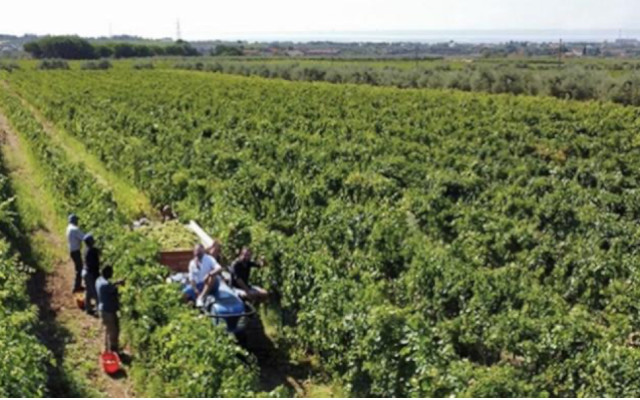
The organic wine it is a wine obtained from organic grapes and vinified according to European rules that limit additives, adjuvants and cellar practices, with maximum levels of sulphites lower than those of conventional wine.
The differences upon closer inspection, they begin in the vineyard - where herbicides, insecticides and synthetic nitrogen fertilizers are excluded - and produce measurable effects on the soil, biodiversity and on the quality of life of those who live next to the rows.
This article explains what organic certification guarantees in the wine sector, what the norms applicable in the vineyard and in the cellar, what the studies attest positive externalities and what are the numbers of the sector in Italy and Europe.
What does organic wine mean
There organic production is defined by European Union law as a farm and food production management system based on ecological processes, biodiversity and natural cycles, with uniform production rules, certification and official controls (EU regulation 2018/848, art. 3, point 1). For wine products, two conditions are essentially foreseen: the grapes and other agricultural ingredients must be organic, and the oenological practices must comply with the restrictions of Part VI of Annex II (EU regulation 2018/848, Annex II, Part VI, points 2 and 3). A wine 'from organic grapes' vinified without these restrictions cannot be designated as an organic wine.
Every operator in the organic supply chain in the wine sector - from the winemaker to the bottler - must notify their activity, submit to the control of a control body authorized and receive a certificate (EU regulation 2018/848, articles 34-35). There verification of compliance takes place at least once a year with physical inspection, which can be reduced to one every 24 months only for low-risk operators with three consecutive years without non-compliance (EU regulation 2018/848, art. 38.3); at least 10% of the checks are unannounced and at least 5% of the operators are sampled for analysis (EU executive regulation 2021/279, art. 7).
In Italy the control bodies are authorized and supervised by the Ministry of Agriculture, Food Sovereignty and Forestry (MASAF) pursuant to Legislative Decree 148/2023, within the framework of European official controls (EU regulation 2017/625, art. 29). The system, its values and its data are described in the GIFT article on biological, values, controls and data.
The rules in the vineyard
There organic viticulture excludes chemical herbicides (e.g. glyphosate), synthetic insecticides and nitrogenous mineral fertilizers, entrusting the fertility of the soil through rotations, green manures, grassing and organic substance, with a ceiling of 170 kg of nitrogen from effluents per hectare per year (EU regulation 2018/848, Annex II, Part I, points 1.9.4 and 1.9.8). There defense against adversity is based on preventive measures and, only if necessary, on expressly authorized substances and products, with the obligation to document the need (EU regulation 2018/848, Annex II, Part I, point 1.10.2).
A vineyard can only be called organic after one conversion at least three years before the first certified harvest (EU regulation 2018/848, Annex II, Part I, point 1.7.1); after twelve months of conversion, the grapes and the resulting wine can bear the words 'in conversion to organic farming', without the European logo (EU regulation 2018/848, articles 10.4 and 30.3).
The copper it is the main tool against downy mildew (Plasmopara viticola), even in conventional and integrated companies. In organic farming, copper compounds are allowed within a maximum of 28 kg of copper metal per hectare over seven years, equal to an average of 4 kg per hectare per year (EU Executive Reg. 2021/1165, Annex I, point 10E; EU Executive Reg. 2018/1981). The European approval of copper compounds, classified as candidates for replacement, has been extended to 30 June 2029 pending the renewal evaluation (EU executive reg. 2025/1489), and the Ministry of Health has specified that from 2026 the 28 kg ceiling is calculated on a rolling basis over the previous seven years. The most comprehensive European study on actual use estimates that organic uses on average about half the maximum allowable dose and that resistant varieties reduce the requirement to a fraction of that of traditional varieties (Tamm et al., 2022).
Positive externalities for ecosystems
The scientific literature of the last ten years converges on one fact: where synthetic herbicides and insecticides are not used, the vineyard returns to hosting life. A meta-analysis of 74 studies conducted in 13 countries measured, when comparing organic and conventional vineyards, an average positive effect of 39.7% on biodiversity and ecosystem services and of 53.2% on biodiversity alone. biodiversity, without penalties in yield and grape quality linked to extensive inter-row management (Winter et al., 2018).
In 334 bird communities surveyed in twelve wine-growing regions of France, Italy and Spain, organic management increases the functional diversity of the avifauna, in combination with the grassing and with the heterogeneity of landscape (Barbaro et al., 2021). In the certified organic vineyards arthropods (e.g. insects) are more abundant and the ecotoxicity score of the treatments drops to 12.3 versus 33.2 (Zielonka et al., 2024); in 70 pairs of European vineyards spontaneous flora it is richer at the plot and territory scale (Winter et al., 2025). The longest field test available - eighteen years in Geisenheim, on Riesling - shows that organic and biodynamic yields on average 17% and 14% less than integrated, but the gap is significantly reduced after about a decade from conversion and disappears, until it reverses, in hot and dry years, without appreciable differences in the quality of the grapes (Döring et al., 2026).
The soil is the second beneficiary. A meta-analysis of approximately one hundred studies and over two hundred biological parameters has found one in organic vineyards biomass and a microbial activity three to four times higher, and identified herbicides and bare soil as the most harmful factors for soil fauna (Karimi et al., 2020). Typical organic conservative practices, such as grassing, organic soil improvers and reduced tillage, sequester on average 7.53 tonnes of CO2 equivalent per hectare per year in the first thirty centimeters (Payen et al., 2021), and in Geisenheim's long-term tests the microbial communities of organic and biodynamic soils are clearly distinct from those of integrated soils (Hendgen et al., 2018). Studies also point out that the decisive variable is the intensity of treatments, in particular insecticides (Ostandie et al., 2021): precisely what organic certification excludes by definition.
The benefits for those who live near the vineyards
The wine-growing areas are among the most densely cultivated and inhabited in Europe, and the issue of exposition of residents is the subject of recent studies. The French national PestiRiv survey, conducted by Santé publique France and Anses on 1,946 adults and 742 children in 265 areas of six regions, found that for half of the 56 substances researched, the urine of those who live within 500 meters of the vineyards is more contaminated than those who live more than a kilometer from any crop, with more marked differences in the period of treatments and as the distance decreases; among the most present substances are folpet, metiram, glyphosate and fosethyl-aluminium, all excluded from organic products, while no difference emerges for copper (Santé publique France & Anses, 2025).
A review of 29 international studies confirms that residents' exposure increases with proximity and with the treated surface in the surrounding area (Dereumeaux et al., 2020), and a pilot survey in Gironde found the fungicide tebuconazole in 99.5% of the household surfaces sampled (Teysseire et al., 2023). There are still no studies that directly compare the exposure of residents near organic and conventional vineyards, but the deduction is linear: the synthetic molecules that the studies find in homes are not used in organic viticulture.
The same goes for the final product. In the European control program of residues 80% of the 7,074 biological samples analyzed in 2023 had no quantifiable residues, compared to 58% of the total, and 0.9% exceeded the limits compared to 3.7% (EFSA, 2025). In analysis of grapes and winei, all conventional samples had multiple residues while 23 out of 27 biological samples were free of them or contained only permitted substances (Schusterova et al., 2021); in a pairwise comparison, the average residues in conventional wines were 8.2 µg/kg versus 0.25 in organic wines, with sulphites on average higher in the former (Alonso-González et al., 2022).
The rules in the cellar
Organic wine only allows products and substances listed for the wine sector, a smaller list than that of conventional wine (EU executive regulation 2021/1165, art. 9 and Annex V, Part D). It includes, among others, sulfur dioxide and potassium metabisulphite, tartaric, lactic and citric acid, carbonates for deacidification, yeasts and lactic bacteria, fining agents of protein and mineral origin such as gelatin, albumin, casein, vegetable proteins, bentonite and chitosan, gum arabic, mannoproteins, tannins, pieces of oak wood; some must be organic when available.
I am prohibited oenological practices of partial cold concentration, the physical elimination of sulfur dioxide, electrodialysis and cation exchange resins for tartaric stabilization, while heat treatments cannot exceed 75 °C and filtrations must have pores no smaller than 0.2 micrometers (EU regulation 2018/848, Annex II, Part VI, points 3.2 and 3.3).
The most recent news concerns the dealcoholization: from March 2025, vacuum evaporation and distillation are permitted, within the same temperature limits, to produce only de-alcoholized organic wine with an alcoholic strength not exceeding 0.5% by volume (EU del. reg. 2025/405). The other practices follow the general rules of the CMO and the regulation on oenological practices (EU reg. 1308/2013, art. 80; EU del. reg. 2019/934).
Sulphites, the measurable difference
I limits to sulphites they are the difference best known to the consumer and are set by reference to the limits of conventional wine:
- for i red wines with residual sugars lower than 2 g/l the maximum content is 100 mg/l;
- for i white and rosé wines with residual sugars less than 2 g/l it is 150 mg/l;
- for all other categories the limit for conventional wine is reduced by 30 mg/l (EU executive regulation 2021/1165, Annex V, Part D).
Since the conventional limits are 150 mg/l for reds and 200 for dry whites and rosés, 200 and 250 over 5 g/l of sugars, 185 for quality sparkling wines and 235 for other sparkling wines (EU regulation 2019/934, Annex I, Part B), organic wine contains up to 50 mg/l less sulphites in dry wines and 30 mg/l less in others: a dry organic red stops at 100 mg/l, a dry white at 150, a quality sparkling wine at 155.
The topic has health relevance without the need for alarmism. EFSA first set a group temporary acceptable daily dose of 0.7 mg of sulfur dioxide equivalent per kg of body weight (EFSA ANS Panel, 2016\) and then withdrew it due to insufficient toxicological data, adopting an exposure margin that is lower than the safety threshold for heavy consumers in almost all age groups (EFSA FAF Panel, 2022).
Reducing overall intake is therefore a shared objective, to which organic wine contributes. It should be clarified that a winewithout added sulphites' is not free of sulphites, as fermentation produces them: 80% of the strains of Saccharomyces cerevisiae it generates less than 10 mg/l, some up to 30 mg/l (Zara & Nardi, 2021).
For this reason the wording 'contains sulphites' is mandatory above 10 mg/l (EU Reg. 1169/2011, Annex II, point 12; EU Reg. 2019/33, art. 41), as explained in the FARE question on sulphites in the ingredient list.
It is worth remembering that all health claims are prohibited on drinks with more than 1.2% alcohol and only nutritional claims on low alcohol content or reduction of alcohol and energy are permitted (EC regulation 1924/2006, art. 4.3). The lower sulphite content can therefore be legitimately declared, on the basis of analytical data, without suggesting any possible health benefit.
Organic, biodynamic and natural
The three words are not synonymous, but the relationship between them is more orderly than one might think. The biodynamic it is governed by private standards, the main ones of which, Demeter and Biodyvin, require European organic certification as a prerequisite and add their own rules, including even lower sulphite limits: a certified biodynamic wine is therefore also organic.
There Italian organic law provides that methods based on specific preparations and specifications - without expressly mentioning biodynamics - are 'equivalent to the organic farming method' where compliant with European and national regulations on organic farming (law 23/2022, art. 1.3).
The natural wine however, it has no legal definition in the European Union: there are voluntary specifications of producer associations, described by GIFT in 'Natural wine, from words to specifications', and the European Commission has expressed opposition to the use of the wording on the label, as illustrated in the previous article on natural wine and European Commission. The same goes for the ancestral wine, a category of style and not of law. A natural wine can be certified organic or not; only in the first case can the guarantee be verified by third parties.
How to read the label
Pre-packaged organic wine must bear the logo biological of the European Union, the code of the control body - in Italy in the form IT-BIO followed by the relative number - and the indication of the cultivation place of agricultural raw materials, 'EU agriculture', 'Non-EU agriculture' or 'EU/non-EU agriculture', possibly replaced by the name of the country or region (EU regulation 2018/848, articles 32 and 33).
From December 2023, mandatory information will be added for all wines - in particular, the list of ingredients and the nutritional declaration - which can be provided through the electronic label, as an alternative to the physical one (EU Reg. 1308/2013, art. 119; EU Reg. 2019/33). The Italian organic brand, can be placed alongside the European logo, on a voluntary basis, on the label of products made from national raw materials.
The numbers of organic wine
In the European Union, the organic agricultural area reached 18.1 million hectares in 2024, equal to 11.1% of the used agricultural area, and the organic grapes covers approximately 500,000 hectares, third permanent crop after olive and nuts (FiBL & IFOAM, 2026).
The organic vineyard the largest is the Spanish one, with 164,861 hectares in 2024 (MAPA, 2025), followed by the French with 163,469 hectares, equal to 22% of the national vineyard (FranceAgriMer, 2025), and by the Italian with 132,441 hectares, of which 104,767 certified and 27,674 in conversion (Ismea, MASAF & CIHEAM Bari, 2025).
In relation to the 680,741 hectares of vineyards registered by the Agea inventory, the Italy cultivate in biological about a fifth of own vineyards; the latest survey indicates around 130,000 hectares in 2025, in a year in which the overall organic surface area fell by 5.4% due to the decline in conversions, as illustrated in the previous GIFT article on the report 'Bio in numbers 2026'. Sicily, Tuscany and Puglia concentrate 59% of the national organic vineyard; in the Marche, Tuscany and Sicily over a third of the vineyards are organic.
On the level of volumes, organic wine in Italy certified fluctuates between 2 and 3 million hectoliters per year, around 5-6% of production (SINAB, 2021; Unione Italiana Vini, 2025): a gap with the surface share which is explained by lower yields and with a part of organic grapes vinified as conventional.
THE'export of Italian organic wine was estimated at 626 million euros in 2022, the 8% of wine exports, with Germany, Scandinavia, Switzerland, the United States, the United Kingdom, Canada and Japan as the main markets (Nomisma, 2023). In Italy, organic wine accounts for approximately 2% of wine sales by value, while 85% of restaurateurs offers it on the wine list (Nomisma, 2026). The internal market therefore has ample room for growth.
A choice that suits everyone
Choosing an organic wine means choosing a system verified by third parties whose benefits are distributed along the entire chain:
- The ecosystems they gain living soils, more birds, insects and flora, and carbon stored in the soil;
- who lives and works next to the vineyards it is exposed to fewer synthetic molecules in the air and in homes;
- i winemakers they enhance the territory with a specification recognized globally and with a price premium that foreign markets already recognize;
- i consumers they find less residues and less sulphites in the glass, with the transparency of the logo and control code;
- There supply chain, from the cellar to the restaurant, has a sales argument based on rules and data, not on slogans. It is a solution, in the simplest sense of the expression, where everyone wins.
For operators and supply chains who intend to communicate these values correctly, DO (Food and Agriculture Requirements) offers consultancy for strategic planning of compliance of commercial information in the environmental and sustainability fields, with support for the development of management systems governance and operating procedures.
Dario Dongo
Credit cover Azienda Agricola Fontefico dei F.lli Altieri S.S.A., Vasto (Chieti, Abruzzo)
References
European Union regulatory sources
Commission Delegated Regulation (EU) 2019/934 of 12 March 2019 supplementing Regulation (EU) No 1308/2013 of the European Parliament and of the Council as regards wine-growing areas where the alcoholic strength may be increased, authorized oenological practices and restrictions applicable to the production and conservation of grapevine products, the minimum percentage of alcohol for by-products and their disposal, and publication of OIV files. Consolidated text: 12/29/2024. http://data.europa.eu/eli/reg_del/2019/934/2024-12-29
Commission Delegated Regulation (EU) 2025/405 of 13 December 2024 amending Regulation (EU) 2018/848 of the European Parliament and of the Council as regards oenological practices. OJ L, 2025/405, 26.2.2025. http://data.europa.eu/eli/reg_del/2025/405/oj
Commission Implementing Regulation (EU) 2018/1981 of 13 December 2018 renewing the approval of the active substances copper compounds, as candidates for substitution, in accordance with Regulation (EC) No 1107/2009. OJ L 317, 14.12.2018. http://data.europa.eu/eli/reg_impl/2018/1981/oj
Commission Implementing Regulation (EU) 2021/279 of 22 February 2021 laying down detailed rules for implementing Regulation (EU) 2018/848 of the European Parliament and of the Council on controls and other measures ensuring traceability and compliance in organic production and the labeling of organic products. OJ L 62, 23.2.2021. http://data.europa.eu/eli/reg_impl/2021/279/oj
Commission Implementing Regulation (EU) 2021/1165 of 15 July 2021 authorizing certain products and substances for use in organic production and establishing their lists. Consolidated text: 01/01/2026. http://data.europa.eu/eli/reg_impl/2021/1165/2026-01-01
Commission Implementing Regulation (EU) 2025/1489 of 24 July 2025 amending Implementing Regulation (EU) No 540/2011 as regards the extension of the approval periods of the active substances ametoctradin, Beauveria bassiana strains ATCC 74040 and GHA, buprofezin, clodinafop, copper compounds, cyflumetofen, daminozide, flupyradifurone, Helicoverpa armigera nucleopolyhedrovirus, mandestrobin, mandipropamid, metam, pyraclostrobin, rescalure, Spodoptera littoralis nucleopolyhedrovirus, Streptomyces lydicus strain WYEC 108, Trichoderma asperellum strain T34 and Trichoderma atroviride strain I-1237. OJ L, 2025/1489, 25.7.2025. http://data.europa.eu/eli/reg_impl/2025/1489/oj
Regulation (EC) No 1924/2006 of the European Parliament and of the Council of 20 December 2006 on nutrition and health claims made on foods. Consolidated text: 12/13/2014. http://data.europa.eu/eli/reg/2006/1924/2014-12-13
Regulation (EU) No 1169/2011 of the European Parliament and of the Council of 25 October 2011 on the provision of food information to consumers. Consolidated text: 04/01/2025. http://data.europa.eu/eli/reg/2011/1169/2025-04-01
Regulation (EU) No 1308/2013 of the European Parliament and of the Council of 17 December 2013 establishing a common organization of the markets in agricultural products. Consolidated text: 08/18/2026. http://data.europa.eu/eli/reg/2013/1308/2026-08-18
Regulation (EU) 2017/625 of the European Parliament and of the Council of 15 March 2017 on official controls and other official activities performed to ensure the application of food and feed law, rules on animal health and welfare, plant health and plant protection products. Consolidated text: 05/01/2025. http://data.europa.eu/eli/reg/2017/625/2025-01-05
Regulation (EU) 2018/848 of the European Parliament and of the Council of 30 May 2018 on organic production and labeling of organic products and repealing Council Regulation (EC) No 834/2007. Consolidated text: 03/25/2025. http://data.europa.eu/eli/reg/2018/848/2025-03-25
Italian regulatory sources
Legislative decree 6 October 2023, n. 148. Provisions for the organic production control system. Official Journal no. 254 of 30.10.2023.
Law 9 March 2022, n. 23. Provisions for the protection, development and competitiveness of organic agricultural, agri-food and aquaculture production. Regulatory. Latest consolidated version: 07/13/2024. https://www.normattiva.it/eli/id/2022/03/23/22G00031/CONSOLIDATED/20240714
Scientific studies
Alonso-González, P., Parga-Dans, E., Acosta Dacal, A. C., Zumbado Peña, M., & Pérez Luzardo, O. (2022). Differences in the levels of sulphites and pesticide residues in soils and wines and under organic and conventional production methods. Journal of Food Composition and Analysis, 112, 104714. https://doi.org/10.1016/j.jfca.2022.104714
Barbaro, L., Assandri, G., Brambilla, M., Castagneyrol, B., Froidevaux, J., Giffard, B., Pithon, J., Puig-Montserrat, Sirami, C., & Rusch, A. (2021). Organic management and landscape heterogeneity combine to sustain multifunctional bird communities in European vineyards. Journal of Applied Ecology, 58(6), 1261-1271. https://doi.org/10.1111/1365-2664.13885
Dereumeaux, C., Fillol, C., Quenel, P., & Denys, S. (2020). Pesticide exposures for residents living close to agricultural lands: A review. Environment International, 134, 105210. https://doi.org/10.1016/j.envint.2019.105210
Döring, J., Steng, K., Wohlfahrt, Y., Meißner, G., Friedel, M., Scheidweiler, M., Stoll, M., Hofmann, M., & Kauer, R. (2026). Overcoming yield gaps in organic and biodynamic viticulture: insights from an 18-year field trial. Agronomy for Sustainable Development, 46, 13. https://doi.org/10.1007/s13593-025-01079-2
EFSA (European Food Safety Authority). (2025). The 2023 European Union report on pesticide residues in food. EFSA Journal, 23(5), e9398. https://doi.org/10.2903/j.efsa.2025.9398
EFSA ANS Panel (EFSA Panel on Food Additives and Nutrient Sources added to Food). (2016). Scientific Opinion on the re-evaluation of sulfur dioxide (E 220), sodium sulfite (E 221), sodium bisulfite (E 222), sodium metabisulfite (E 223), potassium metabisulfite (E 224), calcium sulfite (E 226), calcium bisulfite (E 227\) and potassium bisulfite (E 228\) as food additives. EFSA Journal, 14(4), 4438. https://doi.org/10.2903/j.efsa.2016.4438
EFSA FAF Panel (EFSA Panel on Food Additives and Flavorings). (2022). Follow-up of the re-evaluation of sulfur dioxide (E 220), sodium sulfite (E 221), sodium bisulfite (E 222), sodium metabisulfite (E 223), potassium metabisulfite (E 224), calcium sulfite (E 226), calcium bisulfite (E 227\) and potassium bisulfite (E 228). EFSA Journal, 20(11), 7594. https://doi.org/10.2903/j.efsa.2022.7594
Hendgen, M., Hoppe, B., Döring, J., Friedel, M., Kauer, R., Frisch, M., Dahl, A., & Kellner, H. (2018). Effects of different management regimes on microbial biodiversity in vineyard soils. Scientific Reports, 8, 9393. https://doi.org/10.1038/s41598-018-27743-0
Karimi, B., Cahurel, J.-Y., Gontier, L., Charlier, L., Chovelon, M., Mahé, H., & Ranjard, L. (2020). A meta-analysis of the ecotoxicological impact of viticultural practices on soil biodiversity. Environmental Chemistry Letters, 18(6), 1947-1966. https://doi.org/10.1007/s10311-020-01050-5
Ostandie, N., Giffard, B., Bonnard, O., Joubard, B., Richart-Cervera, S., Thiéry, D., & Rusch, A. (2021). Multi-community effects of organic and conventional farming practices in vineyards. Scientific Reports, 11, 11979. https://doi.org/10.1038/s41598-021-91095-5
Payen, F. T., Sykes, A., Aitkenhead, M., Alexander, P., Moran, D., & MacLeod, M. (2021). Soil organic carbon sequestration rates in vineyard agroecosystems under different soil management practices: A meta-analysis. Journal of Cleaner Production, 290, 125736. https://doi.org/10.1016/j.jclepro.2020.125736
Schusterova, D., Hajslova, J., Kocourek, V., & Pulkrabova, J. (2021). Pesticide residues and their metabolites in grapes and wines from conventional and organic farming system. Foods, 10(2), 307. https://doi.org/10.3390/foods10020307
Tamm, L., Thuerig, B., Apostolov, S., Blogg, H., Borgo, E., Corneo, P. E., Fittje, S., de Palma, M., Donko, A., Experton, C., Alcázar Marín, É., Morell Pérez, Á., Pertot, I., Rasmussen, A., Steinshamn, H., Vetemaa, A., Willer, H., & Herforth-Rahmé, J. (2022). Use of copper-based fungicides in organic agriculture in twelve European countries. Agronomy, 12(3), 673. https://doi.org/10.3390/agronomy12030673
Teysseire, R., Barron, E., Baldi, I., Bedos, C., Chazeaubeny, A., Le Menach, K., Roudil, A., Budzinski, H., & Delva, F. (2023). Pesticide exposure of residents living in wine regions: Protocol and first results of the Pestiprev study. International Journal of Environmental Research and Public Health, 20(5), 3882. https://doi.org/10.3390/ijerph20053882
Winter, S., Bauer, T., Strauss, P., Kratschmer, S., Paredes, D., Popescu, D., Landa, B., Guzmán, G., Gómez, J. A., Guernion, M., Zaller, J. G., & Batáry, P. (2018). Effects of vegetation management intensity on biodiversity and ecosystem services in vineyards: A meta-analysis. Journal of Applied Ecology, 55(5), 2484-2495. https://doi.org/10.1111/1365-2664.13124
Winter, S., Weitzl, R., Möth, S., Petrović, B., Aurelle, V., Tolle, P., Costes, T., Richart-Cervera, S., & Rusch, A. (2025). Extensive vegetation management and semi-natural habitats increase plant alpha and gamma diversity in European vineyards. Basic and Applied Ecology, 83, 98-108. https://doi.org/10.1016/j.baae.2025.01.005
Zara, G., & Nardi, T. (2021). Yeast metabolism and its exploitation in emerging winemaking trends: From sulfite tolerance to sulfite reduction. Fermentation, 7(2), 57. https://doi.org/10.3390/fermentation7020057
Zielonka, N. B., Shutt, J. D., Butler, S. J., & Dicks, L. V. (2024). Management practices, and not surrounding habitats, drive bird and arthropod biodiversity within vineyards. Agriculture, Ecosystems & Environment, 367, 108982. https://doi.org/10.1016/j.agee.2024.108982
Reports and data
FiBL & IFOAM – Organics International. (2026). The World of Organic Agriculture. Statistics and Emerging Trends 2026. Research Institute of Organic Agriculture FiBL. https://www.fibl.org/fileadmin/documents/shop/1861-organic-world-2026.pdf
FranceAgriMer. (2025). Les chiffres-clés de la filière viti-vinicole 2025. https://www.franceagrimer.fr/sites/default/files/2025-12/20251121_CC%20VITI%20VINICOLE%20%202025.pdf
Ismea, MASAF & CIHEAM Bari. (2025). Bio in numbers 2025. https://sinab.it/wp-content/uploads/2025/12/Rappello-BIC-ISMEA-2025-web_17_12.pdf
MAPA (Ministerio de Agricultura, Pesca y Alimentación). (2025). Ecological production statistics in Spain, year 2024. https://www.mapa.gob.es/dam/mapa/contenido/alimentacion/temas/produccion-ecologica/1-estrategias-y-estudios/estadisticas/estadisticas_pe_2024.pdf
Nomisma. (2023). Italian organic wine on international markets. Survey for ICE Agency and FederBio, May 2023.
Nomisma. (2026). SANA 2026 Observatory. BolognaFiere, February 2026.
Santé publique France & Anses. (2025). PestsRev. Etude de l'exposition aux pesticides chez les riverains de zones viticoles et non-vicoles. Volume 2: results of biological impregnation. https://www.anses.fr/fr/content/pestiriv-resultats-de-letude-nationale-sur-lexposition-aux-pesticides-des-riverains-de
SINAB. (2021). The organic wine supply chain. Thematic notebook. https://sinab.it/wp-content/uploads/2024/10/LA-FILIERA-VITIVINICOLA-BIOLOGICA.pdf
Italian Wine Union. (2025). Wine in numbers 2025. The Wine Courier.
GIFT, Food Times and FARE articles
Dongo, D. (2020, November 2). Natural wine, the big lobbies and the European Commission try to oppose it (with S. Giordanengo). GIFT. https://www.greatitalianfoodtrade.it/etichette/vino-naturale-le-grandi-lobby-e-la-commissione-europea-provano-a-opporsi/
Dongo, D. (2025, June 13). Sulphites in the ingredient list of soft drinks. DO. https://fareagrifood.com/2025/06/13/solfiti-bevande-anoltreiche/
Dongo, D. (2026, January 20). Ancestral wine: identity and perspectives. GIFT. https://www.greatitalianfoodtrade.it/vino-italiano/vino-ancestrale-identita-e-prospettive/
Dongo, D. (2026, March 9). Yields of organic viticulture: the study lasted 18 years. FoodTimes. https://www.foodtimes.eu/it/sistemi-alimentari/rese-viticoltura-biologica-studio/
Dongo, D. (2026, July 21). Italian organic label, rules and critical issues. GIFT. https://www.greatitalianfoodtrade.it/certificazioni-e-analysis/marchio-biologico-italiano-decreto-regole/
Dongo, D. (2026, August 30). Organic: values, controls and data in Italy and the EU. GIFT. https://www.greatitalianfoodtrade.it/certificazioni-e-analysis/biologico-valori-controlli-dati-filiera/
Dongo, D., & Bergamini, S. (2019, February 20). Natural wine, from words to specifications. GIFT. https://www.greatitalianfoodtrade.it/vino-italiano/vino-naturale-dalle-parole-ai-disciplinari/
Govi, J. (2024, October 11). Organic agriculture, fertilizers allowed in the EU. FoodTimes. https://www.foodtimes.eu/it/pianeta/agricoltura-bio-i-fertilizzanti-ammessi-in-ue/
Strinati, M. (2023, March 16). Pesticides used in conventional and organic. Toxicity comparison. FoodTimes. https://www.foodtimes.eu/it/sistemi-alimentari/pesticides-implicati-nel-convenzionale-e-nel-bio-tossicita-a-confronto/
Strinati, M. (2026, October 21). Organic in numbers 2026, organic data in Italy. GIFT. https://www.greatitalianfoodtrade.it/notizie/bio-in-cifre-2026-dati-biologico-italia

Dario Dongo, lawyer and journalist, PhD in international food law, founder of WIISE (FARE - GIFT – Food Times) and Égalité.


