

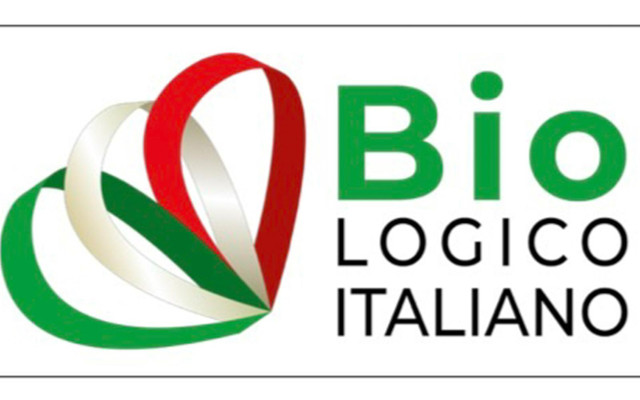
With the decree of May 26, 2026, the Ministry of Agriculture, Food Sovereignty and Forests (MASAF) has defined the conditions and methods of attribution and use of the ‘Italian organic brand‘, the national distinctive sign established pursuant to the law of March 9, 2022, n. 23.
The brand – voluntary, free of charge and the exclusive property of the ministry – is intended to mark only organic products obtained from agricultural raw materials cultivated or raised in Italy, in addition to the European Union organic production logo.
The exclusion of the processing industry and specialized distribution, which handle complex products or with ingredients not cultivable in Italy, risks nullifying the spread of the brand itself. Not to mention doubts about compatibility with European law.
The regulatory path from the framework law to the implementing decree
National law 23/2022 – the framework law on organic farming, in article 7 – had established the Italian organic brand as a public distinctive sign, referring to a ministerial decree for the definition of the application rules. The agreement in the State-Regions Conference was reached in February 2026 and the implementing decree, signed on May 26, 2026, was published in the Official Gazette on July 13, 2026.
The provision consists of six articles and a technical annex. Article 1 adopts the usage regulation and identifies the mark in the graphic sign shown in the annex, with the related binding technical specifications. Articles 2 and 3 govern the access procedure and the methods of use on the label, article 4 the controls.
The logo depicts a leaf-shaped composition in the colors of the Italian flag, with the inscription 'Biologico italiano'.
Origin requirements and the constraint of national raw materials
All organic operators with registered and production offices in the territory of the European Union may use the mark, provided that the product bears the wording ‘Agriculture Italy' or 'Aquaculture Italy', pursuant to Regulation (EU) 2018/848.
The essential requirement is therefore anchored to Article 32 of Regulation (EU) 2018/848, which allows the name of a country to be indicated as the place of cultivation of agricultural raw materials when these have been obtained there in an amount at least equal to 95% by weight.
The decree, note well, does not introduce production requirements additional, nor a parallel certification system. The declared objective is to strengthen the enhancement of national organic farming and transparency towards consumers, without altering the certification framework already established by EU law.
The request through the information system and tacit consent
Access to the mark follows a logic of administrative simplification. Interested operators must submit a communication to MASAF through a dedicated application, available free of charge in the Organic Information System (SIB), integrated into the SIAN (National Agricultural Information System). The communication must contain:
- the enterprise's identifying data, including the CUAA (Unique Code of Identification of the Agricultural Company) or another unique code;
- the list of products on which the mark is intended to be applied;
- a self-declaration with which the operator certifies compliance with the organic control system and expresses the intention to use the mark;
- the commitment to comply with the regulations of use and to promptly communicate any changes related to the declared products.
It applies silence-assent: after thirty days from the communication without objection from the ministry, the operator is authorized to use the mark.
Graphic criteria for coexistence with the European logo
The decree establishes specific prescriptions so that the Italian organic mark can be placed on label, to ensure the recognizability of the mark and the subordinate hierarchy compared to the European logo:
- complementarity. The national mark must be used in addition (and not as a substitute) to the EU organic logo, in the same field of view and in smaller dimensions;
- unalterability. Additions of text, shape modifications, alterations of visual elements, graphic effects, transparencies, and coverings, even partial compared to the models reported in the decree, are prohibited;
- dimensions. The standard model must comply with a minimum height of 8.5 mm and a minimum width of 18.022 mm. For very small packages – where even the EU logo is in reduced size – a minimum height of 5.5 mm is allowed, without the wording ‘Italian Organic’;
- variants. Monochrome or negative versions are provided when the background does not guarantee adequate readability. The annex defines colors, fonts, proportions, and usable versions.
Official controls and sanctions
The Organic Information System (SIB) performs a consistency check on the registration of the operator in the national list of organic operators and on the possession of a valid certificate under European regulations. The supervision of the use of the mark is then integrated into the system of official controls — entrusted to ICQRF, authorities, and control bodies — already operating in the organic sector (Ferrucci et al., 2019).
Regarding sanctions the decree refers to legislative decree 148/2023. Improper use of the mark, when likely to mislead the consumer about the Italian origin of the raw material, is punished — unless the act constitutes a crime (e.g. food fraud) — with an administrative pecuniary sanction up to up to 4% of turnover global of the financial year preceding the assessment, in any case not less than 4,000 euros nor more than 100,000 euros.
Uncertainties about compatibility with the single market
The covering note of the project notified to the European Commission states the intention to ‘promote and enhance national organic products‘ made ‘with raw materials cultivated or bred in Italy‘ (TRIS, notification 2026/0067/IT). A public brand which takes the national origin of raw materials as the primary message – and any promotional campaigns financed with state resources – however risks colliding with:
- the prohibition of measures having equivalent effect to quantitative restrictions on the free movement of goods (Article 34 TFEU, formerly Article 28 TEC). In the judgement Commission v. Ireland (case 249/81, ‘Buy Irish’), the Court of Justice ruled the illegality of an advertising campaign aimed at strengthening consumer preferences towards national products;
- the regulation of state aid (Article 107 TFEU). As clarified by the Commission in response to written question P-0040/09, ‘the Commission will not authorise state aid for advertising campaigns whose primary message is the origin of the product‘, and aid for the development and use of a label indicating origin as the primary message itself qualifies as aid for advertising,
- the European Commission guidelines (2001) on state aid for the advertising of agricultural products. Which prohibit advertising that induces the purchase of national products ‘solely because of their national origin‘ (point 20) and censure measures that reflect ‘a considered intention of a Member State to substitute domestic products for products imported from other Member States‘ (point 24).
The formal opening to operators based in other Member States (Article 1, paragraph 3) however appears of doubtful effectiveness: the application SIB is available only in Italian language and above all does not have been defined procedures nor agreements with control bodies authorized by the competent authorities of other Member States for the certification of the Italian origin of raw materials.
The Italian Ministry of Agriculture, it is worth remembering, had already been forced to reform its own decree on organic products, as it introduced discrimination in official controls on imported products (Dongo, 2021).
The European Commission however allowed the standstill period provided for by the Technical Regulation Information System Directive (EU) 2015/1535 (TRIS) without expressing any observation, to the detriment of the competitiveness of European companies in the organic sector and the free movement of goods which is the basis of the integration of Member States.
Concluding considerations
The decree under examination, paradoxically, also discriminates against all products ‘Made in Italy’ where it is not possible to use 95% of Italian agricultural raw materials for a variety of reasons including their total unavailability (e.g. cocoa, coffee) or partial, also due to seasonal, quantitative and qualitative supply needs.
The potential of the Italian organic certification mark — as an instrument of enhancement of Made in Italy organic products — is thus wasted from the start, since the majority of processing and specialized distribution operators will not be able to use it and therefore will not promote it either in Italy or in international markets.
The reform of the decree with the effective involvement of all stakeholder could prevent the repetition of failure, due to lack of participation and total absence of consumer recognition, already observed in a series of public certification marks that nonetheless had appreciable meaning, from ‘Made Green in Italy’ to SQNBA, SQNZ, SQNPI.
Dario Dongo
Notes
Legislation, case law and European databases
Court of Justice of the European Communities. (1982). Judgment of 24 November 1982, Commission v Ireland, Case 249/81 (‘Buy Irish’), ECR 1982, 4005. https://eur-lex.europa.eu/legal-content/EN/TXT/?uri=CELEX:61981CJ0249
European Commission. (2001). Community guidelines for State aid for advertising of products listed in Annex I to the EC Treaty and of certain non-Annex I products. Official Journal of the European Communities, C 252, 12.9.2001, 5–14. https://eur-lex.europa.eu/legal-content/EN/TXT/?uri=CELEX:52001XC0912(01)
European Commission. (2009). Answer given by Mrs Fischer Boel on behalf of the Commission to written question P-0040/09 (Hannu Takkula, ALDE). https://www.europarl.europa.eu/sides/getAllAnswers.do?reference=P-2009-0040&language=EN
Regulation (EU) No 1169/2011 of the European Parliament and of the Council of 25 October 2011 on the provision of food information to consumers. Consolidated text: 01/04/2025. http://data.europa.eu/eli/reg/2011/1169/2025-04-01
Regulation (EU) 2018/848 of the European Parliament and of the Council of 30 May 2018 on organic production and labelling of organic products and repealing Council Regulation (EC) No 834/2007. Consolidated text: 25/03/2025. http://data.europa.eu/eli/reg/2018/848/2025-03-25
Technical Regulation Information System (TRIS), European Commission. TRIS Notification No. 2025/0233/D. Italy . Ministerial Decree laying down the conditions and procedures for the award of the Italian Organic Mark pursuant to Article 6 paragraph 3 of Law No 23 of 9 March 2022. https://technical-regulation-information-system.ec.europa.eu/it/notification/27687/text/D/EN
Italian legislation
MASAF Decree 26 May 2026. Conditions and methods for awarding the Italian Organic Mark. Official Gazette General Series No. 160 of 13.7.26. https://www.gazzettaufficiale.it/eli/id/2026/07/13/26A03407/sg
Law 9 March 2022, No. 23. Provisions for the protection, development and competitiveness of agricultural, agri-food and aquaculture production with organic methods. Normattiva (last update of the act published on 13.7.24) https://www.normattiva.it/uri-res/N2Ls?urn:nir:stato:legge:2022-03-09;23
Legislative decree 20 October 2023, No. 148. Adaptation of national legislation to the provisions of Regulation (EU) No 2018/848 on organic production and labelling of organic products, and to the provisions of Regulation (EU) 2017/625 on official controls and other official activities carried out to ensure the application of food and feed law, animal health and welfare rules, plant health, and plant protection products. Normattiva. https://www.normattiva.it/uri-res/N2Ls?urn:nir:state:law:2023-10-06;148
Previous articles
Ferrucci, D., Dongo, D. (2019, March 7). Organic controls in Italy, the ABC and the data. FT (Food Times). https://www.foodtimes.eu/en/planet/organic-controls-in-italy-the-abc-and-the-data/
Dongo, D. (2021, May 24). Controls on imports of organic products, the MiPAAF corrects the course. https://www.foodtimes.eu/en/food-systems/controls-on-imports-of-organic-products-the-mipaaf-corrects-the-course/

Dario Dongo, lawyer and journalist, PhD in international food law, founder of WIISE (FARE - GIFT – Food Times) and Égalité.


