

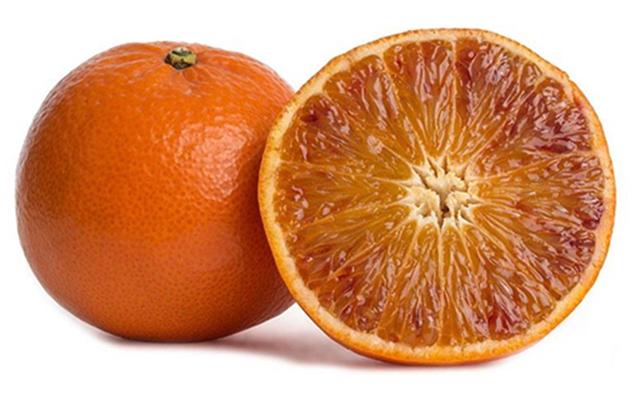
The Mandared it is a seedless mandarin-like, with red-pigmented pulp and a sour taste reminiscent of blood oranges. Born from a cross between clementine of Nules and Tarocco orange tetraploid, obtained in 1985 by researchers from Acireale (ARSAC, s.d.). CREA, the Council for Agricultural Research and Agricultural Economic Analysis, released it in 2004. Today it is cultivated or tested in several citrus producing countries (Caruso et al., 2020).
Origin of the Mandared, from Nules and Tarocco
The 1985 crossover and the 2004 release mark two distinct stages. First the hybrid was obtained, then approximately twenty years of selection and evaluation followed (ARSAC, s.d.; Caruso et al., 2020). According to the sheet of the regional company for the development of Calabrian agriculture (ARSAC), the variety is protected by a European patent (ARSAC, s.d.).
The Mandared is a triploid hybrid: it has three sets of chromosomes, because it was born from a clementine with two sets and from a Tarocco with four (Caruso et al., 2020). For over forty years the CREA of Acireale has crossed diploid mandarins with the tetraploid Tarocco to obtain triploid, sterile and therefore without seeds (Licciardello, 2021).
The same program gave the Tacle, born in 1980 from Clementina Monreal and tetraploid Tarocco (ARSAC, s.d.). The two red mandarins therefore have the same male parent and different mothers. They are autonomous varieties, with their own characteristics and calendars.
Shape, zest and taste
The fruit has oblate shape, that is, flattened at the poles, with thin and smooth skin, and medium-large size for a mandarin (Caruso et al., 2020). In the ARSAC experimental fields of Mirto, in the Sibari Plain, the fruits weigh 150-170 grams. They yield 55-60% juice, are peeled with medium ease and have an intense anthocyanin red pulp (ARSAC, s.d.).
The taste it's more acidic than that of other mandarins and remembers the blood oranges, from which the Mandared inherits the male parent (Caruso et al., 2020). In the CREA test in the Syracuse area, the juice had between 10.1 and 12.3 degrees Brix and an acidity between 12 and 16 grams per liter. In suitable environments, sugars and acids reach a good balance (Caruso et al., 2020).
When it ripens and where it is grown
In the northern hemisphere the Mandared matures between mid-January and mid-February (Caruso et al., 2020). A company in the Catania plain markets it from January to February, with fruits weighing between 80 and 220 grams (Oranfrizer, s.d.). However, the calendar changes with the environment: in the Sibari Plain the ratio between sugars and acids exceeds 9 only at the beginning of March (ARSAC, s.d.).
In Mirto (Cosenza, Calabria) the Mandared is part of a varietal orientation field created with the Acireale centre. All varieties in the field are seedless and do not induce seeds in neighboring Common Clementines through cross-pollination. Evidence indicates that these mandarin-like can extend the citrus fruit season of the Piana di Sibari until March (ARSAC, s.d.).
Red pulp, the role of cold
There red pulp it is due to anthocyanins. In red mandarins made up of CREA these pigments accumulate from mid-December, stimulated by low temperatures (Caruso et al., 2026). The color therefore depends on the variety, the year and the environment, and also on the rootstock. In the Sicilian trial, the trees grafted onto the C22 rootstock gave the highest and most stable anthocyanin concentrations between one year and the next (Caruso et al., 2020).
Cultivation, the limits and the role of rootstocks
Ten years after the first commercial plantings, CREA researchers listed some defects of the variety:
- late entry into production and low productivity;
- the thorns, which injure the peel in windy areas;
- the thin peel, which does little to protect the fruit;
- especially the pre-harvest drop, i.e. the fall of the fruit before commercial maturity (Caruso et al., 2020).
Mandared inherits this tendency from Tarocco, but in an even more marked form, especially with frosts and dry winds (Caruso et al., 2020). For this reason, the weak attachment of the fruit to the peduncle requires anti-drop treatments before harvesting (ARSAC, s.d.).
A CREA trial in the Palazzelli experimental company, in the Syracuse area, compared 11 rootstocks for five years to identify those (C57, C35 and C22) most suitable in south-eastern Sicily (Caruso et al., 2020).
Consumption and uses in the kitchen
THE'absence of seeds and the sweet-sour taste make Mandared suitable for natural consumption. The segments enrich winter fruit salads and salads, the juice lends itself to condiments, sorbets and desserts. The whole fruit preserves the fiber.
The CREA food composition tables do not include Mandared, and the values of mandarins, clementines or oranges cannot be transferred to this hybrid. The agronomic studies cited measure sugars, acidity and anthocyanins in the juice, but do not evaluate health effects.
Tips for purchasing
It is advisable to choose intact fruit, without mould, lesions or soft areas, checking the origin and indication of the variety. The thin peel requires delicacy in handling and storage, in a cool place and with periodic checks. The color of the pulp varies with the vintage and must be evaluated together with taste and juiciness.
Certified citrus fruits organic always guarantee the edibility of the peel – in light of the absolute ban on chemical treatments on it – as well as the highest levels of protection of ecosystems and biodiversity.
For the professional buyers what matters is the degree of ripeness, the relationship between sugars and acidity, the integrity of the skin and the stability after harvesting. The provenance also indicates the calendar: January and February in Sicily, until March in the Sibari Plain (Oranfrizer, s.d.; ARSAC, s.d.).
Dario Dongo
Credit cover Oranfrizer
References
Peer-reviewed scientific studies
Caruso, M., Continella, A., Modica, G., Pannitteri, C., Russo, R., Salonia, F., Arlotta, C., Gentile, A., & Russo, G. (2020). Rootstocks influence yield precocity, productivity, and pre-harvest fruit drop of Mandared pigmented mandarin. Agronomy, 10(9), 1305. https://doi.org/10.3390/agronomy10091305
Institutional sources and agronomic documentation
Regional Company for the Development of Calabrian Agriculture [ARSAC]. (s.d.). Mirto Experimental Demonstration Center: Citrus growing. Accessed 14 October 2026. https://www.arsacweb.it/mirto_agrumicoltura/
Caruso, M., Cortese, M., Russo, R., & Arlotta, C. (2026, May 30). New CREA/2 varieties: citrus fruits. CREATE Future. https://creafuturo.crea.gov.it/17216/
CREA, Food and Nutrition Research Center. (2018). Guidelines for healthy eating. 2018 revision. https://www.crea.gov.it/web/alimenti-e-nutrizione/-/linee-guida-per-una-sana-alimentazione-2018
Licciardello, C. (2021, May 20). The CITRUS project implements sustainable biotechnology to improve the quality of citrus fruit. CREATE Future. https://creafuturo.crea.gov.it/2307/
Company documentation
Oranfrizer. (s.d.). Mandared. Product sheet. Accessed 14 October 2026. https://www.oranfrizer.it/product_detail/it-IT/43/mandared

Dario Dongo, lawyer and journalist, PhD in international food law, founder of WIISE (FARE - GIFT – Food Times) and Égalité.


