

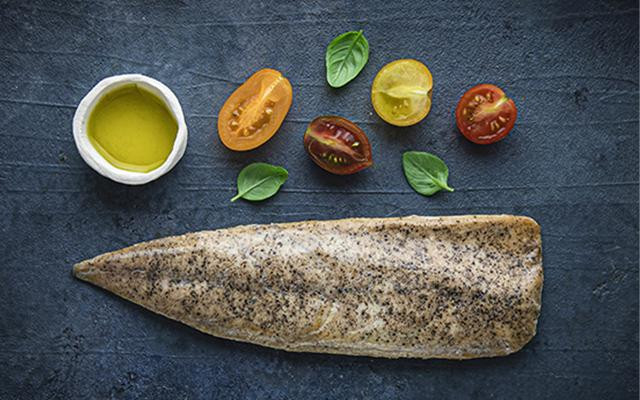
The mackerel is one of the most interesting blue fish from a nutritional, gastronomic and industrial perspective. Economical compared to many other marine species, equipped with tasty and naturally lipid-rich flesh, it is suitable for both fresh consumption and long-lasting preservation – preserves in oil or brine – as well as higher value-added processing, such ashot smoking.
Production, market and export
Mackerel represents a major commodity of North Atlantic fishing. In 2025 the TAC (Total Allowable Catch) of the northeast Atlantic mackerel was set at 576,958 tons, a 22% reduction compared to 2024 and, at that time, in line with the scientific opinion of the International Council for the Exploration of the Sea, ICES (European Commission, 2024).
However, the ICES opinion published at the end of September 2025 indicated, according to the Maximum Sustainable Yield (MSY) approach, catches not exceeding 174,357 tons in 2026, about 70% less (ICES, 2025). On December 13, 2025, the Council of the European Union thus adopted provisional catch limits for the first six months of 2026, equal to 90% of the level recommended by science, pending the conclusion of consultations among coastal States (Council of the European Union, 2025).
The United Kingdom, Norway, Faroe Islands (Denmark) and Iceland, excluding the European Union, have then signed a four-party agreement setting the total 2026 TAC at 299,010 tonnes, about 1.7 times the level indicated by ICES. The shared management of this migratory pelagic stock thus remains far from resolved (Scottish Government, 2025).
The European market already recorded a phase of sustained prices in 2025. According to EUMOFA data (European Market Observatory for Fisheries and Aquaculture Products), the average first sale price of whole fresh mackerel in the period January-October 2025 reached €2.06/kg in Denmark, €1.60/kg in Ireland, €3.17/kg in the Netherlands and €3.38/kg in Spain. In France, on the wholesale market, the January-October average stood at €4.35/kg for the product caught with trawl nets and €5.02/kg for that caught with line. Retail prices monitored by EUMOFA reached, in the first nine months of 2025, €6.94/kg in Poland and €9.64/kg in France (EUMOFA, n.d.).
Mackerel, considering together the different commercial species, is furthermore among the most consumed fish in the European Union. EUMOFA indicates an apparent consumption of 0.67 kg per capita in live weight equivalent in 2023, the last year with consolidated supply balance, twelfth species by consumption in the Union (EUMOFA, n.d.).
In 2026, the European sector of small pelagics continues to show high volumes of trade. In the first quarter of the year, first sales of small pelagics in the European Union reached 353,648 tonnes, +23% compared to the corresponding period in 2025, while extra-EU imports of the sector in the same quarter grew by 16% in volume and 11% in value (EUMOFA, 2026).
History
Mackerel has accompanied coastal populations of the Mediterranean and the Atlantic for centuries. Its distribution, seasonal abundance and natural aptitude for salting have favored its use both fresh and processed.
The techniques of salting, drying, marinating and smoking they respond to the same historical need: to stabilize a fatty and rapidly perishable fish during periods of abundance.
FAO still records traditional uses of mackerel in the Mediterranean as fresh, salted, dried under salt, smoked, marinated, and canned consumption (Griffiths et al., 2007).
Pellegrino Artusi also dedicates a precise note to mackerel in the introduction to fish dishes of The science in the kitchen and the art of eating well. Indicates the favorable period in the spring and suggests cooking stewed or grilled, with oil, salt, pepper and 'some rosemary leaves', the rosemary (Artusi, 1911).
Fishing and processing areas in Italy
The Atlantic mackerel (Scomber scombrus Linnaeus, 1758) is a gregarious epipelagic species distributed in the North Atlantic, including the Baltic, the Mediterranean, and the Black Sea. It forms size-homogeneous schools, winters in deeper waters, and approaches the coasts in spring, when the water temperature is between 11 and 14 °C. It coexists with other species of the genus Scomber, including the Atlantic chub mackerel, Scomber colias (Collette & Nauen, 1983; FishBase, 2026a, 2026b).
In the Mediterranean, the FAO reports semi-industrial fishing activities of mackerel, among others, in Sicily, Tyrrhenian Sea, and Adriatic Sea, alongside artisanal fishing. The gear associated with the species includes lift nets and purse seines, light fishing, bottom and pelagic trawl nets, gillnets, longlines, hand lines, and trolling (Griffiths et al., 2007). However, Italian production should not be confused with the origin of the raw materials processed in Italy. A significant portion of the mackerel intended for preserves and smoked specialties actually comes from the northeastern Atlantic.
An example is Friultrota, a company from San Daniele del Friuli that applies processing techniques to mackerel developed from its experience with trout and other fish. For its hot-smoked mackerel, the company declares Scomber scombrus caught in the northeastern Atlantic, between the northwestern coast of Scotland, northern Ireland, and the seabeds west of Scotland, with an ingredient list limited to mackerel, salt, and black pepper (Friultrota, n.d.).
The case is also interesting because it shows how Italian fish processing does not necessarily coincide with Italian raw materials. The added value of Made in Italy in this sector is therefore linked to the recognized art of selection, trimming, salting, smoking, portioning, and packaging.
Ingredients and processing methods
Canned mackerel fillets
Mackerel is particularly well suited to sterilization in a hermetically sealed container because heat treatment stabilizes an otherwise highly perishable food, and the lipid component maintains good juiciness of the flesh.
The formulations may include the simplest:
- mackerel;
- olive oil or extra virgin olive oil, or other vegetable oils (e.g. sunflower);
- alternatively, water or brine;
- salt;
- any herbs, spices, vegetables, or sauces.
In traditional industrial processing, the fish is beheaded and gutted, carefully cleaned, sectioned or filleted, possibly subjected to brining or precooking, placed in the container with the packing liquid, and finally subjected to heat treatment of sterilization.
hot smoking
Hot smoking combines salting, smoke and heat treatment. Unlike cold smoking, it does not have only an aromatic function since it includes cooking the fish. The technical note from the Torry Research Station, published by the FAO, recommends hot smoking mackerels with at least 10% fat, a short passage in concentrated brine, and exposure to smoke at increasing temperatures, in three phases at 30, 50, and 80 °C, until the meat is completely cooked (Keay, 1979).
Friultrota applies to mackerel a technique of hot smoking in which, according to the company, 'salt, temperature and fumes obtained from the combustion of hardwoods and aromatic berries' contribute to the result, after salting and processing at controlled temperature. The company also emphasizes the selection of raw material only in the season when the fat content is considered optimal for smoking (Friultrota, n.d.).
Fat indeed plays an important technological and sensory role: it limits the perception of dryness, conveys smoke aromas, and contributes to a delicate texture.
Nutritional properties
The food composition tables indicated by CREA — Center for Food and Nutrition Research (2019) refer to Scomber scombrus two specific sheets, mackerel raw, code 123000, and mackerel in brine, code 123010, with the following nutritional values (CREA, 2019a, 2019b).
The following table reproduces CREA values per 100 g, ordering macronutrients according to the sequence provided in Annex XV of Regulation (EU) No 1169/2011. Minerals and vitamins reaching or exceeding 15% of the reference nutritional values in Annex XIII to Regulation (EU) No 1169/2011 (NRV) per 100 g are added.
| Nutrient, per 100 g | Raw mackerel | Mackerel in brine |
| Energy | 710 kJ / 170 kcal | 741 kJ / 177 kcal |
| Fats | 11.1 g | 11.1 g |
| of which saturated fatty acids | n.d. in g* | n.d. |
| Carbohydrates | 0.5 g | 0 g |
| of which sugars | 0.5 g | 0 g |
| Fibre | 0 g | 0 g |
| Proteins | 17.0 g | 19.3 g |
| Salt | 0.33 g** | n.d. |
| Potassium | 360 mg – 18% NRV | n.d. |
| Phosphorus | 264 mg – 37.7% NRV | 274 mg – 39.1% NRV |
| Copper | 0.7 mg – 70% NRV | n.d. |
| Zinc | 2.0 mg – 20% NRV | n.d. |
| Selenium | 9.8 µg – 17.8% NRV | n.d. |
| Calcium | 38 mg | 185 mg – 23.1% NRV |
| Iron | 1.2 mg | 2.1 mg – 15% NRV |
| Riboflavin (B2) | 0.25 mg – 17.9% NRV | 0.21 mg – 15% NRV |
| Niacin (B3) | 7.60 mg – 47.5% NRV | 5.80 mg – 36.3% NRV |
| Vitamin A, retinol equivalent | 45 µg | 129 µg – 16.1% NRV |
(*) For raw mackerel CREA does not express saturates in g/100 g, but reports saturated fatty acids as 28.5% of the fatty acids analyzed. In the same profile monounsaturated fatty acids represent 45.1% and polyunsaturated 26.86%. Eicosapentaenoic acid (EPA) e docosahexaenoic acid (DHA) represent respectively 7.97% and 13.76% of the fatty acids reported by CREA.
(**) CREA reports 130 mg sodium/100 g for the raw product. Applying the conversion factor established by European regulations, salt = sodium × 2.5 (EU reg. 1169/2011, Annex I, point 11), results in 0.33 g salt per 100 g.
Nutrition and health claim
CREA values suggest the possibility to use nutrition claims below, in the commercial information related to fresh mackerel, respecting the conditions of use set by regulation (EC) no. 1924/2006:
- ‘high protein content‘, because they provide about 40% of energy, that is double the threshold (20%) established to provide such indication (reg. EC 1924/2006, Annex);
- ‘high high content of phosphorus, copper and niacin, which exceed 30% of the respective NRVs;
- ‘source of potassium, zinc, selenium and riboflavin, whose values range between 15% and 30% of the corresponding NRVs;
- ‘high high content of omega-3 fatty acids‘, where EPA and DHA together represent about 2 g per 100 g, far beyond the 80 mg of EPA and DHA per 100 g and per 100 kcal required for the claim.
For brined mackerel the nutrition claim ‘high protein content’, phosphorus and niacin, ‘source of’ calcium, iron, riboflavin and vitamin A, presumably also ‘high omega-3 content’. When the cited conditions occur, the following authorized health claim may also be referred to according to regulation (EU) no. 432/2012.
All nutritional and health claims must in any case be based on analyses of representative product samples. Our team of DO supports the operators, their representatives and the consortia also of research in enhancing the products under these and other profiles, based on transparency and compliance with the current rules in the destination markets.
Possible health benefits
The scientific literature of recent years – based on epidemiological studies and their reviews – suggests possible health benefits associated with fish consumption and fatty fish, as it is rich in omega-3. These studies have not yet been considered by EFSA for the authorization of further health claim, which therefore cannot be used in commercial communication.
Cardiovascular health
The most consistent evidence concerns the association between fish consumption and cardiovascular health:
- a systematic review of 24 observational studies, on over 700,000 participants, found that the consumption of non-fried fish is probably associated with a lower risk of cardiovascular events and heart attack, although noting heterogeneous results among studies and no significant association with stroke (Krittanawong et al., 2021);
- a subsequent meta-analysis of cohort studies, including over 1.4 million participants and about 79,000 cardiovascular events, found an inverse association between fish consumption and overall cardiovascular risk; an intake of about two-three weekly portions was associated with a relative risk reduction of approximately 8-10% (Ricci et al., 2023).
Cognitive function
A systematic review with dose-response meta-analysis published in Nutrition Reviews observed an association between fish consumption up to two weekly portions and a lower risk of dementia and, more statistically robustly, Alzheimer’s disease, without further benefits beyond this threshold (Kosti et al., 2022).
An updated 2024 meta-analysis, based on 35 observational studies, found inverse associations between higher fish consumption and cognitive decline, dementia, and Alzheimer’s disease, with relative risk reductions of about 18-20% between highest and lowest intakes.
The authors also emphasize that, especially for dementia and Alzheimer's, further data are needed before turning such associations into definitive causal conclusions (Godos et al., 2024).
Mackerel in Italian cuisine
Italian cuisine has probably valued mackerel less compared to tuna, sardines and anchovies, although it also has remarkable gastronomic versatility.
Fresh
Pellegrino Artusi recommended fresh fresh mackerel in spring, 'especially in May', suggesting above all the preparation stewed, because of the meat 'tough and stringy', or grilled with oil, salt, pepper and rosemary (Artusi, 1911).
Contemporary cuisine has greatly expanded the repertoire. La Cucina Italiana offers mackerel pan-fried, baked, grilled, marinated, breaded, with citrus, vegetables and fennel, as well as preparations with pasta and risotto (La Cucina Italiana, 2026).
Il Cucchiaio d’Argento also documents preparations grilled with lemon and chili, baked with potatoes, with mustard, showing how a strongly flavored meat can support the simplest Mediterranean seasonings as well as more complex sauces (Cucchiaio d’Argento, n.d.).
The critical point remains the cooking. Mackerel quickly loses juiciness when overcooked: very fresh fillets normally require short and controlled cooking times.
In oil
Mackerel preserved in oil is now part of the Italian pantry alongside tuna. It can be used in bruschetta and crostini, potato or legume salads, pasta sauces, dishes with tomato, capers and olives, creams and fillings, preparations with raw or cooked vegetables.
Smoked mackerel
Smoked mackerel is a ready-to-eat food still not widespread in Italy, alternative to smoked trout and salmon, and lends itself to particularly simple preparations. Il Cucchiaio d’Argento, for example, pairs smoked mackerel fillets with yogurt, lemon and chives for tartines (Cucchiaio d’Argento, n.d.).
Hot smoking also offers a different texture from classic cold smoking: closer to that of cooked fish, soft and flaky, suitable both for direct consumption and for catering.
Buyer tips
In fresh fish it is good to first check clear and bright eye, gills of vivid color, shiny skin, clean marine smell and firm flesh. Artusi already indicated the'lively and shiny eye' and the 'red color of the gills' among the signs of fish freshness (Artusi, 1911).
Mackerel is a fatty and very perishable fish. It is therefore advisable to prioritize its real freshness over size or perfect aesthetic appearance and keep it strictly refrigerated.
Thefresh fish label provides useful information also for an informed gastronomic choice. The European rules on the common organization of the fishery markets impose, among other things, the indication of commercial name, scientific name, production method, catch area and category of the fishing gear, as well as the indication of any defrosting in the cases provided for (EU reg. 1379/2013, art. 35.1).
For preserves it is advisable to compare:
- actual percentage of fish;
- declared species;
- type of brine and/or oil;
- amount of salt;
- integrity of the fillets;
- origin of the raw material, if indicated voluntarily.
For thesmoked, besides species and origin, the smoking technique, salting and the consistency of the fillet gain importance.
Cold chain
A particularly important point for mackerel is the histamine risk. The Scombridae are indeed among the fish families with high histidine content for which European microbiological criteria set specific histamine limits (reg. EC 2073/2005, Annex I, chapter 1, criteria 1.26 and 1.27).
Histamine can develop when time and temperature management is inadequate and, once formed, it cannot be eliminated by subsequent cooking. The correct cold chain thus constitutes an essential purchase and management criterion for fresh fish.
Conclusions
The mackerel (Scomber scombrus) combines characteristics that deserve greater attention in the Italian food chain: affordable cost, appreciable nutritional value, gastronomic roots and remarkable technological versatility.
The Fresh enhances a simple raw material through quick cooking and Mediterranean cuisine; the preserves allow long shelf life and great practicality; thehot smokingstill relatively niche in Italy, offers opportunities for products premium with a high level of processing.
On the nutritional level, CREA data confirm a good intake of proteins and several micronutrients, as well as a lipid fraction characterized by the presence of EPA and DHA.
Scientific evidence from the last decade also associates regular fish consumption, within balanced dietary models, with favorable outcomes especially on cardiovascular health and, with less definitive evidence, cognitive health.
The greatest challenge in the coming years may appear upstream in the supply chain. The strong reduction in the scientific opinion on the catches of northeastern Atlantic mackerel for 2026 shows how sustainable management of stocks, availability of raw materials and prices are destined to become increasingly important factors also for processors, distributors, and Italian consumers.
Dario Dongo
Credit cover Friul Trota
References
Scientific sources
Godos, J., Micek, A., Currenti, W., Franchi, C., Poli, A., Battino, M., Dolci, A., Ricci, C., Ungvari, Z., & Grosso, G. (2024). Fish consumption, cognitive impairment and dementia: An updated dose-response meta-analysis of observational studies. Aging Clinical and Experimental Research, 36(1), 171. https://doi.org/10.1007/s40520-024-02823-6
Kosti, R. I., Kasdagli, M. I., Kyrozis, A., Orsini, N., Lagiou, P., Taiganidou, F., & Naska, A. (2022). Fish intake, n-3 fatty acid body status, and risk of cognitive decline: A systematic review and a dose–response meta-analysis of observational and experimental studies. Nutrition Reviews, 80(6), 1445–1458. https://doi.org/10.1093/nutrit/nuab078
Krittanawong, C., Isath, A., Hahn, J., Wang, Z., Narasimhan, B., Kaplin, S. L., Jneid, H., Virani, S. S., & Tang, W. H. W. (2021). Fish consumption and cardiovascular health: A systematic review. The American Journal of Medicine, 134(6), 713–720. https://doi.org/10.1016/j.amjmed.2020.12.017
Ricci, H., Gaeta, M., Franchi, C., Poli, A., Battino, M., Dolci, A., Schmid, D., & Ricci, C. (2023). Fish intake in relation to fatal and non-fatal cardiovascular risk: A systematic review and meta-analysis of cohort studies. Nutrients, 15(21), 4539. https://doi.org/10.3390/nu15214539
Nutritional data
CREA – Research Center for Food and Nutrition. (2019a). Food composition tables. Mackerel, raw, code 123000 – Scomber scombrus. FoodNUTrition. https://www.alimentinutrizione.it/tabelle-nutrizionali/123000
CREA – Research Center for Food and Nutrition. (2019b). Food composition tables. Mackerel, in brine, code 123010 – Scomber scombrus. FoodNUTrition. https://www.alimentinutrizione.it/tabelle-nutrizionali/123010
Fishing, market and biology
Collette, B. B., & Nauen, C. E. (1983). FAO species catalogue. Vol. 2. Scombrids of the world. An annotated and illustrated catalogue of tunas, mackerels, bonitos and related species known to date (FAO Fisheries Synopsis No. 125, Vol. 2). FAO. https://www.fao.org/docrep/pdf/009/ac478e/ac478e09.pdf
EUMOFA – European Market Observatory for Fisheries and Aquaculture Products. (n.d.). Atlantic mackerel (Scomber scombrus): Species profile. European Commission. Accessed October 3, 2026. https://fishery-aquaculture-market-observatory.ec.europa.eu/en/country-and-species-profiles/species-profiles/atlantic-mackerel
EUMOFA – European Market Observatory for Fisheries and Aquaculture Products. (2026). Monthly Highlights No. 6/2026. European Commission. https://fishery-aquaculture-market-observatory.ec.europa.eu/system/files/2026-07/Monthly%20Highlights%20N.%206-2026_2.pdf
FishBase. (2026a). Scomber scombrus Linnaeus, 1758. Atlantic mackerel. https://www.fishbase.se/Summary/SpeciesSummary.php?id=118&lang=english
FishBase. (2026b). Scomber colias Gmelin, 1789. Atlantic chub mackerel. https://www.fishbase.se/summary/Scomber-colias.html
Griffiths, R. C., Robles, R., Coppola, S. R., & Camiñas, J. A. (2007). Is there a future for artisanal fisheries in the western Mediterranean? FAO/COPEMED. https://www.fao.org/4/a1073e/a1073e00.pdf
ICES – International Council for the Exploration of the Sea. (2025). Mackerel (Scomber scombrus) in subareas 1–8 and 14 and in divisions 9.a, 12.a, and 12.b (Northeast Atlantic and adjacent waters). ICES Advice 2025, mac.27.nea. https://doi.org/10.17895/ices.advice.27202689
Processing technologies
Friultrota di Pighin S.r.l. (n.d.). Hot smoked mackerel. San Daniele del Friuli. https://www.friultrota.com/sgombro-affumicato-a-caldo/
Keay, J. N. (1979). Handling and processing mackerel (Torry Advisory Note No. 66, revised). Torry Research Station, Ministry of Agriculture, Fisheries and Food. https://www.fao.org/4/x5938e/x5938e01.htm
Gastronomic sources
Artusi, P. (1911). Fish dishes. In The science in the kitchen and the art of eating well. Definitive edition, reproduced by the Municipality of Forlimpopoli. https://www.pellegrinoartusi.it/piatti-di-pesce-2/
Silver Spoon. (n.d.). Recipes with mackerel. Editoriale Domus. https://www.cucchiaio.it/ricette/pesce-azzurro_sgombro~1/
La Cucina Italiana. (June 5, 2026). 20 easy mackerel recipes rich in Omega-3. Condé Nast. https://www.lacucinaitaliana.it/news/cucina/ricette-sgombro-idee-gustose-da-cui-prendere-spunto/
European Union regulations
Regulation (EC) No 1924/2006 of the European Parliament and of the Council on nutrition and health claims made on foods. Consolidated text: 13/12/2014. http://data.europa.eu/eli/reg/2006/1924/2014-12-13
Regulation (EU) No 1169/2011 of the European Parliament and of the Council on the provision of food information to consumers. Consolidated text: 01/04/2025. http://data.europa.eu/eli/reg/2011/1169/2025-04-01
Commission Regulation (EU) No 432/2012 establishing a list of permitted health claims made on foods, other than those referring to the reduction of disease risk and to children’s development and health. Consolidated text: 20/08/2025. http://data.europa.eu/eli/reg/2012/432/2025-08-20
Regulation (EU) No 1379/2013 of the European Parliament and of the Council on the common organisation of the markets in fishery and aquaculture products. Consolidated text: 27/11/2024. http://data.europa.eu/eli/reg/2013/1379/2024-11-27
Commission Regulation (EC) No 2073/2005 on microbiological criteria for foodstuffs. Consolidated text: 01/07/2026. http://data.europa.eu/eli/reg/2005/2073/2026-07-01
Fisheries resource management
European Commission. (2024, 25 October). North-East Atlantic coastal states reach agreement on mackerel, blue whiting and Atlanto-Scandian herring TACs for 2025. Directorate-General for Maritime Affairs and Fisheries. https://oceans-and-fisheries.ec.europa.eu/news/north-east-atlantic-coastal-states-reach-agreement-mackerel-blue-whiting-and-atlanto-scandian-2024-10-25_en
Council of the European Union. (2025, 13 December). Fishing opportunities for 2026 in EU and non-EU waters: Council secures agreement [press release]. https://www.consilium.europa.eu/it/press/press-releases/2025/12/13/fishing-opportunities-for-2026-in-eu-and-non-eu-waters-council-secures-agreement/
Scottish Government. (2025, 15 December). Mackerel: 4 party arrangement (UK, Norway, Faroe Islands, Iceland). In Management of shared fish stocks: Coastal state agreed records 2026. https://www.gov.scot/publications/management-of-shared-fish-stocks-coastal-state-agreed-records-2026/pages/mackerel/

Dario Dongo, lawyer and journalist, PhD in international food law, founder of WIISE (FARE - GIFT – Food Times) and Égalité.


