

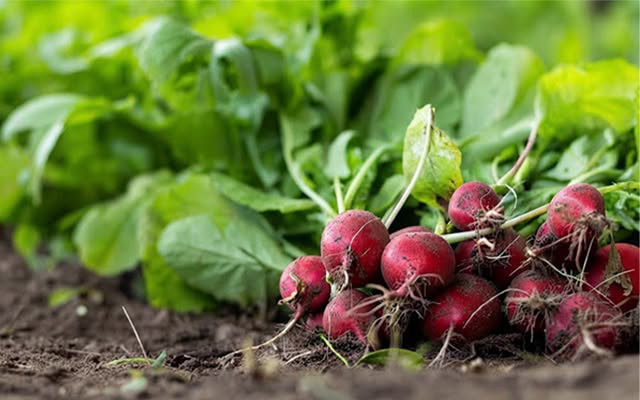
The radish it is one of the most common and at the same time least studied vegetables on the Italian table. Unmissable in pinzimonio, where it provides a spicy note, is distinguished by its bright pinkish-red skin, sometimes with purple hues, and its white, crunchy pulp. The supply chain is dynamic: theItaly figure among the main world exporters of radishes, alongside leafy vegetables and various fruits.
There scientific research of the last ten years has explored its anti-diabetic and anti-inflammatory potential and documented how leaves, normally discarded, surpass the root in various nutritional profiles. This article reconstructs the history, botany, nutritional value, recipes and market prospects of a vegetable that deserves more attention than it receives.
Production, market and export
The available data allow a partial snapshot. ISMEA, at Macfrut 2026, recalled that in 2025 the Italian fruit and vegetable sector it generated around 17 billion euros in the agricultural phase alone, with exports of fresh and processed fruit and vegetables over 13 billion (+6%). Italy, the world's leading exporter of apples, is also on the podium for kiwi, peaches and nectarines, hazelnuts, salads (e.g. lettuce, rocket) and radicchios, spinach, radishes e watermelons (Ismea, 2026).
The radish does not appear in the ISTAT published tables on cultivations, but the Italian data exists and is public. Italy is required to transmit it to Eurostat, which publishes it in statistics on plant productions under the entry Radishes. In 2024 the planted area is 1,010 hectares, for a harvested production of 34,320 tons and a yield of about 34 tons per hectare; the 2025 area rises to 1,240 hectares (Eurostat, 2026).
The volumes are not instead isolable in customs statistics. The combined nomenclature assigns a specific subheading to carrots and turnips, celeriac and horseradish, while radishes fall into the residual 0706 90 90, described as ‘salad beets, salsify, radishes and similar edible roots, fresh or refrigerated‘. No figure relating solely to the radish can therefore be derived from that code.
TheAgro Pontino, in the province of Latina (Lazio), is the reference district for exports. Ortolanda, a cooperative in Borgo Grappa specialized only in radishes, has about 45 hectares of greenhouses, which rise to 70 in winter with partner producers, harvests entirely by hand and manages supply programs across Europe (FreshPlaza, 2024a). In nearby Sabaudia, the OP Stern cultivates radishes on 100 hectares, 80 of which are in tunnels, and markets about 6.5 million bunches per season (Stern, 2023).
History and legends about cultivation
The roots of the radish go back to Mediterranean antiquity. Herodotus reports that on the Great Pyramid was inscribed how much was spent on radishes, onions and garlic for the workers (Histories, II, 125). The Greeks held it in great esteem: Pliny recounts that at Delphi a lead turnip, a chard of silver and a gold radish were offered to the god.
In theancient Rome radishes were common food but not appreciated by everyone. Pliny himself defines it as cibus illiberalis, food for humble people, while recognizing its digestive virtues, and recalls the doctor Androcide, who recommended its consumption against the effects of wine (Naturalis historia, XIX). The radish also appears among the recipes of De re coquinaria attributed to Apicius.
In the Renaissance, Cristoforo da Messisbugo describes a banquet at the Este court of Ferrara in which, among caper and endive salads, are served ‘large radishes carved and small whole radishes‘ (Messisbugo, 1549).
Botanical characteristics and seasonality
The radish belongs to the family of Brassicaceae (Cruciferae). The commonly used name, also by CREA, is Raphanus sativus L. The Flora of Italy Portal — the database of the Life Sciences Department of the University of Trieste, which organizes nomenclature and distribution data of national vascular flora checklists, including that of alien species curated by Galasso and colleagues (2018) — classifies it instead as Raphanus raphanistrum L. subsp. sativus (L.) Schmalh., domesticated directly from the wild subspecies of the eastern Mediterranean. In Italy, it is recorded as casual archaeophyte, that is introduced in ancient times and present in the wild state only occasionally (Flora of Italy Portal, n.d.).
The plant is a scapose therophyte, annual, cultivated for the root, round or elongated, red, white or pink. The cultivation cycle is short, from 30-35 days in autumn and spring to 60-65 in winter (Stern, 2023). Thanks to protected cultivation, radish is available all year, but the main production period is from mid-November to mid-April (FreshPlaza, 2024a).
Production areas, agronomic practices and sustainability
The Italian production center of gravity is the Lazio, and more precisely the area of Latina, where according to trade press 95% of national production is concentrated on over 2,000 hectares cultivated over multiple cycles (FreshPlaza, 2021). The figure does not contradict the 1,010 hectares recorded by Eurostat because it sums the surfaces of each cultivation cycle, rather than measuring the land engaged. The cultivation It takes place in open fields during the mild season and in tunnels or semi-open greenhouses during the cold months. Italian greenhouses supply Northern European markets in winter, where local producers face competition from Italian imports (FreshPlaza, 2024b).
The agronomic practices include staggered sowing for continuous harvesting, controlled irrigation, summer green manuring to restore the soil, and manual harvesting for bunches. Among the varieties most common are Cherry Belle, Saxa, Candela di fuoco, Candela di ghiaccio, Little Red Riding Hood, Sicilian Giant, and Tondo di Albegna. Regarding the sustainability of this crop, the general considerations on horticulture apply organic e integrated.
Nutritional properties
The food composition tables provided by CREA — Food and Nutrition Research Center (2019) report the following nutritional values for fresh radishes (code 005670, 200 g portion), per 100 g:
- energy 56 kJ, 13 kcal;
- fat 0.1 g, of which saturated fatty acids n.d.;
- carbohydrates 1.8 g, of which sugars 1.8 g;
- fiber 1.3 g;
- protein 0.8 g;
- salt 0.15 g;
- vitamin C 18 mg, equal to 22.5% of the Nutrient Reference Values as per Annex XIII of Regulation (EU) No 1169/2011.
It is therefore possible to make the nutrition claim ‘'source of vitamin C'’ (> 15% NRV) — in commercial communication regarding radishes — and the corresponding health claim authorized pursuant to Regulation (EC) No. 1924/06, as per Regulation (EU) No. 432/2012 and subsequent amendments. It is not possible to refer to the presence of other micronutrients, as they do not reach 15% of the NRVs: potassium 240 mg (12%), iron 0.9 mg (6.4%), calcium 39 mg (4.9%).
The leaves deserve a separate discussion. The systematic review by Gamba et al. (2021), which reports data from Goyeneche and colleagues on the red radish, indicates in the leaves 3.81 g of protein per 100 g (compared to 0.57 g in the root), 752 mg of calcium, 495 mg of potassium, and 38.6 mg of vitamin C. Calcium and potassium content in the leaves are the highest among the Brassicaceae compared. A review more recent confirms that the leaves surpass the root for proteins, ash, fiber, and ascorbic acid, and proposes them as by-product to enhance also with a view to reducing food waste (Geng et al., 2025).
Possible health benefits
The Nutrition and Health Claims Regulation (EC) No 1924/06, it is recalled, does not allow health claims in commercial communication related to foods, except for those authorized and included in the list pursuant to Regulation (EU) No 432/2012 and subsequent amendments. No claim has so far been requested, assessed by EFSA, or authorized regarding radish. Scientific research has explored its potential in two main directions:
- diabetes. A review on Nutrients has synthesized three decades of studies in vitro e in vivo on the relationship between radish and diabetes (Banihani, 2017). The hypothesized mechanisms include enhancing antioxidant defenses, reducing free radical accumulation, the effect on hormone-mediated glycemic homeostasis, promoting cellular glucose uptake and energy metabolism, reducing intestinal glucose absorption. However, the observed antidiabetic effects require confirmation with further studies in vivo and clinical trials;
- inflammatory bowel diseases (IBD, Inflammatory Bowel Disease). A 2024 review examined the role of cruciferous glucosinolates, including radishes, in managing IBD (Zhao et al., 2024). The reviewed studies indicate that glucosinolates and their metabolites regulate the intestinal microbiota composition, exert antioxidant and anti-inflammatory effects, restore barrier function, and modulate epigenetic mechanisms. The authors note the scarcity of human clinical trials and variability of results as limitations to overcome.
Pinzimonio, and other recipes
The pinzimonio is the simplest and most widespread way to consume radishes in Italy: seasonal raw vegetables, cut into sticks or slices (or even served whole), to dip into a bowl of extra virgin olive oil, salt, and pepper. The name derives from ‘to pinch‘, the gesture of taking vegetables with fingers. It is a convivial dish originating from Tuscany and Lazio, now widespread everywhere, that values the freshness of the ingredients and requires no cooking. The radish is the protagonist for the contrast between crunchiness and the spicy note, or rather pungent, due to the isothiocyanate released upon cutting (Gamba et al., 2021).
The variants are endless. Il Cucchiaio d’Argento proposes a pinzimonio with three sauces where radishes, carrots, fennel, celery, peppers, and Belgian endive meet an emulsion of honey, mustard, and balsamic vinegar, and a pinzimonio of radishes and honey mayonnaise, where the sweetness of the sauce balances the spiciness of the vegetable (Cucchiaio d’Argento, 2020; 2026).
On the edge of the vinaigrette, the radish enters into other preparations, such as:
- single dish salads, such as 'La Fantasiosa' from the Finocchiona PGI Consortium, with songino, spinach, radicchio, radishes, carrots, strawberries, Pecorino Toscano PDO, Finocchiona PGI and Tuscan PGI oil (Consorzio Finocchiona PGI, 2019);
- pickles and fermented, to extend their preservation;
- pestos and sauces made from the leaves, as detailed below.
The leaves, from waste to plate. The tender leaves of fresh radishes lend themselves to pestos, soups, omelets, and a quick sauté in a pan. The fusilli with radish leaf pesto from Cucchiaio d’Argento transform the waste into a first course, with the pungent note softened by lemon zest and juice (Cucchiaio d’Argento, 2025). Using the leaves means recovering the part richest in proteins, calcium, and vitamin C of the plant, as well as reducing food waste.
Advice for buyers
For gourmets. Choose small and firm radishes, with fresh and turgid leaves: the small size indicates crisp and not spongy pulp, intact leaves guarantee recent harvest. Favor products organic, for the best guarantee of environmental and biodiversity protection. The flavor varies with the season: spicier in the hot months, milder in autumn.
For professional buyers. The period of greatest supply runs from November to April, although the greenhouses of Lazio ensure continuous supply for twelve months. The product is offered in bunches with leaves, loose, in flowpack or in snack leafless form, with longer shelf life.
Conclusions
Despite its modest reputation, the radish has solid credentials: a history that goes from the Egypt of the pharaohs to Este banquets to reach an Italian supply chain capable of exporting all year round, a distinctive nutritional profile (especially in the leaves), research prospects on metabolic and inflammatory fronts. Its cuisine is simple, from vinaigrette to leaf pesto. For the consumer, the choice is clear: seasonal, with leaves, organic where possible.
Dario Dongo
References
Peer-reviewed scientific studies
Banihani, S. A. (2017). Radish (Raphanus sativus) and diabetes. Nutrients, 9(9), 1014. https://doi.org/10.3390/nu9091014
Galasso, G., Conti, F., Peruzzi, L., et al. (2018). An updated checklist of the vascular flora alien to Italy. Plant Biosystems, 152(3), 556-592. https://doi.org/10.1080/11263504.2018.1441197
Gamba, M., Asllanaj, E., Raguindin, P. F., Glisic, M., Franco, O. H., Minder, B., Bussler, W., Metzger, B., Kern, H., & Muka, T. (2021). Nutritional and phytochemical characterization of radish (Raphanus sativus): A systematic review. Trends in Food Science & Technology, 113, 205-218. https://doi.org/10.1016/j.tifs.2021.04.045
Geng, X., Gong, Z., Tian, W., Zhuang, M., Shang, H., Chen, Y., Li, J., Lv, Y., & Bai, K. (2025). Nutritional and phytochemical characterization of radish leaves: A comprehensive overview. Foods, 14(18), 3270. https://doi.org/10.3390/foods14183270
Zhao, J., Zhang, X., Li, F., Lei, X., Ge, L., Li, H., Zhao, N., & Ming, J. (2024). The effects of interventions with glucosinolates and their metabolites in cruciferous vegetables on inflammatory bowel disease: A review. Foods, 13(21), 3507. https://doi.org/10.3390/foods13213507
Publications by institutions and organizations
CREA — Research Center for Food and Nutrition. (2019). Food composition tables: Radishes, fresh (code 005670). https://www.alimentinutrizione.it/tabelle-nutrizionali/005670
Consortium for the protection of Finocchiona PGI. (2019, August 2). Finocchiona PGI to add flavor to summer salads. https://www.finocchionaigp.it/2019/08/la-finocchiona-igp-per-dare-gusto-alle-insalate-estive/
Eurostat. (2026). Crop production in EU standard humidity [apro_cpsh1], item V4500 Radishes, Italy. https://ec.europa.eu/eurostat/databrowser/view/apro_cpsh1/default/table
Ismea. (2026, April 20). Macfrut: Masaf-Ismea, 'fruit and vegetables in schools' at the fair with little chefs [press release reprinted by ANSA]. https://www.ansa.it/sito/notizie/economia/agrimercati/2026/04/20/macfrut-masaf-ismea-frutta-e-verdura-nelle-scuole-in-fiera-i-piccoli-chef_97740e5e-be51-47ce-a8c5-78b345bcf629.html
Portal of the Flora of Italy. (s.d.). Raphanus raphanistrum L. subsp. sativus (L.) Schmalh. University of Trieste. http://dryades.units.it/floritaly/index.php?procedure=taxon_page&tipo=all&id=1690
Stern OP. (2023). radishes. https://www.coopstern.it/prodotti/ravanelli/
Industry press and recipes
Silver Spoon. (2020). pinzimonio of radishes and honey mayonnaise. https://www.cucchiaio.it/ricetta/pinzimonio-di-ravanelli-e-maionese-di-miele/
Silver Spoon. (2025). fusilli with radish leaf pesto. https://www.cucchiaio.it/ricetta/fusilli-al-pesto-di-foglie-di-ravanelli/
Silver Spoon. (2026). Pinzimonio with three delicious sauces. https://www.cucchiaio.it/ricetta/ricetta-pinzimonio-tre-salse-sfiziose/
FreshPlaza. (2021, April 8). Latina is the Italian capital of radish. https://www.freshplaza.it/article/9309590/e-latina-la-capitale-italiana-del-ravanello/
FreshPlaza. (2024a, April 23). The new generation reinvigorates the Italian radish cultivation. https://www.freshplaza.it/article/9619765/la-nuova-generazione-rinvigorisce-la-coltura-italiana-del-ravanello/
FreshPlaza. (2024b, April 15). In the winter season abundance of radishes at affordable prices from Italy. https://www.freshplaza.it/article/9617073/nella-stagione-invernale-abbondanza-di-ravanelli-a-prezzi-convenienti-dall-italia/
Historical sources
Herodotus. Histories, book II, 125.
Messisbugo, C. da. (1549). Banquets, compositions of dishes and general preparation. Ferrara: Buglhat and Hucher. https://archive.org/details/bub_gb_9yA8AAAAcAAJ
Pliny the Elder. Naturalis historia, book XIX.
Legal sources of the European Union
Commission Regulation (EU) No 432/2012 of 16 May 2012 establishing a list of permitted health claims made on foods, other than those referring to the reduction of disease risk and to children’s development and health. Consolidated text: 20/08/2025. http://data.europa.eu/eli/reg/2012/432/2025-08-20
Regulation (EC) No 1924/2006 of the European Parliament and of the Council of 20 December 2006 on nutrition and health claims made on foods. Consolidated text: 13/12/2014. http://data.europa.eu/eli/reg/2006/1924/2014-12-13
Regulation (EU) No 1169/2011 of the European Parliament and of the Council of 25 October 2011 on the provision of food information to consumers. Consolidated text: 01/04/2025. http://data.europa.eu/eli/reg/2011/1169/2025-04-01

Dario Dongo, lawyer and journalist, PhD in international food law, founder of WIISE (FARE - GIFT – Food Times) and Égalité.


