

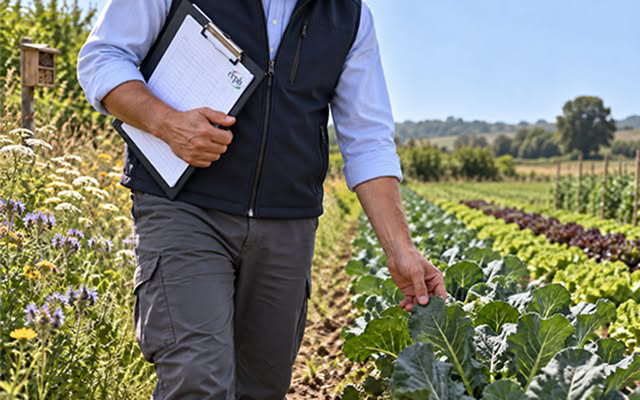
Integrated agriculture is established as a concrete response to the needs of environmental sustainability, healthiness, and competitiveness of Italian agricultural supply chains. In the absence of a harmonized European regulation, the schemes public and private certification: from the technical standard UNI 11233 to the National Quality System for Integrated Production (SQNPI), alongside which, with a different focus, is the international standard of good agricultural practices GLOBALG.A.P. IFA, with the additional social assessment module GRASP.
This article proposes an analysis of the main tools available for farmers, producers' organizations, food industries, and large-scale distribution, with a comparative table to guide the choice. Remembering that — with the application of the ECGT directive, transposed in Italy by Legislative Decree 30/2026, starting from September 27, 2026 — third-party certification becomes the conditio sine qua non to display sustainability labels and support environmental claims on food products.
Integrated agriculture: definition and regulatory framework
Integrated agriculture — or production — is a agricultural production system that favors the use of natural resources and regulatory mechanisms, partially replacing synthetic chemical substances, in order to guarantee sustainable agriculture. This definition:
- refers to Directive 2009/128/EC on the sustainable use of pesticides, which introduced in the European system the principles of integrated pest management, transposed in Italy with Legislative Decree 150/2012 (Dongo & Ferrucci, 2019);
- is linked to the Common Agricultural Policy 2023-2027, which assigns to national strategic plans both the eco-schemes (EU Reg. 2021/2115, art. 31) and the agri-climate-environment commitments (EU Reg. 2021/2115, art. 70). The Italian Strategic Plan dedicates to integrated production the measure SRA01, linked to the SQNPI, while none of the five national eco-schemes is specifically reserved for it.
Unlike the organic system — regulated by Regulation (EU) 2018/848 — integrated production does not have a harmonized legal framework at the European level: therefore it is up to Member States, regions, and private bodies to define reference standards and regulations. It is in this context that the broad ecosystem of certification schemes present today in Italy is located, where a national technical reference (UNI 11233), a public quality system (SQNPI), and an international private standard (GLOBALG.A.P.) coexist.
UNI 11233, the national technical reference
The technical standard UNI 11233 — 'Integrated production systems in agri-food supply chains. General principles for design and implementation in crop supply chains' — defines an eco-compatible agricultural system that integrates biological, mechanical, and chemical techniques, balanced according to three criteria: environmental protection, economic convenience, and social requirements.
The current edition is UNI 11233:2009, published on August 6, 2009, which replaced the first edition UNI 11233:2007 of May 3, 2007. No subsequent revision has been published by the Italian Standardization Body: the standard remains effective in the 2009 version and is the only regulatory reference for the accreditation scheme ‘Integrated production’ managed by Accredia.
The international framework
TheItaly è among the first countries to have entrusted its standardization body with a voluntary technical standard specifically dedicated to integrated production systems and usable for third-party certification purposes. The primacy cannot be extended to integrated production as such, since Switzerland had introduced the private IP-SUISSE scheme in 1989, France had codified theagriculture raisonnée with a référentiel public standard in 2002 (decree no. 2002-631 and order of April 30, 2002) and, outside Europe, New Zealand had already launched in the mid-1990s the national program of Integrated Fruit Production for pome fruits.
The principles of integrated production, in turn, are codified at the international level by theIOBC-WPRS — International Organisation for Biological and Integrated Control, West Palaearctic Regional Section, the west palaearctic section of the international organization for biological and integrated control — in the document ‘Integrated Production Objectives, Principles and Technical Guidelines’, reached the fourth edition in 2018.
Certification
The certification according to UNI 11233 is a voluntary product certification, issued by certification bodies accredited by Accredia in accordance with the standard UNI CEI EN ISO/IEC 17065:2012, which establishes the requirements for bodies certifying products, processes and services.
Theprocess is structured as follows:
- certification application and examination of company documentation, from defense and fertilization plans to water management, to the phytosanitary treatment register;
- compliance verification of the company management system to the general principles of the standard, from soil and water management to variety selection, integrated pest management, and by-products management;
- field audit, with inspections at production units by qualified inspectors of the certification body;
- certificate issuance, which identifies the plant species and the relevant production units, as well as the applied scheme, according to what the UNI CEI EN ISO/IEC 17065:2012 standard prescribes for certification documents. The traceability then allows the certification to be communicated along the downstream supply chain;
- annual surveillance, with audits and document checks.
The treatment register deserves special attention, as its format is changing. The registers of phytosanitary products held by professional users must be kept in electronic format machine-readable (EU Reg. 2023/564, art. 2), starting from January 1, 2026 (EU Reg. 2023/564, art. 5). The European Commission has then allowed Member States to admit that registers relating to uses prior to January 1, 2027 are not converted into the prescribed format (EU Reg. 2025/2203, art. 1). Italy has made use of this option: conversion to electronic format is mandatory by December 31, 2026 (Masaf decree December 30, 2025, art. 1).
The certificate also allows the certified body’s mark to be affixed on the products certification mark of the accredited body.
SQNPI, the national public system
The National quality system of integrated production (SQNPI) is the public certification scheme established by law 4/2011 (law 4/2011, art. 2.3) and made operational with the ministerial decree of May 8, 2014, no. 4890. It applies to all plant productions, processed and unprocessed, and is characterized by the following aspects:
- voluntariness. Membership is voluntary, aimed at individual or associated agricultural operators and processing companies;
- technical basis. The National Integrated Production Guidelines and the regional integrated production regulations constitute the reference for compliance verification. The guidelines are updated every year: those for 2026 were approved on November 24, 2025;
- registration. The operator joins through the portal SIAN, the National Agricultural Information System, with identification of the areas involved derived from the company file;
- controls. Certification is issued by third-party and independent control bodies, accredited according to the UNI CEI EN ISO/IEC 17065:2012 standard and listed in the register kept by the Ministry of Agriculture (MASAF). Public control is exercised in oversight, not in direct certification;
- mark. Right to affix the national integrated production mark on the product and in commercial communication. A tool now useful to prevent the environmental claim from being qualified as generic, lacking a specification provided in clear and evident terms on the same means of communication (dir. 2005/29/EC, art. 2, lett. ‘p’).
The two tools coexist: UNI 11233 offers the voluntary technical reference for accredited product certification, SQNPI the public apparatus of rules, control and mark.
GLOBALG.A.P. IFA, the good agricultural practices standard required by the large-scale retail trade
Born in the early 2000s as EurepGAP, to meet the food safety needs of the main retailer European, GLOBALG.A.P. IFA (Integrated Farm Assurance) is today the international private scheme of reference for the good agricultural practices: a GLOBALG.A.P. certificate, for many products, is the prerequisite for access to supply chain of the retailer Europeans, the United Kingdom and non-European countries.
IFA covers the primary production and the operations of handling of the harvested product — storage, post-harvest treatments, sorting, washing — which must be included in the scope whenever the product remains at the producer's disposal. When handling is entrusted to third parties, they must have the certification Chain of Custody. The standard integrates:
- food safety. The standard does not require a formal HACCP system, which is not required by European Union law for primary production and related operations listed in Annex I (Reg. EC 852/2004, art. 5.3), but rather documented risk assessments on hygiene, physical, chemical and microbiological contaminants, water, organic fertilizers;
- health and safety of workers;
- environmental sustainability, with resource management and traceability of pesticides;
- animal welfare, for aquaculture productions only. The livestock scope IFA for Livestock has been discontinued, with the last certificates expired in 2024.
Version 6 and fields of application
The version 6 of the IFA standard, published on September 29, 2022, is divided into two editions: IFA v6 Smart, mandatory from January 1, 2024, and IFA v6 GFS, mandatory from January 1, 2025 and intended for those who need recognition of the Global Food Safety Initiative (GFSIFor fruit and vegetables only the edition GFS obtained GFSI recognition on August 6, 2024, for the BI and BIII scopes. A version 6.1 was issued on September 1, 2026 as interim final, with validity and mandatory dates yet to be defined.
The fields of application of version 6 are two: Plants, articulated into sub-areas Fruit and vegetables, Combinable crops, Flowers and ornamentals, Plant propagation material, Tea e Hops, and Aquaculture. Downstream activities from primary production are covered by distinct standards, from Chain of Custody to Produce Handling Assurance and to Compound Feed Manufacturing.
The certification is issued by Certification Body (CB) recognized by GLOBALG.A.P. after field audits with targeted sampling; the management of results provides for the classification of control points into levels of compliance and, in case of non-compliance, a corrective plan with closure verification within defined times.
Thesupply chain approach is achieved through the traceability ‘one step forward, one step back' and through the scheme Chain of Custody, mandatory for anyone handling, packaging or labeling bulk product intended to be marketed with reference to GLOBALG.A.P. certification.
IFA does not certify integrated production
The name of the standard can be misleading. Integrated Farm Assurance indicates an integrated assurance system of the farm, translated in the Italian version of GLOBALG.A.P. documents as ‘Integrated Safety in Agriculture’, and not The Integrated production in the meaning that the expression has in Italy. IFA criteria require the application of integrated pest management (Integrated Pest Management) according to the principles of the standard. They do not require compliance with integrated production protocols, which constrain the choice of active substances, number of treatments, fertilization and irrigation.
The distinction has a precise regulatory basis. The mandatory integrated pest management applies from January 1, 2014 to all professional users of plant protection products, according to the general principles set out in Annex III (dir. 2009/128/EC, art. 14.4; Legislative Decree 150/2012, art. 19). The voluntary integrated pest management instead involves compliance with regional regulations, on which the SQNPI is based (dir. 2009/128/EC, art. 14.5; legislative decree 150/2012, art. 20). The UNI 11233 standard in turn requires a technical operator protocol, subject to third-party verification.
The IFA certificate alone therefore does not allow the company to declare that products come from 'integrated production' or 'integrated agriculture'. The IFA certified company can only refer to mandatory integrated pest management, i.e., a legal requirement common to all European Union farmers. Presenting it as a distinctive feature of the offer falls among commercial practices always considered unfair (EU dir. 2024/825, Annex I, point 10 bis).
GRASP, the assessment of social requirements
GRASP — GLOBALG.A.P. Risk Assessment on Social Practice — it is not a certification in the strict sense. It is an additional module for the evaluation of social risks in primary production, whose requirements are not covered by the IFA certification, which presupposes a valid certification according to a GLOBALG.A.P. primary production standard or an equivalent recognized scheme. The evaluation is conducted by the same body, together with the IFA audit, and remains outside the scope of the certification accredited according to the ISO/IEC 17065 standard, which concerns the IFA standard. Version 2.0 is valid from October 1, 2022, and ismandatory from January 1, 2024.
The evaluation combines document review and interviews to workers and their representatives, and concludes with a letter of conformance (letter of conformance) valid for twelve months, instead of a certificate. The verified topics are:
- worker representation, freedom of association and grievance procedure;
- policies and information on human and labor rights, including disciplinary procedures;
- hiring documents, wages, working hours and prohibition of forced labor;
- minimum age, protection of young workers and access to education.
In version 2.0 the fundamental rights of workers are classified as major must zero tolerance and the definition of worker includes permanent, temporary, seasonal, migrant and subcontracted personnel.
As of 31 December 2024, GRASP recorded 117,847 companies evaluated in over one hundred countries, with a total employment of about 1.8 million workers. The demand mainly comes from German and Northern European retail (e.g. ALDI Nord, ALDI SÜD, EDEKA, LIDL, Tegut), which however expressly accepts alternative social programs. The combination IFA + GRASP should therefore be described as a very widespread market request, not as a generalized requirement.
The module can also contribute to fulfilling the obligations introduced by the Corporate Sustainability Due Diligence Directive (EU) 2024/1760 by the giants of industry and large retail subject to it. This directive, following the changes introduced with the package Omnibus, in fact applies only to companies in the European Union with at least 5,000 employees and 1.5 billion euros in global net turnover, as well as to those from third countries with at least 1.5 billion euros in net turnover in the European Union, starting from 26 July 2029.
In practice, IFA certifies ‘how it is produced’ from a technical-hygienic and environmental point of view, while GRASP adds the verification of ‘who participates in production’, in a logic consistent with the criteria ESG (Environmental, Social, Governance) increasingly requested by markets.
Comparison table: UNI 11233, SQNPI and GLOBALG.A.P. IFA (+ GRASP)
| Comparison item | UNI 11233 | SQNPI | GLOBALG.A.P. IFA (+ GRASP) |
| Nature | National technical standard UNI | National public quality system | International private standard |
| Reference | UNI 11233:2009, which replaced UNI 11233:2007 | Law 4/2011, art. 2.3; ministerial decree May 8, 2014, n. 4890; National guidelines and regional regulations | IFA Standard, version 6, editions Smart e GFS |
| Geographical validity | Italy | Italy | Global |
| Subject | Integrated production systems in crop sectors | Integrated plant production, processed and unprocessed | Good agricultural practices in the areas Plants e Aquaculture |
| Covered phases | Primary production; traceability allows communication of certification downstream | Primary production and processing | Primary production and handling of harvested product; downstream supply chain with the Chain of Custody |
| Technical content | Integrated pest management, soil and water management, by-products | Requirements of national guidelines and regional regulations | Food safety for risk assessment, good agricultural and hygiene practices, environment, animal welfare in aquaculture |
| Integrated production | Yes, according to the operator’s technical protocol verified by a third party | Yes, according to regional protocols (voluntary integrated pest management) | No. Integrated pest management according to standard criteria, without binding integrated production protocols |
| Social requirements | General principles, not subject to specific verification | Not verified separately | Yes, with the GRASP module: non-accredited assessment, with document review and interviews, certified by annual conformity letter |
| Certification body | Bodies accredited by Accredia according to ISO/IEC 17065 | Third-party control bodies, accredited ISO/IEC 17065 and registered in the Masaf list | CBs recognized by GLOBALG.A.P. |
| registration | Accredia database of certified products and services, maintained by certification bodies | SIAN Portal, with identification of surfaces | Producer registration in database GLOBALG.A.P. |
| Mark on the product | Mark of the accredited certification body | national integrated production mark | GLOBALG.A.P. mark and GGN number, according to the scheme usage rules; GRASP results in a letter of conformance, not a mark |
| Surveillance | Annual audit, periodic surveillance according to ISO/IEC 17065 (the standard does not set a minimum inspection frequency) | Annual verification on 100% of individual operators and on √n members for associates, with multi-residue analysis | Annual audit with targeted sampling |
| Typical market | National and regional supply chains | National production, intra-EU export | International GDO, export |
| Commercial role | Third party technical qualification towards industry and GDO, not a supply condition; extendable to processed products for traceability | Value on the national market and communication to the consumer through a specific brand | Condition of access to supply chainof foreign distribution; in Italy required for Coop branded fruit and vegetables |
| Relationship with the CAP | Consistent with agro-climatic-environmental commitments | Linked to intervention SRA01 of the 2023-2027 Strategic Plan | Consistent with good agricultural practices and rural development funds |
Other complementary private schemes
Some private schemes may be recognized as equivalent by GLOBALG.A.P., in the forms of benchmarked scheme and of the benchmarked checklist, or only compared based on a documentary review (compared schemes). The schemes currently recognized as equivalent are eight: AMAG.A.P., KFC Flowers and ornamentals, MPS-GAP, New Zealand GAP, QS-GAP, Red Tractor Assurance for Farms Fresh Produce, SIZA and SwissGAP Horticulture. Alongside them are:
- LEAF Marque (Linking Environment And Farming), scheme of British origin founded onIntegrated Farm Management and today spread in over fifty countries, in version 17.0 effective from May 5, 2026. It is not among the schemes recognized as equivalent by GLOBALG.A.P.;
- SPRING (Sustainable Program for Irrigation and Groundwater Use), integrates GLOBALG.A.P. on responsible water management, in version 2 published on September 5, 2023 and to be combined with IFA v6 from January 1, 2024;
- Nurture Module, the evolution of the Tesco Nurture program integrating GLOBALG.A.P. since 2017, in version 13.0 valid from June 1, 2025 and focused on managing the list of allowed phytosanitary products;
- Biodiversity Friend, standard created in 2010 by World Biodiversity Association and certified by third-party organizations, focused on biodiversity indices of soil, water, air and agricultural landscape;
- Biodiversity Alliance, CCPB scheme aimed at primary production operators wishing to measure and communicate their commitment to the biodiversity of the agroecosystem. The assessment is based on the QBS (Biological Quality of Soils) indicator, associated with the examination of agronomic practices, the adopted production system, organic or integrated, and the environment;
- supply chain standard, such as Chain of Custody of GLOBALG.A.P., which ensures segregation and traceability of products from certified production processes, from the packer to catering. The add-on and the standards that share the IFA base can be verified in combined audits, saving compliance costs.
What changes for supply chains and large-scale distribution
The certification of integrated agriculture responds to three needs converging:
- commercial. GLOBALG.A.P. IFA is an access requirement for the supply chain of international distribution. In Italy it is not a generalized requirement of mass retail for the private label: brands normally publish requirements focused on standards downstream of agricultural production, such as IFS and FSSC 22000. An exception is Coop Italia which, for fruit and vegetables under its own brand from Italian and foreign suppliers, requires IFA certification as a prerequisite for theadd-on Coop Italia Pesticide Transparency;
- access to public support. The SRA01 intervention of the 2023-2027 CAP Strategic Plan rewards integrated production commitments, with reference to the SQNPI, and rural development funds reward adherence to certified quality systems;
- legal compliance. With the application of the new rules on claim environmental in the European Union, from 27 September 2026, third-party certification becomes an essential requirement to display sustainability labels and support environmental claims, as seen in the following paragraph.
Environmental claims and certifications
The adoption and maintenance of this type of certification today constitutes the essential condition to make environmental claims on the label and in advertising of products, on any physical medium, online and audiovisual. Directive (EU) 2024/825 – also known as ECGT, Empowering Consumers for the Green Transition – has also been transposed in Italy with Legislative Decree 20 February 2026, no. 30, and applies from 27 September 2026, albeit with a progressive approach, under certain conditions. The new rules include three particularly significant prohibitions:
- it is forbidden to display a sustainability label that is not based on a certification system or not established by public authorities (EU Directive 2024/825, Annex I, point 2 bis). A certification system means a third-party verification system, with transparent and non-discriminatory access, and objective monitoring;
- it is forbidden to make a generic environmental claim when the operator is not able to prove higher-level environmental performance, recognized and relevant to the claim (EU Directive 2024/825, Annex I, point 4 bis);
- it is forbidden to refer to the product or the activity as a whole to a claim that only concerns a specific aspect (EU Directive 2024/825, Annex I, point 4 ter).
The responsibility falls on the brand owner with which the food is sold — the farm, for fresh and processed products; the processing industry in the various cases of IV range and V range, frozen products, vegetable preserves, juices, nectars and others Beverages, Jams, products ready-to-eat such as soups, as well as cereals and their derivatives; the retail trade, for the aforementioned products marketed under its own brand, in private label — as well as on the distributor, even without brands, in its role as guarantor and co-responsible for the legal compliance of the products marketed by it.
It is in any case essential to maintain the consistency between the object of the certification and theenvironmental claim: it is not possible to invoke ‘sustainability’ in general terms, but only the environmental sustainability, in the absence of certification or specific information on social sustainability, such as those that the GRASP evaluation helps to verify. For the same reason, the IFA certification alone does not support a claim of ‘integrated production’, which requires UNI 11233 or SQNPI certification. Third party certification thus remains the anchor of certainty that transforms sustainability from a statement of principle into a verifiable fact.
Conclusions
Italy today has one of the most complex integrated agriculture certification systems, in which the standard UNI 11233 plays the role of common technical reference, interacting with the public system of SQNPI on one side and, on another level, with the international standard of good agricultural practices GLOBALG.A.P. IFA, which can be integrated with the social assessment GRASP, on the other.
For farmers, producer organizations and processing companies, the choice of the scheme — or their combination in integrated audits — depends on the markets target, from the demands of retail and from the supply chain of belonging: the national market rewards SQNPI and UNI 11233, export to retail pushes towards IFA and GRASP. With a warning: IFA certifies good agricultural practices and mandatory integrated pest management, not integrated production, and GRASP is an evaluation, not a certification.
For further information on other food certifications, please refer to our articles dedicated to the main standards and private schemes, in this section of GIFT (Great Italian Food Trade). The team of DO (Food and Agriculture Requirements) supports operators, ‘from farm to fork’, in the strategic choice of schemes to be adopted and in enhancing products according to the various aspects that distinguish them, in the name of transparency and compliance with current regulations.
Dario Dongo
Credit cover CCPB
References
European Union normative sources
Regulation (EC) No 852/2004 of the European Parliament and of the Council of 29 April 2004 on the hygiene of foodstuffs. Consolidated text: 24/03/2021. http://data.europa.eu/eli/reg/2004/852/2021-03-24
Directive 2005/29/EC of the European Parliament and of the Council of 11 May 2005 concerning unfair business-to-consumer commercial practices in the internal market (‘Unfair Commercial Practices Directive’). Consolidated text: 28/05/2022. http://data.europa.eu/eli/dir/2005/29/2022-05-28
Directive 2009/128/EC of the European Parliament and of the Council of 21 October 2009 establishing a framework for Community action to achieve the sustainable use of pesticides. Consolidated text: 26/07/2019. http://data.europa.eu/eli/dir/2009/128/2019-07-26
Regulation (EU) 2018/848 of the European Parliament and of the Council of 30 May 2018 on organic production and labelling of organic products and repealing Council Regulation (EC) No 834/2007. Consolidated text: 25/03/2025. http://data.europa.eu/eli/reg/2018/848/2025-03-25
Regulation (EU) 2021/2115 of the European Parliament and of the Council of 2 December 2021 establishing rules on support for strategic plans to be drawn up by Member States under the common agricultural policy (CAP Strategic Plans) and financed by the European Agricultural Guarantee Fund (EAGF) and by the European Agricultural Fund for Rural Development (EAFRD) and repealing Regulations (EU) No 1305/2013 and (EU) No 1307/2013. Consolidated text: 18/03/2026. http://data.europa.eu/eli/reg/2021/2115/2026-03-18
Commission Implementing Regulation (EU) 2023/564 of 10 March 2023 as regards the content and format of the records of plant protection products kept by professional users pursuant to Regulation (EC) No 1107/2009 of the European Parliament and of the Council. Consolidated text: 23/11/2025. Commission Implementing Regulation (EU) 2023/564 of 23 November 2025
Directive (EU) 2024/825 of the European Parliament and of the Council of 28 February 2024 amending Directives 2005/29/EC and 2011/83/EU as regards empowering consumers for the green transition through better protection against unfair practices and better information. Official Journal of the European Union, 6.3.2024. http://data.europa.eu/eli/dir/2024/825/oj
Directive (EU) 2024/1760 of the European Parliament and of the Council of 13 June 2024 on corporate sustainability due diligence and amending Directive (EU) 2019/1937 and Regulation (EU) 2023/2859. Consolidated text: 18/03/2026. http://data.europa.eu/eli/dir/2024/1760/2026-03-18
Commission Implementing Regulation (EU) 2025/2203 of 31 October 2025 amending Implementing Regulation (EU) 2023/564 as regards the transfer into electronic format of the records of plant protection products kept by professional users. Official Journal of the European Union, 3.11.2025. http://data.europa.eu/eli/reg_impl/2025/2203/oj
National normative sources
Law 3 February 2011, No. 4, Provisions on the labeling and quality of food products. RegulatoryLast consolidated version: 03/06/2011. https://www.normattiva.it/uri-res/N2Ls?urn:nir:stato:legge:2011-02-03;4
Legislative decree 14 August 2012, No. 150, Implementation of Directive 2009/128/EC establishing a framework for Community action to achieve the sustainable use of pesticides. RegulatoryLast consolidated version: 09/14/2012. https://www.normattiva.it/uri-res/N2Ls?urn:nir:stato:decreto.legislativo:2012-08-14;150
Legislative decree 20 February 2026, No. 30, Implementation of Directive (EU) 2024/825 of the European Parliament and of the Council of 28 February 2024 amending Directives 2005/29/EC and 2011/83/EU as regards empowering consumers for the green transition through better protection against unfair practices and better information. RegulatoryLast consolidated version: 03/24/2026. https://www.normattiva.it/eli/id/2026/03/09/26G00047/CONSOLIDATED
Decree of the Ministry of Agricultural, Food and Forestry Policies May 8, 2014, No. 4890, Implementation of Article 2, Paragraph 6, of Law February 3, 2011, No. 4. Official Gazette of the Italian Republic, General Series No. 174 of July 29, 2014. https://www.gazzettaufficiale.it/eli/id/2014/07/29/14A05975/sg
Decree of the Ministry of Agriculture, Food Sovereignty and Forestry December 30, 2025, Implementation of Commission Implementing Regulation (EU) 2025/2203 of October 31, 2025, on the electronic format conversion of the pesticide register. Official Gazette of the Italian Republic, General Series No. 94 of April 23, 2026. https://www.gazzettaufficiale.it/eli/id/2026/04/23/26A01955/sg
Technical standards
UNI 11233:2009, Integrated production systems in agri-food supply chains. General principles for the design and implementation in plant supply chains. Italian Standardization Body. https://unistore.uni.com/uni-11233-2009
ISO/IEC 17065:2012, Conformity assessment. Requirements for bodies certifying products, processes and services. International Organization for Standardization. https://www.iso.org/standard/46568.html
Institutional sources and private standards
Accredia. Integrated production. https://www.accredia.it/servizio-accreditato/produzione-integrata/
CCPB. Biodiversity Alliance: biological quality of the soil. https://www.ccpb.it/blog/certificazione/biodiversity-alliance-qualita-biologica-suoli/
National Rural Network, MASAF. National quality system of integrated production. https://www.reterurale.it/produzioneintegrata
National Rural Network, MASAF. CAP 2023-2027. SRA Interventions. https://www.reterurale.it/PAC_2023_27/SRA
GLOBALG.A.P. Risk Assessment on Social Practice (GRASP). https://globalgap.org/what-we-offer/solutions/grasp/
GLOBALG.A.P. Integrated Farm Assurance (IFA) for fruit and vegetables. https://globalgap.org/what-we-offer/solutions/ifa-fruit-and-vegetables/
GLOBALG.A.P. General Regulations. Rules for plants scope, version 6.0, 29 September 2022. https://documents.globalgap.org/documents/220929_GG_GR_Rules_for_plants_v6_0_Sep22_en.pdf
GLOBALG.A.P. GRASP General Rules, version 2.0, 29 September 2022. https://documents.globalgap.org/documents/220929_GRASP_general_rules_v2_0_Sep22_en.pdf
GLOBALG.A.P. Chain of Custody. https://globalgap.org/what-we-offer/solutions/chain-of-custody/
GLOBALG.A.P. Benchmarking. https://globalgap.org/what-we-offer/benchmarking/
GLOBALG.A.P. Coop Italia Pesticide Transparency. https://www.globalgap.org/what-we-offer/solutions/coop-italia-pesticide-transparency/
GLOBALG.A.P. SPRING. https://www.globalgap.org/what-we-offer/solutions/spring/
GLOBALG.A.P. Nurture Module. https://www.globalgap.org/what-we-offer/solutions/nurture-module/
Global Food Safety Initiative. GLOBALG.A.P. certification programmes IFA v6 GFS for fruits and vegetables and IFA v6 SMART/GFS for aquaculture gain GFSI recognition, 6 August 2024. https://mygfsi.com/press_releases/globalg-a-p-certification-programmes-ifa-v6-gfs-for-fruits-and-vegetables-and-ifa-v6-smart-gfs-for-aquaculture-gain-gfsi-recognition/
LEAF. LEAF Marque Standard. https://leaf.eco/leafmarque/standard
World Biodiversity Association. Biodiversity Friend. https://biodiversityassociation.org/en/what-we-do/biodiversity-friend-2/
IOBC-WPRS. Integrated Production Objectives, Principles and Technical Guidelines, 4th edition, 2018. https://iobc-wprs.org/wp-content/uploads/2022/06/IOBC-WPRS_IP_objectives_and_principles_4th_edition_2018_EN.pdf
European Commission. Corporate sustainability due diligence. https://commission.europa.eu/topics/business-and-industry/doing-business-eu/sustainability-due-diligence-responsible-business/corporate-sustainability-due-diligence_en
In-depth articles
Dongo, D., Ferrucci, D. (2019, February 16). Sustainable agriculture, the ABC. FT (Food Times). https://www.foodtimes.eu/it/pianeta/agricoltura-sostenibile-labc/

Dario Dongo, lawyer and journalist, PhD in international food law, founder of WIISE (FARE - GIFT – Food Times) and Égalité.


