

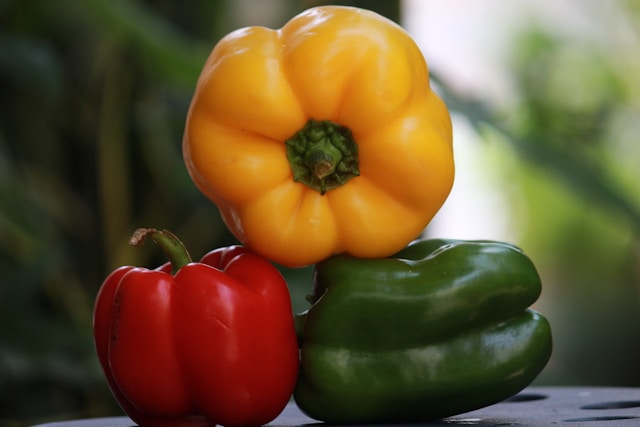
I peppers are among the most beloved vegetables in Italian cuisine, protagonists of summer from local markets to large distribution platforms. Fruit of the Capsicum annuum L., species arrived from the Americas over five centuries ago, the pepper has found in Italy an extraordinary varietal diversification, from the Quadrato d’Asti to the Piedmontese Corno di bue, from the Cornetto di Pontecorvo to the Senise peppers destined to become 'cruschi'. Two Geographical Indications — one PDO and one PGI — and numerous local ecotypes testify to an agricultural and gastronomic heritage that deserves attention, also in light of the nutritional virtues recognized by CREA.
Production and market
The most recent ISTAT data available (2024) indicate in Italy a pepper cultivation area of over 7,000 hectares, with a production of about 160,000 tons in open field. Cultivation is concentrated in southern regions (Sicily, Campania, Puglia, Calabria, Basilicata, and Lazio) for early and greenhouse productions, and in the North — Piedmont and Emilia-Romagna above all — for summer open field production.
The Italian pepper market has a peculiarity: unlike many horticultural sectors of Made in Italy, the national production is largely destined for domestic consumption, with a clear preference for the type Lamuyo (elongated fruit with a rectangular section), while the trade balance remains in structural deficit, due to imports — especially of greenhouse products from Spain and the Netherlands — which cover demand in the cold months. The economic situation is also favorable: in 2025, domestic consumption of fresh vegetables in Italy grew by 2.9% in volume, in a context of general recovery of the shopping basket (ISMEA, 2026).
History and legends
The pepper is a gift of the so-called Columbian exchange. Domesticated in Mesoamerica several thousand years ago, the Capsicum arrived in Europe after the return of the first voyages of Christopher Columbus, at the end of the 15th century, initially appreciated as an economic substitute for pepper — from which the name derives — and later also selected in sweet varieties, without spiciness (Mustafa, 2024).
In Italy cultivation took root between the 16th and 17th centuries, initially in southern gardens under Spanish influence. This is the case of Basilicata, where the pepper of Senise has been cultivated for centuries in the valleys of Sinni and Agri and gave rise to the tradition of the 'serte', the necklaces of fruits hung to dry in the sun on balconies, still today an identity symbol of Lucanian cuisine (European Commission, 1996). In Piedmont, the cultivation exploded instead at the beginning of the 20th century, when the vegetable growers of the plain of Carmagnola made it a territorial specialization: since 1949 the National Pepper Fair of Carmagnola celebrates this primacy every September, and it is among the most important Italian events dedicated to a single agricultural product (Qualivita Foundation, 2022). In the Lazio southern, finally, oral tradition attributes 18th-century roots to the ‘Cornetto’ of Pontecorvo, in the fertile alluvial soils of the Liri and Sacco river valley.
Botanical characteristics and seasonality
The pepper belongs to the family of Solanaceae, like tomato, eggplant, and potato. The species cultivated in Italy is Capsicum annuum L., a perennial plant in its original climates but grown as an annual at our latitudes. From a botanical point of view, the fruit is a hollow berry, with a central placenta that bears the seeds. The sweet varieties are distinguished from chili peppers by theabsence practically total of capsaicin, the alkaloid responsible for spiciness (Hassan et al., 2019).
I morphotypes most common in Italy are:
- the square (var. grossum, such as the Quadrato d’Asti and the Topepo);
- the medium-long or Lamuyo;
- the horn (Corno di bue, Cornetto);
- the small fruits for frying (friggitelli) and for preserving (Neapolitan papaccella).
The color — green in the unripe fruit, yellow, orange or red at maturity — depends on the degradation of chlorophyll and the synthesis of specific carotenoids, such as capsanthin in red fruits and violaxanthin in yellow ones (Hassan et al., 2019).
The cultivation requires mild temperatures (optimum 20-25 °C) and fears cold spells: field transplanting takes place between May and early June, harvest — staggered — from July to October. The seasonality natural seasonality of the Italian pepper thus coincides with summer and early autumn, while protected crops (Sicily, Campania, Lazio) anticipate and extend the commercial calendar.
Territories, agronomic practices and sustainability
The historic terroirs of the Italian pepper tell precise geographies. In Piedmont, the loose and sandy soils of the Po alluvial plain between Carmagnola and Cuneo give the local types (Quadrato, Lungo or Corno di bue, Trottola, Tumaticot) thick pulp, sweetness and keeping quality. In Basilicata, the Senise area — between the provinces of Potenza and Matera, in areas served by the irrigation systems of the Sinni valley — produces an ecotype with thin pericarp and low water content, ideal for natural sun drying (European Commission, 1996). In Lazio, the Pontecorvo basin (Frosinone) offers deep and fresh alluvial soils to the local Cornetto. Completing the mosaic are the Campania region of friggitelli and papaccelle, the Capriglio pepper in Asti, and the one from Voghera, currently subject to recovery.
From an agronomic point of view, the specifications of the registered designations codify practices of sustainability ante litteram: for example, the Peperone di Pontecorvo PDO specification imposes a crop rotation which allows the return of the crop to the same plot only once every four years, to protect soil fertility and plant health (Masaf, 2010). The selection of seeds from company mother plants, manual harvest at staggered maturity and sun drying of Senise peppers are further examples of low-impact supply chains.
Italian PDO and PGI
The Italian Pepper Geographical Indications registered in the European Union are still two:
- Senise Peppers PGI (Basilicata). Registered with Regulation (EC) No. 1263/96, the denomination was updated with Commission Implementing Regulation (EU) 2020/1718. It includes the Appuntito, Tronco and Uncino types, placed on the market fresh, in ‘bunches‘ dried or in very fine powder. From the quick frying of the dried fruits arises the famous crispy pepper, a crunchy icon of Lucanian gastronomy (European Commission, 1996; 2020);
- Pontecorvo Pepper PDO (Lazio). Registered with Regulation (EU) No. 1021/2010, the PGI designates the Cornetto cultivated in Pontecorvo and nine neighboring municipalities in the province of Frosinone: a cylindrical-conical, trilobate, red fruit with thin skin and flesh that make it a particularly digestible and sweet pepper (Masaf, 2010).
The Carmagnola Pepper, recognized as a Traditional Agri-food Product (PAT) of Piedmont, is still awaiting PGI registration, the process — started and resumed several times since 2016 — is supported by the local consortium together with the Piedmont Region and Municipality (Fondazione Qualivita, 2022).
Nutritional properties, CREA data
The CREA food composition tables depict a very light vegetable and at the same time extraordinarily rich in micronutrients. The raw red peppers provide on average, per 100 g of edible portion: 34 kcal, 91.6 g of water, 0.9 g of protein, 0.3 g of lipids, 6.5 g of available carbohydrates (of which 6.5 g sugars) and 1.9 g of fiber (CREA, 2019a).
The contents of vitamins and minerals in the red ones are extraordinary, when compared to the reference nutrient values (RNVs) established in Annex XIII to Regulation (EU) No 1169/2011:
- vitamin C, 165 mg per 100 g of product, equivalent to 206% of the RNVs (80 mg);
- chromium, 20 µg per 100 g, equivalent to 50% of the RNVs (40 µg);
- vitamin A (retinol equivalent), 385 µg per 100 g, equivalent to 48% of the RNVs (800 µg).
- following, just below the legal threshold of significance, the potassium (276 mg, 14% RNVs) and the zinc (1.36 mg, 14% NRV).
I raw green peppers are even lighter (31 kcal/100 g) and maintain a content of vitamin C excellent, equal to 127 mg/100 g — the 159% of the NRV — with 117 µg of vitamin A (15% NRV) (CREA, 2019b).
A standard 200 g serving of red peppers thus provides 330 mg of vitamin C, more than four times the daily reference value. To preserve this vitamin — which is heat-sensitive and water-soluble — raw consumption or short cooking without water is preferable.
Health properties, scientific evidence
Peer-reviewed scientific literature attributes a significant health profile to sweet pepper, linked to the synergy between antioxidant vitamins and bioactive compounds.
The vitamin C contributes to the normal function of the immune system, protection of cells from oxidative stress, collagen formation and non-heme iron absorption, as also recognized by authorized EU claims (Carr & Maggini, 2017; EU reg. 432/2012).
I carotenoids of the pepper — beta-carotene, capsanthin, lutein, zeaxanthin and violaxanthin — act as antioxidants lipophilic and are associated, in in vitro, in vivo and clinical studies, with protective effects against degenerative diseases, eye health (lutein and zeaxanthin concentrate in the macula) and cardiovascular function (Hassan et al., 2019). The capsanthin, a characteristic pigment of red fruits, has shown a prolonged free radical capture capacity compared to other carotenoids (Hassan et al., 2019).
I polyphenols — quercetin and luteolin above all — complete the antioxidant set, with anti-inflammatory activities documented; the content of phenolic compounds and overall antioxidant activity vary with color and degree of ripeness, generally being highest in red fruits (Sun et al., 2007). A recent review also summarizes the evidence on antimicrobial, antidiabetic and cardioprotective properties of the phytocompounds of sweet pepper, while underlining the need for further clinical studies on humans (Mustafa, 2024).
Culinary uses and industrial applications
The versatility of the bell pepper in cooking is proverbial. Raw, in pinzimonio or in salad, it expresses crunchiness and sweetness with the highest vitamin content. Traditional Italian cooking ranges from peperonata to roasted and peeled peppers, from Sicilian caponata to stuffed peppers (with meat, bread, anchovies and capers, rice) up to sautéed friggitelli and papaccella in Neapolitan reinforcement salad, as well as Piedmontese pairings with bagna cauda. The crispy Senise pepper, fried for a few seconds in extra virgin olive oil, accompanies cod and Lucanian pasta.
Thefood industry absorbs significant shares of field production: peppers in oil and pickled, in sweet and sour, grilled frozen, creams and pestos, IV range. From dried and ground fruits is obtained the paprika sweet, from extracts the oleoresins used as natural colorants (paprika extract, E160c) and flavorings, in foods and feed (Hassan et al., 2019).
Advice for buyers
For gourmets, the quality of the pepper is recognized by sight and touch: fruits firm and turgid, shiny and taut skin, green and well-attached stalk, no bruises or burns. The weight must be proportional to the volume: a heavy pepper is rich in pulp and plant water. Prefer the natural season (July-October), products with DOP and IGP denominations and purchases from short supply chains.
The choice of organic It is always recommended: the cultivation of pepper is among those that in conventional farming may require repeated phytosanitary treatments, and the organic method — certified in accordance with Regulation (EU) 2018/848 — offers the best guarantees of absence of synthetic chemical residues, as well as protecting soils and pollinating insects.
For professional buyers — catering, retail, industry — additional criteria apply: uniformity of size and color, compliance with EU marketing standards, certifications of integrated or organic production, batch and origin traceability on the label. The type must be chosen according to use: Lamuyo and square for fresh and grilling, horn for pan and preserves, thin-fleshed ecotypes for drying. Even in the professional channel, the growing demand for references organic and PDO/PGI represents an opportunity for differentiation on the shelf and in documentation.
Conclusions
The Italian pepper is a concentrate of rural history, biodiversity, and precious nutrients. The two registered denominations — Peperoni di Senise IGP and Peperone di Pontecorvo DOP — and the numerous territorial ecotypes protect agricultural knowledge that deserves support, while CREA data and scientific literature confirm an excellent nutritional profile, with levels of vitamin C and carotenoids among the highest in fresh vegetables. The challenge for the supply chain is twofold: reduce dependence on imports during the cold months and accompany thetransition towards increasingly sustainable practices, with organic farming at the forefront. Meanwhile, the consumers have the easier task: choose Italian peppers, in season and organic.
Dario Dongo
Credit cover srinivas bandari on Unsplash
References
Carr, A. C., & Maggini, S. (2017). Vitamin C and immune function. Nutrients, 9(11), 1211. https://doi.org/10.3390/nu9111211
Hassan, N. M., Yusof, N. A., Yahaya, A. F., Mohd Rozali, N. N., & Othman, R. (2019). Carotenoids of Capsicum fruits: Pigment profile and health-promoting functional attributes. Antioxidants, 8(10), 469. https://doi.org/10.3390/antiox8100469
Mustafa, Y. F. (2024). Sweet bell pepper: A focus on its nutritional qualities and illness-alleviated properties. Indian Journal of Clinical Biochemistry, 39(4), 459–469. https://doi.org/10.1007/s12291-023-01165-w
Sun, T., Xu, Z., Wu, C. T., Janes, M., Prinyawiwatkul, W., & No, H. K. (2007). Antioxidant activities of different colored sweet bell peppers (Capsicum annuum THE.). Journal of Food Science, 72(2), S98–S102. https://doi.org/10.1111/j.1750-3841.2006.00245.x
Commission Regulation (EC) No 1263/96 of 1 July 1996 supplementing the Annex to Regulation (EC) No 1107/96 on the registration of geographical indications and designations of origin under the procedure laid down in Article 17 of Regulation (EEC) No 2081/92. http://data.europa.eu/eli/reg/1996/1263/oj
Commission Regulation (EU) No 1021/2010 of 12 November 2010 entering a name in the register of protected designations of origin and protected geographical indications [Peperone di Pontecorvo (PDO)]. http://data.europa.eu/eli/reg/2010/1021/oj
Commission Implementing Regulation (EU) 2020/1718 of 11 November 2020 approving non-minor amendments to the specification for a name entered in the register of protected designations of origin and protected geographical indications (‘Peperone di Senise’ (PGI)). http://data.europa.eu/eli/reg_impl/2020/1718/oj
CREA — Research Center for Food and Nutrition. (2019a). Composition tables of foods: Peppers, red, raw (code 005630). https://www.alimentinutrizione.it/tabelle-nutrizionali/005630
CREA — Research Center for Food and Nutrition. (2019b). Composition tables of foods: Peppers, green, raw (code 005640). https://www.alimentinutrizione.it/tabelle-nutrizionali/005640
ISMEA. (2026). AgriMarkets Report, 3rd quarter 2025. Institute of Services for the Agricultural Food Market. https://www.ismeamercati.it
Masaf. (2010). Production specification of the Protected Designation of Origin 'Peperone di Pontecorvo'. Ministry of Agriculture, Food Sovereignty and Forests. https://www.masaf.gov.it/flex/cm/pages/ServeBLOB.php/L/IT/IDPagina/7722
Qualivita Foundation. (2022, May 18). PGI: the Carmagnola Pepper tries again, Region and Municipality alongside the Consortium. https://www.qualivita.it/news/igp-il-peperone-di-carmagnola-ci-riprova-regione-e-comune-a-fianco-del-consorzio/

Dario Dongo, lawyer and journalist, PhD in international food law, founder of WIISE (FARE - GIFT – Food Times) and Égalité.


