

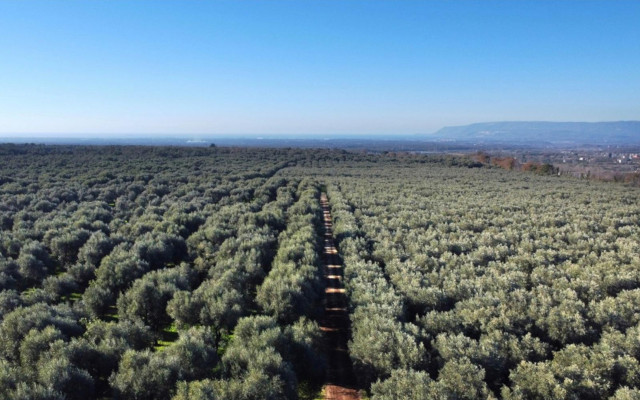
TheCalabrian extra virgin olive oil is the discreet giant of Italian olive growing. Calabria — with about 180,000 hectares of olive groves spread between the Ionian Sea and the Tyrrhenian Sea — consistently contributes to more than one tenth of the national olive oil production, contending with Sicily for second place after Puglia. Yet its value remains largely hidden: most of the oil still travels in bulk, without brand or identity, to bottlers in the Center-North and abroad.
The 2025/2026 olive campaign and the latest ICQRF data depict a paradox: a region that produces a lot and holds record stocks of organic oil but struggles to turn them into value. In this context, theCalabria PDO Olive Oil – registered by the European Union in 2016 and also protected by a state anti-counterfeiting mark – represents a possible strategic lever to restore name, origin and income to a millennial olive heritage.
2025/2026 Campaign, the comeback of the South
After the 2024/2025 campaign closed just under 250,000 tons (Ismea based on Agea data), the 2025/2026 campaign marks a decisive recovery for Italy. Ismea estimates indicate a national production of 300-310,000 tons (+25-30% over the previous year), driven by the southern regions: Apulia and Calabria together exceed 60% of national volumes (Ismea, 2025).
The Calabria confirms its leading role, with an estimated production over 35,000 tons, an increase of 30-40% compared to the previous campaign thanks to spring rains and a good year for fruit set. At the European level, the EU 2025/2026 production stands at around 2,046,000 tons, with Spain leading at 1,372,000 tons (European Commission, 2026), as analyzed in the previous GIFT in-depth analysis on the Italian oil market.
The flip side is the pressure on prices. While Spanish extra virgin olive oil quickly dropped below 4 euros/kg, the Italian one maintained average prices above 9 euros/kg until mid-2025 (ISMEA, 2025), then gave way under the weight of the stocks. As of June 30, 2026, Italian warehouses held 258,480 tons of oil (+46.4% over June 2025), of which 12.3% was in Calabria, about 31,000 tons: a stock that led Apulia and Calabria to request a state of crisis for the sector (ICQRF, 2026).
Export, a potential to unlock
In 2024 theItaly exported about 344,000 tons of olive oil for a value of 3.09 billion euros (+42.6%), confirming itself as the second largest exporter in the world after Spain. The United States absorbs 32.2% of Italian exports, followed by Germany (14%) and France (6.8%) (ISMEA, 2025).
The direct Calabrian exports of bulk oil are instead marginal: about 35 tons in recent campaigns, to Canada, Switzerland, United States, Vietnam, Yemen, and Sudan (Calabria Region, 2025).
The majority of Calabrian oil reaches foreign markets anonymously, inside blend bottled elsewhere: this is where the largest share of regional added value is lost.
Olio di Calabria IGP, the lever of value
The DOP economy Italian oil sector is still marginal, although rapidly expanding. The ISMEA-Qualivita Report 2025 records in 2024 a certified DOP and IGP production of 16,190 tons (+31.1%), with a production value of 194 million euros (+46.9%), 258 million at consumption (+47.8%), and 102 million in exports (+25.3%) (Ismea & Qualivita, 2025).
TheCalabria PDO Olive Oil represents 90% of regional productions with Geographic Indication, with about 200 olive growers adhering to the protection consortium and 754 operators out of 868 total in Calabrian DOP/IGP supply chains. The certified volumes - 149 tons in 2021, for just under 1 million euros - however remain a minimal fraction of the potential: on average 2016-2023 Calabria produced about 1,000 tons of oil suitable to become DOP/IGP, equal to 3.3% of the total regional production and 8.3% of the extra virgin alone (Regione Calabria, 2025).
Encouraging sign: as of June 30, 2026, national stocks of DOP and IGP oils reached 18.2 million liters (+45.6% annually) and Calabria IGP Oil is among the most represented denominations, after Terra di Bari DOP e IGP Sicily (ICQRF, 2026).
Organic, the treasure in the silos
Calabria is a reference hub, in Italy, for the production of organic oil. National stocks of organic extra virgin and virgin oil reached about 41,000 tons in June 2026, concentrated mainly in Puglia and Calabria: as of April 30, 2026 the Calabrian silos stored almost 9,000 tons of organic oil, second only to those of Puglia (ICQRF, 2026).
A heritage awaiting proper remuneration: monthly bio sales are around 2,000 tons nationwide (ICQRF, 2026) and high Calabrian stocks expose producers to speculative maneuvers by intermediaries.
The combination IGP + organic – expressly allowed by the regulations – is the master path to transform this agronomic primacy into recognized value, also combined with other organic products of the territory such as Calabria IGP chili pepper.
From Magna Graecia to today, three thousand years of olive trees
The mythology of ancient Greece attributed the birth of the olive tree to the contest between Athena and Poseidon for the dominion of Attica: Zeus rewarded the most peaceful gift, the tree able to light the night, heal wounds and feed people. In Roman tradition, Romulus and Remus were said to be born under the shade of an olive tree, symbol of glory and prestige.
In Calabrian land the olive tree was already known in Neolithic era, but it was the Greek colonists — who, between the late 8th and 7th century BC, founded cities on the Ionian coasts such as Sybaris, Crotone, Locri and Reggio — who systematically organized its cultivation and trade, making oil one of the economic engines of Magna Graecia. With the Romans the cultivation was consolidated: Pliny the Elder, in the ‘Naturalis Historia’, lists dozens of qualities of oil, including those from the renowned olive groves of the ancient Greek colonies of Bruzio, while oil ships plowed the Mediterranean loaded with Calabrian product.
In the eighteenth century Calabria underwent a profound land transformation: the olive gradually replaced the mulberry and theoil became the main item of regional export, surpassing Apulian volumes in the second half of the century. From Calabrian ports – Gioia Tauro foremost – large quantities of ‘lamp oil’ were shipped destined for lighting and soap factories in Marseille and Northern Europe: a commercial vocation that precedes by centuries the current challenge of certified quality.
Varietal heritage and native cultivars
Calabria PGI Oil is distinguished by the exclusive use of native cultivars, present in a proportion not less than 90%:
- Carolea (Nicastrese, Becco di Corvo), the most widespread, resistant to cold and drought
- Dolce di Rossano (Rossanese), typical of the Ionian area
- Sinopolese (Chianota, Coccitana)
- Grossa di Gerace (Mammolese, Geracitana), from the Reggio Ionian area
- Tondina (Roggianella), widespread in the Sibari plain
- Ottobratica (Dedarico, Perciasacchi), early variety
- Grossa di Cassano (Cassanese), from the Pollino area
- Tonda di Strongoli, from the Crotone area.
The remaining 10% may come from minor native cultivars: Nostrana, Spezzanese, Santomauro, Dolce di Cerchiara, Tombarello, Ciciarello, Zinzifarica, Galatrese, Tonda di Filocaso, Tonda di Filadelfia, Borgese, Pennulara, Mafra, Vraja, Agristigna and Corniola (IGP Olio di Calabria, 2026). A deposit of olive biodiversity unmatched in varietal breadth among Italian denominations.
The production specification
The specification of theCalabria PDO Olive Oil – registered with implementing regulation (EU) 2016/2301 of 8 December 2016 – was updated with ordinary amendments approved by MASAF decree of 3 July 2023 and, most recently, with the decree of 17 December 2024.
Name and production area
The PGI is reserved forextra virgin olive oil obtained from olives produced in the entire administrative territory of Calabria Region, area with Mediterranean climate with cold and humid winters and hot and dry summers, with temperatures frequently exceeding 32°C between July and August (specifications, articles 1 and 3).
Consumer characteristics
Organoleptic profile
- color from green to straw yellow, with chromatic variation over time
- olive fruity: median 2-8 (CVr% ≤ 20)
- notes of herbaceous and/or artichoke and/or floral (≥ 2, ≤ 8)
- bitter 3-6, pungent 4-6
Chemical-physical parameters
- oleic acid ≥ 70%
- acidity ≤ 0.50%
- peroxide number ≤ 12 meq O2/kg
- K232 ≤ 2.20; K270 ≤ 0.20
- total polyphenols ≥ 200 ppm (specifications, article 2).
Proof of origin
Traceability and trackability of the product are guaranteed by the documentary monitoring of input and output of each phase, from the registration of olive groves, producers, processors, storers and packers in specific lists managed by the control body, by the keeping of registers of production, storage and packaging and by the timely declaration of quantities produced (article 4).
I controls compliance with the specifications — now regulated by article 39 of regulation (EU) 2024/1143 — is entrusted to Suolo e Salute S.r.l. (Fano, PU), an organization authorized by ICQRF since 2015, with operational coordination at the Caraffa di Catanzaro office (article 7).
Method of obtaining
The specifications bind every step of the supply chain with measurable parameters, from the planting layout to the grinding times:
- autochthonous cultivars ≥ 90%; other national cultivars allowed as pollinators ≤ 3%
- planting layouts with a maximum of 416 plants per hectare
- typical regional training systems (policonic vase, bush, open, globe, vertical axis)
- pruning at least every two years (annual in intensive plantations)
- irrigation according to regional integrated production regulations
- harvesting from the plant between September 15 and January 15, manual or assisted; fallen olives prohibited
- maximum production 12 tons of olives per hectare
- grinding within 24 hours of harvesting
- processing temperature ≤ 30°C
- maximum oil yield 20% (article 5).
Connection with the territory and biochemical profile
The high summer temperatures and prolonged summer drought determine thehigh phenolic content and the acid profile of the oil. Particular attention to the values of oleic acid, which according to the requirements of the Protected Geographical Indication Calabria Extra Virgin Olive Oil must be equal to or greater than 70%.
Oils containing at least 70% oleic acid can, among other things, display on labels and advertising, unfortunately only in the US market, a 'qualified health claim' referring to an evidence of 'favorable but not conclusive' of reduction of the risk of coronary heart disease (FDA, 2018).
Labeling
The regulation governs thelabel on three levels — prohibitions, authorized optional mentions, mandatory indications:
- unforeseen qualifications are prohibited ('fine', 'chosen', 'selected', 'superior');
- mention allowed; 'monovarietal' followed by the cultivar name, subject to approval by the control body;
- mandatory indication of theproduction year of the olives;
- reference to the organic method allowed;
- packaging in dark glass bottles, ceramic, glazed terracotta or tinplate, capacity ≤ 5 liters
- obligation to display the PGI logo and the European symbol (article 8).
State marking and QR code, the anti-counterfeiting breakthrough
In 2023 the Protection Consortium adopted aunique label for all bottles: the logo depicts an olive tree whose trunk, made up of five lines (the five Calabrian provinces), outlines the stylized shape of Calabria, with the payoff 'Calabrian in every drop'.
In December 2024, thanks to an agreement with Poligrafico and State Mint and ICQRF, the Consortium introduced a uniquely numbered State mark equipped with QR code, which allows the consumer to verify the authenticity of each individual bottle and facilitates anti-fraud controls.
Calabria PGI Oil is thus among the first Italian olive oil denominations to be equipped with a system of bottle-by-bottle traceability.
Sensory profile and pairings
According to the CREA-Oleario Oil Charter (2024), Calabrian oil has a fruitiness from light to intense, from green to ripe olive, with hints of artichoke, almond, field grass and floral notes, accompanied by medium intensity bitterness and pungency. Its harmonious structure makes it versatile, both raw and in light cooking.
Calabrian cuisine:
- fileja pasta with ‘nduja sauce: the spiciness of the sausage balances with the fruitiness and bitterness of the oil;
- pasta with sardines: floral and herbal notes enhance the blue fish;
- eggplant caponata: the artichoke scent interacts with the sweetness of the vegetable;
- peperonata: the green tomato note enhances the flavors
- salted cod and stockfish: the intensity of the oil balances the saltiness of the dried fish.
Mediterranean cuisine:
- tomato bruschetta, legume salads, grilled white meats;
- cheeses from sheep and goat, including aged ones, which the oil stands up to in intensity.
Guide to conscious purchasing
For gourmets:
- check the wording 'Calabria PGI Oil', the consortium logo, the European symbol and the State mark with QR code;
- prefer the organic, which guarantees absence of synthetic pesticides, soil fertility and biodiversity in olive groves;
- check theproduction year (mandatory on the label) and consume the oil within 12-18 months from milling;
- expect color from green to straw yellow and aroma of green olive, artichoke, freshly cut grass and floral notes;
- store away from light and heat, between 12°C and 20°C, in dark glass.
For professional buyers:
- evaluate the quality-price ratio in light of the superior parameters of the specification (polyphenols ≥ 200 ppm, acidity ≤ 0.50%);
- request the chemical-physical and organoleptic conformity certificates issued by Suolo e Salute;
- explore the monovarietal references (Balanced Carolea, intense Ottobratica, delicate Dolce di Rossano);
- schedule purchases on the new campaign (harvest September 15 – January 15) for maximum freshness;
- consider the segment bio-PGI, today undervalued by the market and therefore full of opportunities.
Conclusions
Turning volumes into economic and reputational value is the primary challenge of Calabrian olive growing. The integration between PGI certification, organic farming, and advanced traceability systems guaranteed by the State offers a concrete response to market fluctuations.
For consumers, choosing certified Calabrian oil, even better if organic, means supporting the biodiversity of sixteen or more native cultivars, a local economy based on quality, and an olive landscape that tells three thousand years of Mediterranean history. In every drop.
Dario Dongo
Credit cover Consorzio tutela Olio extra vergine di Calabria IGP
References
Regulatory and institutional sources
Commission Implementing Regulation (EU) 2016/2301 of 8 December 2016 entering a name in the register of protected designations of origin and protected geographical indications (Olio di Calabria PGI). http://data.europa.eu/eli/reg_impl/2016/2301/oj
MASAF Decree 3 July 2023 – Ordinary amendments to the production specification of PGI 'Olio di Calabria' (23A03940). https://www.gazzettaufficiale.it/atto/serie_generale/caricaDettaglioAtto/originario?atto.dataPubblicazioneGazzetta=2023-07-15&atto.codiceRedazionale=23A03940&elenco30giorni=false
Food and Drug Administration. (2018, November 19). FDA completes review of qualified health claim petition for oleic acid and the risk of coronary heart disease. U.S. Food and Drug Administration. https://www.fda.gov/food/hfp-constituent-updates/fda-completes-review-qualified-health-claim-petition-oleic-acid-and-risk-coronary-heart-disease
Official Gazette of the Italian Republic. (2025, January 2). MASAF Decree December 17, 2024 – Amendment of the production regulation of the denomination «Olio di Calabria» (Official Gazette General Series No. 1, 24A06914). https://www.gazzettaufficiale.it/eli/id/2025/01/02/24A06914/SG
Calabria Region. (2025). Action plan for the relaunch of the olive oil sector of the Calabria Region. https://www.regione.calabria.it/wp-content/uploads/2025/05/POC_compressed.pdf
Market reports and data
European Commission. (2026, January 29). Market situation in the olive oil and table olives sectors – Market Observatory [Presentation]. Expert Group EU Olive Oil and Table Olives Market Observatory. https://agriculture.ec.europa.eu/data-and-analysis/markets/price-data/price-monitoring-sector/olive-oil_en
ICQRF – Central Inspectorate for Quality Protection and Fraud Repression of Agri-food Products. (2026). Frantoio Italia. Report No. 7/2026 – Oil stocks as of June 30, 2026. Ministry of Agriculture, Food Sovereignty and Forestry. https://www.masaf.gov.it/flex/cm/pages/ServeBLOB.php/L/IT/IDPagina/24872
Ismea. (2025, July). Olive Oil Trends No. 1/2025. https://www.ismeamercati.it/flex/cm/pages/ServeBLOB.php/L/IT/IDPagina/13559
Ismea. (2025, August 1). Italian olive oil, ISMEA publishes the Sector Sheet and the Trends Report. https://www.ismea.it/flex/cm/pages/ServeBLOB.php/L/IT/IDPagina/13382
Ismea & Qualivita Foundation. (2025). ISMEA-Qualivita 2025 Report on Italian agri-food and wine productions PDO, PGI and STG (23rd ed.). Qualivita Editions. https://www.ismea.it/flex/cm/pages/ServeAttachment.php/L/IT/D/1%252Fe%252F8%252FD.fefdd2e7c08546544955/P/BLOB%3AID%3D13512/E/pdf?mode=download
Technical and sector sources
CREA-Oleario. (2024). Map of Oils of Calabria. https://oleario.crea.gov.it/wp-content/uploads/2024/04/Carta-degli-oli-Calabria_web.pdf
PGI Calabria Oil. (2026). The Disciplinary. https://www.igpoliodicalabria.it/il-disciplinare/

Dario Dongo, lawyer and journalist, PhD in international food law, founder of WIISE (FARE - GIFT – Food Times) and Égalité.


