

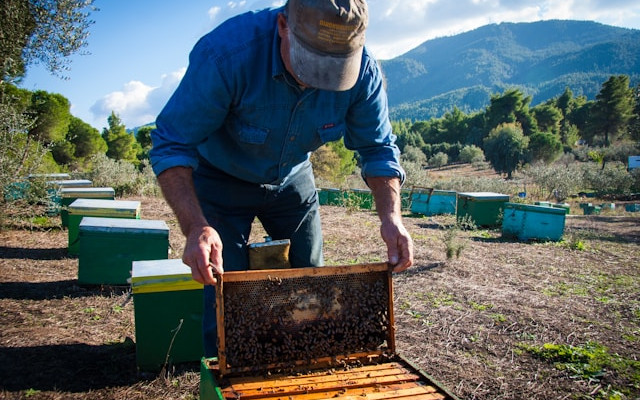
On July 13, 2026, the Ministry of Enterprises and Made in Italy notified the European Commission of the national single specification of ‘Certified Quality Honey‘ (TRIS, Technical Regulation Information System, notification 2026/0374/IT). The certification scheme is part of the National Zootechnical Quality System (SQNZ).
The regulatory framework. SQNZ and European legal basis
The Italian specification for ‘Certified Quality Honey’ is based on a regulatory architecture structured on three levels:
- At the European level, the Delegated Regulation (EU) 2022/126 in article 47 amends Regulation (EU) 2021/2115 on the CAP Strategic Plans 2023-2027 providing that quality schemes for specific products recognized at national level must guarantee, through binding specifications, specific characteristics of the product, particular production methods o a quality of the final product significantly higher than current commercial standards in terms of public health, plant health, animal welfare and environmental protection. These schemes must also be open to all producers, include independent control and ensure full traceability;
- At the national level, the Ministerial Decree December 16, 2022, no. 646632 has established the National Quality System for Livestock, in accordance with the aforementioned European rule, repealing the previous 2011 regulation. The SQNZ is a voluntary quality scheme, open to all producers in the European Union, which includes the certification of farms, agricultural products, and food products of livestock origin;
- the third level is the specific product specification, object of this analysis, which accompanies the SQNZ specifications already recognized for other livestock supply chains, whose certification allows operators to indicate — on product labels and advertising — the wording ‘sustainable farming’, in compliance with Directive (EU) 2024/825 (Dongo et al., 2026).
The definition of ‘SQNZ Honey’. What changes compared to conventional honey
The heart of the specification lies in the definition of ‘Certified Quality Honey’, which narrows – without prejudice to the definition of honey in Directive 2001/110/EC, as amended by the Breakfast Directive (EU) 2024/1438 – the scope of the certifiable product. Such honey:
- produced according to good production standards in rational hives with movable frames and vertical development, extracted by centrifugation from uncapped combs free of brood, with a content of Water (< 17%) suitable to ensure long natural preservation and prevent fermentation;
- must not have undergone thermal treatments intended to extend its shelf life in the liquid state, and in particular must never have been heated above 40 °C;
- must be stored so as to maintain the compositional and organoleptic characteristics inherent to its natural origin.
The specification also defines the three allowed categories – monofloral, multifloral and honeydew – with an important clarification: a product obtained by mixing different monofloral honeys cannot be designated as ‘multifloral’.
On the side of prohibited qualifications, the text excludes both the term ‘natural honey’ and the attributes ‘filtered’, ‘centrifuged’ or ‘pressed’, since the product is obtained exclusively by centrifugation.
The technical requirements. Physico-chemical parameters in comparison
The specificity of SQNZ Certified Quality Honey is measured concretely on a prospectus of more stringent analytical parameters compared to the general criteria for honey composition. The latter are set by Annex II of Directive 2001/110/EC, as amended by the Breakfast Directive (EU) 2024/1438. The following table compares the key values that distinguish the disciplinary from the European rules.
| Parameter | SQNZ Honey | General EU Standard* | SQNZ Reference |
| Water content | max 17.0% | max 20% (23% for heather honey and industrial use) | At packaging |
| HMF | max 15 mg/kg at bottling (35 mg/kg in distribution) | max 40 mg/kg (80 mg/kg for honey of declared tropical origin and their blends) | Production/packaging and distribution |
| Residues of individual acaricides | max 0.020 mg/kg | not regulated by EU composition criteria; residues regulated by MRLs (Reg. EC 396/2005, Reg. EU 37/2010) | Products other than natural organic acids |
| Sum of total acaricide residues | max 0.030 mg/kg | not regulated by EU composition criteria | — |
(*) Composition criteria pursuant to Annex II of Directive 2001/110/EC, as amended by the Breakfast Directive (EU) 2024/1438. Acaricide residues are not indicated in maximum residue limit regulations.
Some brief remarks:
- The Water content maximum of 17% represents a significant margin compared to the general EU threshold of 20%, and aims to ensure stability and resistance to fermentation;
- on the front ofHMF (hydroxymethylfurfural) – marker of freshness and correct thermal management, whose increase indicates heating or aging – the threshold of 15 mg/kg at bottling is particularly selective, just over one third of the general EU limit of 40 mg/kg. The differentiated value (35 mg/kg) for the distribution phase acknowledges the natural evolution of the parameter over time, while maintaining a lower cap than conventional standards;
- the control on acaricide residues finally reflects a precise approach to hive health defense, as explained below.
Health protection
One of the most relevant aspects of the regulation concerns infestation management:
- to counteract Varroa destructor, the main parasitic threat to European beekeeping, the regulation prohibits the use of antibiotics and sulfonamides, limiting health defense against this parasite to only authorized veterinary drugs based on naturally occurring organic acids – oxalic acid, formic acid – or based on essential oils and aromatic substances such as menthol, thymol, eucalyptol or camphor;
- against the wax moths (Galleria mellonella e Achroia grisella) only the use of Bacillus thuringiensis, acetic acid and cold chain.
If the management of the infestation requires the use of different drugs, honey from treated apiaries may be admitted to certification provided that it complies with the chemical-physical limits mentioned above, with particular regard to the thresholds on acaricide residues. This approach thus confirms the compliance of the final product to the analytical result on the product, without excluding the possible use of different substances where necessary.
Feeding and management of the hive
The nutritional properties requirement is based on precise rules for feeding the bees. The artificial feeding is exclusively sugary and is allowed only in case of necessity, to be suspended in any case at least 10 days before placing the supers; it is strictly prohibited during the honey flow in the presence of the supers.
Conversely, they are excluded sugars derived from starch hydrolysis (corn, wheat, rice syrups) and pollen substitutes, while protein supplementation is prohibited except for the administration of self-produced pollen.
Regarding the materials, the regulations impose hives rational with movable frames with inspectable anti-varroa bottom, made of wood, with a ban on internal paints and admission of only non-toxic external coatings with low lead and heavy metal content. The wax of the wax sheets must undergo documented heat treatment, suitable to significantly reduce the microbial load. Traceability of this requirement, in case of third-party processing, is based on a supplier's declaration.
Cold chain and packaging
Processing is governed by strict thermal constraints, consistent with the product definition:
- in the rooms of honey extraction relative humidity must remain below 60% and the temperature must never exceed 40 °C;
- Theextraction is carried out exclusively by centrifugal honey extractors, with a ban on pasteurization and sterilization;
- the dehumidification the honey with water content between 17 and 20% is allowed, through hot and dry air, with treatment temperature not exceeding 35 °C and maximum duration of 72 hours;
- the technological operations above 25 °C are limited to the strict minimum, and the mass of the honey must not remain between 32 and 38 °C for more than 7 days, nor between 38 and 40 °C for more than 72 hours;
- the average temperature of the mass must never exceed 40 °C.
The product intended for the final consumer is packaged in packaging of glass with a tight lid and warranty seal, with exemption on materials only for packages under 400 grams, provided they guarantee equivalent protection of compositional and organoleptic characteristics.
Traceability, labeling and controls
The requirement of traceability is based on Regulation (EC) 178/2002 and the registration of the beekeeper in the National Database (BDN), Beekeeping Registry section, with annual census of beehives. The documentation – treatment register, feed register, analysis register – must be kept for a minimum period of 5 years.
Thelabel must report — in addition to the indications prescribed by Regulation (EU) 1169/2011 and Directive 2001/110/EC, as amended by the Breakfast Directive (EU) 2024/1438 (Dongo, 2023) — the SQNZ logo, the indication of the batch (not replaceable by the minimum shelf life) and the recommendation of storage at a temperature below 20 °C, in a dry environment and protected from light.
The control system It is based on an operator self-control plan, subject to verification by a control body authorized by the Ministry (public authority or private body accredited according to standard EN 45011 / ISO Guide 65 with which a certification agreement is concluded).
Concluding considerations
The SQNZ Certified Quality Honey specification defines a system of technical guarantees coherent and verifiable, based on three pillars: stricter analytical thresholds (water ≤ 17%, HMF ≤ 15 mg/kg at bottling), strict cold chain control forbidding temperatures above 40 °C, and sanitary protection focused solely on natural molecules.
Some are observed, in the application phase, potential critical issues:
- the economic sustainability of the requirements for small beekeeping enterprises, given parameters requiring equipment, records and analysis of non-negligible costs;
- the actual perception of value by the consumer, which the specification identifies among its objectives but depends on the communicative strength of the SQNZ logo, unfortunately non-existent so far.
The development of the National Zootechnical Quality System therefore depends on the Italian government's willingness to support its adoption with specific aid and especially to invest in the promotion of the SQNZ brand, so that professional buyers and consumers can understand the added value of certified products.
Dario Dongo
Credit cover Spyros Skareas on Unsplash
Legal references
‘Certified Quality Mark’ SQNZ specification
European Commission (2026). Technical Regulation Information System, TRIS, notification 2026/0374/IT https://technical-regulation-information-system.ec.europa.eu/it/notification/28245
European legislation
Commission Delegated Regulation (EU) 2022/126 of 7 December 2021 supplementing Regulation (EU) 2021/2115 of the European Parliament and of the Council with additional requirements for certain types of intervention specified by Member States in their CAP Strategic Plans for the period 2023 to 2027 under that Regulation as well as rules on the ratio for the good agricultural and environmental condition (GAEC) standard 1. Consolidated text: 27/03/2026. Council Directive 2001/110/EC of 20 December 2001 relating to honey. Consolidated text: 14/06/2026.
Council Directive 2001/110/EC of 20 December 2001 relating to honey. Consolidated text: 14/06/2026. Regulation (EU) No 1169/2011 of the European Parliament and of the Council of 25 October 2011 on the provision of food information to consumers. Consolidated text: 01/04/2025.
Regulation (EU) No 1169/2011 of the European Parliament and of the Council of 25 October 2011 on the provision of food information to consumers. Consolidated text: 01/04/2025. Regulation (EU) 2021/2115 of the European Parliament and of the Council of 2 December 2021 establishing rules on support for strategic plans to be drawn up by Member States under the common agricultural policy (CAP Strategic Plans) and financed by the European Agricultural Guarantee Fund (EAGF) and by the European Agricultural Fund for Rural Development (EAFRD) and repealing Regulations (EU) No 1305/2013 and (EU) No 1307/2013. Consolidated text: 18/03/2026.
Regulation (EU) 2021/2115 of the European Parliament and of the Council of 2 December 2021 establishing rules on support for strategic plans to be drawn up by Member States under the common agricultural policy (CAP Strategic Plans) and financed by the European Agricultural Guarantee Fund (EAGF) and by the European Agricultural Fund for Rural Development (EAFRD) and repealing Regulations (EU) No 1305/2013 and (EU) No 1307/2013. Consolidated text: 18/03/2026. Italian legislation
Italian legislation
Legislative Decree 21 May 2004, No. 179, implementation of Directive 2001/110/EC. Normattiva (last update to the act published on 05/01/2026). Ministerial Decree MASAF 16 December 2022, No. 646632, establishment of the National Quality System for livestock. https://www.masaf.gov.it/flex/cm/pages/ServeAttachment.php/L/IT/D/1%252Fb%252F0%252FD.beed691926adb92035cb/P/BLOB%3AID%3D19012/E/pdf?mode=download
Legislative Decree 30 December 2025, No. 207, transposition of Directive (EU) 2024/1438.
Legislative Decree 30 December 2025, No. 207, transposition of Directive (EU) 2024/1438. Normattiva. In-depth articles
In-depth articles
Dongo, D., Della Penna, A.A. (2026, 15 May). Environmental claims and unfair commercial practices. FT (Food Times). Dongo, D. (2026, 14 luglio). Environmental claims e scorte di magazzino, la road-map.
Dongo, D. (2026, 14 July). Environmental claims and stock inventory, the road-map. FT (Food Times). https://www.foodtimes.eu/it/sistemi-alimentari/environmental-claims-scorte-magazzino-road-map/
Dongo, D. (2023, December 12). Breakfast Directive, the European Parliament raises barriers against non-EU honey. FT (Food Times). https://www.foodtimes.eu/it/sistemi-alimentari/breakfast-directives-il-parlamento-europeo-alza-le-barriere-contro-il-miele-extra-ue-2/

Dario Dongo, lawyer and journalist, PhD in international food law, founder of WIISE (FARE - GIFT – Food Times) and Égalité.


