
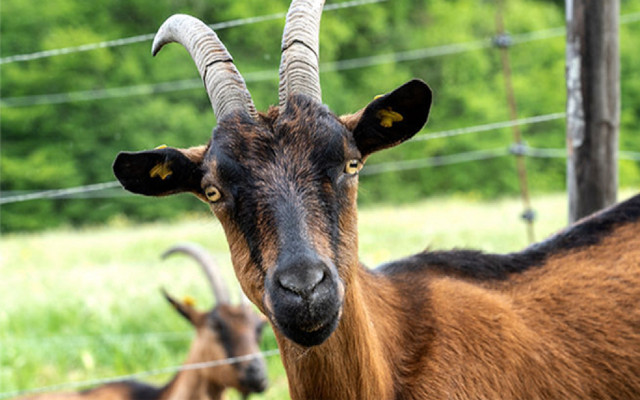
Sheep milk is denser and higher in protein, while goat milk is richer in vitamin A and studied for digestive comfort. Each of them has nutritional profiles and characteristics that differ from whole cow's milk, although sharing with it a similar lactose content.
In Italy, their combined collection comes close to 500,000 tonnes a year – less than 4% of national milk – and, alongside a niche of drinking milk, yogurt and fermented milks, it feeds almost entirely the cheese supply chain: eighteen PDO (Protected Designation of Origin) cheeses, one PGI (Protected Geographical Indication) and over one hundred Traditional Agri-food Products (PATs).
This guide compares sheep, goat and cow milk in terms of nutritional values, nutrition claims permitted in the EU, digestibility and bioactive compounds, as well as outlining market figures and the requirements of product specifications on raw material quality.
Sheep and goat milk worldwide and in Europe
In 2025, the world production of milk reached 1.005 billion tonnes, up 2.1%. Cow milk accounts for 81%, buffalo milk 16%, while goats, sheep and camels together supply just 3%. Over the next decade, average annual growth of 2% per year is expected, thanks to the progressive increase in yields per head (OECD & FAO, 2026).
In European Union the centre of gravity for sheep and goats is Mediterranean. Of the 150.8 million tonnes of milk delivered to dairies in 2024, 146.5 million were cow milk and the remaining 4.3 million comprise sheep, goat and buffalo milk. Greece is the leading supplier of sheep milk with 731,000 tonnes, about one third of the European total, followed by Spain with 622,000 tonnes. For goat milk, the leader is France with 522,000 tonnes, ahead of the Netherlands (459,000) and Spain (442,000) (Eurostat, 2025a). In Greece, 58.1% of the milk delivered to dairies comes from sheep and goats (Eurostat, 2025b).
The Italian supply chain, figures and key players
Production
In Italy the 2024 collection amounted to 455.5 kt of milk from sheep e 40.9 kt of milk from goat: together, about 3.6% of the 13.84 million tonnes of Milk collected in the country. Compared with 2006, sheep milk is substantially stable (-1.6%), although the herd is reported to have decreased by 28.1% in 2025, thanks to a yield per head that has grown by 45.1%. Goat milk has increased by 50.4%, with a yield per head growing by 54.5%. The Islands host 59.5% of sheep and 37.2% of goats (ISTAT, 2026).
The livestock register counts just under 6.3 million head in 2025: 5.4 million sheep and 883,000 goats, spread across about 104,600 farms. Sardinia holds 46.4% of the stock, ahead of Sicily (11.5%), Lazio (8.5%), Tuscany (4.4%), and supplies about two thirds of the national sheep and goat milk. For 2025 ISMEA estimates production of about 477 kt (-1.8%), with an ex-farm sheep milk price in Sardinia of 150 euro per 100 litres in March 2026, VAT included, in line with the previous year (ISMEA, 2026).
Sheep and goat milk and meat together are worth 906 million euro at basic prices, 1.3% of national agricultural output, according to the latest available summary, referring to 2023 (ISMEA, n.d.).
The key players
The drinking milk goat's and sheep's is a niche, held by a few national brands alongside many farms. In goat's milk, the cooperative Arborea, under the brand Girau, claims about 80% of the national fresh goat's milk market, 60% of yogurt, and in 2026 launched a lactose-free goat's milk yogurt (GDO News, 2026).
Alongside the national brands there are hundreds of small farms that bottle their own milk and process it, often organically. To cite just a few examples:
- in the centre of Sicily Luca Cammarata's farm raises Girgentana goats on 60 hectares of certified pastures, to produce milk, yogurt and cheeses (Azienda Agricola Biologica Luca Cammarata, n.d.);
- in Vobarno, in Lombardy, in the Brescia area, BioBio combines Rendena breed cows with a small herd of Alpine Chamois goats, from which it obtains organic goat's milk (BioBio Azienda Agricola, n.d.);
- L'Alba, a family business operating since 2004 in the province of Mantua (Lombardy), raises Saanen goats to sell fresh pasteurised milk, yogurt and cheeses, all organic (L'Alba Allevamento Caprino, n.d.);
- on the sheep side, instead, in Pienza, in Tuscany, Podere Il Casale turns the milk of its grazing sheep into organic yogurt (Podere Il Casale, n.d.).
Organic farming and animal welfare
The sector organic is among the most significant in Italian animal husbandry: in 2025 certified animals numbered 556,672 sheep (10.6% of the national stock) and 100,249 goats (11.6%) (SINAB et al., 2026). European organic rules prohibit tethering animals, require access to pasture whenever conditions allow, and set minimum areas for loose housing: 1.5 m² indoors plus 2.5 m² outdoors for each adult sheep or goat (Regulation (EU) 2018/848, Annex II, part II; Regulation (EU) 2020/464, Annex I, part I).
Even outside organic farming, grazing remains central: in the Mediterranean area farms dairy sheep farms are largely semi-extensive, with natural pastures as the primary feed source. In twelve Tuscan farms of this kind, assessed using the Ministry of Health's ClassyFarm protocol, the level of animal welfare proved adequate in all cases, with room for improvement in resting surfaces, milking hygiene and biosecurity plans (Salari et al., 2024).
From Neolithic pottery to Varro, the sources on shepherds' milk
The first direct evidence of the use of milk in the Mediterranean comes from the Dalmatian coast. In the Neolithic villages of Pokrovnik and Danilo Bitinj, in Croatia, lipid residues in pottery attest to milk as early as around 5700 BC and, from 5200 BC, to its processing: cheese in the rhyta, fermented milks in the strainers. Fermenting and curdling milk reduced its lactose content: in this way a larger share of the population, at the time largely lacking lactase in adulthood, could feed on it (McClure et al., 2018).
In the Odyssey, Polyphemus milks ewes and goats, then curdles half the milk to collect it in woven baskets (Homer, 8th-7th century BC, book IX). Marcus Terentius Varro, in the 1st century BC, drew up a ranking: 'Lacte est omnium rerum, quas cibi causa capimus, liquentium maxime alibile, et id ovillum, dein caprinum', milk is the most nourishing of liquid foods, first sheep's milk, then goat's milk (De re rustica, II, 11, 1). Of goat's cheeses he notes that they are the easiest to digest, and for coagulation he prefers hare or kid rennet to lamb rennet, while also mentioning those who use fig latex with vinegar (De re rustica, II, 11, 3-4). Lucius Junius Moderatus Columella – a century later, in his broader treatise De re rustica, in 12 books – describes lamb rennet and wild thistle flower still prescribed today by several product specifications for pecorino.
Milk followed the flocks. transhumance, the seasonal movement of animals along drove roads or mountain pasture routes, has been inscribed since 2019 on the UNESCO list of intangible cultural heritage following the nomination by Italy, Austria and Greece, extended in 2023 to ten European countries (UNESCO, 2019, 2023). In Sardinia, shepherds also drank milk fermented: the gioddu, made from sheep's or goat's milk, also known as miciuratu, mezzoraddu or latte ischidu, has a porcelain-white colour, a creamy texture and a sourish taste (Laore Sardegna, n.d.).
Nutritional values according to CREA
The food composition tables provided by CREA — Research Centre for Food and Nutrition (2019) attribute to sheep's milk, goat's milk and pasteurised whole cow's milk the nutritional values given below, expressed per 100 g in the order established by Regulation (EU) 1169/11. Vitamins and minerals appear only where they reach 7.5% of the nutrient reference values set out in Annex XIII to Regulation (EU) No 1169/2011 (NRVs), the threshold laid down for beverages.
Table 1. Nutritional values per 100 g (CREA, 2019)
| Sheep's milk | Goat's milk | Whole cow's milk
| |
| Energy | 430 kJ / 103 kcal | 320 kJ / 76 kcal | 268 kJ / 64 kcal |
| Fat | 6.9 g | 4.8 g | 3.6 g |
| of which saturates | N/A (73.9% of fatty acids) | N/A (69.2% of fatty acids) | N/A (63.0% of fatty acids) |
| Carbohydrate | 5.2 g | 4.7 g | 4.9 g |
| of which sugars | 5.2 g | 4.7 g | 4.9 g |
| Fibre | 0 g | 0 g | 0 g |
| Protein | 5.3 g | 3.9 g | 3.3 g |
| Salt | 0.08 g | 0.10 g | 0.13 g |
| Calcium | 180 mg (22.5% NRV) | 141 mg (17.6% NRV) | 119 mg (14.9% NRV) |
| Phosphorus | 96 mg (13.7% NRV) | 106 mg (15.1% NRV) | 93 mg (13.3% NRV) |
| Potassium | 182 mg (9.1% NRV) | 180 mg (9.0% NRV) | 150 mg (7.5% NRV) |
| Riboflavin | 0.25 mg (17.9% NRV) | 0.11 mg (7.9% NRV) | 0.18 mg (12.9% NRV) |
| Vitamin A | below threshold | 86 µg (10.8% VNR) | below threshold |
Note: Salt is calculated from sodium (×2.5). CREA expresses saturated fatty acids as a percentage of total fatty acids, not in grams per 100 g.
Sheep's milk is the most concentrated: compared to whole cow's milk it provides approximately 60% more energy and Protein, 51% more than Calcium. Goat's milk is in an intermediate position, with 18% more calcium and more than double vitamin A. Lactose is present in the three milks in similar quantities.
Permitted nutrition claims
The indicazioni nutrizionali volontarie nella comunicazione commerciale sono ammesse solo nei termini stabiliti a livello europeo, quando il prodotto pronto per il consumo ne rispetta le condizioni (reg. CE 1924/06, Allegato). La verifica va condotta sui valori analitici su campioni rappresentativi di prodotto, con attenzione alle tolleranze in difetto che sono ammesse entro i ristretti limiti dell’incertezza del metodo
Per vitamine e minerali il parametro è la quantità significativa: nelle bevande, il 7,5% dei VNR per 100 ml consente la dicitura ‘fonte di’, il 15% quella ‘ad alto contenuto di’ (reg. UE 1169/11, Allegato XIII, parte A, punto 2).
Table 2. Nutrition claims permitted on the basis of CREA values
| Indicazione | Sheep's milk | Goat's milk | Whole cow's milk
|
| ‘ad alto contenuto di proteine’ (almeno il 20% dell’energia) | sì (20,6%) | sì (20,5%) | sì (20,6%) |
| Calcium | ‘ad alto contenuto di’ | ‘ad alto contenuto di’ | ‘fonte di’ |
| Phosphorus | ‘fonte di’ | ‘ad alto contenuto di’ | ‘fonte di’ |
| Riboflavin | ‘ad alto contenuto di’ | ‘fonte di’ | ‘fonte di’ |
| Potassium | ‘fonte di’ | ‘fonte di’ | ‘fonte di’ |
| Vitamin A | no | ‘fonte di’ | no |
Analisi dedicate possono sostenere ulteriori indicazioni, ad esempio su vitamina B12 o iodio, non riportati dalle tabelle CREA per questi latti. Laddove un nutriente sia presente in quantità significativa possono altresì venire utilizzati gli health claim authorised, such as for example ‘Calcium is needed for the maintenance of normal bones’ (Regulation (EU) 432/12, Annex).
Our team of FARE (Food and Agriculture Requirements) supports operators, together with their representative bodies, in enhancing the value of supply chains and products in these as well as other respects, in compliance with the rules in force in the various destination markets, both EU and non-EU.
Possible health benefits
EFSA (European Food Safety Authority) has so far not assessed any health claim applications specifically referring to the health benefits associated with the consumption of sheep and goat milk; in 2012, however, it recognised the suitability of the proteins of Goat's milk as a protein source in infant formulae and follow-on formulae (EFSA NDA Panel, 2012). In recent years, moreover, scientific research has begun to assess the digestibility of sheep and goat milk, with promising preliminary results that deserve further clinical studies:
- in a dynamic in vitro model of gastric digestion, skimmed cow, goat and sheep milk forms a curd within the first 15 minutes, at pH 6.1-6.3; the sheep milk curd retains less water and is firmer at the end of digestion, the goat milk one has a lower dry matter content, while protein hydrolysis by pepsin follows the same pattern in the three species (Roy et al., 2021);
- milks reconstituted from commercial powders show broadly similar behaviour, with high digestibility in the small intestine (Li, S. et al., 2024);
- in a randomised double-blind study on 30 women aged 20-30 who habitually avoided dairy products, 650 ml of sheep milk did not increase digestive symptoms compared with the same amount of cow milk, despite its higher energy and nutrient content (Shrestha et al., 2021);
- in New Zealand the YUMMI study is still ongoing: 165 healthy older women receive cow, goat or sheep milk, or no milk, twice a day for 12 weeks, so as to assess digestive comfort as the primary outcome (Ong et al., 2024).
A second strand of research is investigating oligosaccharides:
- goat milk oligosaccharides have a structure similar to those of human milk; administered orally to ovalbumin-sensitised mice, particularly in the α2,6-linked sialylated fraction, they significantly attenuated food allergy, with effects on gut flora and on the glycosylation of colonic mucins (Li, C. et al., 2025);
- a survey of about 1,000 goats from 18 commercial farms indicates that oligosaccharide composition depends to a significant extent on genetics: breeding selection could therefore steer it, with a view to use in infant formulas (Gonzalez-Prendes et al., 2024).
For sheep milk, a recent scientific review gathers the evidence on proteins, essential fatty acids, immunoglobulins, peptides and oligosaccharides with antimicrobial, anti-inflammatory and immunomodulatory activity; the same authors point out, however, that the literature is fragmentary and largely preclinical (Ahmad et al., 2025).
It should also be made clear that goat and sheep milk proteins have strong homology with those of cow milk and show cross-reactivity: these milks are therefore not suitable in cases of IgE-mediated cow milk protein allergy (Benjamin-van Aalst et al., 2024; Lajnaf et al., 2023). They naturally contain lactose, in amounts comparable to cow milk, and this sugar can in any case be split into glucose and galactose by the enzyme lactase, as happens in lactose-free cow milk products (Li, A. et al., 2023).
Sheep and goat milk in PDO and PGI product specifications
Almost all Italian sheep and goat milk goes into dairy. Pecorino Romano PDO closed the 2024/2025 season at 39,267 tonnes; in 2025 Italy exported 19,357 tonnes of pecorino cheeses (-2.8%) worth about 253 million euros, with the United States as the leading market. Domestic consumption of pecorino cheeses grew by 1.0% in volume in 2025 and by 3.5% in the first quarter of 2026 (ISMEA, 2026). Among the main processors, the F.lli Pinna in Thiesi, operating since 1919, processes over 40 million litres of milk a year supplied by almost 1,500 Sardinian farms (F.lli Pinna, n.d.), with revenues rising to 103.2 million euro in 2023 (Sechi, 2025).
Sheep's and goat's milk is used in nineteen designations registered in the European Union: eighteen PDO and one PGI. The specifications define the animal species, any heat treatment and the area of origin: requirements that affect the raw material, even before the cheese. At least eight designations require raw milk, while others allow thermisation or pasteurisation.
The Pecorino Romano PDO is made from whole, fresh sheep's milk from Sardinia, Lazio and the province of Grosseto. From 2026 the specification provides for the 'Riserva' type, matured for at least 18 months, produced from December to March, with sodium chloride not exceeding 4% (communication C/2026/4125). The Pecorino Toscano PDO allows raw or pasteurised milk, the Pecorino Sardo PDO whole milk, including thermised or pasteurised, while Fiore Sardo PDO requires raw milk from Sarda ewes.
On the goat side, the Roccaverano PDO has been, since 2023, a robiola-type cheese made exclusively from whole raw goat's milk (Regulation (EU) 2023/335), like Formaggella del Luinese PDO from the Varese Prealps, matured for at least 20 days (Regulation (EU) 375/11). The Canestrato di Moliterno PGI combines the two species, with 70 to 90% sheep's milk and 10 to 30% goat's milk; the 2024 amendment extended the permitted goat breeds to Grigia Lucana and Rossa Mediterranea (communication C/2024/3834). Ricotta Romana PDO is made from the whey of whole sheep's milk from Lazio, to which the specification allows whole sheep's milk to be added during heating to 50-60 °C. The types, techniques and figures of Italian goat cheeses complete the picture.
Table 3. Milk prescribed by the specifications of sheep and goat PDOs and PGIs
| Designation | Prescribed milk | Area and main requirements
|
| Pecorino Romano PDO | fresh whole sheep's milk, including thermised | Sardinia, Lazio, province of Grosseto; lamb rennet paste; at least 5 months, 8 for grating; ‘Riserva’ from 18 months |
| Pecorino Toscano PDO | sheep's milk, raw or pasteurised | Tuscany, Allerona and Castiglione del Lago (Umbria), municipalities of the Viterbo area (Lazio); 20 days for soft-paste, 4 months for semi-hard paste |
| Pecorino Sardo PDO | whole sheep's milk, including thermised or pasteurised | Sardinia; Dolce 20-60 days, Maturo over 2 months |
| Pecorino Siciliano PDO | whole raw sheep's milk | Sicily; Stagionato from 120 days |
| Pecorino di Filiano PDO | whole raw sheep's milk | 30 municipalities in the province of Potenza (Basilicata); at least 180 days |
| Pecorino Crotonese PDO | whole sheep's milk | Crotone area (Calabria); matured for over 90 days |
| Pecorino di Picinisco PDO | raw sheep's milk, with up to 25% raw goat's milk | Val di Comino (Frosinone, Lazio); Scamosciato 30-60 days, Stagionato over 90 |
| Pecorino delle Balze Volterrane PDO | whole raw sheep's milk | five municipalities in the province of Pisa (Tuscany); only vegetable thistle rennet |
| Pecorino del Monte Poro PDO | whole raw sheep's milk | Poro plateau (Vibo Valentia, Calabria); lamb or kid rennet |
| Fiore Sardo PDO | raw milk from Sarda sheep | Sardinia; at least 3 months; optional smoking |
| Canestrato Pugliese PDO | sheep's milk | provinces of Foggia and Bari (Apulia) |
| Piacentinu Ennese PDO | sheep's milk | province of Enna (Sicily); with saffron |
| Vastedda della valle del Belìce PDO | sheep's milk | Belìce valley (Sicily); pasta filata |
| Casciotta d’Urbino PDO | mixed, predominantly sheep's milk | Marche |
| Murazzano PDO | sheep's milk, or mixed with at least 60% sheep's milk | Langhe (Piedmont) |
| Roccaverano PDO | raw whole goat's milk, pure | provinces of Asti and Alessandria (Piedmont); fresh 4-10 days, matured from the eleventh day |
| Formaggella del Luinese PDO | raw whole goat's milk | Varese Prealps (Lombardy); at least 20 days |
| Canestrato di Moliterno PGI | sheep's milk 70-90%, goat's milk 10-30% | Basilicata |
| Ricotta Romana PDO | whole sheep's milk whey | Lazio; fat not less than 40% on dry matter |
Traditional Agri-food Products (PATs) and Municipal Designations
The national list of Traditional Agri-food Products (PATs), now in its twenty-sixth revision with 5,813 entries, includes 57 pecorino cheeses and 44 goat cheeses, as well as three mixed cheeses with goat's milk (MASAF, 2026). Sardinia also registers milk as such: gioddu, ‘Latte di capra alimentare’ (Latti de craba), as well as ricotta cheeses sheep and goat. Yogurt e kefir goat's or sheep's milk, now widespread in modern distribution, are the contemporary version of it.
The Municipal Denominations (De.Co.), approved by Italian municipalities without the value of a geographical indication, also concern goat cheeses. In Toscolano Maderno, on the Brescia side of Lake Garda in Lombardy, the ‘Piramide di Cervano’, a cheese made solely from whole goat's milk with lactic coagulation and aged 15-20 days, is the seventeenth municipal De.Co. (Giornale di Brescia, 2024).
Conclusions
Sheep's and goat's milk has a limited impact on volumes, but conversely a significant one on the value linked to territories: less than 4% of Italian milk feeds nineteen European denominations, over one hundred PAT cheeses, and an export item worth 253 million euros.
CREA's nutritional profiles provide useful insights for checking protein, calcium, phosphorus and riboflavin values, in order to enhance products with the nutrition claims and health claims authorised in the European Union.
Research suggests efficient digestion and opens up prospects regarding goat oligosaccharides as well as sheep bioactive compounds, pending the first long-term clinical results.
Dario Dongo
Cover credit: Agricampeggio Apicorno, Tavarnelle Val di Pesa (Florence).
Frequently asked questions
Is sheep milk more nutritious than cow milk? It is the most concentrated of the three: per 100 g it provides 103 kcal, 5.3 g of protein, 180 mg of calcium, compared with 64 kcal, 3.3 g, 119 mg of whole cow milk (CREA, 2019).
What are the nutritional values of goat milk? Per 100 g: 76 kcal, 4.8 g of fat, 4.7 g of sugars, 3.9 g of protein, 141 mg of calcium. It is the only one of the three milks to reach a significant amount of vitamin A, with 86 µg (CREA, 2019).
Do goat and sheep milk contain lactose? Yes. The CREA tables indicate 4.7 g of sugars per 100 g in goat milk and 5.2 g in sheep milk, compared with 4.9 g in whole cow milk. Lactose-free products are however available.
Which nutrition claims can sheep milk and goat milk bear? Based on CREA values, both are ‘high in protein’ and ‘high in calcium’; sheep milk is also ‘high in riboflavin’, goat milk is ‘high in phosphorus’ as well as a ‘source of vitamin A’. The conditions must be verified against the product analyses.
Are sheep and goat milk more digestible than cow milk? The evidence is preliminary. In an in vitro model, protein digestion follows the same pattern in the three species (Roy et al., 2021); in a clinical study on 30 women, 650 ml of sheep milk did not increase digestive symptoms compared with cow milk (Shrestha et al., 2021). Further clinical studies are needed.
References
Geographical indications, European Union acts
Commission communication C/2024/3834, ‘Canestrato di Moliterno’ (PGI), EU No PGI-IT-0487-AM01. http://data.europa.eu/eli/C/2024/3834/oj
Commission communication C/2026/4125, Communication of approval of a standard amendment, ‘Pecorino Romano’ (PDO), EU reference number PDO-IT-0017-AM01. http://data.europa.eu/eli/C/2026/4125/oj
Commission Implementing Regulation (EU) No 375/2011 of 11 April 2011 entering a name in the register of protected designations of origin and protected geographical indications (Formaggella del Luinese (PDO)). OJ L 102, 16.4.2011, pp. 15–16. http://data.europa.eu/eli/reg_impl/2011/375/oj
Commission Implementing Regulation (EU) 2023/335, ‘Robiola di Roccaverano’ (PDO). OJ L 47, 15.2.2023. http://data.europa.eu/eli/reg_impl/2023/335/oj
Regulation (EU) 2024/1143 of the European Parliament and of the Council of 11 April 2024 on geographical indications for wine, spirit drinks and agricultural products, as well as traditional specialities guaranteed and optional quality terms for agricultural products. Consolidated text: 18/03/2026. http://data.europa.eu/eli/reg/2024/1143/2026-03-18
Consumer information, nutrition and health claims, European Union acts
Commission Regulation (EU) No 432/2012 of 16 May 2012 establishing a list of permitted health claims made on foods, other than those referring to the reduction of disease risk and to children’s development and health. Consolidated text: 20/08/2025. http://data.europa.eu/eli/reg/2012/432/2025-08-20
Regulation (EC) No 1924/2006 of the European Parliament and of the Council of 20 December 2006 on nutrition and health claims made on foods. Consolidated text: 13/12/2014. http://data.europa.eu/eli/reg/2006/1924/2014-12-13
Regulation (EU) No 1169/2011 of the European Parliament and of the Council of 25 October 2011 on the provision of food information to consumers. Consolidated text: 01/04/2025. http://data.europa.eu/eli/reg/2011/1169/2025-04-01
PDO product specifications
European Commission (2010). Summary sheet ‘Formaggella del Luinese’ (PDO), 2010/C 220/10. OJ C 220, 14.8.2010. https://unionalimentari.com/wp-content/uploads/2024/09/DOP_formaggella.pdf
Ministry of Agricultural and Forestry Policies (2003). Product specification of the protected designation of origin ‘Ricotta Romana’ (03A12846). Gazzetta Ufficiale, General Series, 3.12.2003. https://www.gazzettaufficiale.it/atto/serie_generale/caricaArticolo?art.progressivo=0&art.idArticolo=1&art.versione=1&art.codiceRedazionale=03A12846&art.dataPubblicazioneGazzetta=2003-12-03&art.idGruppo=0&art.idSottoArticolo1=10&art.idSottoArticolo=1&art.flagTipoArticolo=1
Traditional Agri-food Products (PATs) and Municipal Designations
Giornale di Brescia (2024, 25 August). 100% whole goat's milk: the Piramide di Cervano becomes DeCo. https://www.giornaledibrescia.it/cucina/latte-intero-di-capra-al-100-la-piramide-di-cervano-diventa-deco-r25b4v48
Laore Sardegna (n.d.). Gioddu. Fact sheet on Sardinia's traditional products. https://www.onaf.it/uploads/public/formaggi/6844_gioddu-laore.pdf
MASAF (2026). Twenty-sixth revision of the national list of traditional agri-food products (decree of 6 February 2026, no. 59360). https://www.masaf.gov.it/flex/cm/pages/ServeBLOB.php/L/IT/IDPagina/24151
Production and market, official statistics
Eurostat (2025a). Key figures on the European food chain – 2025 edition. Publications Office of the European Union. https://ec.europa.eu/eurostat/web/products-key-figures/w/ks-01-25-049
Eurostat (2025b). Milk and milk product statistics. Statistics Explained. https://ec.europa.eu/eurostat/statistics-explained/index.php?title=Milk_and_milk_product_statistics
ISMEA (2026). Tendenze Ovicaprini (Sheep and Goat Trends), no. 1/2026. https://www.ismeamercati.it/flex/cm/pages/ServeBLOB.php/L/IT/IDPagina/14019
ISMEA (n.d.). Sheep and goats. The sector in figures. Ismea Mercati. https://www.ismeamercati.it/flex/cm/pages/ServeBLOB.php/L/IT/IDPagina/4360
ISTAT (2026). Crop and livestock production. Year 2025. Statistica focus, 4 September 2026. https://www.istat.it/wp-content/uploads/2026/09/Focus_Produzioni-agricole-e-zootecniche_Anno-2025-rev-7-settembre.pdf
OECD & FAO (2026). Dairy and dairy products. In OECD-FAO Agricultural Outlook 2026-2035. OECD Publishing. https://www.oecd.org/en/publications/2026/06/oecd-fao-agricultural-outlook-2026-2035_5610f218/full-report/dairy-and-dairy-products_5e1ae8f8.html
Operators and the organic sector
Azienda Agricola Biologica Luca Cammarata (n.d.). Livestock farming and grazing. https://www.aziendacammarata.com/
BioBio Azienda Agricola (n.d.). Organic cow's and goat's milk. https://www.biobioaziendaagricola.it/it/obu15/latte-biologico.html
F.lli Pinna Industria Casearia (n.d.). Our history. https://www.pinnaformaggi.it/en/company/story/
GDO News (2026, 23 October). Girau banks on the growth of goat's milk yogurt and kefir: new SKUs and more space in retail. https://www.gdonews.it/2026/10/23/girau-punta-sulla-crescita-di-yogurt-e-kefir-di-capra-nuove-referenze-e-piu-spazio-nella-gdo/
L’Alba Allevamento Caprino (n.d.). A bit about us. https://www.allevamentocaprino.it/
Podere Il Casale (n.d.). Sheep yogurt. https://podereilcasale.com/en/sheep-yogurt/
Sechi, M. (2025, 3 June). The agri-food industry grows driven by dairies: turnover reaches 1.8 billion euros. La Nuova Sardegna. https://www.lanuovasardegna.it/regione/2025/06/03/news/l-agroindustria-cresce-trainata-dai-caseifici-fatturato-a-1-8-miliardi-di-euro-1.100716512
SINAB, ISMEA & CIHEAM Bari (2026). Bio in cifre. The organic sector in figures in 2025. https://sinab.it/report-annuali/
Organic production and animal welfare
Commission Implementing Regulation (EU) 2020/464 of 26 March 2020 laying down certain rules for the application of Regulation (EU) 2018/848 of the European Parliament and of the Council as regards the documents needed for the retroactive recognition of periods for the purpose of conversion, the production of organic products and information to be provided by Member States. Consolidated text: 25/11/2021. http://data.europa.eu/eli/reg_impl/2020/464/2021-11-25
Regulation (EU) 2018/848 of the European Parliament and of the Council of 30 May 2018 on organic production and labelling of organic products and repealing Council Regulation (EC) No 834/2007. Consolidated text: 25/03/2025. http://data.europa.eu/eli/reg/2018/848/2025-03-25
Salari, F., Roncoroni, C., Mariottini, F., Muzic, A., Altomonte, I., Sodi, I., Creatini, S., Giuliotti, L., Brajon, G., & Martini, M. (2024). Risk categorization in on-farm welfare in different-sized dairy sheep flocks. Animals, 14(10), 1401. https://doi.org/10.3390/ani14101401
Nutritional data
CREA — Research Centre for Food and Nutrition (2019a). Food composition tables: Goat milk (food code 130010). https://www.alimentinutrizione.it/tabelle-nutrizionali/130010
CREA — Research Centre for Food and Nutrition (2019b). Food composition tables: Sheep milk (food code 131010). https://www.alimentinutrizione.it/tabelle-nutrizionali/131010
CREA — Research Centre for Food and Nutrition (2019c). Food composition tables: Cow milk, pasteurised, whole (food code 135010). https://www.alimentinutrizione.it/tabelle-nutrizionali/135010
EFSA scientific opinions
EFSA Panel on Dietetic Products, Nutrition and Allergies (2012). Scientific Opinion on the suitability of goat milk protein as a source of protein in infant formulae and in follow-on formulae. EFSA Journal, 10(3), 2603. https://doi.org/10.2903/j.efsa.2012.2603
Scientific studies on the digestion of sheep and goat milk
Li, A., Zheng, J., Han, X., Yang, S., Cheng, S., Zhao, J., Zhou, W., & Lu, Y. (2023). Advances in low-lactose/lactose-free dairy products and their production. Foods, 12(13), 2553. https://doi.org/10.3390/foods12132553
Li, S., Ye, A., Cui, J., Zhang, Y., Ware, L., Miller, J. C., Abbotts-Holmes, H., Roy, N. C., Singh, H., & McNabb, W. (2024). Dynamic gastrointestinal digestion of bovine, caprine and ovine milk reconstituted from commercial whole milk powders. Foods, 13(9), 1403. https://doi.org/10.3390/foods13091403
Ong, S. P., Miller, J. C., McNabb, W. C., Gearry, R. B., Ware, L. M., Mullaney, J. A., Fraser, K., Hort, J., Bayer, S. B., Frampton, C. M. A., & Roy, N. C. (2024). Study protocol for a randomized controlled trial investigating the effects of the daily consumption of ruminant milk on digestive comfort and nutrition in older women: The YUMMI Study. Nutrients, 16(23), 4215. https://doi.org/10.3390/nu16234215
Roy, D., Ye, A., Moughan, P. J., & Singh, H. (2021). Structural changes in cow, goat, and sheep skim milk during dynamic in vitro gastric digestion. Journal of Dairy Science, 104(2), 1394–1411. https://doi.org/10.3168/jds.2020-18779
Shrestha, A., Samuelsson, L. M., Sharma, P., Day, L., Cameron-Smith, D., & Milan, A. M. (2021). Comparing response of sheep and cow milk on acute digestive comfort and lactose malabsorption: A randomized controlled trial in female dairy avoiders. Frontiers in Nutrition, 8, 603816. https://doi.org/10.3389/fnut.2021.603816
Scientific studies on oligosaccharides and bioactive compounds
Ahmad, N., Zhu, Z., Chu, T., Danni, L., Pimentel, T. C., Zhang, L., Yuan, H., & Song, Y. (2025). Unlocking the nutritional and bioactive potential of sheep milk: Implications for food and health. Food & Function, 16(19), 7491–7511. https://doi.org/10.1039/D5FO02936H
Gonzalez-Prendes, R., Crooijmans, R. P. M. A., Dibbits, B., Laport, K., Breunig, S., Keijzer, P., Pellis, L., & Bovenhuis, H. (2024). Genetic and environmental factors shaping goat milk oligosaccharide composition. Journal of Dairy Science, 107(12), 11214–11223. https://doi.org/10.3168/jds.2024-25132
Li, C., Han, T., Zhong, P., Zhang, Y., Zhao, T., Wang, S., Wang, X., Tian, Y., Gong, G., Liu, Y., Huang, L., Lu, Y., & Wang, Z. (2025). α2,6-linked sialylated oligosaccharides riched in goat milk alleviate food allergy by regulating the gut flora and mucin O-glycosylation. Carbohydrate Polymers, 350, 123049. https://doi.org/10.1016/j.carbpol.2024.123049
Scientific studies on milk protein allergy
Benjamin-van Aalst, O., Dupont, C., van der Zee, L., Garssen, J., & Knipping, K. (2024). Goat milk allergy and a potential role for goat milk in cow’s milk allergy. Nutrients, 16(15), 2402. https://doi.org/10.3390/nu16152402
Lajnaf, R., Feki, S., Ben Ameur, S., Attia, H., Kammoun, T., Ayadi, M., & Masmoudi, H. (2023). Recent advances in selective allergies to mammalian milk proteins not associated with Cow’s Milk Proteins Allergy. Food and Chemical Toxicology, 178, 113929. https://pubmed.ncbi.nlm.nih.gov/37406758/
Historical and archaeological sources
McClure, S. B., Magill, C., Podrug, E., Moore, A. M. T., Harper, T. K., Culleton, B. J., Kennett, D. J., & Freeman, K. H. (2018). Fatty acid specific δ13C values reveal earliest Mediterranean cheese production 7,200 years ago. PLoS ONE, 13(9), e0202807. https://doi.org/10.1371/journal.pone.0202807
Homer (1900). The Odyssey (S. Butler, trans.), book IX. Longmans, Green and Co. https://www.gutenberg.org/ebooks/1727
UNESCO (2019). Decision of the Intergovernmental Committee 14.COM 10.B.2, Transhumance, the seasonal droving of livestock along migratory routes in the Mediterranean and in the Alps. https://ich.unesco.org/en/decisions/14.COM/10.B.2
UNESCO (2023). Decision of the Intergovernmental Committee 18.COM 8.B.14, Transhumance, the seasonal droving of livestock. https://ich.unesco.org/en/decisions/18.COM/8.B.14
Varro, M. T. (1934). De re rustica, book II (W. D. Hooper & H. B. Ash, Eds.). Loeb Classical Library. https://penelope.uchicago.edu/Thayer/L/Roman/Texts/Varro/de_Re_Rustica/2*.html
Articles on FARE
FARE (2022, 3 December). Protein content on the front of the label? https://fareagrifood.com/2022/12/03/contenuto-proteine-fronte-etichetta/
FARE (2023, 29 April). Nutrition and health claims, are paraphrases and lexical variants allowed? https://fareagrifood.com/2023/04/29/nutrition-health-claim/
Articles on Food Times
Dongo, D. (2023, 29 June). Nutrition and health claims, what tolerances on claimed values? Food Times. https://www.foodtimes.eu/consumers-and-health/nutrition-and-health-claims-what-tolerances-on-claimed-values/

Dario Dongo, lawyer and journalist, PhD in international food law, founder of WIISE (FARE - GIFT – Food Times) and Égalité.


