

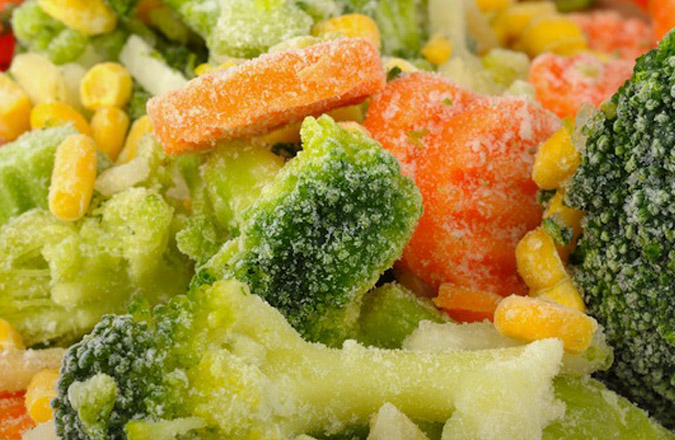
Frozen vegetables, goodness over time
The Frozen vegetables represent, in terms of practicality, a valid help especially for those who have little time to cook or when feeling like having out-of-season vegetables. Contrary to what one might think, there are many advantages offered by frozen foods and in particular the various types of vegetables.
It is a myth that the freezing process causes a loss of freshness and nutritional value: on the contrary, it is precisely frozen vegetables that better maintain their qualities, including organoleptic ones. In all types of vegetables, nutritional loss begins the moment the produce is harvested from the soil and ends in the pot during incorrect cooking. Meanwhile, with the freezing process, deterioration is slowed or stopped by lowering the temperature and bycrystallization.
Vegetables begin to deteriorate from the first minute after their harvest: specifically, research has shown that, for example, green beans can lose up to 45% of nutrients, broccoli and cauliflower 25%, peas 15%, and carrots 10%. Frozen vegetables, on the other hand, are usually frozen within a very short time and therefore retain more nutrients.


