
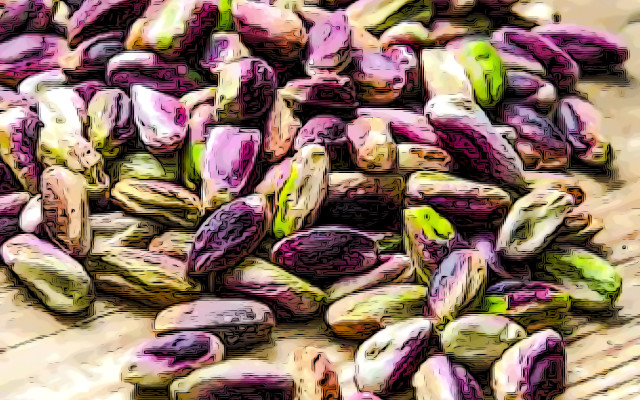
The green gold of Sicily is enriched with a new vein, the Pistachio from Raffadali PDO, registered among the Italian Geographical Indications (GI) on 15.3.21. (1)
The lands of the Pistachio from Raffadali PDO
The cultivation of the Pistachio from Raffadali PDO is concentrated in 29 municipalities in the province of Agrigento and 2 in the province of Caltanissetta. (2)
To the PDO there are already more than 100 growers and some processors (10-15), coordinated by the producers' association that has worked since 2016 for recognition. And which will soon be transformed into the protection consortium, as requested for the PDOs. Many other agricultural and processing companies could join the PDO and triple the number of members.
Where to taste it
The harvest of the 500 hectares of pistachio groves now PDO (over 100 tons/year) is transformed and used in ever more innovative ways, not confined to pastry. Spreadable cream, pesto, fillings for sweets, flakes for the traditional Sicilian cannoli, of course, but also pasta sauces and an unexpected ingredient even in meat-based preparations.
Many delicacies are tasted at Fastucafest, the Pistachio Festival of Raffadali, held every year (except 2020 due to the pandemic) on the third weekend of September in the historic center of the town of the same name. Fresh pistachios, from the harvest that begins the third week of August and ends the first of October. Always in two phases, following the double flowering, with priority given to the faster crops near the sea.
The Fastucafest is a magnet for tourists discovering Western Sicily, who already from the Valley of the Temples glimpse the pistachio groves of Raffadali. But it is also significant for Sicilians.
‘The Fastucafest was a moment of rediscovery of the pistachio, a crop abandoned in the 70s-80s dominated by emigration abroad in search of work. Universities and agricultural doctors are also involved to promote culture, to rediscover this cultivar, to stimulate the creativity of processors. It is enogastronomy, not just agriculture’, says Calogero Frenda, president of the producers' association who led the long process of acquiring the PDO.
An investment in green
The Pistachio of Raffadali PDO It is also agriculture, partly organic, expanding. In just three years, the associated farmers – now PDO – have planted 15,000 new trees.
The cultivar is indeed considered profitable. The Sicilian plant comes into production after 6-8 years and reaches its peak between 10 and 15 years, when it can produce up to 20 kg of pistachios.
Considered that in shell the fruits are worth 10 euros per kg, with a density of 270 plants per hectare and a yield of 200 euros per plant, a gross income of 54,000 euros/ha is estimated.
Irrigation pleases the plants, but when missing it is remedied with more frequent soil work, to oxygenate it, close the cracks and keep the roots cool.
Pistachio from Raffadali PDO and pistachio from Bronte PDO
There must not be missing a reference to the cousin Pistachio of Bronte PDO. The two productions may seem equivalent to the less experienced, but this is not the case.
Both precious fruits with origin Made in Sicily, the two pistachios differ like the soils on which they grow. Rocky, volcanic origin, the Bronte; calcareous that of Agrigento-Nisseno of Raffadali, with the consequent more agile field operation, also mechanical.
The specificities of the soil are reflected in the organoleptic qualities, which qualify Bronte as more savory and Raffadali (richer in essential oils) as sweeter and softer to the palate.
Marta Strinati
Notes
(1) See Implementing Regulation (EU) 2021/474 of the Commission of 15 March 2021 concerning the registration of a name in the register of protected designations of origin and protected geographical indications «Pistachio of Raffadali» (PDO). Official Journal of the European Union https://eur-lex.europa.eu/legal-content/IT/TXT/?toc=OJ%3AL%3A2021%3A099%3AFULL&uri=uriserv%3AOJ.L_.2021.099.01.0034.01.ITA
2) The Raffadali Pistachio PDO is cultivated in the municipalities of Raffadali, Joppolo Giancaxio, Santa Elisabetta, Agrigento, Cianciana, Favara, Racalmuto, Sant’Angelo Muxaro, San Biagio Platani, Cattolica Eraclea, Casteltermini, Santo Stefano Quisquina, Aragona, Comitini, Grotte, Montallegro, Alessandria della Rocca, Siculiana, Realmonte, Naro, Porto Empedocle, Castrofilippo, Campobello di Licata, Ribera, Canicatti, Palma di Montechiaro, Ravanusa, Camastra; Montedoro and Serradifalco in the province of Caltanissetta.

Professional journalist since January 1995, she has worked for newspapers (Il Messaggero, Paese Sera, La Stampa) and magazines (NumeroUno, Il Salvagente). Author of journalistic investigations on food, she published the volume 'Reading labels to know what we eat'.


 italiane il 15.3.21.)