

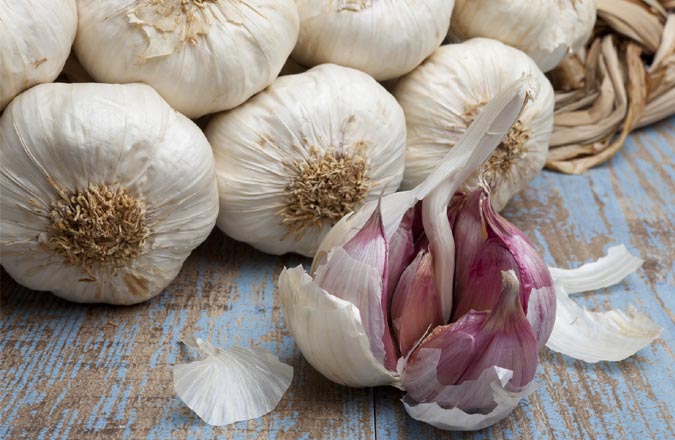
In 2025, Italy harvested about 25,800 tons of garlic on 3,250 hectares and imported 34,500 tons, resulting in a trade deficit of 78 million euros. The two Protected Designations of Origin (PDO), Aglio Bianco Polesano and Aglio di Voghiera, together certify about one thousand tons annually. Nutritionally, garlic concentrates vitamin B6 and sulfur compounds in a few grams, while clinical research confirms measurable, albeit modest, effects on blood pressure.
Italian production and European market share
According to Eurostat data (2026a), the total garlic production in theEuropean Union amounts to 370,670 tons. The market is dominated by Spain, which alone covers 67% of the total (248,470 tons), followed by France (27,010 tons). TheItaly ranks third with 7% of the EU production, ahead of Poland and Romania. Specifically, in the 2025 Italy produced 25,810 tons of garlic on 3,250 hectares, with an average yield of almost 8 tons per hectare. This figure marks a 10% decline compared to 2021, when national production was 28,660 tons on 3,410 hectares.
Trade flows, suppliers and import prices
The foreign trade of fresh or refrigerated garlic (CN customs code 0703 20 00, scope to which all following data refer) shows a structurally importing country. In 2025 theItaly has imported 34,463 tons for 108.7 million euros, 35% more in volume compared to 2024 (25,435 tons, 84.4 million). The exports stopped at 7,375 tons for 30.6 million euros, down 7% from 2024 (Eurostat, 2026b).
The Spain provided 19,832 tons, 57.5% of imported volume, at 3.37 euros per kilo. Following are the Netherlands as shipping country (6,447 tons), theEgypt (2,751), France (1,729), China (936) and Argentina (790). Import average prices vary greatly: 1.57 euros per kilo for Chinese garlic, 1.64 for Egyptian. On the opposite side, the Germany absorbs the 45% of exports in value and 39.5% Italian in volume, at 4.74 euros per kilo, indicating that the domestic product is placed in the highest price range (Eurostat, 2026b).
Adding production and imports and subtracting exports, in Italy the apparent consumption of garlic exceeds 52,900 tons: national production covers 49% of it. The calculation excludes stock changes and processed garlic (dried, powdered, preserved).
The issue has also gained importance in European trade policy. Regulation (EU) 2026/687, implementing bilateral safeguard clauses of the EU-Mercosur agreement, classifies garlic among sensitive products to monitor. From July 2026 the delegated regulation (EU) 2026/912 has thus added garlic to the horticultural products for which Spain, France, Italy, Romania, Portugal and Poland must communicate to the European Commission production prices, for bulbs sized 45-60 millimeters in packages of about 2-5 kilos (Reg. EU 2026/912, Art. 1). Argentina, a Mercosur member, is already the sixth origin of Italian imports.
PDO and biodiversity of local ecotypes
The geographical indications registered by the European Union for Italian garlic are two, both PDO, between the provinces of Rovigo (Veneto) and Ferrara (Emilia-Romagna):
- theWhite Polesano Garlic PDO, registered in November 2009, is cultivated in 29 municipalities of the province of Rovigo over about 150 hectares, with the local ecotype Bianco Polesano, Avorio variety (CSQA, 2026a). The disciplinary requires that garlic does not return to the same soil for at least three years, allows sowing from October 1 to December 31, and provides for the categories Extra (minimum size 45 millimeters) and Prima (30 millimeters). The bulbs can be hand-braided with their own stem, in formats ranging from baskets of 3-5 heads to ‘clusters’ of 70-120 bulbs(Fondazione Qualivita, 2026a);
- theVoghiera Garlic PDO, registered in May 2010, comes from the municipality of Voghiera and parts of those of Masi Torello, Portomaggiore, Argenta and Ferrara. It is sown from September 15 to November 30, harvested from June 10 to July 31 and sold only in the 'Dry' type, with minimum calibers of 45 millimeters for Extra and 40 for Prima (Fondazione Qualivita, 2026b). The supply chain currently counts 17 operators, 430 certified tons and a production value of one million euros (CSQA, 2026b).
In 2023, the last year with complete data for both, the two PDOs certified 602 and 397 tons, for a total value of 4.3 million euros (Fondazione Qualivita, 2026a, 2026b). Compared to the 26,730 tons produced in Italy that year (Eurostat, 2026a), they represent 3,7% of national production.
Outside the PDO system there are ecotypes of great interest. TheRed Garlic of Sulmona, registered among the Traditional Agri-food Products, is the only Italian ecotype that regularly emits the flower stalk every year. The stalks, harvested in June before flowering, are boiled and preserved in oil under the local name of ‘zolle’ (Maiella National Park, n.d.).
Three garlics are Slow Food Presidiums: theResia Garlic, in Friuli, with a reddish tunic and lacking central cloves; theRed Garlic of Nubia, on about 90 hectares in the Trapani area (Sicily), base of the pasta cull’àgghia with Trapani-style pesto; theHistoric Garlic of Caraglio, in the Cuneo area (Piedmont) (Fondazione Slow Food, n.d.-a, n.d.-b).
History and legends, from Virgil to Artusi
Pliny the Elder notes that the Egyptians counted garlic and onions among the deities invoked in oaths (Naturalis Historia, XIX, 101). In the second Bucolica of Virgil the peasant Testili pounds for the reapers, exhausted by the heat, 'garlic and savory herbs she crushes emitting fragrance': garlic and savory, aromatic herbs (Virgil, Bucolics, II, 10-11).
In the Polesine, according to the reconstruction reported in the PDO documentation, the historian Francesco Antonio Bocchi recounts that in the Middle Ages the inhabitants of Rovigo were required to cultivate 'alio loco bono' in their own plots (Fondazione Qualivita, 2026a). To Voghiera the turning point came with the Este family: in 1435 Marquis Niccolò III had the Delizia del Belriguardo built, the court's summer residence, and the gardens destined for his banquets boosted the cultivation of garlic. Accounting documents from 1928 already record the trade of local 'garlic and onions' to other European countries (Fondazione Qualivita, 2026b).
Pellegrino Artusi opens the recipe of rustic spaghetti with a small history of the bulb: 'The ancient Romans allowed the lowest people to eat garlic, and Alfonso, king of Castile, hated it so much that he punished anyone who appeared at court with the smell of garlic in their mouth'. Then he defends it against those who banish it from the kitchen as a plebeian condiment, because this 'obsession deprives them of hygienic and tasty food' (Artusi, 1911, recipe no. 104).
Nutritional profile
The food composition tables indicated by CREA — Food and Nutrition Research Center (2019) refer toraw garlic (code 005000, edible part 75%, portion 5 grams) the following nutritional values.
| Per 100 g | % NRV per 100 g | Per serving (5 g) | |
| Energy | 222 kJ, 53 kcal | 10 kJ, 2 kcal | |
| Fat | 0.8 g | 0.0 g | |
| of which saturated fatty acids | 0.15 g | 0.01 g | |
| Carbohydrates | 1.0 g | 0.1 g | |
| of which sugars | 1.0 g | 0.1 g | |
| Fiber | 4.3 g | 0.2 g | |
| Protein | 8.4 g | 0.4 g | |
| Salt | 0.01 g | 0.00 g | |
| Vitamin B6 | 1.29 mg | 92,1% | 0.06 mg |
| Thiamine | 0.23 mg | 20,9% | 0.01 mg |
| Copper | 0.20 mg | 20,0% | 0.01 mg |
| Potassium | 310 mg | 15,5% | 16 mg |
| Phosphorus | 106 mg | 15,1% | 5 mg |
Note: saturated fatty acids calculated on the 18.2% lipid fraction reported by CREA; salt calculated from sodium (4 mg) multiplied by 2.5. Percentages of reference nutritional values as per Annex XIII of Regulation (EU) No 1169/2011.
Garlic could therefore boast the nutrition claim 'high in vitamin B6' and the claims 'source of' thiamine, copper, potassium, phosphorus and fiber (Reg. EC 1924/2006, Annex), although the usual portion is only a few grams. The CREA tables separately report a little known fact, the richness in fructooligosaccharides (18.9 grams per 100 g), prebiotic fibers that may promote the balance of the intestinal microbiota (CREA, 2019).
Garlic and health, the research
I sulfur compounds of garlic – ajoene and allyl sulfides – derive from allicin which is formed when the tissue is cut or crushed. In the laboratory these compounds show bactericidal activity, against biofilms and against bacterial communication systems (quorum sensing), also on antibiotic-resistant strains (Bhatwalkar et al., 2021).
Clinical research in recent years has focused on the possible correlations between garlic consumption and blood pressure:
- a meta-analysis of 10 randomized studies on hypertensive patients found average reductions of 4.2 mmHg in systolic pressure (maximum) and 3.1 mmHg in diastolic pressure (minimum), with a more marked effect between 50 and 60 years of age. The authors still consider the overall impact on hypertension limited and report gastrointestinal disorders and bad breath as the most frequent side effects (Tang et al., 2025);
- a second meta-analysis, limited toaged garlic on 19 studies, confirms a reduction in systolic pressure of 2.5 mmHg and LDL cholesterol of 4.4 mg/dl, without significant effects on diastolic pressure and HDL cholesterol (Bashiri et al., 2025).
In the kitchen, from Artusi to Trapani
Artusi’s rustic spaghetti recipe is still a model today: a minced mix of two garlic cloves and parsley in oil, then six or seven chopped tomatoes, strained sauce and parmesan. Artusi’s warning applies to every soffritto: garlic must not be cooked too much, because 'then it takes on a very bad taste' (Artusi, 1911, recipe no. 104).
Spaghetti aglio, olio e peperoncino originated in the poorest areas of Naples, probably as an alternative to pasta with clams when these were not affordable by everyone. In Trapani, Nubia red garlic is crushed with basil, almonds, tomato, and extra virgin olive oil for the Trapani pesto, and accompanies the fish cous cous (Fondazione Slow Food, n.d.-b). In Piedmont and Liguria, bagna càuda and agliata make it the main ingredient.
Advice for buyers and consumers
The first information to look for is theorigin, which at the fruit and vegetable counter allows distinguishing the national product from the Spanish, Dutch or Egyptian ones. The DOP logo guarantees the area, ecotype and minimum sizes set by the regulation. For professional use, compact bulbs should be chosen, with well-adhering cloves and dry skins, free of sprouts. Stored in a cool, dry and well-ventilated place, preferably with its roots, the Aglio Bianco Polesano DOP keeps for 8-10 months (Fondazione Qualivita, 2026a).
Conclusions
Italian garlic covers less than half of the national consumption, while imports are growing and the European Union has begun monitoring prices in light of the agreement with Mercosur. The two PDOs, accounting for 4% of production, show how the link between ecotype, territory and regulation can support higher prices in foreign markets, starting with Germany. Science confirms real but contained cardiovascular effects, obtained with standardized extracts, and restores to garlic its most solid role: an ingredientidentitarian of Italian cuisine.
Dario Dongo
References
European Union regulatory sources
Commission Delegated Regulation (EU) 2026/912 of 27 April 2026 amending Delegated Regulation (EU) 2017/891 as regards the Member States’ notifications concerning producer prices of fruit and vegetables on the internal market. OJ L, 2026/912, 6.7.2026. http://data.europa.eu/eli/reg_del/2026/912/oj
Regulation (EC) No 1924/2006 of the European Parliament and of the Council of 20 December 2006 on nutrition and health claims made on foods. Consolidated text: 13/12/2014. http://data.europa.eu/eli/reg/2006/1924/2014-12-13
Regulation (EU) No 1169/2011 of the European Parliament and of the Council of 25 October 2011 on the provision of food information to consumers. Consolidated text: 01/04/2025. http://data.europa.eu/eli/reg/2011/1169/2025-04-01
Regulation (EU) 2024/1143 of the European Parliament and of the Council of 11 April 2024 on geographical indications for wine, spirit drinks and agricultural products, as well as traditional specialities guaranteed and optional quality terms for agricultural products. Consolidated text: 18/03/2026. http://data.europa.eu/eli/reg/2024/1143/2026-03-18
Regulation (EU) 2026/687 of the European Parliament and of the Council of 11 March 2026 implementing the bilateral safeguard clauses of the EU-Mercosur Partnership Agreement and the EU-Mercosur Interim Trade Agreement for agricultural products. OJ L, 2026/687, 19.3.2026. http://data.europa.eu/eli/reg/2026/687/oj
Statistical data and institutional sources
CREA — Food and Nutrition Research Center. (2019). Food composition tables: Garlic (code 005000). https://www.alimentinutrizione.it/tabelle-nutrizionali/005000
CSQA. (2026a, 22 March). Polesano PDO White Garlic: CSQA control body confirmed. https://www.csqa.it/en-us/press/aglio-bianco-polesano-dop-confermato-csqa-ente-di-controllo
CSQA. (2026b, 29 April). Voghiera Garlic PDO, a supply chain worth €1 million. https://www.csqa.it/en-us/press/aglio-di-voghiera-dop,-una-filiera-che-vale-1-milione-di-euro
Eurostat. (2026a). Crop production in EU standard humidity (apro_cpsh1), garlic (V4600) [Data set, update 28/09/2026]. https://doi.org/10.2908/APRO_CPSH1
Eurostat. (2026b). EU trade since 2002 by CN8 (DS-045409), Italy, CN 0703 20 00 [Data set, extraction 16/10/2026]. https://ec.europa.eu/eurostat/api/comext/dissemination/sdmx/2.1/data/DS-045409/A.IT.WORLD.07032000.1+2.VALUE_IN_EUROS+QUANTITY_IN_100KG?format=TSV&startPeriod=2021
Fondazione Qualivita. (2026a). White Polesano Garlic PDO. Qualigeo. https://www.qualigeo.eu/prodotto-qualigeo/aglio-bianco-polesano-dop/
Fondazione Qualivita. (2026b). Voghiera Garlic PDO. Qualigeo. https://www.qualigeo.eu/prodotto-qualigeo/aglio-di-voghiera-dop/
Fondazione Slow Food. (n.d.-a). Resia Garlic. Slow Food Presidium. https://www.fondazioneslowfood.com/it/presidi-slow-food/aglio-di-resia/
Fondazione Slow Food. (n.d.-b). Red Garlic of Nubia. Slow Food Presidium. https://www.fondazioneslowfood.com/it/presidi-slow-food/aglio-rosso-di-nubia/
Maiella National Park. (n.d.). Red Garlic of Sulmona. PAT – Traditional Agri-food Products. https://www.parks.it/parco.nazionale.majella/dettaglio_prodotto.php?id_prodotti=1791
Rome Tourism. (n.d.-a). Spaghetti with garlic, oil and chili pepper. https://www.turismoroma.it/de/node/85420
Scientific studies
Bashiri, S., TaghipourSheshdeh, F., Foshati, S., Askarpour, M., Ahmadi, A., & Babajafari, S. (2025). The effect of aged garlic supplementation on blood pressure and lipid profile: A dose–response GRADE-assessed systematic review and meta-analysis of randomized controlled trials. Phytotherapy Research, 39(12), 5669–5694. https://doi.org/10.1002/ptr.70032
Bhatwalkar, S. B., Mondal, R., Krishna, S. B. N., Adam, J. K., Govender, P., & Anupam, R. (2021). Antibacterial properties of organosulfur compounds of garlic (Allium sativum). Frontiers in Microbiology, 12, 613077. https://doi.org/10.3389/fmicb.2021.613077
Tang, Y., Lei, Y., Xu, M., Tu, Q., Mao, X., Huang, N., & Jiang, Q. (2025). Meta-analysis on the safety and efficacy of long-term garlic consumption as an adjunctive treatment for hypertension. Frontiers in Nutrition, 12, 1656809. https://doi.org/10.3389/fnut.2025.1656809
Historical and gastronomic sources
Artusi, P. (1911). The science in the kitchen and the art of eating well, recipe no. 104 ‘Rustic spaghetti’. Text reproduced from the Terni Municipal Library. https://bct.comune.terni.it/sites/default/files/artusi_5_minestre_asciutte_spaghetti_alla_rustica_104_1_0.pdf
Pliny the Elder. Naturalis Historia, XIX, 101.
Virgilio Marone, P. Bucolics, II, 10-11.

Dario Dongo, lawyer and journalist, PhD in international food law, founder of WIISE (FARE - GIFT – Food Times) and Égalité.


