

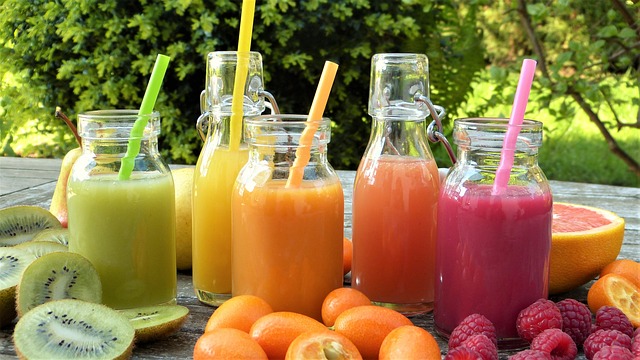
The EU directive on fruit juices and nectars strictly defines their requirements, in order to distinguish these two product categories from other fruit beverages.
Fruit nectar must meet specific composition criteria — permitted raw materials, minimum fruit content, sugar and/or honey limits, use of sweeteners — as well as labeling and usage requirements of nutrition claim 'no added sugars'.
The reform introduced with the Breakfast Directive redefines its compositional limits and label transparency, imposing new operational constraints for the processing industry and distribution.
Fruit nectar, the regulatory framework
The reference regulation is the Fruit Juice Directive 2001/112/EC, concerning fruit juices and similar products intended for human consumption, as amended by Breakfast Directive (EU) 2024/1438. The directive — transposed in Italy by legislative decree 151/2004 and 207/2025 — is in turn consistent with the General standard for fruit juices and nectars defined by the Commission of Codex Alimentarius in 2005 and updated in 2024.
The fruit nectar is defined as the fermentable but not fermented product obtained by adding water, with or without added sugars and/or honey, to fruit juices and similar products, fruit puree and/or concentrated fruit puree, or a mixture of such products, in compliance with the requirements of Annex IV (FJD, Annex I, Part I, point 5).
The production sequence
The production sequence of fruit nectar is therefore as follows:
- transformation of fruit into juice and/or puree;
- possible concentration and subsequent reconstitution;
- possible addition of aroma, pulp and cells obtained by appropriate physical processes from the same fruit species;
- addition of water, in quantity sufficient to ensure the minimum fruit content in the final product;
- possible addition of sugars and/or honey, or sweeteners.
Comparison between fruit-based beverages
| Category | Distinctive element | sweeteners | Applicable rules |
| Fruit juice | obtained from the edible part of the fruit, without adding water, sugars or sweeteners | not allowed | Fruit Juice Directive, as amended by Breakfast Directive |
| Concentrated fruit juice | reconstituted with drinking water, respecting the minimum Brix value specified in Annex V | not allowed | Fruit Juice Directive, as amended by Breakfast Directive |
| Fruit juice with reduced sugar content | naturally present sugars reduced by at least 30%, using physical methods, without sweeteners | not allowed | Fruit Juice Directive, as amended by Breakfast Directive |
| fruit nectar | juice and/or puree, water, possible sugars and/or honey, respecting the minimum fruit content | not allowed | Fruit Juice Directive, as amended by Breakfast Directive |
| Fruit nectar without added sugars | made without addition of sugars or honey, respecting the minimum fruit content | allowed, as total or partial sugar substitutes; however, their use excludes the claim ‘no added sugars’ | Fruit Juice Directive, as amended by Breakfast Directive |
| Fruit nectars with reduced energy intake | energy intake reduced by at least 30% compared to a similar product, respecting the minimum fruit content | allowed, as total or partial substitutes for sugars; their use excludes the claim 'no added sugars' | Fruit Juice Directive, as amended by Breakfast Directive |
| Other fruit drinks | outside the scope of the directive, no minimum fruit content nor compositional limit | allowed | Regulation (EU) No 1169/2011 |
NB: the denominations of juice and fruit nectar are reserved for products precisely defined in the Fruit Juice Directive and cannot be used to designate beverages that — although made with fruit — do not meet the specific characteristics established therein.
Classification of fruits and 'minimum content'
Annex IV of the 'juice directive' establishes the minimum content of juice and/or puree that a nectar must have, expressed as a percentage of the finished product volume. The minimum content varies according to individual fruits, which the directive divides into three groups:
- Part I — fruits with acidic juice, not suitable for consumption in natural state. Passion fruit, black, white and red currants, sea buckthorn, lemons and limes: 25%. Gooseberries, sloe, plums, damsons, serviceberries, cranberries: 30%. Morello cherries: 35%. Other cherriesrose hips, blueberries, raspberries, apricots, strawberries, blackberries: 40%. Elderberries and quinces: 50%. Other fruit of the category: 25%;
- Part II — fruits with low acid content, very pulpy or very aromatic. Mangoes, bananas, guavas, papayas, lychees, pomegranates, cashews and other listed species: 25%;
- Part III — fruits with juice suitable for consumption in natural state. Apples, quinces, pears, peaches, citrus fruits other than lemons and limes, pineapples, tomatoes and other fruit of the category: 50%.
Sugars and honey, the new limits
The 'juice directive' originally provided for thepossible addition of sugars and/or honey — in all fruit nectars — up to a maximum of 20% of the total weight of the finished product. The Breakfast Directive has instead introduced limits differentiated based on the belonging group of the fruit:
- 20% of the total weight for fruit nectars from acidic juice, not suitable for consumption in the natural state (Annex IV, Part I);
- 15% for fruit nectars with low acid content, very pulpy or very aromatic (Annex IV, Part II);
- 10% for fruit nectars with juice suitable for consumption in the natural state (Annex IV, Part II).
The rationale of this substantial reform is explained in the recitals of the Breakfast Directive: the proportion of sugars or honey must be reduced for nectars obtained from naturally low-acid fruits already pleasant to the palate. For example, a peach or pear nectar (Part III) decreases from a maximum of 20% to a maximum of 10%, the most severe reduction.
These are obviously maximum limits, not mandatory compositions. However, the reform has entailed the need to reformulate some of the products so far available on the shelf.
The ‘sugars‘ that can be added remain those defined in Annex II to the FJD: the sugars referred to in Directive 2001/111/EC (factory or white sugar also refined; liquid sugar, including inverted; inverted sugar syrup; glucose syrup also dehydrated; dextrose, both monohydrate or anhydrous, fructose), fructose syrup and sugars derived from fruit.
'No added sugars', conditions of use
The indication ‘no added sugars’, and any other indication of equivalent meaning for the consumer, on the label and advertising of fruit nectar:
- is allowed only if the product does not contain added mono- or disaccharides, nor any other food product used for its sweetening properties, including sweeteners;
- must always be accompanied, following the reform introduced with the Breakfast Directive, by the wording ‘contains naturally occurring sugars‘. In line with the regulations applicable to the majority of food products, pursuant to the Nutrition and Health Claims Regulation (EC) No 1924/06 (Dongo, 2023).
In the different case of Fruit juices, where the new directive has instead provided for the optional indication ‘fruit juices contain only naturally occurring sugars‘, in the same field of view as the sales denomination (legislative decree 151/2004, article 4, paragraph 6-ter). With the precise aim of distinguishing this product category, where the addition of sugars and sweeteners is never allowed.
Sweeteners, rules for use and labelling
The Fruit Juice Directive allows the use of sweeteners, as a total or partial substitute for sugars, only in fruit nectars (not also fruit juices) produced ‘without added sugars or with reduced energy content’ [at least 30% compared to the average of the most sold products in the same category in the reference market, ed], ‘subject to regulation (EC) no. 1924/06’ (Annex I, Part I, point 5).
The designation of the food must in these cases be accompanied by the indication «with sweetener(s)», pursuant to Food Information Regulation (EU) No 1169/11, Annex III, point 2.1.
However, the European legislator has expressly excluded, note well, that fruit nectar with sweeteners may bear The nutrition claim ‘no added sugars' (Annex I, Part II, point 2, fifth dash of directive 2001/112/EC, as replaced by EU dir. 2024/1438). It follows that fruit drinks with sweeteners must be marketed with a different denomination, of a descriptive type, which is always essential (Dongo, 2026).
The nectar label, four elements to read
Thelabeling of the nectar must always report, in the same visual field as the sales denomination, 'the minimum content of fruit juice, fruit puree or the mixture of such ingredients, with the wording «fruit … % minimum»’ (FJD, article 3, paragraph 7). In this way:
- the operator declares under his own responsibility the actual amount of fruit present in the product;
- consumers and buyers can appreciate nectars with a fruit content higher than the established minimum.
The notice ‘from concentrate(s)' or 'partially from concentrate(s)‘ is in turn mandatory on the label of nectars thus obtained entirely or partially from one or more concentrates, immediately next to the sales denomination, clearly visible within the entire context and with clearly visible characters.
‘Juice and pulp'. It is not a marketing formula, but a designation specific reserved in Italy to 'nectars obtained exclusively from fruit puree, including concentrated' (FJD, Annex III, Part I, letter 'c').
Fruit used. If the product is made with two or more species, the sales denomination indicates the fruit used in descending order of volume of juices or purees, as reported in the list of ingredients. With three or more species, the wording 'multiple fruit species', a similar indication or the number of species used is allowed (FJD, article 3.3).
The transitional regime and the sugar tax suspended
The provisions of Legislative Decree 207/2025 shall apply from 14 June 2026. Products placed on the market or labeled before that date, in accordance with the previous regulations, may be marketed until stocks are exhausted. Therefore, for months, shelves will contain labels built on two different regimes.
In the background remains the excise tax on sweetened beverages, so-called sugar tax, introduced by Law No. 160 of 27 December 2019 and never entered into force. It affects products under NC codes 2009 and 2202 obtained by adding sweeteners, natural or synthetic, in the amount of 10 euro cents per liter (10 euros per hectoliter) on finished products. Nectars with added sugars or sweeteners would fall under this, 100% juices would not.
Furthermore, Law No. 199 of 30 December 2025 postponed its effectiveness to 1 January 2027 (Article 1, paragraph 125), for the eighth time since its theoretical introduction, which has so far never occurred.
Analysis of the Italian market and consumption
According to Circana surveys for the year ending March 2025, the Italian market for juices and nectars reached 533 million liters (-6.3%) for 831.7 million euros (-4.3%), considering hypermarkets, supermarkets, self-service, traditional retail, and discount stores.
However, the trend by segment is strongly divergent:
- fruit-based drinks up to 29%: +0.3% in volume and +1.2% in value;
- fruit-based drinks from 30 to 99%: -0.3% in volume and +3.2% in value;
- nectars and similar products: -14.5% in volume and -13% in value;
- 100% juices: -16.5% in volume and -11.3% in value;
- UHT squeezed juices: -24.3% in volume and -19.4% in value;
- UHT smoothies: -27.7% in volume and -27.4% in value.
The paradox is evident: the two categories whose quality is regulated at European and international level (Codex Alimentarius, 2005) — nectars and fruit juices — retreat double-digit, while those with free formulation resist and even grow slightly. In the same period, demand for references with ‘no added sugars‘ (Modern Distribution, 2025).
The distribution structure explains part of the phenomenon. Supermarkets absorb 45.3% of volumes and 50.4% of value, discounts 34.6% of volumes but only 27% of value. The distributor's brand represents the 43.3% of the value of the category, while the top three industrial groups — Conserve Italia, Zuegg and Parmalat Group — cover a total of 35.2%.
In the annual period between September 1, 2024 and August 31 2025, Circana then recorded for the whole of juices, nectars and other fruit drinks in modern distribution alone 515 million liters (-6% approximately) and 864 million euros (-3%), with an average price rising to 1.68 euros per liter — 1.88 in large distribution, 1.31 in discount (Beverfood.com, 2025).
Nectar also retains a peculiar technological raison d’être: making fruits too acidic, too pulpy or too aromatic to be consumed as juice drinkable, enhancing peaches, pears and apricots from Italian fruit growing in a stable and transportable form.
How to choose a fruit nectar
The choice of a fruit nectar should consider several aspects:
- The indication ‘fruit ... % minimum‘ allows comparison of the various nectars, given the same fruit(s) used. The product value tends to be proportional to the amount of fruit used;
- organic certification, for the best guarantee of ecosystem and biodiversity protection, including the fruit microbiota (Dongo et al., 2019); secondly, absence of pesticide residues;
- Theorigin of the fruits is not in itself a quality indicator, but choosing products with Italian agricultural origin also supports national fruit growing and the short supply chain (Dongo, 2019; Dongo, 2026);
- the denominations ‘nectar‘ and ‘Juice and pulp‘ in turn differ because in the first case the fruit base is juice, in the second puree. Thus, quality does not vary but rather the density of the product.
For professional operators it is essential to verify the technical data sheets of products and compliance with the new regulations described above, as well as the various certifications. The team of GIFT (Great Italian Food Trade) supports international buyers in selecting reliable Italian suppliers, with expertise in food legislation, product technical characteristics, and supply chain evaluation.
Conclusions
Fruit nectars will be subject to stricter regulations from June 14, 2026, precisely when the market is penalizing them. It is a combination that can be interpreted in two ways.
The first is receptive, that is, to adapt the labels and wait. The second is proactive: the reduction of added sugar limits, the obligation to accompany the claim with the wording ‘contains naturally occurring sugars’ and the documented growth in demand for products without added sugars converge in the same direction. Those working with fruit percentages above the legal minimum, with traceable Italian raw materials and possibly organic with ‘clean label’, today have verifiable arguments, not just evocative ones.
For the consumer, the rule remains one: the legal designation and the wording ‘fruit … % minimum’ say more in two lines than any image on the packaging.
Dario Dongo
Credit cover Silvia from Pixabay
References
European Union legal sources
Council Directive 2001/112/EC of 20 December 2001 relating to fruit juices and certain similar products intended for human consumption. Consolidated text: 14/06/2026. http://data.europa.eu/eli/dir/2001/112/2026-06-14
Directive (EU) 2024/1438 of the European Parliament and of the Council of 14 May 2024 amending Council Directives 2001/110/EC, 2001/112/EC, 2001/113/EC and 2001/114/EC. http://data.europa.eu/eli/dir/2024/1438/oj
Regulation (EU) No 1169/2011 of the European Parliament and of the Council of 25 October 2011 on the provision of food information to consumers. Consolidated text: 01/04/2025. http://data.europa.eu/eli/reg/2011/1169/2025-04-01
Regulation (EC) No 1333/2008 of the European Parliament and of the Council of 16 December 2008 on food additives. Consolidated text: 18/08/2026. http://data.europa.eu/eli/reg/2008/1333/2026-08-18
Regulation (EC) No 1924/2006 of the European Parliament and of the Council of 20 December 2006 on nutrition and health claims made on foods. Consolidated text: 13/12/2014. http://data.europa.eu/eli/reg/2006/1924/2014-12-13
Italian legal sources
Legislative Decree 21 May 2004, No. 151. Implementation of Directive 2001/112/EC concerning fruit juices and certain similar products intended for human consumption. Normattiva. Last update to the act published on 05/01/2026: https://www.normattiva.it/uri-res/N2Ls?urn:nir:stato:decreto.legislativo:2004;151
Legislative Decree 30 December 2025, No. 207. Implementation of Directive (EU) 2024/1438. Normattiva. https://www.normattiva.it/uri-res/N2Ls?urn:nir:stato:decreto.legislativo:2025-12-30;207
Law 30 December 2025, No. 199. State budget forecast for the financial year 2026 and multi-year budget for the three-year period 2026‑2028, article 1, paragraph 125. Official Gazette of the Italian Republic, General Series No. 301 of 30 December 2025. Normattiva. Last update to the act published on 07/08/2026. https://www.normattiva.it/uri-res/N2Ls?urn:nir:stato:legge:2025-12-30;199!vig=
Codex Alimentarius
Codex Alimentarius Commission. (2005). General standard for fruit juices and nectars (CXS 247-2005) (amended 2024). FAO/WHO. https://www.fao.org/fao-who-codexalimentarius/sh-proxy/jp/?lnk=1&url=https%253A%252F%252Fworkspace.fao.org%252Fsites%252Fcodex%252FStandards%252FCXS%2B247-2005%252FCXS_247e.pdf
In-depth articles
Dongo, D. (2023, 16 June). Fruit drinks ‘zero added sugars’? FARE (Food and Agriculture Requirements). https://fareagrifood.com/2023/06/16/bevande-frutta-zero-zuccheri-aggiunti/
Dongo, D. (2026, 5 June). Denomination, the case of cheeses. FARE (Food and Agriculture Requirements). https://fareagrifood.com/2026/06/05/denominazione-caso-formaggi/
Dongo, D., Ferrucci, D. (2019, 28 July). The time of organic apples. Even better for health, science shows. FT (Food Times). https://www.foodtimes.eu/it/pianeta/il-tempo-delle-mele-bio-tanto-meglio-per-la-salute-dimostra-la-scienza/
Dongo, D. (2019, 27 September). Short supply chain, concepts and values. FT (Food Times). https://www.foodtimes.eu/it/consumatori-e-salute/filiera-corta-concetti-e-valori/
Dongo, D. (2026, 6 August). Reg. (EU) 2026/1739: 'fair', 'equitable' and 'short supply chain', written contracts, meat sounding. FT (Food Times). https://www.foodtimes.eu/it/sistemi-alimentari/regolamento-ue-2026-1739-agricoltori-filiera-alimentare/
Statistics and market
Beverfood.com. (2025, 26 November). Juices and fruit drinks in 2025, volumes still declining in modern distribution. https://www.beverfood.com/mercato-succhi-bevande-frutta-italia-calo-vendite/
Modern Distribution. (2025, 5 June). Juices and nectars: the trend of no added sugars is growing (processing based on Circana data). https://distribuzionemoderna.info/mercati/succhi-e-nettari-cresce-il-trend-del-senza-zuccheri-aggiunti

Dario Dongo, lawyer and journalist, PhD in international food law, founder of WIISE (FARE - GIFT – Food Times) and Égalité.


