

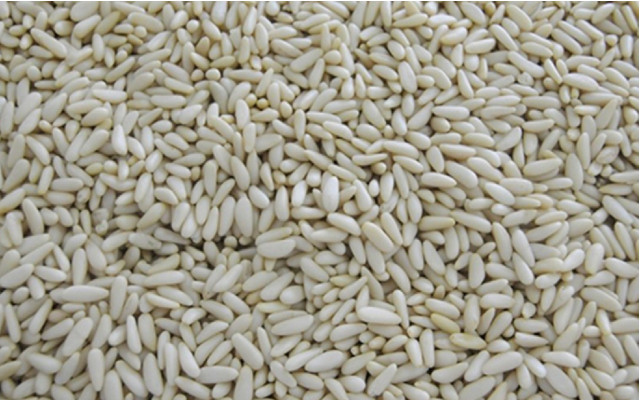
I pine nuts are a cornerstone ingredient of Mediterranean cuisine, but behind a single commercial name coexist botanical species, processing methods and nutritional profiles profoundly different.
Alongside the stone pine (Pinus pinea) grown in the Mediterranean basin - and represented in Italy by historical productions such as the organic one in the Migliarino-San Rossore Park - the global offer is based on Asian varieties, characterized by a different ratio of proteins and lipids.
A complete analysis of the supply chain, market flows and European rules on origin, nutrition claims and allergens offers sector operators and consumers the technical tools to distinguish the different options available on the market.
The stone pine in Italian history
The stone pine has accompanied the Mediterranean landscape for millennia. The Romans used its seeds in sauces, as documented by the recipe collection De re coquinaria attributed to Marco Gavio Apicius, while charred pine cones emerged in the excavations of the Vesuvian area (79 AD). In the Middle Ages pine nuts enter the cuisine of courts as well as monasteries, in sweets, fillings and sauces.
The great coastal pine forests also belong to literary history. Dante he compares the wind in the forest of the earthly Paradise to the sound that 'is gathered from branch to branch / through the pine forest up 'the coast of Chiassi' (Purgatorio, XXVIII, 19-20), the pine forest of Classe near Ravenna. In Tuscany, the San Rossore estate, today in the Migliarino, San Rossore and Massaciuccoli Regional Park, houses the pine forest from which the region's best-known pine nut comes.
Botanical characteristics and seasonality
The Pinus pinea belongs to the Pinaceae family. Pine cones take approximately three years to reach maturity and protect seeds encased in a woody shell, which is in turn covered by a thin dark film. The harvesting of closed pine cones takes place from autumn to early spring, by hand or with the aid of ladders and poles.
The freshly extracted pine nut therefore has an autumn-winter seasonality, while the shelled and dried product is available all year round.
In Italy the species of commercial interest is the stone pine. The Swiss stone pine (Pinus cembra) of the Alps produces smaller seeds, used mainly locally, while the Aleppo pine (Pinus halepensis) and the maritime pine (Pinus pinaster) have no food importance.
The extraction of pine nuts, from the pine cone to the seed
The extraction method described for the Pine Nuts of the Migliarino-San Rossore Park uses very old machinery, in historic facilities, with a sequence of phases that has remained virtually unchanged for over a century (Regione Toscana, N/A). The collected pine cones are spread on cloths for approximately seven months, the time needed to open their scales. The seeds still in their shell are then separated from the cone, washed in water to remove the dark powder from the shell, then subjected to thermal treatment.
Followed by shelling: the pine nuts are crushed by machine, while the shell fragments are separated by decantation in a tub of water. After a passage in a dryer at around 90°C, the skin, called nocella, is removed. There final sieving is entrusted to the manual work of operators.
The price elevated is due to the labour costs for harvesting but also to the yield: the estimates of the International Nut and Dried Fruit Council (INC) on Italian production indicate approximately one kilo of shelled pine nuts for every five kilos of pine nuts in shell (INC, 2026), without counting the weight of the pine cone, which is far greater than that of the seeds.
Production and market of pine nuts in Italy
According to the INC, the Italian production of pine nuts stood at 625 tonnes in shell in the 2024/25 season, equal to 125 kt of shelled seed, with an estimate of 500 and 100 kt for 2025/26 (INC, 2026).
In the'Mediterranean area Turkey leads the production of Pinus pinea, with 1,750 kt of shelled fish estimated for 2025/26, while Spain and Portugal experienced a poor year. At a global level, the supply depends on Asian species (Pinus koraiensis, Pinus sibirica, Pinus yunnanensis, Pinus gerardiana), with the China leading producer. Global production fell from 44,840 to 25,762 kt kt of shelled product in the transition from 2024/25 to 2025/26 (INC, 2026).
As in other sectors of the tree nuts, the Italy confirms itself as a reference market. A study carried out for CBI, the Dutch centre for the promotion of imports from developing countries, estimates imports Italian shelled pine nuts equal to 3,100 kt in 2025, worth 72.8 million euros, up from 2,300 kt in 2021 (CBI, 2026).
The same study reports the arrival of almost 600 tons of pine nuts in shell, especially from Spain, destined for Italian processing industry. The national product, together with the seeds obtained in Italy from Spanish pine nuts, represents approximately 9% of the supply on the domestic market (CBI, 2026). It's the premium segment, supported by demand for quality, traceability and organic.
Pine nut from Migliarino-San Rossore Park, the Tuscan PAT
No Italian pine nut is currently registered as PDO or PGI. The national list of Traditional Agri-food Products, reached in 2026 at the twenty-sixth revision with 5,813 entries (MASAF, 2026), includes the Pine nut of Migliarino-San Rossore Park among the plant products of Tuscany.
The tourism portal of the Tuscany Region describes it as the first organic pine nut in Europe, with an intense aroma and resinous flavour imparted by the pines of the Mediterranean maquis, with white ovoid seed, dark brown shell (Regione Toscana, N/A). In pastry-making it is an appreciated ingredient, as well as an increasingly requested gelato flavour.
The PATs mention certifies processing methods consolidated over time as well as a historical link with the territory, but does not constitute a European quality scheme like PDO or PGI. The certified organic adds the guarantee of compliance with European rules on pinewood management, harvesting, processing, verified by certification bodies.
Nutritional values of stone pine nuts
The food composition tables indicated by CREA — Food and Nutrition Research Centre (2019) report for Pinus pinea pine nuts (code 008590) the nutritional values as follows, per 100 grams of edible portion. The reference portion is 30 grams.
| Pine nuts, 100 g | Value | %NRV
|
| Energy | 2.528 kJ / 604 kcal | |
| Fats | 50.3 g | |
| of which saturated fatty acids | N/A | |
| Carbohydrates | 4.0 g | |
| of which sugars | 3.9 g | |
| Fibre | 4.5 g | |
| Proteins | 31.9 g | |
| Salt | N/A | |
| Phosphorus | 466 mg | 67% |
| Thiamine (vitamin B1) | 0.39 mg | 35% |
| Riboflavin (vitamin B2) | 0.25 mg | 18% |
| niacin | 2.70 mg | 17% |
Note: N/A: value not reported by CREA. %NRV: percentage of the nutritional reference values as set out in Annex XIII to Regulation (EU) No 1169/2011. Vitamins and minerals are indicated if present in an amount equal to or greater than 15% of the NRV.
The distinctive feature is the protein content, close to 32% in Italian pine nuts (CREA) as in Mediterranean ones, much lower in Asian species:
- a study on Spanish and Turkish Pinus pinea pine nuts confirms a protein content of 30-32.4% (Teneva & Petkova, 2026). The lipid profile is dominated by linoleic acid (46-50%), followed by oleic acid (32-37.5%). γ-tocopherol is the only tocopherol detected, β-sitosterol is the prevalent phytosterol, and roasting does not significantly modify the fatty acid composition;
- reviews dedicated to pine nuts of Asian species, which are prevalent in world trade, instead report values around 20% of proteins, 64% of fats (Takala et al., 2023).
Nutrition claims
Pursuant to Regulation (EC) No 1924/2006 the Mediterranean pine nuts seem to respond - based on CREA data (2019) - to the conditions for the use of nutrition claims:
- 'to high protein content', since protein provides about 21% of energy, 'high in Phosphorus' and 'high in thiamine', as well
- ‘source of fibre', as well as 'source of riboflavina' (vitamin B2)' and 'source of niacin' (EC regulation 1924/2006, Annex).
Operators wishing to use nutrition claim in commercial communication must in any case verify compliance with the aforementioned conditions, by means of analysis on representative product samples, against tolerances in default limited to measurement uncertainty alone (Dongo, 2023a).
Possible health benefits
An extensive umbrella review associates the consumption of 28 grams per day of tree nuts with a reduction of 21% of the relative risk of cardiovascular disease, as well as 22% of mortality from all causes (Balakrishna et al., 2022). The authors indicate in 15-20 grams per day the optimal dose for cardiovascular protection, a quantity close to the 30 gram portion indicated by CREA for pine nuts. The results were consistent with i benefits of dried fruit for the heart already observed in the literature.
The research on pinolenic acid, present at 14-19% in pine nut oils of Asian species, report favorable effects on appetite, lipid metabolism and inflammation in cellular and animal models, awaiting confirmation in humans (Baker et al., 2021; Takala et al., 2023). In stone pine nuts, studies mainly enhance the supply of proteins, phytosterols, tocopherols and phosphorus.
Pine nuts and allergens, EU regulations
Pine nuts occupy a singular position in the European regulation of consumer information. The list of substances or products that cause allergies or intolerances includes tree nuts, but limits it to almonds, hazelnuts, walnuts, cashew nuts, pecan nuts, Brazil nuts, pistachios, macadamia nuts or Queensland nuts (EU Reg. 1169/2011, Annex II, point 8).
Unlike other tree nuts more commonly used in Italian cooking and pastry-making – such as almonds, hazelnuts, walnuts e pistachios – pine nuts are not included in the list of allergens subject to specific highlighting in the ingredient list (EU regulation 1169/2011, art. 21.1, letter 'b'). It is in fact about seeds of a conifer, botanically distinct from the fruits of angiosperms.
THE'allergy to pine nuts is in fact rare, in the Old Continent, even if documented. Research has identified Pin p 1 as the major pine nut allergen, the first food allergen described in gymnosperms (Cabanillas et al., 2016). Operators can therefore offer voluntary and useful information to sensitive consumers, in the event of their possible presence due to accidental contamination of products where they do not appear in the ingredient list.
In several Non-EU countries pine nuts are instead among the allergens subject to specific labeling information, as summarized in the table below.
| Regulation | Pine nuts allergens on label | Legal basis |
| Codex Alimentarius | No, assessment left to individual countries | CXS 1-1985, revision 2024, section 4.2.1.5 |
| Australia and New Zealand | Yes | Food Standards Code, Standard 1.2.3, Schedule 9 |
| Brazil | Yes | RDC ANVISA 727/2022, art. 13, Annex III |
| Canada | Yes | Food and Drug Regulations, priority allergens (Health Canada) |
| China | Yes, as 'nuts', from 16 March 2027 | GB 7718-2025, with the definition of tree nuts from GB 19300 |
| South Korea | Yes | MFDS Food Labelling Standard, notification 2018-32 |
| Mexico | Yes, general clause on tree nuts | NOM-051-SCFI/SSA1-2010, section 4.2.2.2.3 |
| Gulf countries | Yes, like 'nuts' | GSO 2810:2025 |
| United States | Yes | FALCPA; FDA guidelines, edition 5 (2025), table 1 |
| Japan | No | Food Labelling Standard, Consumer Affairs Agency (9 mandatory allergens, 20 recommended) |
| United Kingdom | No | Regulation 1169/2011 as retained in the United Kingdom, Annex II |
| Switzerland | No | OID, RS 817.022.16, Annex 6 |
| European Union | No | Regulation (EU) 1169/2011, Annex II, section 8 |
Pine nuts in the kitchen, from pesto to chestnut cake
The Genoese pesto it is the best known recipe. The Consortium's version involves crushing the pine nuts with garlic and salt first, then the basil, the cheeses and the oil.
In Sicily the pasta with sardines combines pine nuts, raisins, wild fennel and fresh sardines. In Tuscany the chestnut cake pairs with flour of chestnuts pine nuts, walnuts, raisins and rosemary, according to the recipe proposed by the regional tourism portal (Tuscany Region, N/A-b).
In the province of Perugia the pinocchiata, Christmas sweets made of sugar and pine nuts, appear in the list of Traditional Agri-Food Products of Umbria (Umbria Region, n.d.).
How to choose and store pine nuts
Starting from 2025 the Origin of shelled pine nuts must be indicated in Label, as already happened for those in shell. The obligation also concerns almonds, hazelnuts, walnuts, pistachios, macadamia nuts, pecans and other shelled nuts (EU del. reg. 2023/2429, art. 5.1, letter 'b'; Dongo, 2023b). The wording allows the consumer to recognize the Italian or Mediterranean product.
For Professional buyers it is useful to consider the botanical identification of the species, humidity, mycotoxin control, batch traceability.
Pine nuts should be stored in a cool, dry place, away from light, preferably in the refrigerator after opening the package, as the high content of unsaturated fats exposes them to rancidity.
The choice of pine nuts organic, recognizable by the European logo - as well as, in perspective, by Italian organic mark – ultimately enhances coastal pine forests, ecosystems precious for biodiversity.
The value of Italian pine nuts
With 100-125 tons of shelled per year, Italian pine nuts represent a small fraction of the 3,100 tons imported. This scarcity, together with the high protein content of Pinus pinea, the consolidated processing methods as well as the organic certification, supports its positioning in the premium segment, where the origin on the label helps buyers and consumers to recognize it.
FARE (Food and Agriculture Requirements) supports agri-food and distribution companies in the strategic planning of commercial information compliance on environmental sustainability, supply chains, processes, products, nutrition & health claims, also with support for the development of governance corporate and operating procedures.
Dario Dongo
Credit cover: Migliarino-San Rossore Massaciuccoli Park
Frequently asked questions
Are Italian and Mediterranean pine nuts the same as Asian ones? No. Italian and Mediterranean pine nuts come from the domestic pine tree (Pinus pinea), Asian ones from other species, such as Pinus koraiensis, Pinus sibirica, Pinus yunnanensis and Pinus gerardiana. Mediterranean pine nuts provide more protein (31.9 g per 100 g according to CREA, against approximately 20% of Asian species) and less fat (50.3 g per 100 g, against approximately 64%).
How much protein do Italian pine nuts contain? Pinus pinea pine nuts provide 31.9 grams of protein per 100 grams, according to CREA tables.
Is there a PDO for pine nuts? No. The pine nut from the Migliarino-San Rossore Park is registered in the national list of Traditional Agri-food Products.
How do you recognise Italian pine nuts in the supermarket? From 2025 the origin of shelled pine nuts is mandatory on the label.
Are pine nuts allergens that must be highlighted on the label? Not in the European Union. Annex II to Regulation (EU) no. 1169/2011 lists eight nuts, without pine nuts. However, their name must be reported in the list of ingredients. In the United States, Canada, Australia, New Zealand, South Korea and Brazil, however, pine nuts are among the allergens to be highlighted on the label. The same is true in Mexico, the Gulf countries and, from 2027, in China, in the generic nut category.
References
Scientific studies on pine nuts
Baker, E. J., Miles, E. A., & Calder, P. C. (2021). A review of the functional effects of pine nut oil, pinolenic acid and its derivative eicosatrienoic acid and their potential health benefits. Progress in Lipid Research, 82, 101097. https://doi.org/10.1016/j.plipres.2021.101097
Cabanillas, B., Crespo, J. F., Maleki, S. J., Rodriguez, J., & Novak, N. (2016). Pin p 1 is a major allergen in pine nut and the first food allergen described in the plant group of gymnosperms. Food Chemistry, 210, 70–77. https://doi.org/10.1016/j.foodchem.2016.04.068
Takala, R., Ramji, D. P., & Choy, E. (2023). The beneficial effects of pine nuts and its major fatty acid, pinolenic acid, on inflammation and metabolic perturbations in inflammatory disorders. International Journal of Molecular Sciences, 24(2), 1171. https://doi.org/10.3390/ijms24021171
Teneva, O. T., & Petkova, Z. Y. (2026). Lipid profile and chemical composition of raw and roasted pine nuts from the Mediterranean region. Discover Food, 6(1), 238. https://doi.org/10.1007/s44187-026-00975-0
Scientific studies on tree nuts
Balakrishna, R., Bjørnerud, T., Bemanian, M., Aune, D., & Fadnes, L. T. (2022). Consumption of nuts and seeds and health outcomes including cardiovascular disease, diabetes and metabolic disease, cancer, and mortality: An umbrella review. Advances in Nutrition, 13(6), 2136–2148. https://doi.org/10.1093/advances/nmac077
Nutritional composition
CREA. (2019). Food Composition Tables. Pine nuts, code 008590. CREA — Food and Nutrition Research Centre. https://www.alimentinutrizione.it/tabelle-nutrizionali/008590
Market data on pine nuts
CBI. (2026, September 1). The European market potential for pine nuts. Centre for the Promotion of Imports from developing countries (study carried out by Autentika Global). https://www.cbi.eu/market-information/processed-fruit-vegetables-edible-nuts/pine-nuts/market-potential
INC. (2026). Global crop update, March 2026. International Nut and Dried Fruit Council. https://inc.nutfruit.org/wp-content/uploads/2026/04/Nutfruit_March2026_GlobalCropUpdate.pdf
Institutional sources on Traditional Agri-food Products and recipes
MASAF. (2026). Decree no. 59360 of 6 February 2026. Twenty-sixth revision of the National List of traditional agri-food products. Press release in the Official Journal no. 40 of 18 February 2026.
Regione Toscana. (N/A-a). Pine nut from Migliarino-San Rossore Park. Visit Tuscany. https://www.visittuscany.com/it/sapori/il-pinolo-del-parco-di-migliarino-san-rossore/
Regione Toscana. (N/A-b). The recipe for castagnaccio. Visit Tuscany. https://www.visittuscany.com/it/ricette/la-ricetta-del-castagnaccio/
Umbria region. (n.d.). Identification sheet of traditional Umbrian agri-food products. Pinocchios. https://www.regione.umbria.it/documents/18/9035346/pinoccate.pdf/7e7f0d4a-8c8b-4fbc-b81e-52b14814c7fa
In-depth information on nutrition claims
Dongo, D. (2023a, June 29). Nutrition and health claims, what tolerances on declared values? Food Times. https://www.foodtimes.eu/it/consumatori-e-salute/nutrition-health-claims-tolleranze-valori-dichiarati/
Insights into the origin on the label
Dongo, D. (2023b, November 22). Fruit and vegetables, dried fruit and tree nuts, mandatory origin in EU. Food Times. https://www.foodtimes.eu/it/consumatori-e-salute/ortofrutta-frutta-secca-e-a-guscio-origine-obbligatoria-in-ue/
European regulations on labelling, allergens and origin
Commission Delegated Regulation (EU) 2023/2429 of 17 August 2023 supplementing Regulation (EU) No 1308/2013 of the European Parliament and of the Council as regards marketing standards for the fruit and vegetables sector, certain processed fruit and vegetable products and the bananas sector, and repealing Commission Regulation (EC) No 1666/1999 and Commission Implementing Regulations (EU) No 543/2011 and (EU) No 1333/2011. Consolidated text: 04/10/2025. http://data.europa.eu/eli/reg_del/2023/2429/2025-10-04
Regulation (EC) No 1924/2006 of the European Parliament and of the Council of 20 December 2006 on nutrition and health claims made on foods. Consolidated text: 13/12/2014. Regulation (EU) No 1924/2006 of 20 December 2006 on nutrition and health claims made on foods
Regulation (EU) No 1169/2011 of the European Parliament and of the Council of 25 October 2011 on the provision of food information to consumers, amending Regulations (EC) No 1924/2006 and (EC) No 1925/2006 of the European Parliament and of the Council, and repealing Commission Directive 87/250/EEC, Council Directive 90/496/EEC, Commission Directive 1999/10/EC, Directive 2000/13/EC of the European Parliament and of the Council, Commission Directives 2002/67/EC and 2008/5/EC and Commission Regulation (EC) No 608/2004. Consolidated text:01/04/2025. Regulation (EU) 2011/1169 of 25 October 2011 on the provision of food information to consumers
Codex Alimentarius and third-country regulations on allergens
ANVISA. (2022). Collegiate Board Resolution RDC No. 727, of July 1, 2022. Provides for the labelling of packaged foods. Federal Official Gazette No. 126, 6.7.2022. https://antigo.anvisa.gov.br/documents/10181/6503668/(1)RDC_727_2022_COMP.pdf/8167fbac-395a-4189-ab43-024e4d3aa667
Codex Alimentarius Commission. (2024). General Standard for the Labelling of Pre-packaged Foods (CXS 1-1985). FAO/WHO. https://sfcs.fao.org/newsroom/detail/fao-who-codex-alimentarius-commission-adopts-new-standards-47session/en
Consumer Affairs Agency. (2026). Consumer Affairs Agency's initiatives in the food allergen labelling system. https://www.mhlw.go.jp/content/10905000/001704059.pdf
Food and Drug Administration. (2025). Questions and Answers Regarding Food Allergens, Including the Food Allergen Labeling Requirements of the Federal Food, Drug, and Cosmetic Act (Edition 5). https://www.fda.gov/media/117410/download
Food Standards Agency. (n.d.). Allergen labelling. https://www.food.gov.uk/business-guidance/allergen-labelling
Food Standards Australia New Zealand. (n.d.). Allergen labelling. https://www.foodstandards.gov.au/business/labelling/allergen-labelling
GCC Standardization Organization. (2025). Declaration of Food Allergens on Prepackaged Food Labels (GSO 2810:2025). https://www.gso.org.sa/store/standards/GSO:948494/GSO%202810:2025
Health Canada. (2017). Tree Nuts – Priority food allergens. https://www.canada.ca/en/health-canada/services/food-nutrition/reports-publications/food-safety/tree-nuts-priority-food-allergens.html
Ministry of Food and Drug Safety. (2018). Partial amendment to the food labelling standards (Notification No. 2018-32). https://www.mfds.go.kr/brd/m_207/view.do?seq=14028
National Health Commission of the People's Republic of China. (2025). 《食品安全国家标准 预包装食品标签通则》(GB 7718-2025)问答. https://www.nhc.gov.cn/sps/c100087/202509/bc824a504ec34c27883da73f14c20d44.shtml
Federal Department of Internal Affairs Ordinance on the provision of information on foodstuffs (OID) of 16 December 2016. RS 817.022.16. https://www.blv.admin.ch/it/legislazione-derrati-alimentari-oggetti-uso
Ministry of Economy. (2020). Amendment to Mexican Official Standard NOM-051-SCFI/SSA1-2010, General specifications for labelling of non-alcoholic pre-packaged food and beverages - Commercial and health information. Official Journal of the Federation, 27.3.2020. https://dof.gob.mx/2020/SEECO/NOM_051.pdf

Dario Dongo, lawyer and journalist, PhD in international food law, founder of WIISE (FARE - GIFT – Food Times) and Égalité.


, mercato, obbligo di origine e regole sugli allergeni.)