

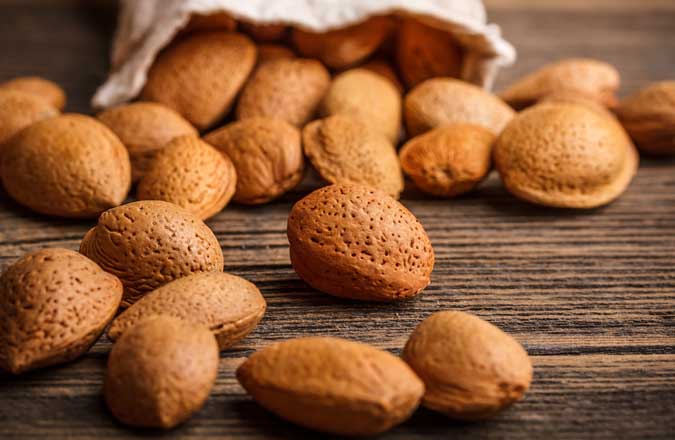
The almonds have always been protagonists of our table, loved for their natural sweetness and gastronomic versatility. However, it is contemporary scientific research that reveals today their true nature as superfood, adding a profound health significance to a consumption already rooted in tradition. In this scenario, Italian almonds are positioned as a premium option, where the richness of biodiversity Mediterranean meets excellent nutritional profiles, offering a value that goes far beyond simple energy contribution.
Italian almond production reached about in 2024 79,000 tons, equal to about 28% of Italian nut production (ISMEA, 2026). The cultivation of almond trees develops over about 54,000 hectares, mainly concentrated in Sicily and Puglia. Over 50% of the total surface area, 22,300 hectares, is managed under organic (+5.4% in the period 2020/2024).
TheItaly is a net importer of almonds, with 137,000 tons of imports – mainly from the USA, the world’s leading producer – driven by the high demand from the confectionery industry. The superior quality of the Italian almonds nonetheless registers a growing appreciation in the international markets, where exports in 2024 reached 24 million euros (ISMEA, 2026).
The fruit's architecture: the protective value of the hard shell
Unlike the Californian varieties, selected for the soft shell which facilitates intensive mechanical harvesting but exposes the seed to oxidation risks, the Italian cultivars mostly belong to the hard-shell type. The sturdy shell acts as a natural chest, better preserving the aromatic profile and the content of essential fatty acids.
Moreover, Mediterranean cultivation requires significantly less water input compared to intensive overseas models, making the Italian product an example of sustainability environmental.
From mythology to the table: the history of a Mediterranean excellence
The almond tree originates from Central and Southwestern Asia and was introduced into the Mediterranean basin in antiquity. Its spread in Italy is attributed to the Phoenicians and subsequently to the Greeks, who developed cultivation techniques in the colonies of Magna Graecia.
In classical culture, the almond tree was a symbol of rebirth and hope, thanks to its early spring blooming. The Greek mythology tells the legend of Phyllis, transformed into an almond tree by the gods while waiting for the return of her beloved Acamas. The plant’s rebloom symbolized the rebirth of love.
During the Middle Ages, cultivation in Southern Italy further spread thanks to the Arabs, who introduced new irrigation techniques and selected varieties, contributing to the development of the Mediterranean confectionery tradition based on almonds.
Agrotechnics and sustainability: the almond tree as guardian of the territory
The almond tree (Prunus dulcis (Mill.) D.A. Webb) belongs to the family of Rosaceae and is closely related to peach and apricot. The seeds contained in the kernels of these fruits, the so-called armelline, are sometimes (improperly) called ‘bitter almonds’ and are traditionally used, in small controlled quantities, as ingredients in amaretti cookies.
The plant of the almond tree is characterized by:
- variable height between 4 and 10 meters;
- early flowering between January and March;
- fruits consisting of a drupe with external hull and woody shell;
- edible inner seed, the almond.
The harvest generally takes place between August and September, when the hull naturally opens. After harvesting, almonds are dried to reduce moisture and ensure their preservation.
Geography of taste: the production districts of Southern Italy
Italian almond production is concentrated in:
- Sicily (provinces of Agrigento, Syracuse, Ragusa, Trapani);
- Apulia (provinces of Bari and Foggia);
- Basilicata;
- Calabria;
- Sardinia.
The characteristics of Mediterranean terroirs – with calcareous soils, good sun exposure and moderate rainfall – favor the development of almonds with intense aromatic profiles.
Agronomic practices
The modern cultivation of the almond tree combines traditional techniques and technological innovation. Among the main practices:
- varietal selection for resistance to pests and climatic stresses;
- integrated pest management, with preference for organic farming organic with minimal environmental impact;
- precision irrigation;
- mechanized or semi-mechanized harvesting.
Sustainable production
The almond tree represents a crop particularly suitable for sustainable agricultural systems, thanks to its drought resistance and the ability to enhance marginal lands. The expansion of organic cultivation meets the growing demand for certified products and contributes to the protection of agricultural biodiversity (ISMEA, 2024).
Ingredients and production process
Almonds marketed as a food product undergo a relatively simple processing:
- harvest of the fruit;
- Hulling (removal of the hull);
- Drying natural or controlled;
- Shelling;
- Possible peeling;
- Selection and grading;
- Packaging.
Almonds can be marketed raw, roasted, peeled, in pieces, flour or paste, or used as an ingredient in numerous confectionery and gastronomic products.
Biodiversity treasures: native cultivars and their potential
The biodiversity of Italian almonds stands out for the value of some native cultivars that have been registered in the national PAT (Traditional Agri-food Product) register but are still unfortunately lacking recognition and protection as PDO at the European level:
- Avola almond (Syracuse, Sicily): composed of three varieties, cultivated together for mutual pollination:
• Pizzuta d’Avola (main, with a hard shell and delicate flavor);
• Fascionello (medium size, full flesh);
• Corrente d’Avola (or Romana, more elongated);
- Noto almond: (Syracuse, Sicily): same varieties as the nearby Avola almond;
- Francavilla almond (Messina, Sicily): local native Sicilian ecotypes selected over time;
- Toritto almond (Bari, Puglia): historic cultivars Filippo Cea, Antonio De Vito, Genco.
These productions represent native varieties of great value, characterized by high sensory quality and historical tradition. The Sicilian varieties Pizzuta, Fascionello, and Romana are particularly sought after in the confectionery sector for their consistency, shape, and taste.
The science in the seed: nutritional analysis and benefits of micronutrients
According to the CREA Food Composition Tables, 100 g of almonds provide on average:
- energy: 628 kcal;
- proteins: 22 g;
- fats: 55.3 g, of which fatty acids monounsaturated 39.8 g; fats polyunsaturated 10.6 g; saturated fats 4.6 g;
- carbohydrates: 4.6 g, of which sugars 3.7 g;
- dietary fibers: 12.7 g.
Regarding micronutrients, almonds are characterized by:
- formidable richness in vitamin E: 26 mg per 100 g, equal to the 216,6% of the Nutrient Reference Value (12 mg) indicated in Annex XIII to Regulation (EU) No. 1169/11;
- exceptional richness in copper, 0.92 mg per 100 g, equal to 92% of the NRV (1 mg);
- equally extraordinary richness in phosphorus, 550 mg, equal to 78,6% of the NRV (700 mg);
- great richness in magnesium, 264 mg, 70,4% of the NRV (375 mg);
- richness in potassium, 780 mg, equal to 39% of the NRV (2000 mg);
- richness in calcium, 240 mg, 30% of the NRV (800 mg);
- presence of zinc, 2.5 mg, 25% of the NRV (10 mg);
- source of iron, 3 mg, 21.4% of the NRV (14 mg).
Table 1 – Micronutrient analysis and daily requirement coverage (NRV)
| Micronutrient | Amount per 100g | % NRV* (EU Reg. 1169/11) | Classification pursuant to Reg. EC 1924/06 |
|---|---|---|---|
| vitamin E | 26 mg | 216,6% | Rich in / High content |
| copper | 0.92 mg | 92% | Rich in / High content |
| phosphorus | 550 mg | 78,6% | Rich in / High content |
| magnesium | 264 mg | 70,4% | Rich in / High content |
| potassium | 780 mg | 39% | Rich in / High content |
| calcium | 240 mg | 30% | Rich in / High content |
| Zinc | 2.5 mg | 25% | Source of |
| Iron | 3 mg | 21,4% | Source of |
| *NRV: Nutrient Reference Value for an average adult (8400 kJ / 2000 kcal). |
Our team of FARE (Food and Agriculture Requirements) is available to operators and associations interested in evaluating the opportunities to enhance the nutritional benefits and health associated with the consumption of almonds and other shelled nuts, in compliance with current legislation and commercial information transparency.
Beyond goodness: new frontiers in health and prevention research
Numerous epidemiological and clinical studies have highlighted the potential role of almonds in promoting health. Although the relevance of such studies has not yet been verified by EFSA (European Food Safety Authority) – in the absence of specific applications for authorization of 'health claims', pursuant to Regulation (EC) No 1924/06 – it is still useful to report some brief notes.
Cardiovascular health
Regular consumption of nuts, including almonds, is associated with a reduced risk of cardiovascular diseases, thanks to the presence of unsaturated fatty acids, phytosterols, and antioxidant compounds (Ros, 2010; Singar et al., 2024).
Recent scientific evidence shows that almonds contribute to:
- improvement of plasma lipid profile, with reduction of LDL cholesterol and maintenance of HDL cholesterol levels (Singar et al., 2024; Berryman et al., 2011);
- modest reduction of diastolic blood pressure (0.17-1.3 mmHg);
- improvement of endothelial function and vascular reactivity;
- reduction of inflammation markers and oxidative stress (Trumbo et al., 2025).
Glycemic control
Almonds may contribute to Glycemic control and reduction of metabolic risk, particularly in subjects with prediabetes (Gulati et al., 2023; Misra et al., 2023). A randomized controlled trial conducted on 66 adults of Indian Asian ethnicity showed that consuming 20 g of almonds 30 minutes before main meals for 3 months results in:
- reduction of body weight, body mass index and waist circumference;
- improvement of glycemia (especially postprandial glycemia);
- reduction of insulin resistance;
- potential reversion of prediabetes towards normoglycemia (Gulati et al., 2023).
Intestinal health and microbiota
Almonds promote gut health through prebiotic effects. Recent studies show that regular consumption of almonds:
- increases intestinal microbiota diversity, particularly beneficial bacteria such as Bifidobacterium e Roseburia (Singar et al., 2024).
- increases the production of short-chain fatty acids (SCFA), especially butyrate, essential for intestinal barrier integrity and modulation of inflammation (Singar et al., 2024; Gilbert et al., 2025);
- promotes microbiome composition towards a healthier profile (Singar et al., 2024).
Gastronomic uses
Almonds represent a fundamental ingredient in Italian gastronomy and Mediterranean. Among the main uses:
- traditional pastry (marzipan, nougat, sugared almonds, cookies, amaretti);
- production of ‘almond milk’ and plant-based beverages;
- ingredients for pesto and savory preparations;
- snacks and nutritional toppings;
- bakery products and ice cream.
The versatility of almonds allows both artisanal and industrial applications, with growing interest in the sector plant-based.
Buyer tips
I foodies should prioritize the purchase of almonds:
- certified organic, to promote the further development of the most environmentally and biodiversity-friendly agriculture system. sustainable;
- By Italian origin, to appreciate the quality of native cultivars, thanks to the mandatory label indication introduced by regulation (EU) 2023/2429 (Dongo, 2023);
- recently harvested and processed, whenever it is possible to collect such information (otherwise not mandatory).
The team of GIFT (Great Italian Food Trade) supports international buyers in identifying reliable Italian suppliers, facilitating access to certified and high value-added productions.
Conclusions
The rediscovery of the almond as health ingredient calls for a more conscious choice, able to reward quality and origin. Although the global market guarantees the availability of this precious seed year-round, Italian varieties represent an excellence that protects biodiversity and offers an authentic sensory experience. Choosing Italian almonds means celebrating a perfect union between goodness passed down through history and well-being confirmed by science.
Dario Dongo
References
- Berryman, C. E., Preston, A. G., Karmally, W., Deckelbaum, R. J., & Kris-Etherton, P. M. (2011). Effects of almond consumption on the reduction of LDL-cholesterol: A discussion of potential mechanisms and future research directions. Nutrition Reviews, 69(4), 171–185. https://doi.org/10.1111/j.1753-4887.2011.00383.x
- Commission Delegated Regulation (EU) 2023/2429 of 17 August 2023 supplementing Regulation (EU) No 1308/2013 of the European Parliament and of the Council as regards marketing standards for the fruit and vegetables sector, certain processed fruit and vegetable products and the bananas sector. http://data.europa.eu/eli/reg_del/2023/2429/oj
- CREA – Research Center for Food and Nutrition. (2019). Food composition tables. Sweet almonds, dry. Rome: CREA. https://www.alimentinutrizione.it/tabelle-nutrizionali/008540
- Dongo, D. (2023, 22 November). Horticultural products, dried fruit and nuts, mandatory origin in the EU. FT (Food Times). https://www.foodtimes.eu/it/consumatori-e-salute/ortofrutta-frutta-secca-e-a-guscio-origine-obbligatoria-in-ue/
- Gilbert, J. A., Trumbo, P. R., Ard, J., Bellisle, F., Drewnowski, A., Kleinman, R., Misra, A., Sievenpiper, J., Tahiri, M., Watson, K. E., & Hill, J. (2025). Examining the potential prebiotic effect of almonds. Journal of Applied Microbiology, 136(4), lxaf078. https://doi.org/10.1093/jambio/lxaf078
- Gulati, S., Misra, A., Tiwari, R., Sharma, M., Pandey, R. M., Upadhyay, A. D., & Sati, H. C. (2023). Premeal almond load decreases postprandial glycaemia, adiposity and reversed prediabetes to normoglycemia: A randomized controlled trial. Clinical Nutrition ESPEN, 54, 12–22. https://doi.org/10.1016/j.clnesp.2022.12.028
- Institute of Services for the Agricultural Food Market. (2026). Nuts: new purchase record in 2025, over 1.1 billion euros. ISMEA Markets. https://www.ismeamercati.it/flex/cm/pages/ServeBLOB.php/L/IT/IDPagina/13752
- Misra, A., Gulati, S., Tiwari, R., Sharma, M., Pandey, R. M., Upadhyay, A. D., & Sati, H. C. (2023). Beneficial effects of premeal almond load on glucose profile on oral glucose tolerance and continuous glucose monitoring: Randomized crossover trials in Asian Indians with prediabetes. European Journal of Clinical Nutrition, 77(4), 453–462. https://doi.org/10.1038/s41430-023-01263-1
- Regulation (EU) No 1169/2011 of the European Parliament and of the Council of 25 October 2011 on the provision of food information to consumers. Latest consolidated text: 01/04/2025 http://data.europa.eu/eli/reg/2011/1169/2025-04-01
- Regulation (EC) No 1924/2006 of the European Parliament and of the Council of 20 December 2006 on nutrition and health claims made on foods. Consolidated text: 13/12/2014 http://data.europa.eu/eli/reg/2006/1924/2014-12-13
- Ros, E. (2010). Health benefits of nut consumption. Nutrients, 2(7), 652–682. https://doi.org/10.3390/nu2070652
- Singar, S., Kadyan, S., Patoine, C., Park, G., Arjmandi, B., & Nagpal, R. (2024). The effects of almond consumption on cardiovascular health and gut microbiome: A comprehensive review. Nutrients, 16(12), 1964. https://doi.org/10.3390/nu16121964
- Trumbo, P. R., Ard, J., Bellisle, F., Drewnowski, A., Gilbert, J. A., Kleinman, R., Misra, A., Sievenpiper, J., Tahiri, M., Watson, K. E., & Hill, J. (2025). Perspective: Current scientific evidence and research strategies in the role of almonds in cardiometabolic health. Current Developments in Nutrition, 9(1), 104516. https://doi.org/10.1016/j.cdnut.2024.104516

Dario Dongo, lawyer and journalist, PhD in international food law, founder of WIISE (FARE - GIFT – Food Times) and Égalité.


